
8 Critical Rules for What to Avoid After Laser Treatment in 2025
You've just completed your laser hair removal session, and the journey to perfectly smooth, hair-free skin is well underway. The advanced Splendor X technology used at NYCLASER has done its part by precisely targeting unwanted hair follicles, but the next 48 hours and subsequent weeks are now in your hands. What you do immediately following your appointment is just as crucial as the treatment itself for achieving flawless, long-lasting results.
Proper aftercare is not merely a set of optional suggestions; it is a fundamental part of the process. It is the definitive line between a seamless recovery and potential complications like hyperpigmentation, irritation, or even infection. Understanding what to avoid after laser treatment is the most effective way to protect your skin, which is temporarily sensitized and more vulnerable. This guide is designed to be your definitive post-treatment roadmap, ensuring your path to silky skin is smooth and complication-free.
We’ve created a comprehensive checklist that moves beyond generic advice. Instead of just telling you to avoid the sun, we'll explain precisely why UV exposure is detrimental, for how long you must avoid it (especially on Long Island beaches), and what specific sunscreens are safe to use. Each point on our list details not only the what but also the critical why, the recommended timeframe for avoidance, and safe alternatives you can embrace. Think of this as your essential aftercare bible, tailored to protect your investment and guarantee the beautiful outcome you expect from a premier treatment at our Westbury & Jericho area clinic. Let's dive into the eight essential rules for a perfect recovery.
1. Avoid Direct Sun Exposure and UV Rays
Of all the things what to avoid after laser treatment, sun exposure is arguably the most critical. Think of your skin as being in a state of heightened sensitivity post-procedure. The laser works by targeting melanin in the hair follicles with concentrated light energy. This process temporarily makes the surrounding skin more vulnerable and photosensitive.
Direct UV exposure on this treated skin can trigger a defensive response, leading to unwanted side effects. The most common complication is hyperpigmentation, where the skin produces excess melanin, creating dark spots or patches. It can also cause increased redness, prolonged inflammation, and even blistering, compromising your results and comfort. This is particularly crucial for clients with deeper skin tones, who are naturally more susceptible to post-inflammatory hyperpigmentation.
Why It’s Number One on the List
Your skin’s barrier is temporarily disrupted after a laser session. Exposing it to the sun is like leaving a fresh wound open to the elements. The UV radiation can easily penetrate the sensitized layers, leading to cellular damage that not only looks unappealing but can also undermine the effectiveness of your treatment. For our NYCLASER clients in Nassau County and across Long Island, this is a year-round concern, not just a summer one. UV rays are present even on cloudy days.
Actionable Plan for Sun Avoidance
To ensure a smooth recovery and optimal results, follow this simple yet effective sun protection plan:
Strict Avoidance (First 48 Hours to 1 Week): Completely avoid direct sun exposure on the treated area. This is the period of peak sensitivity.
Diligent Protection (Up to 2 Weeks): If you must be outdoors, protection is non-negotiable. * Apply a broad-spectrum SPF 30+ sunscreen every single day. Mineral-based formulas containing zinc oxide or titanium dioxide are often less irritating on treated skin. * Reapply your sunscreen every two hours, or more frequently if you are sweating or swimming. * Wear protective clothing. Think long-sleeved shirts, pants, and wide-brimmed hats.
Smart Scheduling: For our clients in Westbury and Jericho, consider scheduling your laser sessions during the fall and winter when you're naturally less exposed to intense sun. If planning a vacation, schedule your treatment well in advance, not right before you leave.
Expert Tip: Even incidental sun exposure counts. A short walk from your car to the office or sitting near a bright window can expose your skin to damaging UV rays. Make sunscreen application a non-negotiable part of your morning routine.
When to Contact NYCLASER
If you experience excessive or prolonged redness, dark spots, or blistering after accidental sun exposure, contact our office immediately. These could be signs of a complication that requires professional attention. To understand more about managing skin discoloration, you can learn more about preventing hyperpigmentation after laser treatments.
2. Don't Use Hot Water or Take Hot Showers/Baths
After sun exposure, heat is the next crucial element on the list of what to avoid after laser treatment. Your skin is holding onto residual heat from the laser energy used during your session. Exposing it to more heat from hot water can exacerbate inflammation, leading to increased redness, prolonged sensitivity, and significant discomfort.
The laser technology we use at NYCLASER, particularly the Splendor X, works by delivering controlled thermal energy to the hair follicles. Adding external heat from a steamy shower, hot bath, or sauna effectively compounds this thermal effect on already sensitized skin. This can overwhelm your skin's natural cooling and healing mechanisms, potentially leading to complications like blistering, excessive swelling, or even changes in skin texture.

Why It’s Number Two on the List
Heat-induced inflammation is one of the most common and preventable post-treatment side effects. While it may not seem as severe as a sunburn, it directly interferes with the immediate healing process. Hot water opens up your pores and increases blood flow to the skin's surface, which can trap heat and intensify the mild, sunburn-like sensation you might feel after your appointment. Keeping the treated area cool is a fundamental step in ensuring a calm and comfortable recovery.
Actionable Plan for Heat Avoidance
Adhering to these simple guidelines will help soothe your skin and protect your investment in your laser treatment:
Strict Avoidance (First 48 Hours): Completely avoid hot showers, hot baths, steam rooms, saunas, and hot tubs. This is the most critical period for managing inflammation.
Cautious Approach (Up to 1 Week): Continue to avoid high-heat environments like saunas and hot tubs. * Use lukewarm or cool water for all showers and to cleanse the treated area. * Keep your showers brief to minimize exposure to steam and humidity. * Pat your skin dry gently with a clean, soft towel. Do not rub the area.
Smart Scheduling: For our clients in Nassau County who enjoy activities like hot yoga or have routines involving saunas, plan to skip these for at least two days following your appointment. Schedule your laser session on a day when a quick, cool shower fits easily into your plans.
Expert Tip: Before stepping into the shower, test the water temperature with your wrist or the back of your hand. It should feel cool or tepid to the touch, not warm or hot. This simple check can prevent accidental irritation.
When to Contact NYCLASER
If you notice excessive or painful redness, swelling that doesn't subside, or any blistering after exposure to hot water, please contact our Westbury office. These symptoms could indicate a heightened inflammatory response that may require professional advice to manage effectively. We are here to guide you through every step of your recovery to ensure you achieve the smooth, clear skin you desire.
3. Skip Strenuous Exercise and Sweating
While it may seem counterintuitive to pause your fitness routine, taking a short break from the gym is a crucial part of what to avoid after laser treatment. The primary reason is to prevent heat and bacteria from irritating your skin. Vigorous exercise increases your core body temperature and induces sweating, which creates a warm, moist environment on your skin. This can lead to unwanted irritation, redness, and even a risk of minor infections in the freshly treated hair follicles.
Sweat contains salt and bacteria that can clog and inflame the temporarily sensitive pores, potentially leading to breakouts or folliculitis. For NYCLASER clients treating larger areas like the back, chest, or full legs with our Splendor X technology, minimizing sweat across these zones is particularly important to ensure a smooth, comfortable healing process and protect your investment in the treatment.

Why It’s Number Three on the List
Your skin is essentially dealing with controlled thermal energy after a laser session. Adding more heat from an intense workout is like fanning a small flame. It can exacerbate the normal post-treatment inflammation, prolonging redness and sensitivity. Think of your hair follicles as tiny open channels; introducing sweat and friction from workout clothes can compromise the skin’s delicate state and hinder its natural recovery cycle.
Actionable Plan for Exercise Avoidance
Protecting your skin doesn't mean you have to be completely sedentary. It just requires smart adjustments for a couple of days. Follow this simple plan:
Strict Avoidance (First 24-48 Hours): Avoid all strenuous activities that cause significant sweating. This includes running, HIIT, cycling, hot yoga, and heavy weightlifting.
Safe Alternatives: If you need to move, opt for light activities. A gentle walk or some light stretching is perfectly fine and won't raise your body temperature enough to cause issues.
Smart Scheduling: Many of our clients in Westbury and Jericho find it convenient to schedule their laser appointments on a Friday evening. This allows them the entire weekend for their skin to calm down before resuming their normal gym routine on Monday morning.
Clothing Choice: Wear loose-fitting, breathable clothing made from natural fibers like cotton to minimize friction and allow the skin to breathe.
Expert Tip: Don't forget about other sources of heat and sweat. Avoid saunas, steam rooms, and hot tubs for at least 48 hours. The combination of heat, moisture, and potential chemicals (like chlorine) can be particularly irritating to treated skin.
When to Contact NYCLASER
If you notice any unusual rashes, persistent red bumps that resemble acne, or significant irritation after exercising, please contact our office. These could be signs of folliculitis or another skin reaction that may need attention. To better understand the complete healing timeline, you can learn more about laser hair removal recovery time.
4. Avoid Touching, Scratching, or Picking at Treated Areas
Another crucial point on our list of what to avoid after laser treatment is resisting the urge to touch, scratch, or pick at your skin. After a session, the treated area is essentially a field of micro-wounds where each follicle has been targeted. The skin's protective barrier is temporarily compromised, making it delicate and highly susceptible to irritation and infection.
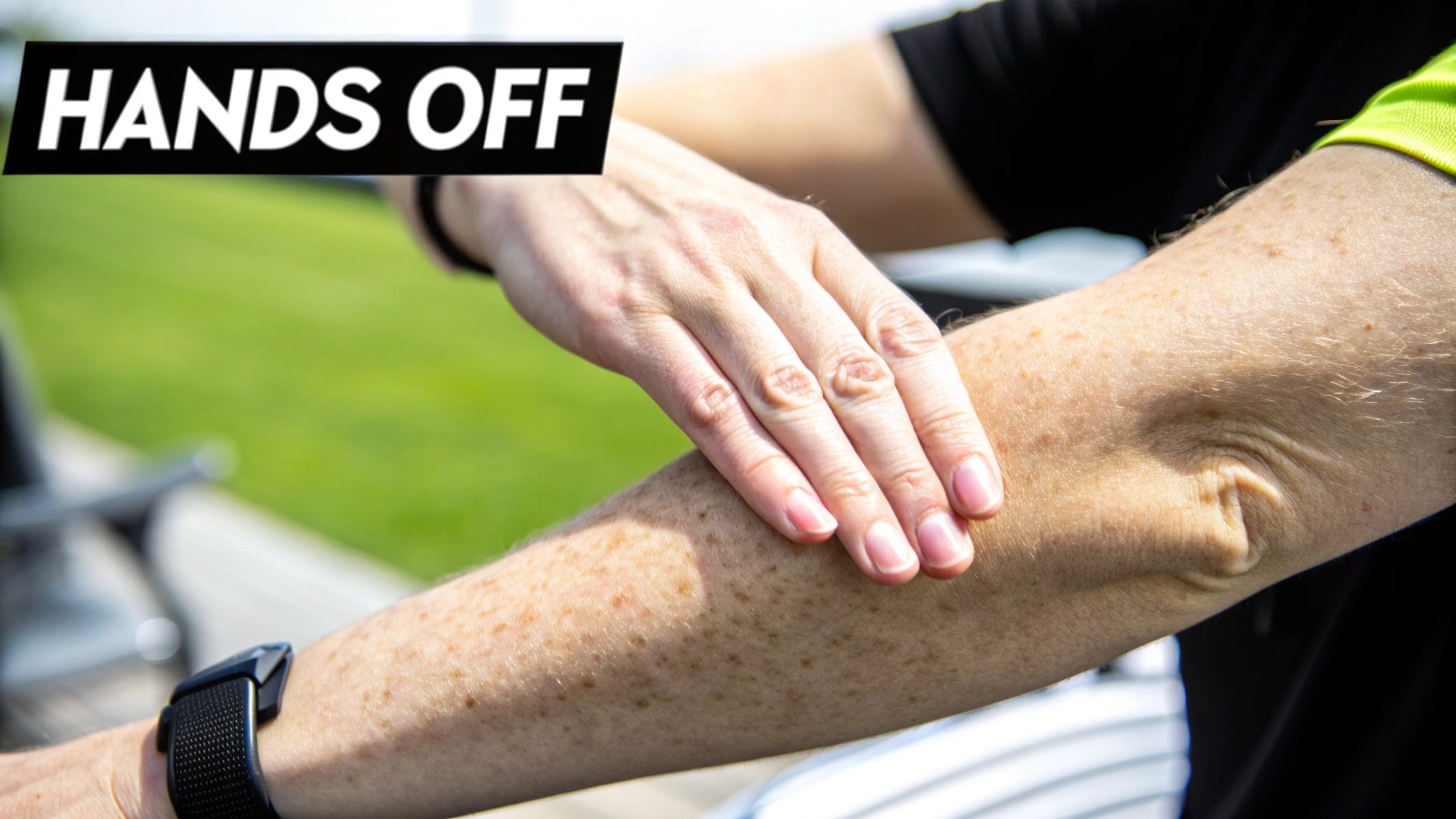
Touching the area introduces bacteria from your hands, which can lead to clogged pores, breakouts, or even a skin infection. Scratching, especially in response to the common post-treatment itch, can cause physical trauma like abrasions and scrapes. This not only delays healing but can also lead to permanent scarring or post-inflammatory hyperpigmentation (PIH), completely undermining the cosmetic goals of your treatment.
Why It’s Number Four on the List
Itching and mild discomfort are normal parts of the healing process as the body works to expel the treated hair follicles. However, giving in to the temptation to scratch or "help" the process along by picking is a direct path to complications. This is especially true for our clients in Westbury and Jericho treating areas prone to unconscious touching, such as the face, or areas with friction from clothing, like the bikini line. Interrupting this natural healing can disrupt the skin's regeneration, potentially damaging the smooth, clear results you're investing in.
Actionable Plan for Hands-Off Healing
To protect your skin and ensure a complication-free recovery, adopt these simple habits:
Mindful Avoidance (First Week): Make a conscious effort to keep your hands away from the treated skin. This is the most critical period for healing.
Preventive Measures: Take proactive steps to minimize irritation and the urge to scratch. * Wear loose, soft clothing made from breathable fabrics like cotton to prevent friction over treated areas like the legs, underarms, or bikini line. * Keep your fingernails trimmed short to minimize potential skin damage from any accidental or subconscious scratching, particularly while sleeping. * Apply a soothing, clinic-approved product like aloe vera gel or a fragrance-free calming moisturizer to alleviate itching.
Distraction Techniques: If you find yourself wanting to touch the area, keep your hands busy with another activity. This simple trick can help you override the impulse until it passes.
Expert Tip: For facial laser treatments, be extra vigilant about habits like resting your chin in your hand. For those who scratch in their sleep, consider wearing soft cotton gloves to bed for the first few nights post-treatment to protect the skin.
When to Contact NYCLASER
A mild, transient itch is normal. However, if you experience persistent, severe itching, develop a rash, pustules, or notice any signs of infection like increased swelling, pain, or pus, it is important to contact our office. These symptoms are not typical and require professional evaluation to ensure your skin heals properly. We can provide guidance on the appropriate next steps to manage the reaction and safeguard your treatment outcome.
5. Don't Apply Harsh Chemicals or Irritating Products
After laser treatment, your skin's protective barrier is temporarily compromised, making it incredibly sensitive. Applying harsh chemicals or irritating products is one of the key things on the list of what to avoid after laser treatment because it can disrupt the healing process. Products containing strong active ingredients can cause severe irritation, redness, stinging, and may even lead to post-inflammatory hyperpigmentation.
Think of your freshly treated skin like a delicate surface that needs to be handled with care. Ingredients like retinol, AHAs/BHAs (such as salicylic and glycolic acid), benzoyl peroxide, and even strong fragrances can be far too aggressive for the sensitized skin. This applies not just to skincare but also to deodorants on treated underarms or perfumed lotions on treated legs, which can provoke an inflammatory response and compromise your results.
Why This Precaution Is Crucial
Your skin is working hard to heal and regenerate after the laser energy has targeted the hair follicles. Introducing potent chemicals forces it to defend against irritation on top of its primary healing task. This can prolong redness and swelling, create discomfort, and in some cases, lead to adverse reactions that mimic a chemical burn. For our clients in Nassau County, where skincare routines can be quite advanced, it's vital to know when to pause these powerful products to protect your investment.
Actionable Plan for Product Avoidance
To keep your skin calm and ensure a smooth recovery, follow this product management plan:
Immediate Post-Treatment (First 72 Hours): This is a strict "no-go" zone for active ingredients. Avoid all products containing retinol, vitamin C, exfoliating acids (AHAs/BHAs), and acne treatments like benzoyl peroxide.
Gentle Alternatives Only: * Cleanse the treated area with lukewarm water and a mild, soap-free, and fragrance-free cleanser. * Apply a gentle, hypoallergenic moisturizer recommended by our technicians to keep the skin hydrated. * Avoid using deodorant or antiperspirant on treated underarms for at least 48 hours. * If you've had facial treatment, skip makeup for the first 24 hours. If necessary, opt for a light mineral-based makeup.
Gradual Reintroduction (After 1 Week): You can slowly reintroduce your regular skincare products after a week, provided your skin shows no signs of irritation. Start with one product at a time to see how your skin tolerates it.
Expert Tip: Check the labels on all your products. Fragrance can be a hidden irritant in many lotions, soaps, and even sunscreens. For the first week, stick to products specifically labeled as "fragrance-free," "for sensitive skin," or "dermatologist-tested."
When to Contact NYCLASER
If you accidentally apply a harsh product and experience a burning sensation, excessive peeling, persistent redness, or a rash, rinse the area gently with cool water. If the irritation continues, contact our office immediately. Understanding how to manage these potential reactions is key. For more detailed information on what to expect, you can learn more about minimizing laser hair removal side effects.
6. Avoid Waxing, Plucking, or Other Hair Removal Methods
Of all the post-care instructions on the list of what to avoid after laser treatment, this one directly protects the core mechanism of the procedure. Laser hair removal works by targeting the pigment (melanin) within the hair follicle. For the laser to be effective, the hair shaft must be present in the follicle to act as a conduit for the light energy to travel down and destroy the root.
Methods like waxing, plucking, threading, or using epilators completely remove the hair from the root. When the root is gone, the laser has no target, rendering your next session ineffective for that growth cycle. This not only wastes the treatment but can also irritate the already sensitive skin, leading to inflammation or ingrown hairs as the new hair attempts to grow back.
Why It’s Critical for Your Results
Disrupting the hair follicle is counterproductive to the entire process. The goal is to let the laser-treated hair shed naturally, which typically happens 1 to 3 weeks after your appointment. Removing it prematurely prevents you and your technician from accurately assessing the treatment's effectiveness and disrupts the natural hair growth cycle that subsequent sessions are timed to target. For our NYCLASER clients treating large areas like full legs or the Brazilian/bikini line, adhering to this rule is essential for achieving smooth, uniform results.
Actionable Plan for Hair Management
To protect your investment and ensure the best outcome, follow this hair removal plan between sessions:
Strict Avoidance (At Least 2 Weeks): Do not wax, pluck, thread, or use depilatory creams on the treated area for a minimum of two weeks before your next session, and ideally for the entire duration of your treatment package.
Shaving is Permitted (After 24-48 Hours): If you need to manage hair growth, shaving is the only approved method. * Wait at least 24 to 48 hours after your session, or until any redness and sensitivity have subsided. * Use a new, sharp razor to minimize bacterial contamination and skin irritation. * Apply a gentle, moisturizing shaving cream and shave carefully without applying too much pressure.
Embrace the Shedding Process: Understand that the hair appearing to "grow" in the first couple of weeks is often the treated hair being pushed out of the follicle. Let it shed on its own.
Expert Tip: For areas like the underarms or bikini line, try gently exfoliating with a soft washcloth about a week after your treatment. This can help speed up the shedding process of the treated hairs and prevent them from becoming trapped under the skin.
When to Contact NYCLASER
If you accidentally waxed or plucked the treated area, it’s important to let us know before your next scheduled appointment. We may need to adjust your treatment timeline to ensure the hair follicles have had enough time to regrow and become suitable targets for the laser. Honesty is key to getting the results you want. For more details on preparing for your next session, visit our pre and post-care instructions page.
7. Skip Swimming, Hot Tubs, and Pools
Taking a dip in a pool or relaxing in a hot tub might seem harmless, but it's a significant risk when considering what to avoid after laser treatment. Your skin is exceptionally porous and sensitive immediately following a session. Environments like chlorinated pools, saltwater oceans, and hot tubs expose this vulnerable skin to a trio of threats: harsh chemicals, bacteria, and excessive heat.
Chlorine and salt can severely irritate the treated follicles, causing stinging, redness, and inflammation. More concerning is the risk of infection. Hot tubs, in particular, are breeding grounds for bacteria that can easily enter the micro-openings in your skin created by the laser, potentially leading to folliculitis or other skin infections that could compromise your results.
Why It’s High on the List
The heat from hot tubs and saunas exacerbates the warmth already present in your skin from the laser energy. This increased heat can prolong inflammation, increase redness, and make the treated area uncomfortable. For our NYCLASER clients in Nassau County and Westbury, especially during the summer, resisting the urge to visit local pools or Long Island beaches is a crucial part of a successful aftercare routine. Protecting your investment means allowing the skin to heal in a clean, cool, and dry environment.
Actionable Plan for Water Avoidance
To safeguard your skin and ensure a smooth recovery, it's essential to keep the treated area out of pools, oceans, and hot tubs.
Strict Avoidance (First 48-72 Hours): This is the minimum time frame to avoid all submersion in pools, hot tubs, or saltwater. Your skin's barrier is at its most compromised during this period.
Ideal Waiting Period (Up to 1 Week): To be completely safe, especially after treating larger areas like the back or full legs, waiting a full week is recommended. This gives the follicles ample time to close and the initial inflammation to subside completely.
Smart Scheduling: If you live near the beaches of Long Island or have a pool, consider scheduling your laser sessions during the fall and winter. This makes avoidance much easier and removes temptation.
Plan Ahead: If you have a vacation or a pool party planned, schedule your laser appointment well in advance, ensuring you have at least a week of healing time before you plan to swim.
Expert Tip: Even if you don't submerge the area, the steam and heat from sitting near a hot tub can still increase skin temperature and cause irritation. It's best to avoid the environment altogether for the first few days post-treatment.
When to Contact NYCLASER
If you accidentally expose the treated area to a pool or hot tub and subsequently notice signs of infection such as excessive itching, persistent redness, pustules (small pus-filled bumps), or unusual swelling, contact our office right away. Prompt attention can prevent minor irritation from becoming a more significant complication.
8. Avoid Scheduling Other Skin Treatments Simultaneously
When considering what to avoid after laser treatment, it’s crucial to think about your entire skincare regimen, not just individual products. Scheduling other intensive skin treatments too close to your laser session can over-stimulate and overwhelm your skin, leading to significant complications and jeopardizing your results.
Your skin requires a dedicated recovery period after laser hair removal. Introducing other procedures like chemical peels, microdermabrasion, microneedling, or even certain types of facials during this time interrupts the skin's natural healing process. This overlap can cause excessive inflammation, prolonged redness, swelling, and increase the risk of adverse reactions such as scarring or pigmentation issues. The advanced Splendor X technology we use at NYCLASER is powerful and effective; it deserves its own recovery window to work its magic without interference.
Why It’s High on the List
Think of your skin's healing capacity as a finite resource. After a laser session, all of that resource is directed toward repairing and regenerating the treated area. When you add another treatment, you're forcing your skin to divide its attention and resources, which can lead to a subpar healing response for both procedures. This is especially important for our clients in Westbury and Jericho, who may be seeing different specialists for various treatments. Coordinated care is key to ensuring each treatment delivers its intended benefit safely.
Actionable Plan for Scheduling Treatments
To protect your skin and maximize the effectiveness of your laser hair removal, adopt a strategic approach to scheduling all your aesthetic treatments.
Create a Treatment "Buffer Zone": Establish a strict "no-treatment" window of at least two weeks before and two weeks after your laser hair removal session. This applies to chemical peels, microdermabrasion, dermal fillers, and other intensive facial treatments.
Communicate with All Your Providers: Be transparent with your dermatologist, esthetician, and our NYCLASER technicians. Inform them of your complete treatment schedule so they can provide the safest and most effective care.
Prioritize Your Treatments: If you have multiple skin goals, work with our team to map out a long-term plan. We can help you sequence treatments logically, ensuring adequate healing time between different procedures for optimal skin health.
Be Cautious with Makeup: Avoid professional makeup applications at spas or salons for the first 48-72 hours post-treatment, as the tools and products may introduce bacteria to your sensitive skin.
Expert Tip: Keep a digital or physical calendar dedicated to your aesthetic treatments. Mark your laser sessions and then block out the two-week periods before and after. This visual reminder will help you avoid accidentally booking conflicting appointments.
When to Contact NYCLASER
If you have inadvertently scheduled another treatment within the two-week buffer zone, or if you are unsure whether a specific procedure is safe, please contact our office immediately. It is always better to reschedule than to risk a skin complication. We can provide guidance on the best timing for all your aesthetic goals to ensure your skin remains healthy, safe, and beautiful. For more information on planning your treatments, feel free to contact our Long Island office for a consultation.
8 Post-Laser Treatment Avoidances Comparison
Item | Implementation Complexity 🔄 | Resource / Effort ⚡ | Expected Outcomes ⭐📊 | Ideal Use Cases 💡 | Key Advantages ⭐ |
|---|---|---|---|---|---|
Avoid Direct Sun Exposure and UV Rays | Low — behavioral change; planning required | Low — sunscreen, protective clothing | ⭐⭐⭐ — prevents hyperpigmentation and preserves efficacy | All post-laser patients; critical for darker tones & outdoor lifestyles | Prevents pigmentation, extends treatment longevity |
Don't Use Hot Water or Take Hot Showers/Baths | Low — adjust shower temperature and habits | Low — no special supplies; use lukewarm water | ⭐⭐ — reduces inflammation, redness, blister risk | All treated areas; important immediately 24–48 hrs post-treatment | Speeds comfort and lowers complication risk |
Skip Strenuous Exercise and Sweating | Moderate — schedule and routine adjustment needed | Medium — plan rest days or light activity alternatives | ⭐⭐⭐ — lowers infection and inflammatory responses | Large-area treatments and active/fitness clients | Supports healing and prevents folliculitis |
Avoid Touching, Scratching, or Picking at Treated Areas | Moderate — requires discipline and protective measures | Low — hygiene, moisturizers, gloves at night if needed | ⭐⭐⭐ — prevents infection, scarring, delayed healing | Facial, Brazilian/bikini, and habitual touchers | Protects skin barrier and treatment results |
Don't Apply Harsh Chemicals or Irritating Products | Moderate — pause actives and change skincare routine | Medium — switch to gentle, fragrance-free products | ⭐⭐⭐ — reduces burning, stinging, and excess photosensitivity | Facial treatments and clients using retinoids/actives | Prevents chemical irritation and prolonged redness |
Avoid Waxing, Plucking, or Other Hair Removal Methods | Low — avoid specific removal methods and wait 2 weeks | Low — shaving acceptable; mark safe dates | ⭐⭐⭐ — preserves follicle targeting and session efficacy | Clients between laser sessions; bikini/Brazilian areas | Maximizes effectiveness and reduces ingrowns |
Skip Swimming, Hot Tubs, and Pools | Moderate — may require vacation or activity planning | Low — avoid water exposure for 48–72 hrs (or longer) | ⭐⭐ — reduces chlorine/salt irritation and infection risk | Beach/pool users, summer/vacation patients | Prevents chemical and bacterial complications |
Avoid Scheduling Other Skin Treatments Simultaneously | Medium — coordinate timing with other providers | Low — reschedule facials/peels/fillers ±2 weeks | ⭐⭐⭐ — avoids compounded inflammation and unpredictable reactions | Clients planning multi-procedure regimens | Ensures predictable healing and safer outcomes |
Your Next Steps for a Smooth, Successful Recovery
Navigating the post-treatment phase of your laser hair removal journey is just as crucial as the treatment itself. This guide has detailed the essential things to avoid after laser treatment, from sun exposure and hot showers to harsh skincare products and other hair removal methods. Each guideline is designed not merely as a rule but as a proactive step to protect your investment, maximize your results, and ensure your skin heals beautifully and efficiently.
Mastering this aftercare protocol is the key to unlocking the full potential of your Splenor X sessions. By understanding why you need to avoid certain activities, you empower yourself to make informed decisions that prevent complications like hyperpigmentation, irritation, or even infection. This isn't just about following instructions; it's about partnering with the technology to achieve the smooth, hair-free skin you desire. The journey doesn't end when you leave our Westbury clinic; it continues with the conscious, careful choices you make in the hours and days that follow.
Key Takeaways: A Quick Recap
To simplify your recovery, let's distill the core principles from our detailed list into a few powerful takeaways. Think of this as your essential post-treatment cheat sheet.
Protect Your Skin's Barrier: The most critical theme is protecting your skin while it's in a vulnerable, healing state. Avoiding sun exposure, harsh chemicals, and physical friction (like scratching or waxing) prevents damage to the delicate skin barrier, which is essential for preventing irritation and discoloration.
Keep It Cool and Calm: Heat is the primary antagonist of freshly treated skin. This principle applies across the board, from avoiding hot showers and saunas to skipping intense workouts that raise your body temperature. Keeping your skin cool minimizes inflammation, reduces redness, and provides a much more comfortable recovery experience.
Patience is a Virtue: Your body needs time to heal and for the hair follicles to shed naturally. Resisting the urge to pluck, wax, or schedule other aggressive skin treatments allows the laser's work to take full effect without interference. Trust the process and allow your skin the time it needs.
Actionable Next Steps: Your Post-Treatment Game Plan
Understanding what to avoid after laser treatment is the first step; implementing it is what truly matters. Here’s how to put this knowledge into practice, starting the moment you leave NYC Laser Hair Removal.
Review Your Personal Aftercare Plan: While these guidelines are comprehensive, our technicians may provide specific advice tailored to your skin type, the treated area, and your Splendor X session. Reread any materials we provided and highlight the instructions most relevant to you.
Adjust Your Schedule: Look at your calendar for the next 48-72 hours. Do you have a hot yoga class scheduled? A trip to the beach planned? Reschedule these activities to a later date. Proactively managing your schedule is the easiest way to avoid accidental missteps.
Prepare Your Post-Treatment Toolkit: Have your gentle, fragrance-free moisturizer and a high-SPF, broad-spectrum sunscreen ready. Place them somewhere visible, like your bathroom counter, as a reminder to use them consistently. If you anticipate swelling, have a cool compress ready in the freezer.
Ultimately, diligent aftercare transforms a standard procedure into a remarkable success story. For residents of Nassau County, from Jericho to Westbury, adhering to these protocols ensures your Splendor X treatments deliver the superior, long-lasting results you expect. It's the final, vital piece of the puzzle that guarantees your journey to hair-free confidence is not only effective but also safe and smooth from start to finish.
Your journey to flawless skin is a partnership, and NYC Laser Hair Removal is committed to guiding you every step of the way. Our expertise in aftercare ensures you get the most from your advanced Splendor X treatments. Book your next session or a free consultation at our Westbury location and let us help you achieve your goals with the highest standard of care. Visit us online at NYC Laser Hair Removal to learn more.
Comments