
Laser hair removal side effects: What to expect and how to minimize risk
It’s completely normal to have questions—and maybe a little apprehension—about what your skin will look like after a laser hair removal session. Let’s clear the air: most of what you’ll experience is not just mild and temporary, but actually a great sign that the treatment is doing its job.
Think of it like the satisfying ache after a good workout. That temporary sensitivity means you’ve successfully stimulated the area, and in this case, the laser has effectively targeted the hair follicles.
Decoding Your Skin's Normal Reactions
So, what’s really happening under the skin? The laser sends a highly focused pulse of energy straight to the hair root. That energy converts to heat, which is what disables the follicle’s ability to grow new hair.
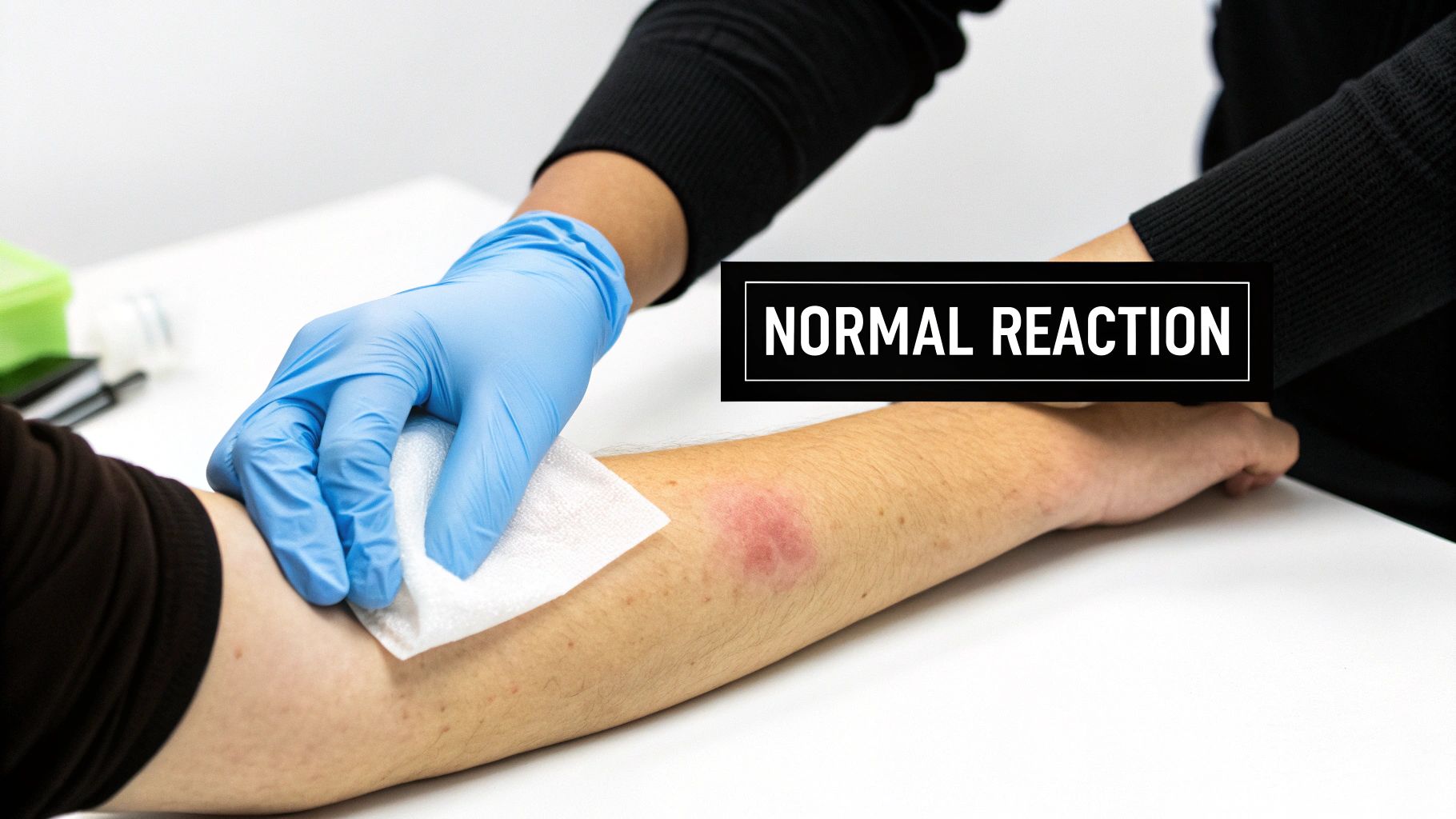
The redness and warmth you feel afterward are simply your body's natural inflammatory response to that targeted heat. It’s the first step in the healing process and proof that the laser hit its mark. This is exactly what we want to see.
Common and Temporary Side Effects
The most frequent reactions are short-lived and resolve on their own, usually within a day or two. Clinical reviews show that these transient effects are a predictable part of the process. For instance, temporary redness is reported by about 14.0% of patients, while a brief burning or tingling sensation occurs in around 5.7% of people.
Another common reaction is folliculitis—small, inflamed bumps around the hair follicles—which happens in roughly 6.4% of patients and typically clears up quickly. You can dig into more patient-reported outcomes in this detailed clinical review.
Here’s a quick guide to help you know exactly what to expect and how to handle it with simple at-home care.
Quick Guide to Common Post-Treatment Reactions
Side Effect | What to Expect | Typical Duration | How to Manage |
|---|---|---|---|
Redness (Erythema) | A mild, pinkish or reddish appearance in the treated area, similar to a light sunburn. | 1-48 hours | Apply a cool compress or aloe vera gel to soothe the skin. |
Mild Swelling | Slight puffiness around the hair follicles (perifollicular edema), which can look like tiny goosebumps. | 1-72 hours | Avoid hot showers and tight clothing. A cold pack can help reduce swelling. |
Slight Itching/Tingling | A minor itching or tingling sensation as the skin begins its natural healing process. | 1-24 hours | Resist the urge to scratch. A gentle, fragrance-free moisturizer can provide relief. |
These reactions are all part of the journey to smooth, hair-free skin and can be easily managed. By knowing what’s normal, you can feel confident and comfortable after every session.
Why Your Skin Reacts After Treatment
Seeing your skin get a little red or puffy after laser hair removal can be surprising, but it’s not just normal—it’s actually a great sign. Think of it as visual confirmation that the laser is doing its job exactly as it should. Understanding what’s happening beneath the surface can turn any initial worry into confidence, knowing your body is responding perfectly.
Imagine the laser as a super-smart heat delivery system. Its sole purpose is to send a concentrated beam of light down into the skin, where it’s absorbed by the dark pigment (melanin) inside the hair follicle. That light instantly converts to heat, which is what strategically damages the follicle to stop it from growing more hair.
While this process is incredibly precise, the skin right next to the follicle inevitably feels some of that warmth. The redness and heat you notice are simply your body's natural inflammatory response kicking into gear, rushing blood to the area to start the healing process.
The Science of Redness and Swelling
In the clinic, we call this temporary redness erythema. It’s the clearest signal that the laser successfully delivered enough energy to create a therapeutic effect. In short, it’s a controlled, microscopic injury designed to achieve a very specific goal: disabling the hair follicle for good.
You might also notice a little bit of swelling right around each follicle, which we call perifollicular edema. This is one of the best indicators of a successful treatment. It means the heat was absorbed so effectively by the hair root that it caused a tiny inflammatory response right where it counts.
Key Takeaway: Redness and swelling aren’t complications; they are the desired clinical endpoints of the treatment. These reactions confirm that the laser energy has reached and effectively disabled the targeted hair follicles.
This whole process is carefully managed by your technician, who calibrates the laser to deliver the perfect amount of energy for your specific skin and hair type. If you want to dive deeper into the technology, you can explore our detailed guide on the science and process of laser hair removal.
Folliculitis: A Predictable Response
Another common reaction is temporary folliculitis, which looks like small, reddish, or skin-colored bumps. This happens when the laser treatment irritates the hair follicles, causing them to get a bit inflamed.
It helps to put it in perspective. If you’ve ever waxed or even plucked a stray hair, you've probably seen similar tiny bumps pop up. It’s your skin’s standard reaction to disrupting the hair follicle, and it almost always calms down on its own within a day or two.
So, to sum it up, the main reasons for these predictable laser hair removal side effects are:
Heat Application: The laser introduces controlled thermal energy into the skin, which naturally tells your body it’s time to start healing.
Targeted Damage: The treatment is designed to selectively damage hair follicles, and inflammation is a necessary part of that process.
Hair Ejection: In the days after your session, the disabled hair starts to shed from the follicle, which can cause some minor, temporary irritation.
Ultimately, these reactions are part of a positive feedback loop. They show that your body is actively healing and that the treatment has set the stage for long-term hair reduction. Once you understand the "why" behind these reactions, you can see them not as a cause for concern, but as visible proof that you’re one step closer to smooth, hair-free skin.
Diving into Less Common Side Effects
While the usual suspects—a little redness and temporary warmth—are mild and fleeting, it’s smart to have the full picture. Talking about rarer complications isn't meant to scare you; it’s about making sure you’re fully informed. Honestly, understanding why these things happen is the best way to prevent them. It all comes back to one key point: serious side effects are almost always avoidable when you’re in the right hands.
Think of it this way: a laser technician is like a master chef with a high-tech oven. An experienced chef knows the exact temperature and timing to cook a dish to perfection. In the wrong hands, that same oven could burn dinner. The technology itself is sound—it’s the expertise of the person operating it that guarantees a great result.
These less common issues are almost always tied to specific, preventable factors. Choosing a certified provider who uses top-tier technology is the single most important decision you can make.
Changes in Skin Pigment
One of the more talked-about (but still uncommon) side effects is a change in your skin’s pigment. It can show up in one of two ways:
Hyperpigmentation: This is when darker spots appear on the treated skin.
Hypopigmentation: This is the opposite—when lighter spots appear.
This happens if the laser's energy accidentally zaps the melanin-producing cells in your skin (called melanocytes) instead of just the hair follicle. The laser can either kick them into overdrive, creating darker spots, or damage them, causing them to produce less pigment and leave lighter spots.
The biggest risk factor here is a mismatch between the laser settings and your skin tone. People with darker skin have more melanin, which can make it tricky for older, less sophisticated lasers to tell the difference between skin and hair. This is exactly why modern technology isn't just a luxury; it's a necessity for a safe treatment.
Why Our Technology Matters: At NYCLaser, we use the Splendor X system. It’s equipped with dual-wavelength technology (Alexandrite and Nd:YAG) and fully customizable settings. This allows us to fine-tune the treatment precisely to your skin tone, dramatically cutting the risk of any pigment changes.
Burns and Blisters
In extremely rare cases, a laser can cause superficial burns or blisters. Let’s be clear: this is a definite sign that something went wrong. The usual culprits are incorrect laser settings—specifically, the energy level being cranked up too high for a person's skin type—or the cooling mechanism not doing its job properly to protect the skin’s surface.
A properly trained technician will always perform a patch test to see how your skin reacts before diving into a full session. This is a non-negotiable step that helps us lock in the safest, most effective settings for you, virtually eliminating the risk of burns. Hitting the beach or a tanning bed right after a session can also increase this risk, which is why following aftercare instructions is so important.
Paradoxical Hypertrichosis
This one sounds like a mouthful, but it’s probably the most counterintuitive side effect out there. Paradoxical hypertrichosis is an extremely rare situation where, instead of disappearing, the hair in or around the treated area grows back finer, but sometimes denser or longer.
The exact cause isn't fully understood, but the leading theory is that a laser energy level that’s too low can actually stimulate dormant hair follicles instead of destroying them. Think of it like gently waking up sleeping follicles instead of putting the active ones to bed for good. Statistically, the odds of this happening are incredibly low.
Serious complications are uncommon, but they are documented. Pigment changes, for instance, are reported more often in patients with darker skin, especially if they don't avoid the sun. Paradoxical hypertrichosis is very rare, with some studies suggesting it happens in about 0.6% of patients, usually on the face and neck. Burns and scarring are even more infrequent and almost always linked to operator error or outdated equipment. You can find more clinical details from the Mayo Clinic's overview of the procedure.
Ultimately, knowing about these rare issues just reinforces why your choice of clinic is so critical. An experienced provider, a thorough skin assessment, and cutting-edge technology all work together to make your laser hair removal journey both effective and exceptionally safe.
Your Post-Treatment Healing Timeline
Knowing what to expect after your laser session is the difference between feeling anxious and feeling confident. When you understand the healing timeline, any temporary side effects stop being a source of worry and become a predictable sign that the treatment is working. Your skin’s journey back to calm follows a clear, manageable path.
This roadmap breaks down the healing process stage by stage, so you know exactly what’s happening and when. The visual below charts the entire journey, from the initial, temporary redness to the satisfying shedding phase and, finally, to beautifully smooth skin.
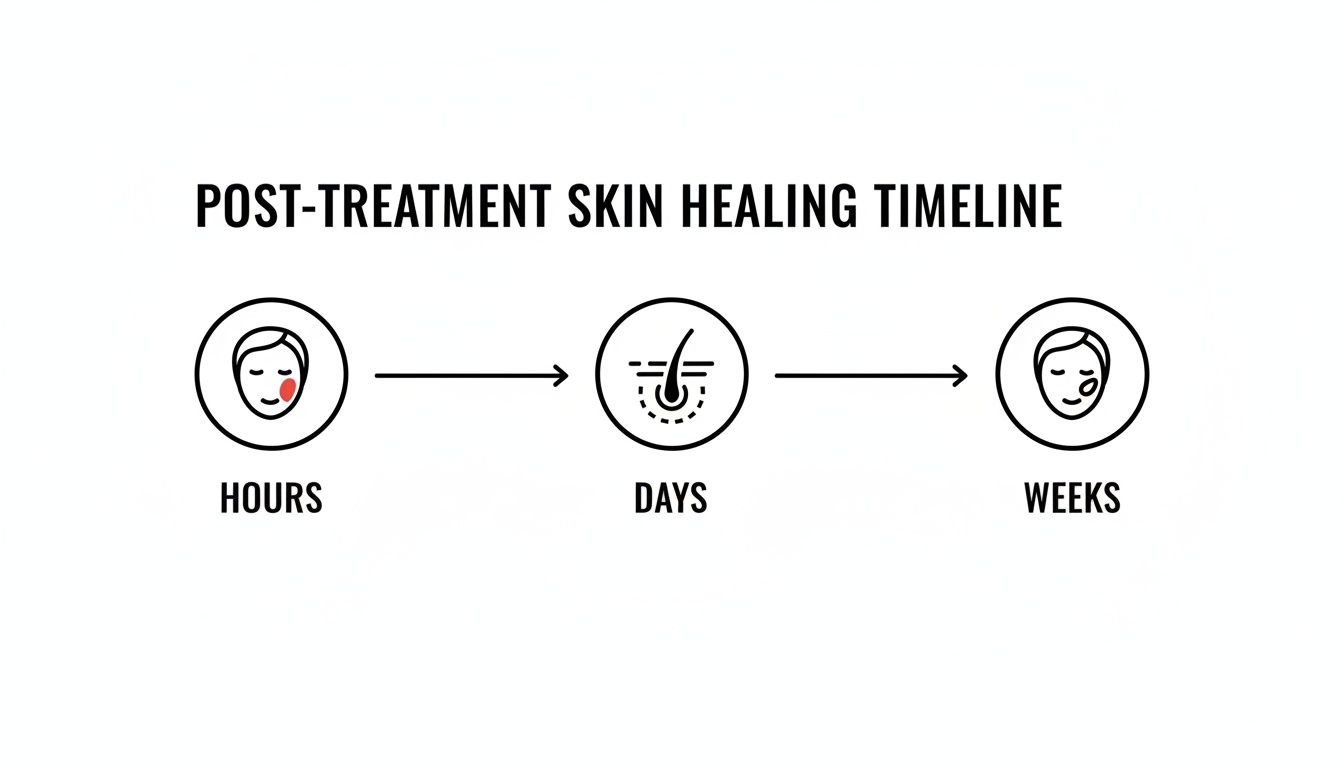
As you can see, the most noticeable reactions are very short-lived. The complete healing and shedding cycle unfolds over the next couple of weeks.
The First Few Hours
Right after your appointment, it’s completely normal for the treated area to look and feel like it has a mild sunburn. This is the peak of the inflammatory response, where you'll see some redness and maybe slight swelling around the individual hair follicles (we call this perifollicular edema).
Don’t worry—this is just your body’s healthy reaction to the laser's thermal energy. Your only job during these first few hours is to keep the skin cool and calm. A cold compress can feel incredibly soothing and helps bring down any warmth or discomfort right away.
The First Two Days
Within 24 to 48 hours, that initial redness and swelling should fade significantly. The area might still feel a bit sensitive, almost like a sunburn that’s just starting to heal. This is a critical window for gentle care.
During this period, you’ll want to avoid anything that could add extra heat or irritate the skin. That means no hot showers, saunas, intense workouts, or tight, restrictive clothing. Stick to lukewarm water and loose, breathable fabrics to give your skin the space it needs to recover peacefully.
Pro Tip: Applying a thin layer of pure aloe vera gel can work wonders during these first two days. Its natural cooling and anti-inflammatory properties are perfect for calming treated skin.
The First Week
Sometime between day five and day fourteen, you'll enter the "shedding" phase. This is probably the most misunderstood part of the process. The treated hairs will start to push their way out of the follicles, and it can sometimes look like new hair is growing.
Rest assured, this is not new growth. It’s the body expelling the hairs that were successfully zapped during your session. You can help the process along by gently exfoliating with a soft washcloth a few times this week, but never, ever force the hairs out by plucking or waxing. For a more detailed look at navigating this stage, check out our guide covering a realistic look at laser hair removal recovery time.
Between Sessions
Once you pass the two-week mark, your skin should be completely back to normal—calm, smooth, and with noticeably less hair. The shedding phase is over, and you'll enter a quiet period before the next growth cycle kicks in.
This is the perfect time to enjoy the initial results of your treatment! The most important thing you can do now is protect your skin from the sun. Consistent use of a broad-spectrum SPF 30 or higher is non-negotiable. It prevents pigmentation issues and ensures your skin is in prime condition for your next appointment.
Aftercare Strategies to Ensure Great Results
Your journey to flawless, smooth skin doesn't end when you leave the treatment room. The next 48 hours are absolutely crucial for minimizing any potential laser hair removal side effects and helping your skin heal perfectly.
Think of aftercare as the final, essential step in your investment—it's your chance to guide your skin toward the best possible outcome. Following a few simple rules will soothe your skin, prevent irritation, and set you up for the fantastic results you're looking for, especially with a powerful system like the Splendor X.
Your Immediate Post-Treatment Checklist
For the first day or two, the name of the game is "less is more." Your focus should be on cooling and calming the skin. The main goals? Reduce heat, avoid friction, and prevent anything that could cause irritation while your skin is at its most sensitive.
Here’s a simple checklist to get you through the first 48 hours:
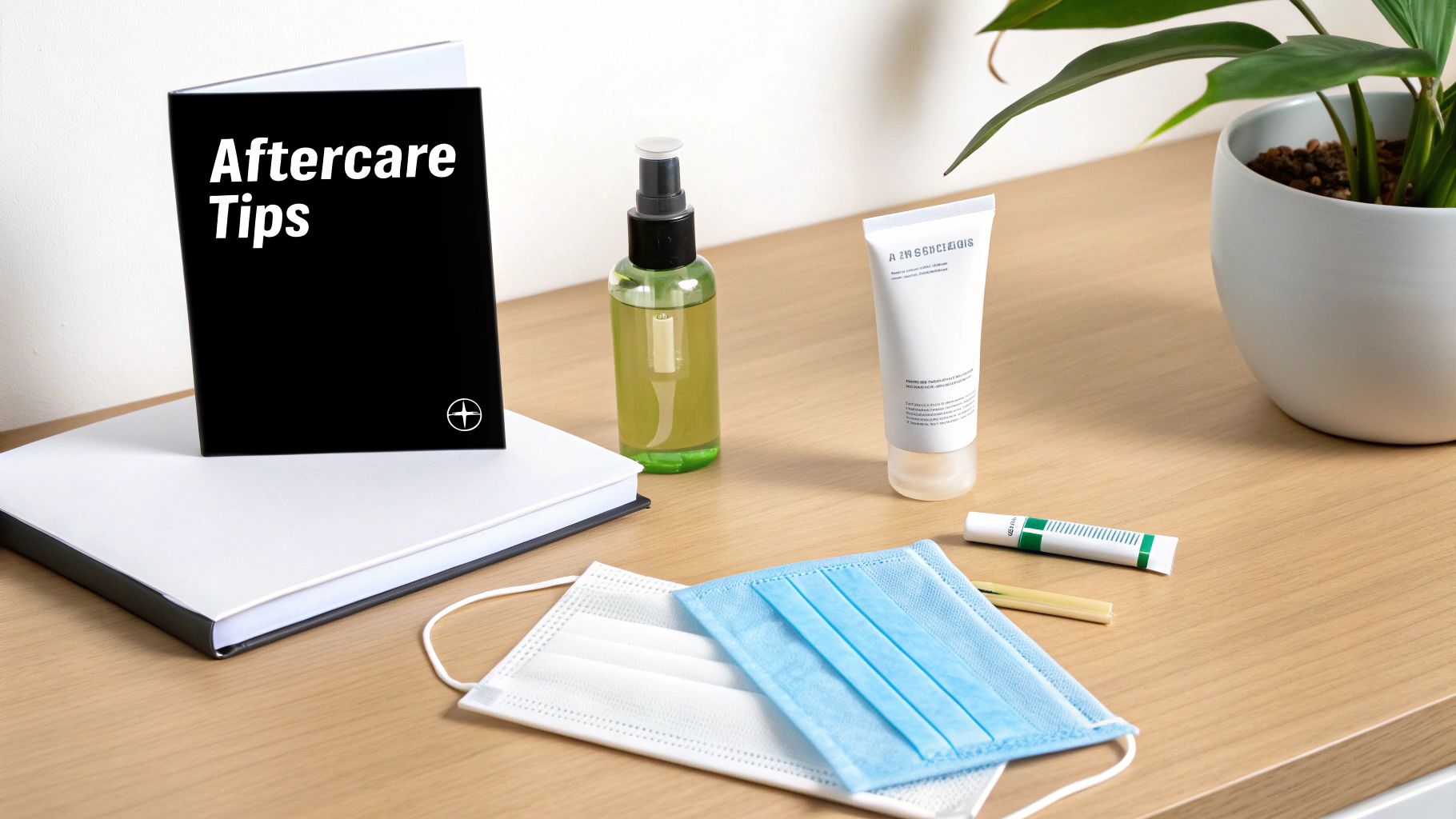
Cool It Down: A cold compress or a clean, cool cloth applied gently to the area is the fastest way to soothe any lingering warmth or redness.
Soothe with Aloe: A thin layer of 100% pure aloe vera gel works wonders. Its natural anti-inflammatory properties bring down redness and offer immediate relief.
Wear Loose Clothing: Ditch any tight, restrictive fabrics that can trap heat and rub against your skin. Opt for soft, breathable materials like cotton to let your skin breathe.
Nailing these simple steps helps your skin's natural healing process along, ensuring a comfortable and speedy recovery. This foundation is just as important as your prep, which you can read all about in our guide on how to prepare for laser hair removal.
What to Avoid for Optimal Healing
Just as important as what you do is what you don't do. For at least 48 hours after your session, you'll need to steer clear of anything that adds excess heat or potential irritants to the treated area.
Key Takeaway: The golden rule of aftercare is to treat your skin like it has a mild sunburn. Anything that would make a sunburn feel worse—like heat, sun, and harsh chemicals—is off-limits for a couple of days.
Here’s a quick list of things to strictly avoid:
Direct Sun Exposure: This is non-negotiable. UV rays can seriously increase the risk of hyperpigmentation (dark spots) on freshly treated skin. Keep the area covered or just stay indoors.
Hot Water and Steam: Skip the hot showers, baths, saunas, and steam rooms. All that heat can make skin irritation worse and keep redness around longer. Stick to lukewarm water.
Strenuous Exercise: Anything that makes you sweat heavily can introduce bacteria into the open follicles, which might lead to bumps or an infection. A casual walk is fine, but save that intense gym session for a few days later.
Harsh Skincare Products: For several days, avoid using exfoliants (like scrubs or acids), retinoids, and any products with alcohol or strong fragrances on the area. Stick to gentle, soothing formulas.
When to Contact a Professional
While most side effects are mild and fade quickly, it’s smart to know the signs that mean you should call your technician or doctor. Knowing what to look for empowers you to take the best care of your skin.
Call your technician or a medical professional if you experience:
Persistent Pain or Blistering: Any signs of burns, like blisters or crusting, are not normal and need immediate attention.
Signs of Infection: Increased swelling, tenderness, pus, or warmth that gets worse instead of better could signal an infection.
Severe or Prolonged Redness: If redness and swelling stick around for more than three days or become much worse, it's best to get it checked out.
Significant Pigment Changes: While minor changes can sometimes happen, any widespread or dramatic lightening or darkening of the skin should be evaluated.
Following these aftercare strategies is the best way to make sure your journey to smooth, hair-free skin is safe, comfortable, and a total success.
How We Prioritize Your Safety at NYCLaser
Understanding potential laser hair removal side effects is one thing. Knowing how to prevent them from happening in the first place is what really matters. We believe the single most important factor in a safe, successful treatment isn’t just the technology—it’s the expertise of the person operating it.
At NYCLaser, minimizing risk isn't an afterthought. It’s the foundation of everything we do.
Our commitment starts with the tools we choose. We exclusively use the Splendor X system, a device known industry-wide for its precision and built-in safety features. Unlike older lasers that rely on a single, one-size-fits-all wavelength, Splendor X blends two. This allows us to create a completely customized treatment for your exact skin tone and hair type, dramatically reducing the risk of side effects like pigmentation changes.
It’s one of the safest, most effective options available for New York’s beautifully diverse skin tones.
A Consultation Focused on You
Before the laser is even turned on, your journey with us begins with a thorough, one-on-one consultation. This isn’t a sales pitch or a formality; it’s a critical risk assessment.
We’ll sit down and talk through your medical history, current medications, and skin concerns to make sure there are no red flags. Then, we perform a patch test. By treating a small, discreet patch of skin, we can see exactly how it responds and fine-tune the Splendor X settings just for you. It’s our way of taking all the guesswork out of the equation to find that perfect balance between powerful results and gentle care.
We believe that a safe procedure is a successful one. Our meticulous process, from the initial consultation to your final session, is designed to deliver smooth, hair-free skin without compromising your well-being.
Expertise for Every Skin Tone
Our team is made up of highly trained and certified technicians who have years of hands-on experience treating every skin tone, from the fairest to the deepest. We understand the nuances of how laser energy interacts with different levels of melanin in the skin—specialized knowledge that is absolutely vital for preventing side effects.
By combining this deep expertise with the advanced capabilities of the Splendor X, we create a safety-first environment where you can feel confident and secure. We don't just perform a service; we partner with you to achieve your goals in the safest way possible. Your peace of mind is our highest priority.
Your Questions, Answered
Even after getting the full rundown, it’s normal to have a few specific questions pop up. Let’s tackle the most common ones we hear at the clinic so you can feel completely confident and ready for your treatment.
Does It Hurt More on Certain Body Parts?
Yes, you’ll definitely notice that some spots are more sensitive than others. It really comes down to anatomy—areas with thinner skin and more nerve endings, like the upper lip, bikini line, or underarms, tend to feel a bit more intense.
Most clients describe the sensation as a quick snap, like a rubber band against the skin. But here’s the good news: each laser pulse is over in less than a second. Plus, advanced cooling technology, like the system built right into our Splendor X machine, makes the whole experience far more comfortable than you might expect.
Do Side Effects Get Worse with Each Session?
That's a fantastic question, and happily, it’s the exact opposite of what most people think. In reality, side effects typically become less noticeable with each visit.
Here’s the logic behind it:
Fewer Hairs to Treat: Every session successfully reduces the number of active hair follicles. With fewer targets for the laser, there’s less energy being absorbed by the skin, which means a much milder reaction.
Finer, Lighter Regrowth: The hair that does grow back between appointments is usually thinner and weaker. Treating this finer hair requires less energy, further minimizing any potential for irritation.
Your Skin Gets Used to It: Over time, your skin simply acclimates to the process. You’ll also become more familiar with the sensation and know exactly what to expect during the healing phase.
So, while your first appointment might bring on the most noticeable redness, you can look forward to an easier and easier experience as you move through your treatment plan.
Expert Insight: Think of the first couple of sessions as doing the heavy lifting. They’re targeting the thickest, densest hair. As we clear that out, the follow-up appointments become progressively quicker and more comfortable because there’s simply less work for the laser to do.
Are Side Effects Different for Darker Skin Tones?
Yes, the risk profile changes with skin tone, which is why having the right technology is non-negotiable. With older lasers, the main challenge was their inability to clearly distinguish the melanin (pigment) in a hair follicle from the melanin in the surrounding skin. This could put clients with darker skin at a higher risk for pigmentation issues like dark spots (hyperpigmentation) or light spots (hypopigmentation).
This is exactly where modern technology like the Splendor X makes all the difference. It’s a game-changer. By blending two laser wavelengths (Alexandrite and Nd:YAG), we can customize the treatment for your exact skin and hair type with incredible precision.
The Nd:YAG wavelength is the key here—it’s significantly safer for darker skin because it bypasses the pigment in the top layer of your skin and zeroes in directly on the hair root. This capability dramatically minimizes the risk, ensuring the energy goes only where it’s needed while leaving your beautiful skin unharmed.
Ready to see what the safest, most effective laser technology can do for you? At NYCLaser, we pair our deep expertise with the advanced Splendor X to deliver the smooth, lasting results you deserve. Book your consultation today and let's get started.
Comments