
A Realistic Look at Laser Hair Removal Recovery Time
For most people, the recovery after laser hair removal is remarkably quick, with zero actual downtime. You can pretty much head right back to your day. It’s normal to see a little mild redness and sensitivity, kind of like a minor sunburn, but that usually fades within a few hours to a day.
What To Expect Immediately After Your Treatment
So you've just walked out of your laser session. Now what? The good news is, for the vast majority of people, the next few hours are totally uneventful. The whole process works by turning light energy into heat to knock out the hair follicles, and that naturally leaves the skin around them a little sensitive for a bit.
Think of it like a temporary, mild sunburn. Seeing a bit of pink is actually a great sign—it means the treatment worked exactly as it should. This initial sensitivity is really the main event of your recovery, and it passes quickly.
The First 24 Hours
In the hours right after your appointment, you’ll probably notice:
Mild Redness: The treated area might look a little pink or flushed.
Minor Swelling: Some people get slight puffiness right around the individual hair follicles. We call this perifollicular edema, and it's perfectly normal.
A Warm Sensation: Your skin might feel warm to the touch, which really drives home that sunburn comparison.
These are just your body's natural reactions to the laser's heat. They're temporary and usually start to calm down within just a few hours.
The entire laser hair removal process is designed for minimal recovery. We’re using targeted heat to disable the hair follicle, and the temporary redness you see is simply proof that we hit the target.
Most clients feel perfectly comfortable returning to their daily routine right away. In fact, the American Academy of Dermatology confirms that there's generally no real downtime needed after treatment, making it easy to fit into a busy schedule. You can read more of their insights on post-treatment care at the American Academy of Dermatology Association.
To give you a quick cheat sheet, here’s what the first couple of days look like.
Your Immediate Recovery Timeline: The First 48 Hours
Timeframe | Common Sensations And Appearance | Recommended Action |
|---|---|---|
0–4 Hours | Skin feels warm, looks pink/red, and may have small bumps around follicles. | Apply a cool compress. Wear loose, soft clothing. Avoid picking or scratching. |
4–24 Hours | Redness begins to fade significantly. The warm feeling subsides. | Stick to lukewarm showers. Avoid saunas, hot tubs, and intense exercise. |
24–48 Hours | Most redness and sensitivity are gone. Skin looks and feels close to normal. | You can resume workouts and normal activities. Continue to moisturize the area. |
Managing this initial phase is simple. A cool compress can feel amazing on any lingering warmth, and wearing loose, soft clothes over the area prevents any annoying friction. As you can see, the immediate recovery is less about healing and more about just letting minor irritation settle down.
For a deeper dive, check out our complete guide on what to expect from laser hair removal for beginners. By the next day, most people find their skin looks and feels almost entirely back to normal.
Your Day-By-Day Guide To The First Week
Once you’ve cleared the first 48 hours, your skin should start feeling much more like itself. That initial sunburn-like sensation and most of the redness will have faded, signaling the end of the immediate reaction phase. From here, your focus shifts to gentle care and watching for the first signs of success.
The laser hair removal recovery time during this first week is less about intense healing and more about letting your skin completely settle down. Think of it as a quiet but crucial part of the process. While your skin isn't actively irritated anymore, it’s still a bit more sensitive than usual, so treating it with care is key for amazing long-term results.
Days 1 To 3: The Calm After The Treatment
In the first few days after your session, any lingering pinkness should fully disappear. Your skin will look and feel normal again, with zero discomfort. This isn’t just anecdotal—it’s backed by solid data. Studies consistently show that 95-98% of patients see mild symptoms like redness and swelling completely resolve within 24-48 hours. The downtime truly is minimal.
This timeline breaks down what’s happening in those critical first two days as your skin quickly bounces back.
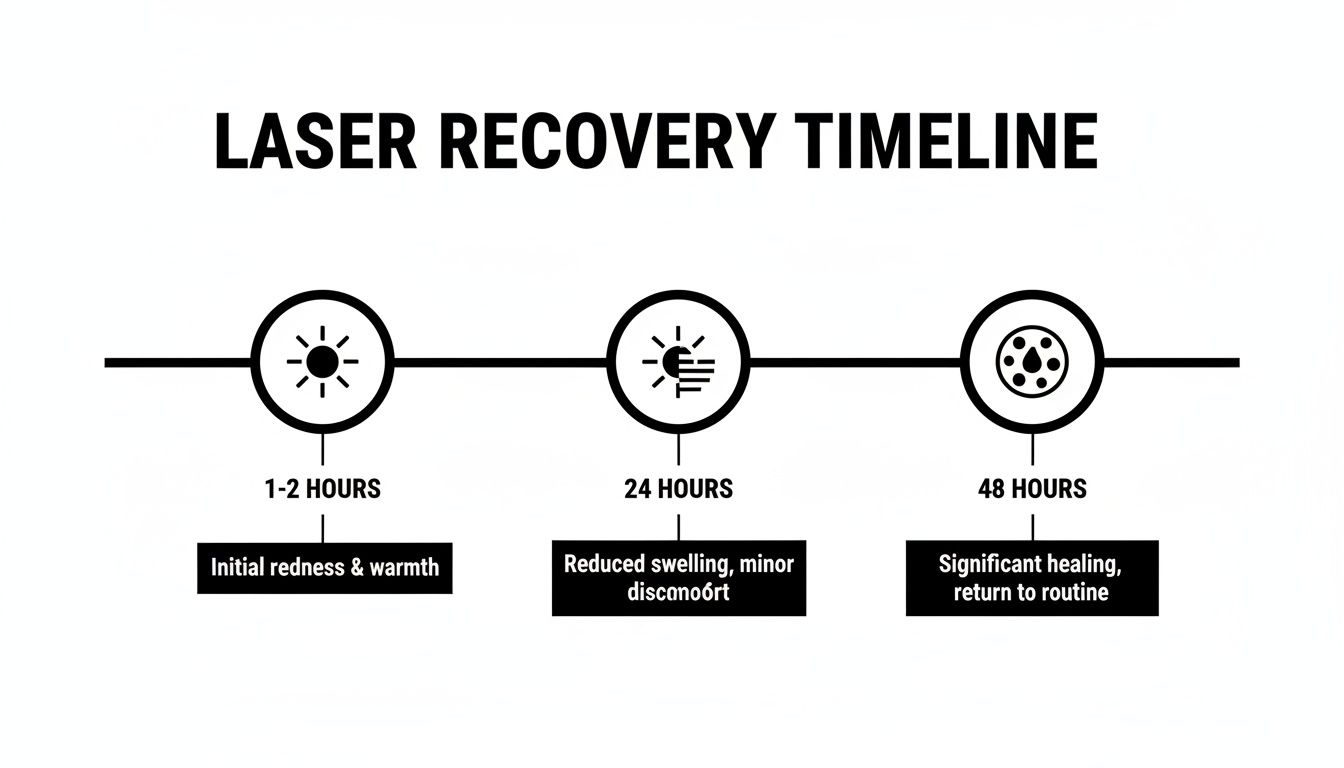
As you can see, the most noticeable effects are concentrated in the first few hours, with your skin making a rapid recovery over the next day or so.
Days 4 To 7: The Beginning Of The Shedding Phase
Toward the end of the first week, you might notice what looks like stubble or new hair popping up. Don’t panic! This is actually the start of the shedding phase. The laser did its job by disabling the hair follicles, and now your body is pushing out the dead hairs.
This is the moment you’ve been waiting for—it's the first real proof that the treatment is working. It’s absolutely essential that you don't pluck, wax, or tweeze these hairs. Just let them fall out on their own.
The "stubble" you see around day 5 to 7 isn't regrowth; it's evidence. Each hair that sheds is a follicle that won't be producing hair anytime soon. This is a key milestone in your journey to smooth skin.
Your aftercare routine this week is simple and consistent. The main goal is just to avoid anything that could irritate the treated skin while it finishes its recovery.
Here are the key things to keep in mind:
Avoid Hot Water: Stick to lukewarm showers and steer clear of hot tubs and saunas. Hot water can agitate sensitive skin.
Postpone Strenuous Workouts: Heavy exercise that makes you sweat a lot can cause irritation. It's best to wait until any sensitivity is completely gone.
Stay Out of the Sun: Your skin is extra vulnerable to UV damage right now. Keep the area covered or be diligent about using a high-SPF, broad-spectrum sunscreen.
Be Gentle: Hold off on harsh scrubs, chemical exfoliants (like glycolic or salicylic acid), and abrasive washcloths for at least a week.
By the end of this first week, your skin should feel completely back to normal. This initial recovery period sets the stage for the next, more visible phase of the process. For a complete look at what to expect over all your sessions, check out our in-depth NYC laser hair removal timeline guide.
Navigating The Hair Shedding Phase
In the weeks after your treatment, your recovery hits its most satisfying stage. This is when you’ll start to see definitive proof that the laser did its job, although it can be a bit confusing at first because it looks a lot like hair growing back.
Spoiler alert: it’s not new growth. It’s actually the opposite—the beginning of the shedding phase. Think of it this way: the laser zapped the follicle, essentially telling it to let go of the hair. Now, over the next one to three weeks, your body methodically pushes those disconnected hairs out to the surface.
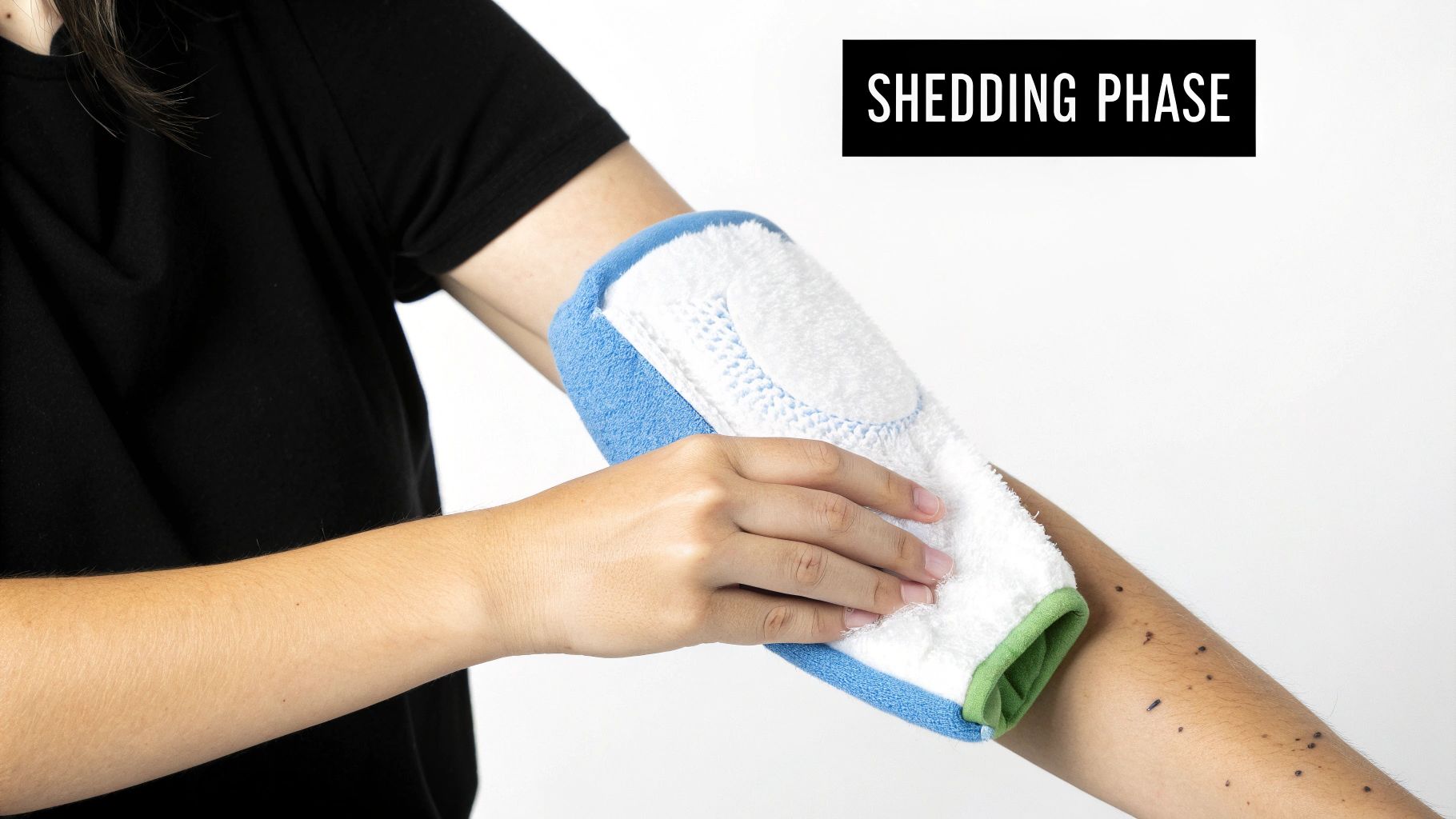
This shedding process is a critical part of your laser hair removal recovery time. It’s the rewarding confirmation that the treatment was successful, so it’s crucial to let it happen naturally.
What The Shedding Phase Looks and Feels Like
As the treated hairs work their way out, you might notice what looks like dark stubble or even little blackheads just under the skin. This is completely normal. The hairs will often fall out on their own, whether in the shower or just from the friction of your clothes.
During this time, you have to resist the urge to tweeze, pluck, or wax the area. Pulling the hairs out by the root can disturb the follicle, which could mess with the results of your next session. Shaving is perfectly fine if you feel the need, but leave the hair root alone.
The shedding phase is the final act for treated hair follicles. Each hair that falls out is a small victory, signaling a follicle that has been successfully disabled by the laser energy. This is not regrowth—it is removal.
This shedding is the most important part of your post-laser recovery. The treated hairs are pushed out naturally over days to weeks, and while it might look like temporary growth, it’s actually the sign of successful follicle disruption. For most people, this entire process is done within 1-3 weeks. You can learn more about the entire laser hair removal process at spamazingaz.com.
Helping The Shedding Process Along
While you should never force the hairs out, you can give the shedding process a gentle nudge once any initial redness or sensitivity has totally disappeared. A week or so after your treatment is usually a good time to start.
Here are a few gentle ways to help things along:
Use a soft washcloth: In the shower, gently rub the treated area in a circular motion with a soft washcloth or an exfoliating mitt.
Try a mild body scrub: A gentle, non-abrasive scrub can also help loosen the shedding hairs. Just be sure to pick one without harsh chemicals or big, scratchy particles.
Exfoliating two to three times a week is plenty to help those hairs on their way. Remember, the goal is to gently assist, not to scrub your skin raw. This simple step helps clear out the "dead" hairs, revealing that super-smooth skin underneath and getting the area prepped for your next session.
So, What Really Affects Your Healing Time?
Ever wonder why your friend’s skin was totally calm an hour after her laser session, while yours stayed a little pink for the rest of the day? Your personal laser hair removal recovery time isn’t a one-size-fits-all deal. A few key factors come together to create a unique healing blueprint for every single person.
Getting a handle on these variables is the best way to set realistic expectations for your own journey. Your body's response is shaped by your natural traits and the specifics of the treatment itself. Knowing what makes your recovery unique helps you prep your skin and care for it afterward.
Your Skin Tone And Hair Type
The single biggest player in your recovery is the contrast between your skin and hair color. Laser hair removal works by sending light energy into the melanin (the pigment) in your hair follicle. The absolute best-case scenario for the laser is light skin with dark, coarse hair because it creates a super clear target.
Dark, Coarse Hair: This hair type is a pro at absorbing the laser’s energy. While that’s fantastic for getting great results, it also means more heat is generated in the follicle, which can sometimes lead to a bit more temporary redness or swelling right after we’re done.
Lighter, Finer Hair: This hair has less pigment, so it needs a more precise laser setting to be effective. The skin's reaction might be less intense, but this type of hair is definitely trickier to treat.
Skin Tone: Darker skin tones naturally have more melanin, which can make it harder for some older lasers to tell the difference between the pigment in the skin and the pigment in the hair. Thankfully, modern tech like the Splendor X is built to be safe and effective for all skin types, pretty much taking this concern off the table.
The Area Being Treated
Let’s be honest—not all skin is the same. The sensitivity and thickness of the skin on different parts of your body make a huge difference in how it reacts and recovers.
For instance, the skin on your face or bikini area is way thinner and more delicate than the tougher skin on your legs or back. You’ll probably notice that these more sensitive spots stay red a little longer or feel more tender for a few hours compared to less reactive zones.
Think of it like this: treating the delicate silk of your upper lip is going to require a gentler touch and might show a reaction more easily than treating the durable denim of your lower legs.
The Technology Used By The Clinic
Finally, the type of laser we use is a total game-changer for both your comfort and your recovery. Older systems could be a bit clumsy, leading to more widespread heat across the skin and a longer period of post-treatment redness.
Here, we use the Splendor X system, which is in a league of its own. It combines two powerful laser wavelengths with a killer cooling system. This setup allows us to send highly targeted energy straight to the follicle while keeping the surrounding skin cool, calm, and protected. That precision means a much more comfortable session and a recovery that’s significantly shorter and milder.
Your Essential Aftercare And Recovery Playbook
Knowing what to expect during your laser hair removal recovery time is only half the battle. The other half is mastering how to care for your skin to protect your investment and get those incredible results you’re after. Aftercare isn’t just about feeling comfortable—it’s about actively helping your skin heal and making the treatment more effective.
Think of your skin post-treatment like a garden bed right after you’ve planted seeds. It's vulnerable. It needs to be kept cool, calm, and protected from anything harsh to let everything take root properly. The same idea applies here. Simple, gentle care is the secret to a fast recovery and flawless results.
This playbook breaks down the absolute must-dos and must-avoids into a simple, no-fuss guide.
The Dos: Simple Steps for a Smooth Recovery
Your mission is simple: keep the treated area cool, calm, and hydrated. This trifecta is key to minimizing any irritation and letting your skin’s natural healing process do its thing without a hitch.
Do apply cool compresses. If your skin feels warm or looks a little pink, a cool cloth or a gel pack wrapped in a towel is your best friend. It offers instant relief and is the perfect first-line defense in the hours right after your session.
Do wear loose, soft clothing. This is not the time for skinny jeans or tight athleisure wear. Friction and trapped heat are the enemies of happy skin. Opt for breathable fabrics like cotton to give your skin room to breathe.
Do use a gentle, fragrance-free moisturizer. Hydration is everything. A simple, soothing lotion helps reinforce your skin’s barrier, keeping it calm and preventing dryness without any risk of a reaction from perfumes or harsh ingredients.
The Don'ts: Things to Avoid Post-Treatment
Knowing what not to do is just as important. Steering clear of certain activities and products is crucial for protecting your vulnerable skin from irritation or damage, ensuring your recovery is completely complication-free.
Protecting your skin from heat and sun exposure after treatment is non-negotiable. Your skin is extra sensitive, and UV rays or high temperatures can easily cause irritation or even hyperpigmentation during this critical healing window.
Here’s a quick list of what to sidestep for at least 48-72 hours:
Don't take hot showers, baths, or visit saunas. Heat will only amplify any redness and sensitivity. Stick to lukewarm water until your skin feels totally back to normal.
Don't expose the area to direct sunlight or tanning beds. Your skin is highly susceptible to burning after a laser treatment. If you have to be outside, be religious about applying a high-SPF, broad-spectrum sunscreen.
Don't use harsh skincare products. Put away the scrubs, chemical exfoliants (like glycolic or salicylic acid), and anything with alcohol or strong fragrances. Wait until every last bit of sensitivity has disappeared.
Don't engage in strenuous exercise. A sweaty, intense workout can introduce bacteria and friction to the treated follicles, which is the last thing you want. Give yourself a day or two off from the gym. Your skin will thank you.
Preparing For Your Next Session And Lasting Results
Your laser hair removal recovery time after a single session is really just one small step in a bigger strategy. Lasting, effortless smoothness isn't an overnight victory; it’s earned through a series of treatments timed perfectly to catch hair when it’s most vulnerable.
Think of your hair as constantly moving through a three-phase cycle: growing, resting, and shedding. Lasers are only really effective during that active growth stage, what we call the anagen phase. The tricky part? At any given moment, only about 20% of your hair is actually in this phase.
This is exactly why sticking to your treatment schedule is everything. Each appointment zaps the current group of actively growing hairs. The recovery period in between isn't just downtime—it's productive waiting, giving the next batch of follicles a chance to wake up and enter the anagen phase, making them the perfect target for your next session.
Setting Realistic Expectations For Permanence
This multi-session approach is specifically designed for permanent hair reduction, not a complete, forever-and-ever wipeout. Once you’ve completed your initial series of treatments, most of our clients enjoy a 70-90% long-term reduction in hair. That's a huge win.
Every now and then, big life changes like hormonal shifts (think pregnancy or menopause) can awaken a few dormant follicles. This just means a quick touch-up session, maybe once a year, might be needed to keep things flawless.
Think of your laser hair removal journey less like a one-time fix and more like a long-term investment. Each session builds on the last, systematically thinning out the hair until you hit that smooth, carefree goal.
The key is to follow the schedule your technician lays out for you. Spacing your appointments correctly is what allows the laser to methodically treat new hair as it cycles into the growth phase.
If you’re curious about what your specific timeline might look like, our guide on how many laser hair removal sessions you will actually need dives much deeper into the details. Once you understand the process, you can see each recovery period for what it is: another successful step toward your final, smooth result.
Common Questions About Laser Hair Removal Recovery
Even with a clear timeline, it’s completely normal to have a few questions pop up as your skin heals. Think of this as your go-to guide for those "is this normal?" moments that can happen after a treatment. We've gathered the most common queries we hear from clients to give you direct, expert answers and peace of mind.
Navigating your recovery is so much simpler when you know exactly what to expect.
When Can I Shave After My Treatment?
You can break out the razor 24 to 48 hours after your session, but only once any redness or sensitivity has totally disappeared. Shaving is the only approved hair removal method between appointments, and for good reason—it leaves the hair follicle root intact, which is exactly what the laser needs to target in your next treatment.
Just remember to be gentle. Use a fresh, sharp razor and a soothing shaving cream to avoid any extra irritation on skin that's still a bit sensitive.
Is It Normal For My Skin To Itch?
Yes, a little bit of mild itching is often part of the process, especially as the treated hairs start to shed. It’s usually just a sign that the follicles are reacting to the laser energy as intended. A cool compress or a simple, fragrance-free moisturizer like aloe vera can provide instant relief.
The most important thing is to avoid scratching. It’s tempting, but scratching can easily lead to irritation or even damage your skin while it's healing.
Can I Exercise After My Session?
It’s best to press pause on the gym for at least 24-48 hours. Heavy exercise heats up your body and makes you sweat, which can seriously irritate the treated hair follicles and even introduce bacteria.
Light activities like a casual walk are perfectly fine, but save that intense spin class or hot yoga session for a couple of days later. This small break helps guarantee a smooth, bump-free recovery.
Ready for effortlessly smooth skin with minimal downtime? The advanced Splendor X technology at NYC Laser Hair Removal makes recovery quicker and more comfortable than ever. Book your session online and start your journey today.
Comments