
Hyperpigmentation From Laser A Guide to Safe and Clear Skin
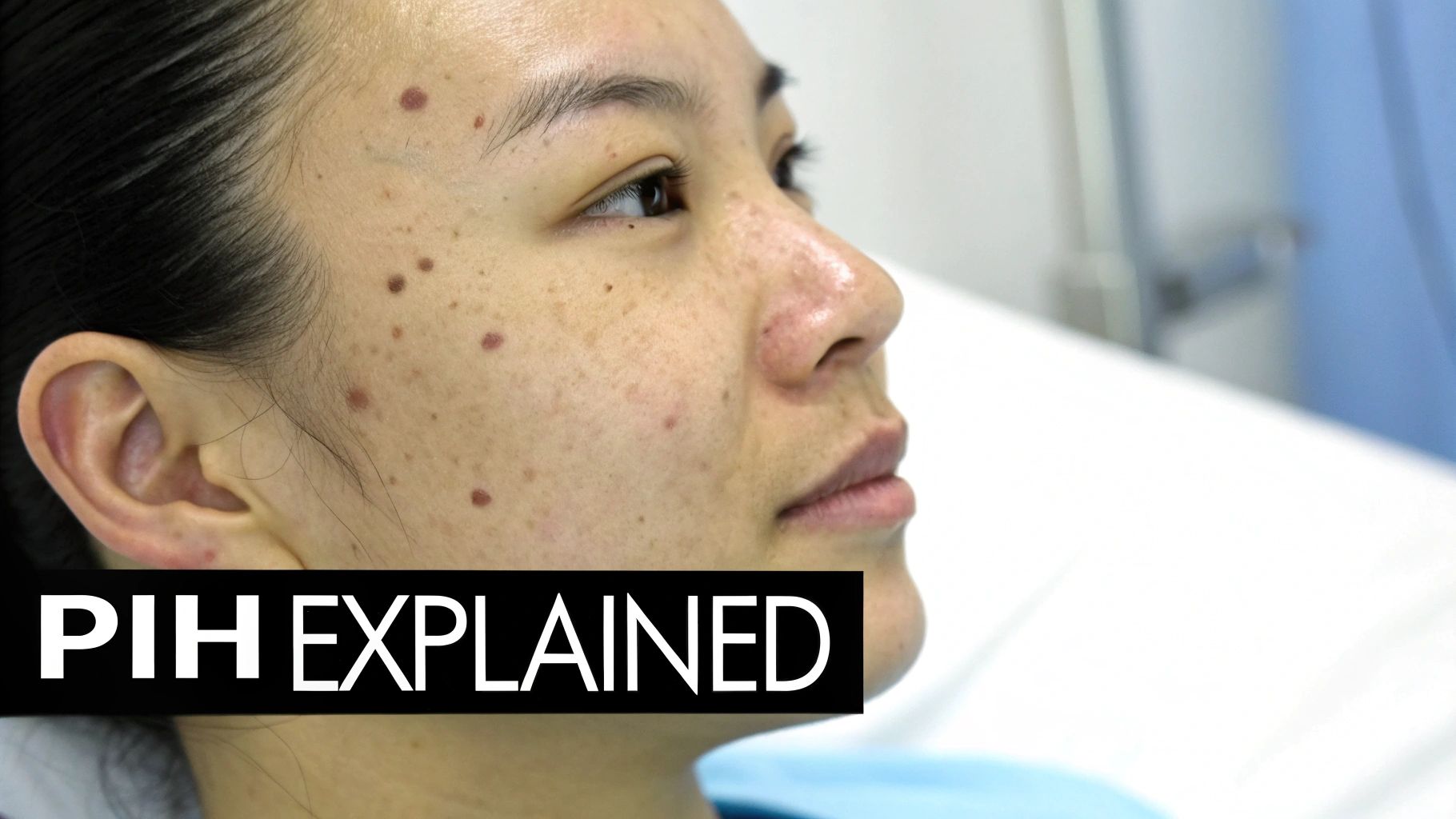
When you see dark spots appear after a laser treatment, it’s natural to worry that something went wrong. But what you’re likely seeing isn’t a burn—it’s a fairly common side effect called Post-Inflammatory Hyperpigmentation (PIH). Think of it as your skin’s defense system getting a little overzealous. Understanding this distinction is the first step to both preventing and treating it effectively.
Defining Hyperpigmentation After Laser Treatment
The term hyperpigmentation from laser sounds alarming, but it’s often a predictable, if frustrating, response to the controlled thermal energy used in treatments like laser hair removal. It’s simply the result of your skin’s inflammatory and healing process kicking into high gear.
Imagine your skin’s healing process as a construction crew. When the laser does its job, the crew is called in to repair the "site." For some people, particularly those with more natural melanin in their skin, the crew boss panics and orders way too much pigment (melanin) to be delivered to the area. This over-delivery is meant to shield the healing skin from further harm, like UV rays, but it results in unwanted dark patches.
Not a Burn, But a Protective Overreaction
It’s critical to know the difference between PIH and a laser burn. A burn is immediate tissue damage from too much heat, often showing up as blisters, crusting, or raw skin. PIH, on the other hand, is a delayed reaction. It’s your body’s own defense mechanism working a little too hard.
This overproduction of melanin creates flat spots of discoloration that can be tan, brown, or even a dark grayish color. These spots usually map perfectly to the treated area and can sneak up on you, appearing anywhere from a few days to several weeks after your session.
Post-Inflammatory Hyperpigmentation (PIH) is essentially an over-correction by your skin. It perceives the laser's energy as an 'injury' and responds by building a shield of extra pigment to protect the recovering tissue.
To help you figure out if what you’re experiencing is actually PIH, we’ve broken down its key characteristics in the table below. Knowing what to look for is essential before we dive into the causes, risk factors, and—most importantly—the solutions.
Identifying Laser-Induced Hyperpigmentation
This quick guide summarizes the tell-tale signs of PIH after a laser treatment.
Characteristic | Description |
|---|---|
Appearance | Flat, discolored patches that can range from light tan to dark brown or gray. |
Texture | The skin surface remains smooth; there is no scaling, blistering, or scarring. |
Onset | Typically develops days or weeks after the initial inflammation from the laser has subsided. |
Location | The discoloration is confined to the specific areas where the laser was applied. |
Sensation | The spots are not usually painful, itchy, or irritated once they have formed. |
Once you can confidently identify PIH, you’re in a much better position to understand why it happened and how to get your skin back to its clear, even-toned state.
So, Why Can a Skin-Perfecting Laser Cause Dark Spots?
It sounds completely backward, doesn't it? You go in for a treatment to get clear, smooth skin, and you walk out with discoloration. The truth is, it’s not a flaw in the laser itself but a complex conversation happening between the laser's energy and your skin's unique defense system.
At its core, a laser treatment creates a controlled thermal effect. It sends a highly focused beam of light into the skin to zap a specific target—like the dark pigment in a hair follicle. This creates a tiny, intentional injury, which is exactly what’s needed to signal your body to start its natural repair process.
For most people, that healing goes off without a hitch. But sometimes, the body’s response is a bit… overenthusiastic. The skin's "emergency crew" sends a message to your pigment-producing cells, the melanocytes, telling them to work overtime. Think of melanocytes as tiny ink factories. When they get an inflammatory signal, they start pumping out extra melanin to shield the healing area, leaving behind the dark spots we know as post-inflammatory hyperpigmentation (PIH).
The Dance Between Laser Settings and Your Skin
Whether or not you end up with hyperpigmentation from laser isn't a simple yes or no. It’s an intricate dance between the specific laser settings and your personal skin profile. Several moving parts determine the outcome:
Laser Type: Lasers generally fall into two camps: ablative (which removes the top layer of skin) and non-ablative (which heats the tissue underneath without touching the surface). Ablative lasers are more aggressive and carry a higher risk of triggering that intense inflammatory response that leads to PIH.
Wavelength: The laser's wavelength dictates how deep the energy goes. Longer wavelengths, like the 1064 nm Nd:YAG used in our Splendor X, are a game-changer for darker skin tones. They bypass the melanin near the surface and hit deeper targets, dramatically cutting the risk of a pigment reaction.
Energy and Pulse Duration: This is where a technician's skill really shines. The intensity of the energy and the speed of the pulse are critical. An inexperienced operator might use settings that are too aggressive for your skin, delivering too much heat too quickly. This overwhelms the skin and practically guarantees an inflammatory overreaction.
The irony is that while lasers are a dominant force, making up 48% of all cosmetic treatments worldwide, their potential for causing PIH—which can occur in 20-40% of cases—is a real concern. In the U.S., a 25% jump in laser procedures since 2022 was met with an 18% rise in PIH reports, underscoring just how crucial expert care is.
Think of It Like a Gardener: Imagine your skin is a garden and the laser is a powerful weeding tool. In the hands of an expert gardener (a skilled technician), that tool can precisely target the weeds without disturbing the flowers. But in a novice's hands, that same tool can churn up the soil, causing more weeds (dark spots) to grow back with a vengeance.
Your Body's Unique Blueprint
Ultimately, your genetics and skin type have the final say. Some people’s melanocytes are just naturally more reactive. Individuals with higher Fitzpatrick skin types (III-VI) have more active pigment cells, making them more prone to developing hyperpigmentation after any kind of skin trauma, including a laser treatment.
This is precisely why a one-size-fits-all approach to laser therapy is not just ineffective—it’s dangerous. Every treatment must be meticulously tailored to your skin’s specific needs to minimize these common laser hair removal side effects and deliver the clear, smooth results you came for. An experienced provider understands this delicate balance, ensuring the laser's power is used for renewal, not reaction.
Are You at Risk for Hyperpigmentation?
Knowing your personal risk for hyperpigmentation after a laser treatment is the single best way to prevent it. While the right technology and an experienced technician are your biggest allies, your own skin and recent lifestyle choices are major players in the game. Think of it as a partnership: some factors are genetic, but others are completely in your control.
The most critical factor, by far, is your natural skin tone. To figure this out, professionals use the Fitzpatrick scale—a system that classifies skin types based on how much pigment they have and how they react to the sun. It's essentially a blueprint for how your skin is likely to behave.
The Fitzpatrick Scale and Pigment Reactivity
If you have a deeper skin tone—specifically types III through VI on the Fitzpatrick scale—your pigment-producing cells, called melanocytes, are naturally more active. Their job is to protect your skin, and they are very good at it. Sometimes, a little too good.
For these skin types, any perceived “injury,” even the controlled heat from a laser, can send those melanocytes into overdrive. The result is often post-inflammatory hyperpigmentation (PIH). It isn't a flaw; it's just your skin’s protective instincts kicking into high gear.
This infographic highlights some of the key statistics linking laser treatments to the risk of developing dark spots.
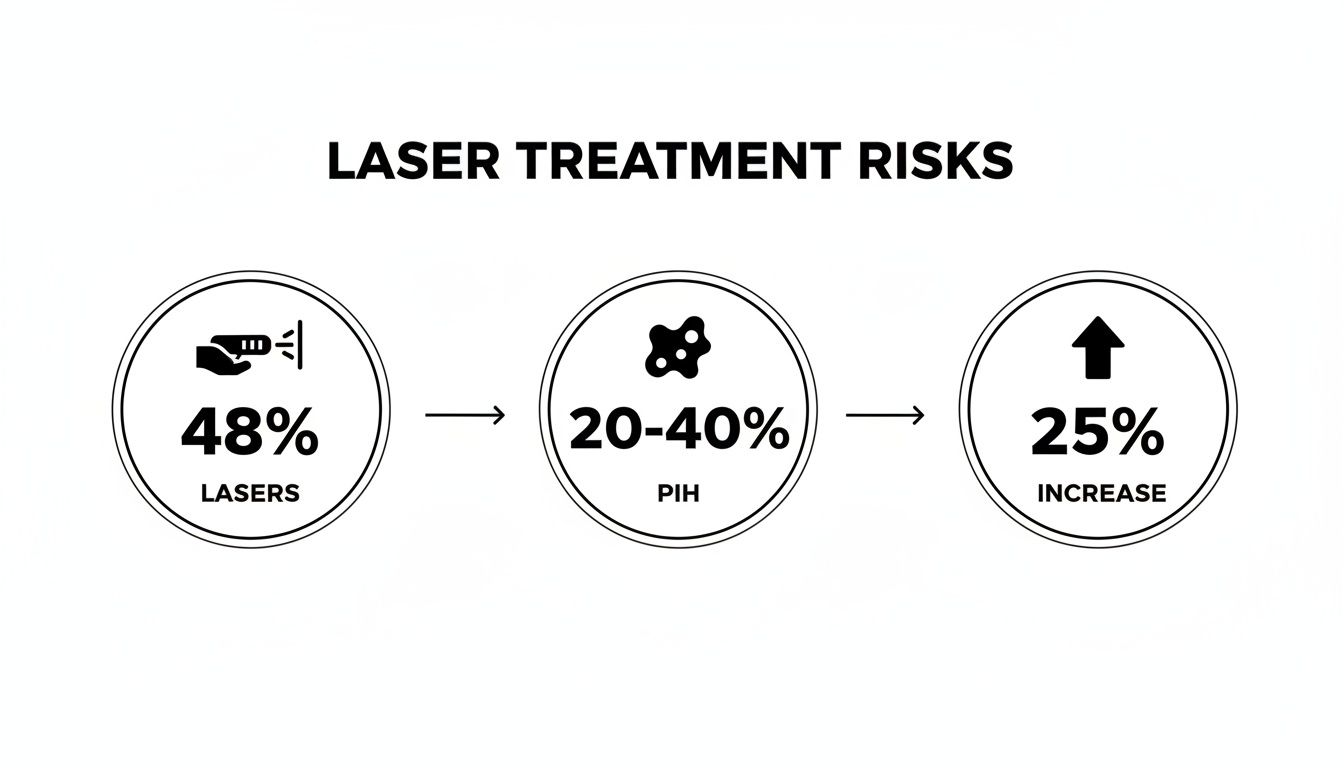
As you can see, even with the best technology, the risk of PIH is a real concern for a huge number of patients. This is exactly why careful screening and expert technique are so important.
The difference in risk between skin tones is significant. In fact, studies show that in Fitzpatrick types V-VI, PIH happens in as many as 47% of people after certain laser treatments. Compare that to just 13% in types I-II. It's this exact challenge that is pushing the North American market, with its incredibly diverse population, to a projected $3.2 billion by 2030 as clinics invest in safer, more inclusive technology.
A Quick Note on Tanning: Getting a tan, whether from the sun or a bed, temporarily bumps your skin into a higher Fitzpatrick category. A tanned Type II skin will act more like a Type III or IV, making it much more reactive and prone to PIH. This is a big deal.
To help you get a better handle on where you stand, we've put together a table breaking down each skin type and its risk level. You can also learn more about how today’s best lasers are built to handle different skin tones in our guide to the best laser hair removal for dark skin.
The chart below gives you a clear visual of the Fitzpatrick skin types and their corresponding risk for developing PIH after laser treatments.
Fitzpatrick Skin Types and PIH Risk Levels
A comparison of Fitzpatrick skin types and their corresponding risk level for developing Post-Inflammatory Hyperpigmentation (PIH) after laser treatments.
Fitzpatrick Skin Type | Typical Characteristics | PIH Risk Level |
|---|---|---|
Type I | Very fair skin, always burns, never tans. | Very Low |
Type II | Fair skin, usually burns, tans with difficulty. | Low |
Type III | Light to olive skin, sometimes burns, tans gradually. | Moderate |
Type IV | Olive to brown skin, rarely burns, tans easily. | High |
Type V | Dark brown skin, very rarely burns, tans very easily. | Very High |
Type VI | Deeply pigmented dark brown to black skin, never burns. | Very High |
Use this table to start a more informed conversation with your laser provider about your specific needs and how to best protect your skin.
Other Critical Risk Factors To Consider
Beyond your natural skin tone, a few other things can seriously increase your risk of developing hyperpigmentation from laser treatments. Being mindful of these helps you and your technician take the right precautions.
Recent Sun Exposure: This one is a non-negotiable. Sun exposure wakes up your melanocytes and puts them on high alert. Treating tanned skin is one of the top reasons for complications, from PIH to burns.
Photosensitizing Medications: Some medications make your skin extra sensitive to light. Common culprits include certain antibiotics (like tetracyclines), acne meds (like isotretinoin), and even herbal supplements like St. John's Wort. Always disclose your full medication list.
Underlying Skin Conditions: If you already deal with pigment issues like melasma, your risk is much higher. The laser can easily trigger a flare-up of existing pigmentation.
Improper Pre-Treatment Care: Skipping your provider’s instructions—like stopping retinoids or exfoliants before your session—can compromise your skin barrier, leaving it ripe for an inflammatory reaction.
By understanding where you land on the Fitzpatrick scale and keeping these other risk factors in check, you can make smarter, safer choices and ensure your laser treatment gives you the beautiful, even-toned results you’re looking for.
How to Prevent Dark Spots Before and After Laser
When it comes to hyperpigmentation from laser treatments, an ounce of prevention is truly worth a pound of cure. It’s far easier to sidestep dark spots altogether than to treat them after they’ve appeared. Think of it like this: your skin is a canvas, and the goal is to prep it so perfectly that the laser can do its job without leaving a single unintended mark.
This requires a real partnership between you and your provider. It’s a combination of expert preparation before you even sit in the chair and diligent aftercare on your part to guarantee a smooth, even-toned result.
The journey to clear, post-laser skin starts long before you feel the first pulse. It begins with choosing the right professional and sticking to a strict pre-treatment protocol designed to keep your skin’s pigment-producing cells calm and happy.
Your Pre-Treatment Playbook
Before your appointment, your main job is getting your skin into a totally calm, non-reactive state. Any good provider will walk you through these steps—they’re non-negotiable for minimizing your risk.
The Consultation is Crucial: Your first step is a detailed chat with an experienced, certified laser technician. This is where they’ll map out your Fitzpatrick skin type, look over your medical history, and ask about any photosensitizing medications you’re taking. Being completely honest here is key to your safety.
Demand a Patch Test: A patch test is a non-negotiable safety check. Period. The technician will treat a small, hidden patch of skin to see how it responds over the next 24 to 48 hours. This tiny test provides priceless information about the perfect laser settings for your skin, preventing a potential widespread issue.
Become a Vampire (Temporarily): Sun exposure is public enemy number one for safe laser treatments. You have to avoid direct sun, tanning beds, and even self-tanners for at least four to six weeks before your session. Tanned skin is essentially inflamed skin, which makes it incredibly prone to a bad pigment reaction.
The Power of Advanced Technology
Choosing a clinic that invests in modern laser technology dramatically lowers your risk profile. Older systems often have a tough time telling the difference between the pigment in your hair and the pigment in your skin, especially with deeper skin tones.
The Splendor X system represents a major leap forward in laser safety. It works by blending two different wavelengths (Alexandrite and Nd:YAG) and features a powerful, integrated cooling system. This combination allows it to safely and effectively treat a much wider range of skin tones while keeping the skin’s surface calm, significantly cutting down the risk of a pigmentary response.
This smart technology lets the laser energy bypass the melanin at the surface and zero in on the hair follicle itself. That’s the secret to preventing post-inflammatory hyperpigmentation.
Your Essential Aftercare Routine
Once the session is over, the focus shifts to healing and protection. Your skin is temporarily vulnerable and needs consistent, gentle care to recover without kicking your pigment cells into overdrive. Follow these steps religiously.
Strict Sun Avoidance: Your skin will be extra sensitive to UV light. Stay out of direct sun for at least two weeks after your treatment. If you have to be outside, cover up with protective clothing and find some shade.
SPF is Your Best Friend: Lather on a broad-spectrum sunscreen with an SPF of 30 or higher every single day, rain or shine. This is the most important thing you can do to stop dark spots from forming or getting worse.
Keep It Calm and Cool: For the first 48 hours, skip the hot showers, saunas, steam rooms, and intense workouts. Heat can ramp up inflammation and irritate the treated skin.
Gentle Skincare Only: Stick to a mild, fragrance-free cleanser and a simple, soothing moisturizer. Ditch any harsh exfoliants, retinoids, or acids for at least a week, or until your provider gives you the okay. For more tips on handling sensitive skin after a session, check out our guide to laser hair removal for sensitive skin.
By sticking to this playbook, you take control of your treatment outcome and create the best possible conditions for achieving the clear, smooth skin you’re after.
Treating Hyperpigmentation Caused by Lasers
Finding unexpected dark spots after a laser treatment can feel incredibly frustrating, but take a deep breath. There’s a clear and effective roadmap to get your skin back on track. Dealing with hyperpigmentation from laser isn't about just waiting it out; it requires a smart strategy that combines at-home care with professional treatments to restore your skin's even tone.
The journey almost always starts with a targeted topical regimen. Think of these products as your daily restoration crew, working consistently behind the scenes to break down that excess pigment and coax healthy, new skin cells to the surface. It's a gradual process, but consistency is your best friend here.
Effective At-Home Topical Treatments
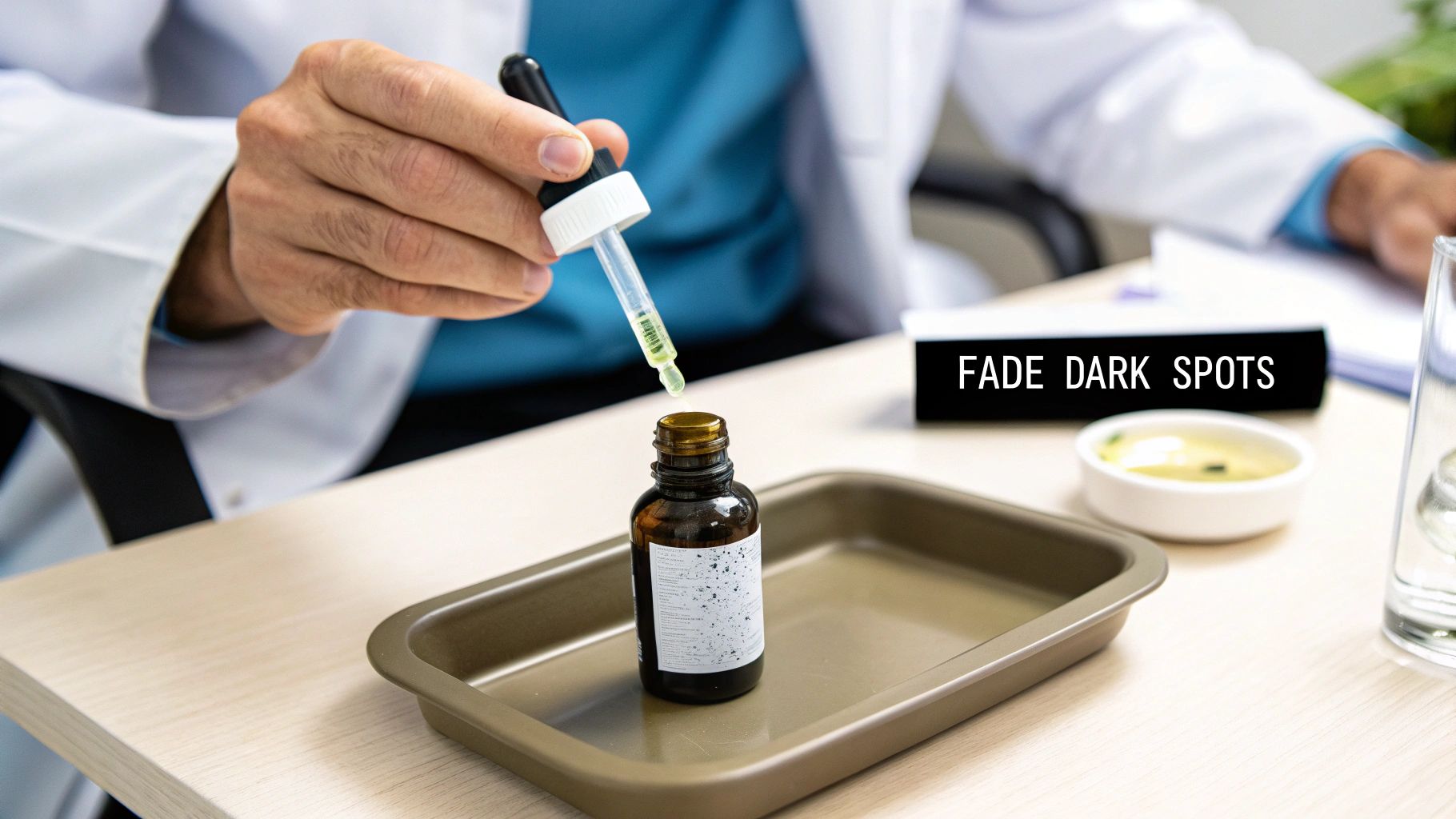
Your own bathroom counter can be your first line of defense. Several powerhouse ingredients have been proven to gently—but effectively—fade post-inflammatory hyperpigmentation. Weaving these into your daily routine can make a world of difference over time.
Retinoids: These are the undisputed champions of skin cell turnover. As vitamin A derivatives (like retinol or the prescription-strength tretinoin), they hit the fast-forward button on your skin’s exfoliation process, pushing those pigmented cells up and out so they can be shed away.
Azelaic Acid: A much gentler hero, azelaic acid works by putting the brakes on an enzyme called tyrosinase—the key ingredient for melanin production. It essentially tells your overactive pigment factories to calm down.
Vitamin C: This isn't just for brightening. As a powerful antioxidant, Vitamin C fades existing spots while also acting as a shield against environmental damage that can make pigmentation worse.
Hydroquinone: Often available by prescription, this is a potent skin-lightening agent that directly decreases the number of melanocytes (your pigment-producing cells). It’s incredibly effective but demands medical supervision due to its strength.
While lasers are fantastic for managing hyperpigmentation, they also carry a known risk of causing it, especially in deeper skin tones. In fact, studies show that Fitzpatrick skin types IV-VI can see PIH rates as high as 40-50% after certain laser procedures. To get ahead of this, top-tier clinics often prescribe pre-treatment protocols with topical hydroquinone for two to four weeks and always perform test spots. This simple step can slash PIH risks by 25-30%. To see where the market is headed, you can explore the latest research on hyperpigmentation treatment.
Key Takeaway: Consistency is everything. Topical treatments are a marathon, not a sprint. It often takes several months of dedicated daily use, paired with non-negotiable sun protection, to see real, lasting improvement.
Professional In-Office Solutions
When your at-home routine isn't cutting it or you're looking to speed things up, professional treatments offer more powerful, targeted solutions. These should only ever be done by a board-certified dermatologist or a highly experienced aesthetician who can correctly diagnose your specific type of pigmentation.
Chemical PeelsUsing acids like glycolic, salicylic, or trichloroacetic acid (TCA), chemical peels lift away the outermost layers of the skin. Think of it as a controlled, accelerated exfoliation. This process removes pigmented cells far more rapidly than topical products can, revealing the fresher, more even-toned skin hiding just beneath the surface.
Corrective Laser and Light TherapiesIt might sound strange, but yes—the solution to hyperpigmentation caused by one laser can sometimes be another, different laser. The key is that these are highly specialized devices engineered to zero in on pigment without generating the kind of excessive heat that triggers more inflammation in the first place.
Picosecond Lasers (Pico): These advanced lasers deliver incredibly short, powerful bursts of energy that literally shatter pigment particles into microscopic, dust-like fragments. From there, your body’s own lymphatic system can easily flush them away.
Low-Fluence Q-Switched Lasers: Often called "laser toning," this technique uses very low energy levels to gently break down pigment over a series of sessions. It’s a go-to method for treating deeper pigmentation and is considered a much safer option for darker skin tones.
Navigating treatment for laser-induced hyperpigmentation requires patience. But with the right combination of diligent at-home care and expert professional guidance, you can absolutely fade the discoloration and bring back your skin’s natural radiance. The path to clearer skin is well-defined and completely achievable.
Common Questions About Laser Hyperpigmentation
Even with all the science, it's natural to have a few lingering questions about hyperpigmentation from laser treatments. Let's get straight to the most common concerns so you can move forward with total confidence.
Is Hyperpigmentation From Laser Permanent?
This is the big one, and I can set your mind at ease: in the vast majority of cases, post-inflammatory hyperpigmentation (PIH) is not permanent.
Think of it less like a permanent tattoo and more like a stubborn stain on your skin. Those dark spots are just clusters of extra pigment that have settled in your skin's layers.
As your skin naturally renews itself, those pigmented cells get pushed to the surface and eventually slough off. While the timeline can range from a few months to over a year, it almost always fades. The single most important factor? Your aftercare. Diligent, consistent sun protection is non-negotiable, as even a little UV exposure can darken the spots and set your progress back.
How Long Does It Take for PIH to Go Away?
There's no one-size-fits-all answer here, as the timeline for fading is unique to your skin. It all comes down to your skin's natural cell turnover rate, which slows down as we age.
For milder, more superficial spots where the pigment is close to the surface, you could see a big improvement within 3 to 6 months. Patience is key.
However, if the pigmentation is deeper or if you have a darker skin tone (Fitzpatrick types IV-VI), the road can be longer. In these situations, it might take 6 to 18 months—and sometimes longer—for the discoloration to fade on its own.
Key Takeaway: You're not just waiting around. A strategic skincare routine can seriously speed things up. Consistently using products with ingredients like retinoids, azelaic acid, or vitamin C, paired with strict sun protection, puts you in control of your recovery.
Can I Get Another Laser Treatment if I Have PIH?
This is a delicate question that absolutely requires an expert opinion from a board-certified dermatologist. Hitting inflamed, reactive skin with more of the same laser energy is a surefire way to make the problem worse. The golden rule is to hold off on any more conventional laser treatments in that area until the skin has completely healed and the PIH has faded significantly.
But there's an important exception. A dermatologist might recommend a completely different type of laser—one specifically designed to break up pigment without generating a lot of heat. These are corrective lasers, not the kind used for hair removal.
A specialist might consider technologies like:
Picosecond Lasers: These deliver incredibly short energy bursts that shatter pigment particles without much heat, minimizing the risk of causing more inflammation.
Low-Fluence Q-Switched Lasers: Often called "laser toning," this approach uses very low energy to gently break up pigment over a series of sessions. It’s a much safer bet for reactive skin.
Ultimately, this call must be made by a medical expert who can properly assess your skin. Never, ever proceed with another laser session at a medspa if you have active PIH without getting a dermatologist's green light first.
How Do I Find a Safe Laser Provider?
Choosing the right provider is your number one defense against complications like hyperpigmentation. You need an expert who truly understands the physics of lasers and the biology of your specific skin tone. Rushing this decision is not worth the risk.
Finding a pro you can trust takes a little homework, but the peace of mind is invaluable.
Your Checklist for a Safe Provider:
Check Credentials: Start your search with board-certified dermatologists or plastic surgeons who specialize in cosmetic laser procedures. For laser hair removal, look for clinics that are medically supervised and staffed with certified, experienced technicians.
Read Real Patient Reviews: Dig deeper than the testimonials on their website. Check out third-party review sites and look for feedback from patients with a skin type and concerns similar to yours.
Ask Questions at the Consultation: A great provider will welcome your questions. Don't be shy. Ask them about their experience with your Fitzpatrick skin type, the laser technology they recommend for you, their safety protocols, and how they handle complications like PIH.
Insist on a Patch Test: A reputable provider will see a patch test as non-negotiable, especially for new clients or anyone with a higher-risk skin tone. It’s the best way to see how your skin will react before committing to a full treatment.
A provider who puts your safety first will be transparent, thorough, and happy to walk you through everything until you feel completely comfortable.
At NYC Laser Hair Removal, your safety and results are our top priorities. Our team of experienced technicians uses the advanced Splendor X system, designed with dual-wavelength technology and built-in cooling to effectively treat a wide range of skin tones while minimizing risks. If you're in the Westbury or Nassau County area, we invite you to book a consultation to discuss a safe and personalized treatment plan.
Comments