
Shaving After Laser Hair Removal: Post-Treatment Tips for Silky Skin
Yes, you can absolutely shave after laser hair removal—in fact, it's the only method we recommend for managing hair between your sessions. Shaving keeps the hair follicle intact right below the skin, giving the laser a perfect target to zap during your next appointment. The real key isn't if you can shave, but when.
The Relationship Between Shaving and Laser Hair Removal
Let's clear up one of the biggest questions we get at NYCLASER: is it really okay to shave after a treatment? Not only is it okay, but it's a vital part of a successful plan.
Unlike waxing or plucking, which yanks the entire hair out from the root, shaving just trims the hair at the skin's surface. That distinction is everything.
For a laser treatment to work, it needs something to target. The advanced Splendor X technology we use sends concentrated light energy straight into the pigment (melanin) within the hair follicle. That energy turns into heat, which damages the follicle and stops it from growing new hair. If the follicle is empty because you've waxed or plucked, the laser has nothing to aim for. The session simply won't be effective for that particular hair.
Why the Hair Growth Cycle Matters
Hair grows in three different phases, but the laser is only effective during one of them: the Anagen, or active growth, phase. In this stage, the hair is firmly attached to the follicle, creating a direct path for the laser's energy to travel down and do its job.
The tricky part? Not all of your hairs are in the Anagen phase at the same time. This is exactly why multiple sessions are necessary to catch every single follicle in its active state. By sticking to shaving only, you ensure that every hair follicle, no matter its growth stage, is present and ready to be treated when its turn comes around.
Key Takeaway: Shaving is your best friend during laser hair removal. It gets rid of surface-level hair without touching the follicle underneath, keeping your treatments on track for the best possible results.
Shaving Is Your Secret Weapon
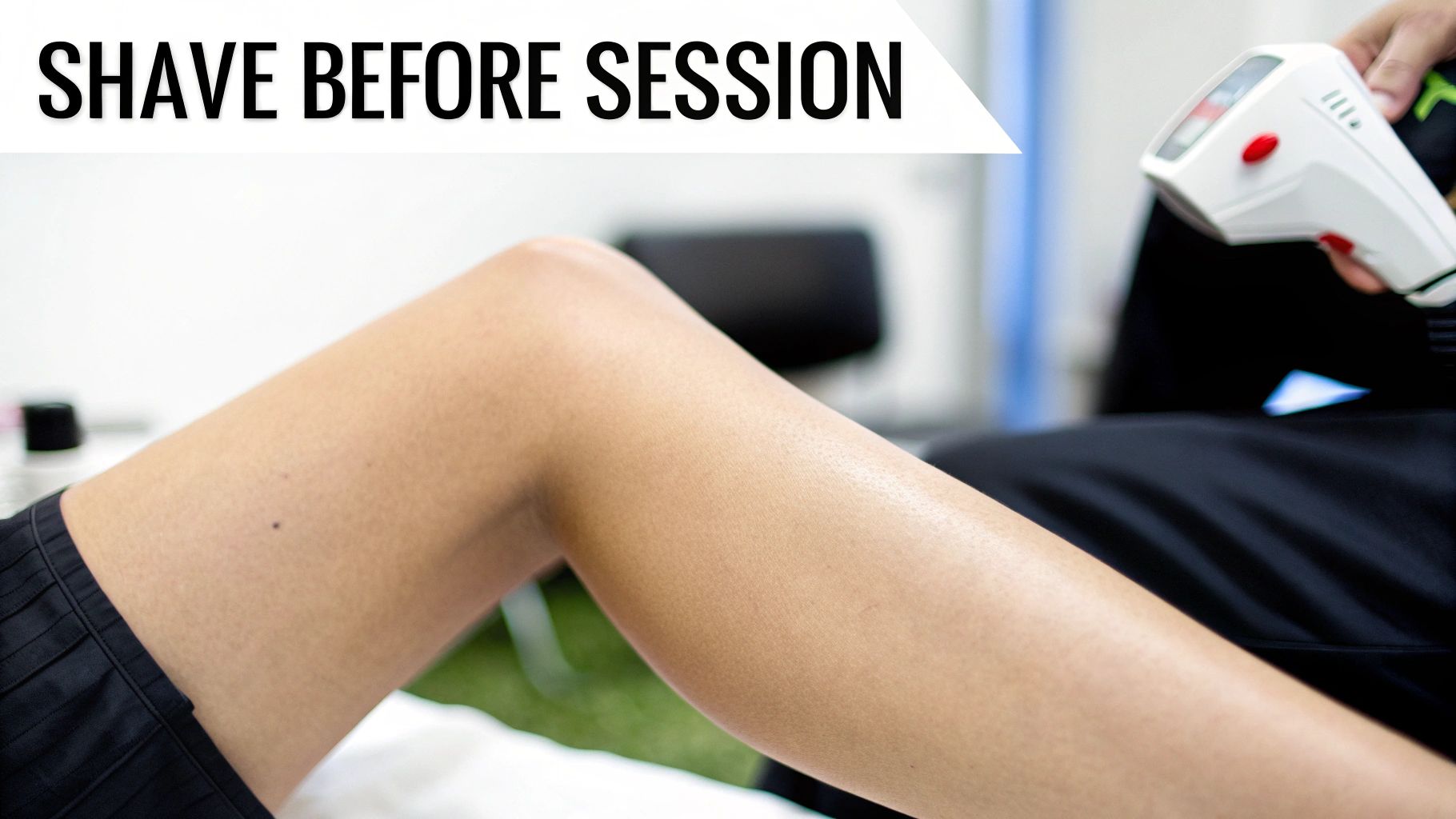
Think of shaving as the prep work for a great session. When you shave about 24 hours before your appointment, you're creating the perfect canvas for the laser. A clean shave clears away any surface hair that could otherwise absorb the laser’s energy before it reaches the follicle, which can cause skin irritation or even burns.
A close shave accomplishes three key things:
Optimal Targeting: All the laser's energy goes directly to the follicle's root where it counts.
Enhanced Safety: It minimizes the risk of surface burns from hair singing on the skin.
Maximum Efficiency: It allows our Splendor X device to work precisely and effectively.
Ultimately, the partnership between strategic shaving and professional laser treatments is what leads to the smooth, long-lasting results you're looking for. It's a simple step, but it's one of the most important parts of the process.
Why Shaving Is Your Only Option Between Laser Sessions
To really get why shaving is the only way to go between laser treatments, you have to understand what the laser is actually doing. It’s not about zapping the hair you can see on the surface. It’s about disabling the factory that produces it—the hair follicle itself.
The laser sends out a super-concentrated beam of light that gets absorbed by the pigment (melanin) in your hair. This light instantly turns into heat, which then travels down the hair shaft to damage the follicle, stopping it from growing new hair. For this whole process to work, the hair has to be physically present in the follicle to act as a conductor for that heat.
This is exactly why other hair removal methods are completely off the table.
The Problem with Plucking and Waxing
When you wax, pluck, or use an epilator, you’re yanking the entire hair out by the root. Sure, it leaves your skin feeling smooth for a little while, but it also removes the very thing the laser needs to target. If the follicle is empty, the laser's energy has nothing to grab onto, making your next treatment on that particular hair totally useless.
You’re basically just hitting the reset button on that follicle's growth cycle. This can seriously delay your results and often means you'll need more sessions than you originally planned for.
Shaving is the only method that preserves the hair follicle. It simply cuts the hair at the skin's surface, leaving the crucial root structure intact and ready for your next laser appointment.
Think of it this way: the hair is the bridge that lets the laser's energy travel down to the follicle. Waxing and plucking completely demolish that bridge. Shaving just trims the grass growing on top, leaving the bridge perfectly functional for your next session.
Maximizing Safety and Effectiveness
Beyond just preserving the follicle, shaving is also a non-negotiable safety step. We always tell our clients to shave the treatment area 24 hours before their appointment. This makes sure there’s no hair sitting above the skin that could absorb the laser’s heat, which can lead to unnecessary skin irritation or even superficial burns.
This one simple step guarantees that 100% of the laser's energy goes exactly where it needs to: deep inside the follicle. The demand for this kind of lasting smooth skin is undeniable. Customer satisfaction for laser hair removal has hit an impressive 92%, a figure that easily beats out traditional methods like waxing (68%) and shaving (54%), as you can explore in more detail when comparing hair removal methods.
Sticking to the right shaving schedule is one of the easiest things you can do to protect your investment and get the smooth, long-lasting skin you’re after. For a deeper dive into how these methods stack up, check out our guide on laser hair removal vs. waxing. It’s a fundamental part of the journey to becoming permanently hair-free.
Your Post-Treatment Shaving Timeline
Knowing exactly when you can pick up the razor again is a huge part of getting the incredible results you want from laser hair removal. While shaving is a key player in this process, your skin absolutely needs a timeout to recover first. Seriously, timing is everything.
Think of the first few hours after your treatment as a dedicated healing phase. We’ve just used focused light energy on your skin, so it’s totally normal for it to feel sensitive—kind of like a mild sunburn. The number one priority is letting it calm down without any friction or stress.
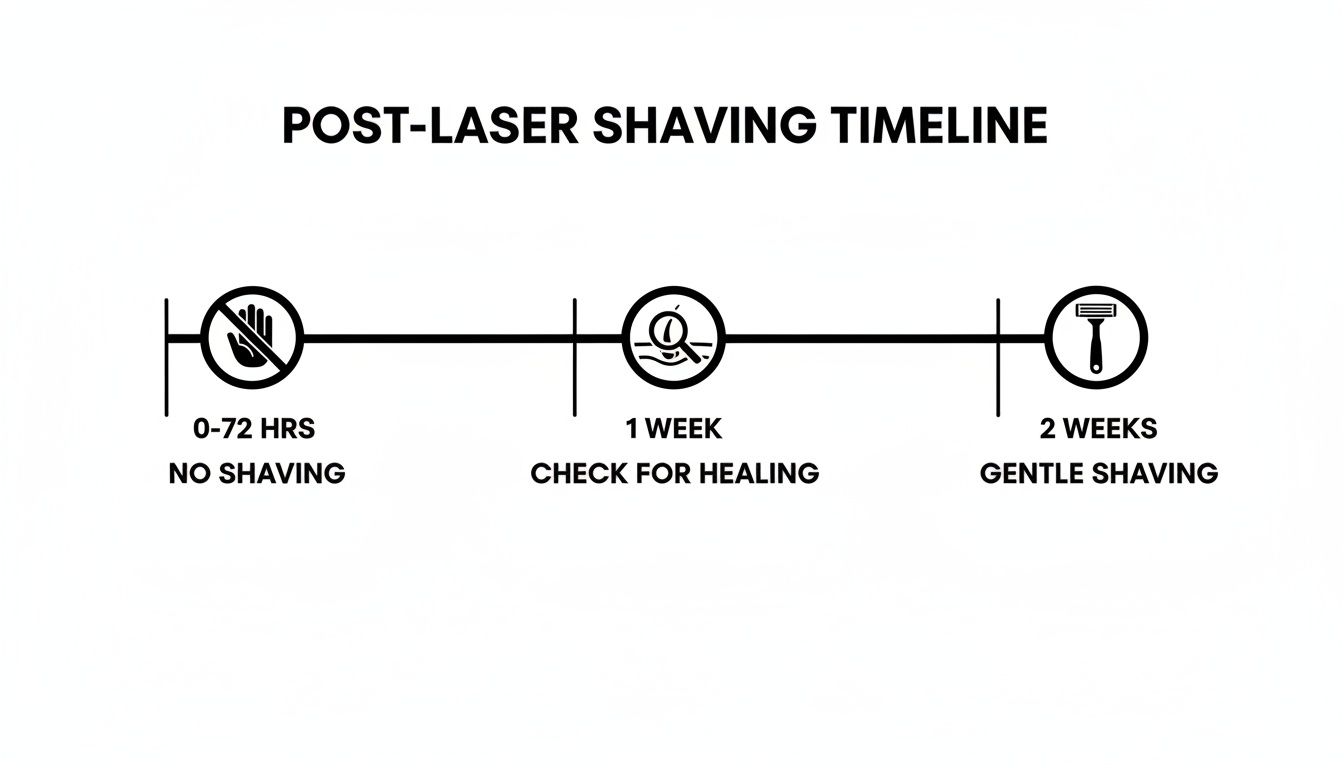
The First 48 to 72 Hours: Hands Off the Razor
Right after you leave the clinic, your skin is at its most sensitive. You’ll probably see some redness and a little bit of swelling around the hair follicles. That’s actually a great sign! It means the treatment hit its mark.
During this crucial 48 to 72-hour window, you need to avoid shaving completely. Taking a razor to freshly treated, tender skin is a recipe for major irritation, razor burn, or even minor infections in those open follicles. Just let your skin breathe and do its thing.
What to Expect During the Shedding Phase
About one to three weeks after your session, you'll hit what we call the "shedding" phase. You might notice what looks like new hair growth or little black pepper-like dots on your skin. Don't panic—this isn't new hair at all. It's the treated, damaged hairs being pushed out of the follicles for good.
This is exactly what we want to see! It’s proof the laser did its job. At this stage, a gentle shave can actually help exfoliate the skin and speed up the shedding, revealing that smoother skin underneath a little faster.
The main takeaway here? Give your skin a few days to recover before you even think about bringing a razor near it.
When You Can Safely Shave Again
Once all the redness, swelling, and sensitivity are completely gone—which is usually after the first 72 hours—you can start thinking about shaving again. We always recommend waiting at least 48 hours, but if your skin still feels a bit delicate, don't rush it. Some people prefer to wait up to a week before resuming their normal routine, and that’s perfectly fine.
When you do shave for that first time post-treatment, be extra gentle:
Use a fresh, sharp razor. A dull blade will only tug at the skin.
Apply a soothing, fragrance-free shaving cream to create a protective barrier.
Shave with the grain of the hair, not against it, to keep irritation to a minimum.
Moisturize immediately after with something gentle and alcohol-free, like an aloe vera gel.
By respecting this timeline, you ensure your skin stays healthy and ready for your next session. Rushing back to shaving can mess with your skin's barrier and get in the way of the amazing results you're working toward.
Understanding these stages is a core part of the journey. For a more detailed look at what to expect session by session, explore our complete NYC laser hair removal timeline. This approach ensures your path to smooth, hair-free skin is as comfortable and effective as possible.
How To Shave Treated Skin Without Causing Irritation
Shaving after your skin has healed from a laser session isn’t quite the same as your old routine. Freshly treated skin is way more sensitive and needs a much gentler approach to sidestep any irritation, nicks, or dreaded razor burn. Getting the technique right is everything when it comes to keeping your skin smooth and healthy between appointments.
The main goal here is to minimize friction and prevent any unnecessary stress on the skin. This isn’t about getting the closest, most aggressive shave possible—it’s about neatly trimming the shedding hair at the surface while protecting the delicate skin underneath. A few simple tweaks can make all the difference.
Pre-Shave Prep Is Key
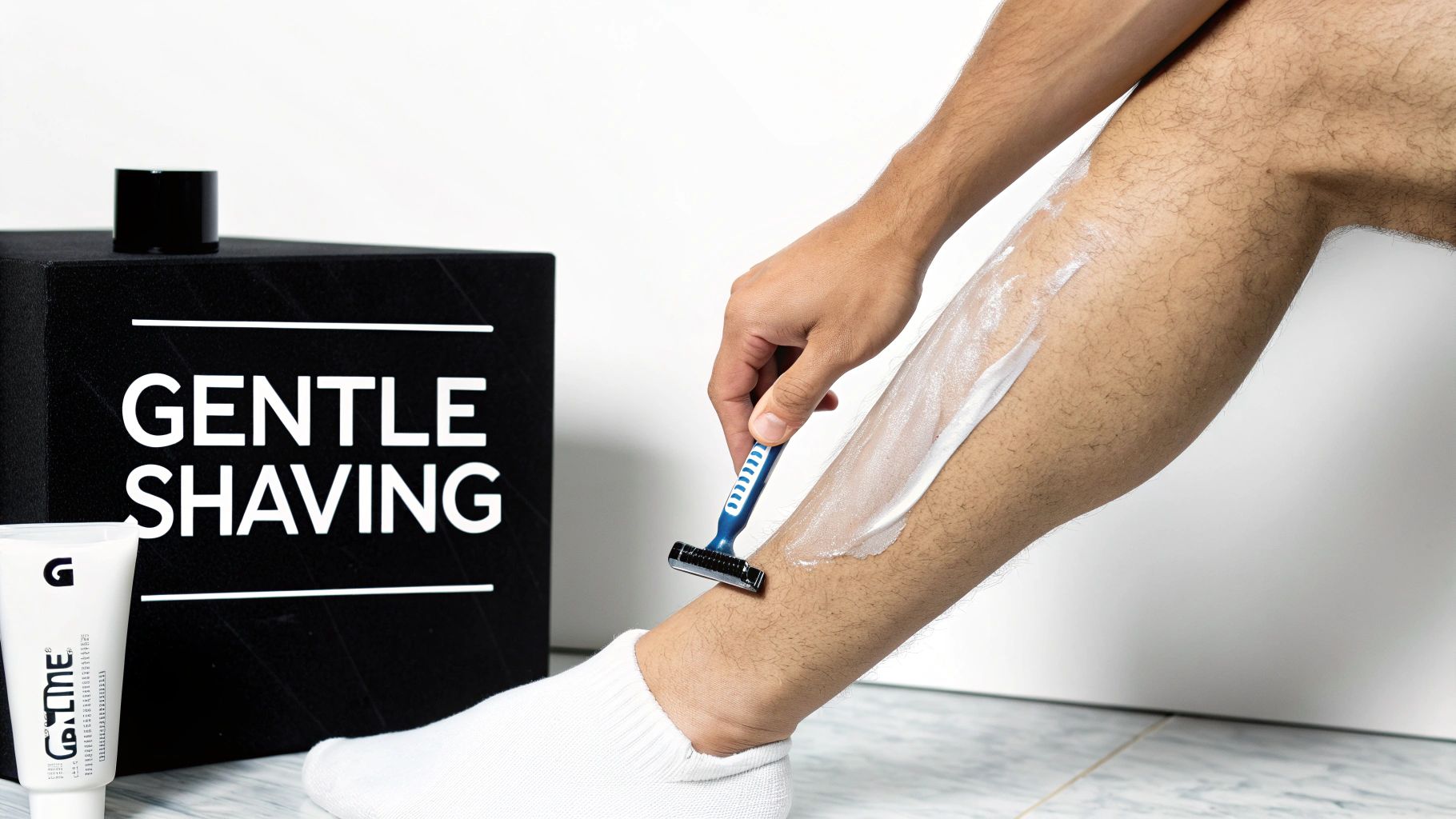
First rule: never, ever dry shave treated skin. Before a razor even thinks about touching your skin, make sure the area is clean and hydrated. Shaving in a warm shower is perfect, as the steam helps soften both the skin and the hair, making it much easier for the blade to glide smoothly.
Slather on a generous layer of a soothing, fragrance-free shaving gel or cream. Look for products with calming ingredients like aloe vera or chamomile. This creates a protective barrier that seriously cuts down the risk of irritation.
The Right Tools And Techniques
The razor you use is just as important as how you use it. A dull, old blade is your worst enemy—it will only drag and pull at the skin, causing redness and bumps.
Always Use a Fresh Blade: A sharp, clean razor gets the job done with less pressure and fewer passes. This one change can dramatically reduce the chances of getting razor burn. A multi-blade razor with a built-in moisturizing strip is a great choice for extra comfort.
Shave With the Grain: While shaving against the grain might feel closer, it’s far too aggressive for post-laser skin. Always shave in the direction your hair grows. This simple switch is one of the most effective ways to prevent redness and ingrown hairs.
No Pressure Necessary: Let the razor do the work. There's absolutely no need to press down hard. Use light, gentle strokes just to trim the hair at the surface. If you feel like you need to go over an area more than once, reapply your shaving gel first.
For those with particularly delicate areas, learning more about the best practices for laser hair removal on sensitive skin can offer even more helpful tips for managing your aftercare routine.
Post-Shave Care for Calm Skin
What you do after you put the razor down is just as crucial for keeping your skin happy and calm. Your post-shave routine should be all about soothing and hydrating.
Rinse the shaved area with cool water, not hot. The cooler temperature helps calm the skin and close up your pores, which can reduce any immediate redness. Gently pat the skin dry with a clean, soft towel—no vigorous rubbing!
Pro Tip: Immediately after drying, apply a generous amount of an alcohol-free, fragrance-free moisturizer. Products packed with aloe vera, ceramides, or hyaluronic acid are excellent choices for locking in moisture and calming any potential irritation.
By following these simple steps, you can make sure shaving supports your journey to silky-smooth skin instead of working against it. This careful approach not only prevents discomfort but also keeps your skin in prime condition for your next effective treatment right here at NYCLASER.
Your Smooth Skin Journey Starts Here
Getting permanently smooth skin is a team effort, and everything we've covered is your roadmap to success. Honestly, understanding the small details—like exactly when and how to shave around your sessions—is what separates good results from truly incredible ones. It’s how you ensure every treatment builds on the last, getting you closer to that hair-free goal.
If there's one thing to take away, it's the importance of proper aftercare, especially your shaving habits. Following the timeline we've laid out and using gentle techniques is your best defense against irritation. It protects your skin and makes sure each laser pulse is as effective as possible. Think of it this way: your commitment at home is the perfect complement to the high-tech work we do in the clinic.
The NYCLASER Difference: Tech and Technique
At NYCLASER, we pair your diligent home care with our own expertise and some of the best technology on the market. Our technicians are seasoned pros who create treatment plans designed specifically for your skin and hair type—no one-size-fits-all approach here.
We use the advanced Splendor X laser system for a reason. Its dual-wavelength design makes it not only powerful but also incredibly safe and effective for every single skin tone, from the very lightest to the very darkest. This is a huge deal. It allows us to deliver precise, powerful energy right to the follicle while an integrated cooling system keeps you comfortable. It’s this combination of expert hands and state-of-the-art equipment that allows us to deliver the lasting, smooth results our clients rave about.
Your success is our success. When you follow the shaving guidelines in this guide, you’re playing an active role in your treatment. You’re prepping the canvas so the Splendor X laser can work its magic on every active follicle, every single time.
Start Your Journey in Nassau County
Ready to finally break the endless cycle of buying razors and booking painful wax appointments? We invite you to take the next step. For anyone in Westbury, Jericho, or the greater Nassau County area, achieving beautifully smooth skin has never been more straightforward. We’re here to answer every last question and design a plan that feels right for you.
Come see us and start your transformation:
Address: 355 Post Avenue, Suite 101, Westbury, NY 11590
Hours: Monday – Saturday, 10 am – 6 pm
Ready to see what it’s all about? Book your complimentary consultation online today and discover the difference that expert care and next-level technology can make.
Your Shaving & Laser Questions, Answered
Even with the clearest instructions, it's totally normal to have questions pop up during your laser hair removal journey. After all, you're making an investment in your skin, and you want to get it right.
We've heard just about every question in the book at our NYC clinic, so we’ve gathered the most common ones right here to give you fast, expert answers. Our goal is to make sure you feel 100% confident in your routine.
What Happens If I Accidentally Wax or Pluck Between Sessions?
It happens! But it's important to know why we advise against it. When you wax or pluck, you're pulling the entire hair follicle out from the root. The laser needs that root as a target to effectively destroy the follicle. No root, no result.
If you do have a slip-up, just let your specialist know before your next appointment. We'll need to skip treating that specific spot until the hair has had enough time to grow back and reconnect to the follicle. It’s not the end of the world, but it can delay your overall timeline.
The Bottom Line: A single mistake won't derail your entire treatment plan, but making a habit of waxing or plucking will definitely slow down your progress. Stick to shaving to keep things on track.
Is an Electric Razor Okay to Use After a Treatment?
Absolutely. In fact, for clients with extra sensitive skin, an electric razor can be a fantastic option. They don't cut the hair quite as close to the skin as a traditional blade, which means less friction and a lower chance of irritation.
This makes them a great, gentle choice for that first shave after your skin has had a few days to calm down. Just be sure the razor is thoroughly cleaned before each use to keep the area free of bacteria while it's healing.
Will Shaving Make My Hair Grow Back Thicker?
This is easily the biggest myth in the world of hair removal, and we’re happy to bust it: shaving does not make hair grow back thicker, darker, or faster.
Shaving simply cuts the hair at the surface, creating a blunt tip. That blunt edge can feel a bit coarse or stubbly as it grows out, which is what tricks people into thinking the hair itself has changed. It hasn't. The laser is what will actually change the hair, making whatever grows back much finer, lighter, and way more sparse.
How Soon Before My Next Appointment Should I Shave?
This is a critical step for getting the best, safest results. We ask every client to shave the treatment area 24 hours before their scheduled session.
This timing isn't random—it's strategic:
Safety First: Shaving removes hair from the surface of the skin. This prevents the laser from singeing the surface hair, which could cause burns or irritation.
Maximum Impact: A clean shave allows the laser's energy to travel directly to the follicle beneath the skin without any interference. Every bit of energy goes right where it needs to.
Skin Recovery: Shaving a full day ahead gives your skin time to calm down from any minor razor irritation before the laser treatment begins.
Following this simple rule is one of the easiest and most important things you can do to prepare for a successful session.
At NYCLASER, we're here to guide you through every single step of your journey to smooth skin. Ready to see the difference for yourself? Book your complimentary consultation today.
Comments