
Laser Hair Removal vs Waxing A Guide to Lasting Smooth Skin
When you're weighing laser hair removal against waxing, the core difference boils down to one simple idea: permanence versus persistence. Laser hair removal uses highly focused light to systematically disable hair follicles, leading to a long-term reduction in growth. Waxing, on the other hand, physically rips the hair out from the root for a few weeks of smoothness, but it's a cycle you'll have to repeat forever.
Your choice really hinges on whether you're ready for an upfront investment that pays off in freedom, or if you prefer a lower initial cost for a temporary fix.
The Definitive Guide to Choosing Your Hair Removal Method
Deciding between laser hair removal and waxing can feel like a huge commitment, but it gets a lot simpler once you understand how they actually work. One is a modern, tech-driven solution designed to stop hair growth where it starts. The other is a traditional, physical method that gives you that instant gratification of smooth skin—but only for a little while.
Each method has its place, and the right one for you depends entirely on your goals, your budget, and how you want to spend your time.
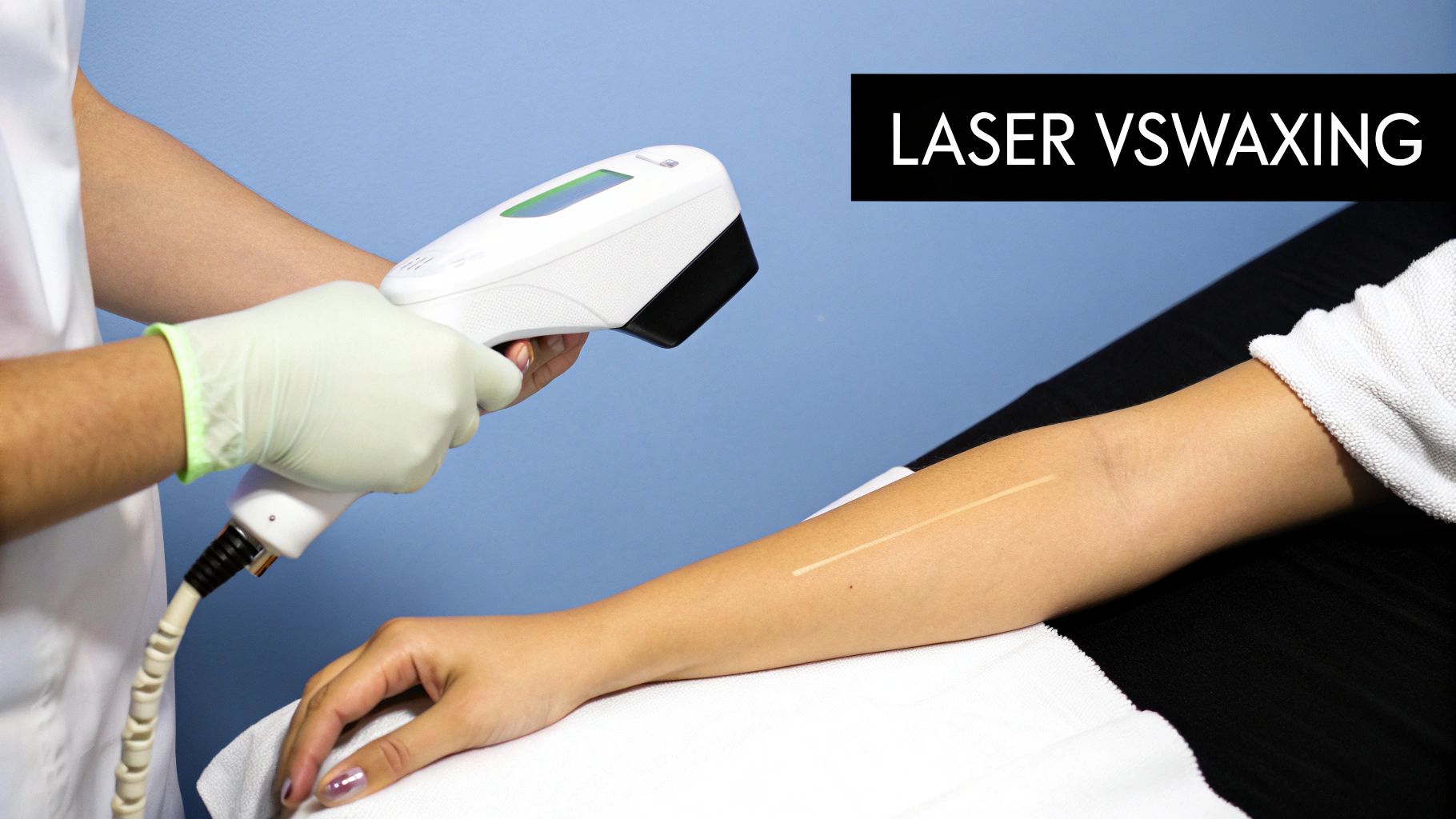
Quick Comparison Laser Hair Removal vs Waxing At a Glance
To cut through the noise in the laser hair removal vs. waxing debate, it helps to see the key differences side-by-side. Think of this table as your cheat sheet for making a smart decision before booking that first appointment.
Feature | Laser Hair Removal | Waxing |
|---|---|---|
Primary Goal | Permanent hair reduction by disabling follicles | Temporary hair removal from the root |
Results Timeline | Gradual reduction over 6-8+ sessions | Immediate smoothness after each session |
Longevity | Near-permanent results with annual touch-ups | Results last approximately 3-6 weeks |
Pain Level | Mild snapping sensation, gets easier over time | Sharp, intense pain with every strip pulled |
Best For | Anyone seeking a long-term solution | Quick results for an event or temporary needs |
Cost Structure | Higher upfront investment, minimal long-term cost | Low cost per session, adds up significantly over time |
This table gives you the high-level overview, but the real story is in how these factors play out over months and years.
The Long-Term Perspective
The single biggest difference here is the final outcome. Laser treatments are specifically designed to damage the hair follicle's ability to grow back. It's no wonder its popularity is skyrocketing—market reports confirm it can reduce hair growth by an incredible 70-90% for most people after a full series of sessions. In the U.S., it's already one of the top three cosmetic procedures, which tells you just how effective it is. You can learn more about the growth of advanced hair removal methods.
Waxing, by contrast, is a cyclical solution. Sure, pulling hair from the root leaves your skin silky smooth for a few weeks, but the follicle is left completely intact, ready to produce a new hair. This locks you into a lifelong commitment of appointments, regrowth phases, and repeated costs.
The real question isn't just "which is better?" It's "which one fits my life?" One path leads to freedom from the daily or monthly grind of hair removal, while the other demands constant upkeep.
Choosing between them means weighing the upfront cost and treatment timeline of laser against the endless cycle of waxing. Your decision will literally shape how you manage unwanted hair for years to come.
How Does Each Hair Removal Method Actually Work?
To settle the laser hair removal vs. waxing debate for yourself, you have to get to the root of how they work. One is a strategic, below-the-surface scientific process, while the other is a physical, external force. That core difference is why their results, longevity, and overall feel are miles apart.
They both promise smooth skin, but the journey there couldn't be more different.
The Science of Laser Hair Removal
Laser hair removal isn't smoke and mirrors; it's a precise medical process called selective photothermolysis. Here’s how it breaks down: a specialized laser emits a concentrated beam of light. This light is calibrated to be absorbed by the dark pigment—or melanin—in your hair.
Once that light hits its target, the energy instantly converts to heat. This targeted heat travels down the hair shaft directly into the follicle, the tiny organ responsible for producing new hair. The heat gently disables the key structures within that follicle, knocking out its ability to grow hair in the future.
This process is only effective when the hair is in its active growth phase, which is exactly why multiple sessions are needed to catch every last hair at the right time.
Modern Technology for All Skin Tones
In the early days, laser hair removal worked best on people with light skin and dark hair. The high contrast made it easy for the laser to find the melanin in the hair without affecting the skin. But technology has come a long way since then.
Advanced systems like the Splendor X—which we proudly use here at NYCLASER—have completely changed the game. It uses a blended, dual-wavelength technology, combining two gold-standard lasers into one synchronized pulse.
Alexandrite (755nm): This wavelength is a powerhouse for targeting melanin in lighter skin tones (Fitzpatrick I-III).
Nd:YAG (1064nm): This longer wavelength safely bypasses the melanin in the skin's surface, making it the safest and most effective option for darker skin tones (Fitzpatrick IV-VI).
By blending these two, we can create a fully customized treatment for virtually any combination of skin and hair color, ensuring every client gets safe, effective results.
The entire principle of laser hair removal is to disable the source. It’s a long-term strategy that addresses the problem at its root—literally. This is what separates it from methods that just offer a temporary fix.
The Mechanics of Waxing
Waxing, on the other hand, is a straightforward method of mechanical hair removal. The process is simple: an esthetician applies a layer of warm, sticky wax to the skin, smoothing it in the direction of hair growth.
As the wax cools, it shrink-wraps around the hairs. Then, in one quick motion, the strip is pulled off against the direction of growth. This forceful action yanks the hairs out from the root, leaving your skin instantly smooth.
While it gets the job done for a few weeks, the process doesn't actually damage the follicle's ability to regenerate. The follicle remains perfectly intact and starts producing a new hair almost immediately. That’s why you see regrowth so quickly. While years of repetitive trauma from waxing can sometimes cause hair to grow back a bit thinner, it never delivers the systematic, permanent reduction that laser achieves.
A Detailed Breakdown of Key Decision Factors
Okay, let's get past the basics. The real choice between laser hair removal and waxing comes down to a few critical factors that hit your wallet, your schedule, and your comfort level. A quick glance won't cut it—we need to look at how these methods truly perform over the long haul. This is about understanding the actual commitment each one demands.
We'll break down the practical side of things—permanence, pain, cost, and skin reactions—to give you a clear, real-world picture of what to expect down each path. This will help you decide which is the right investment for your goals.
This diagram shows you the fundamental difference at a glance: laser gets to the root of the problem (the follicle), while waxing is just a temporary fix for the hair itself.
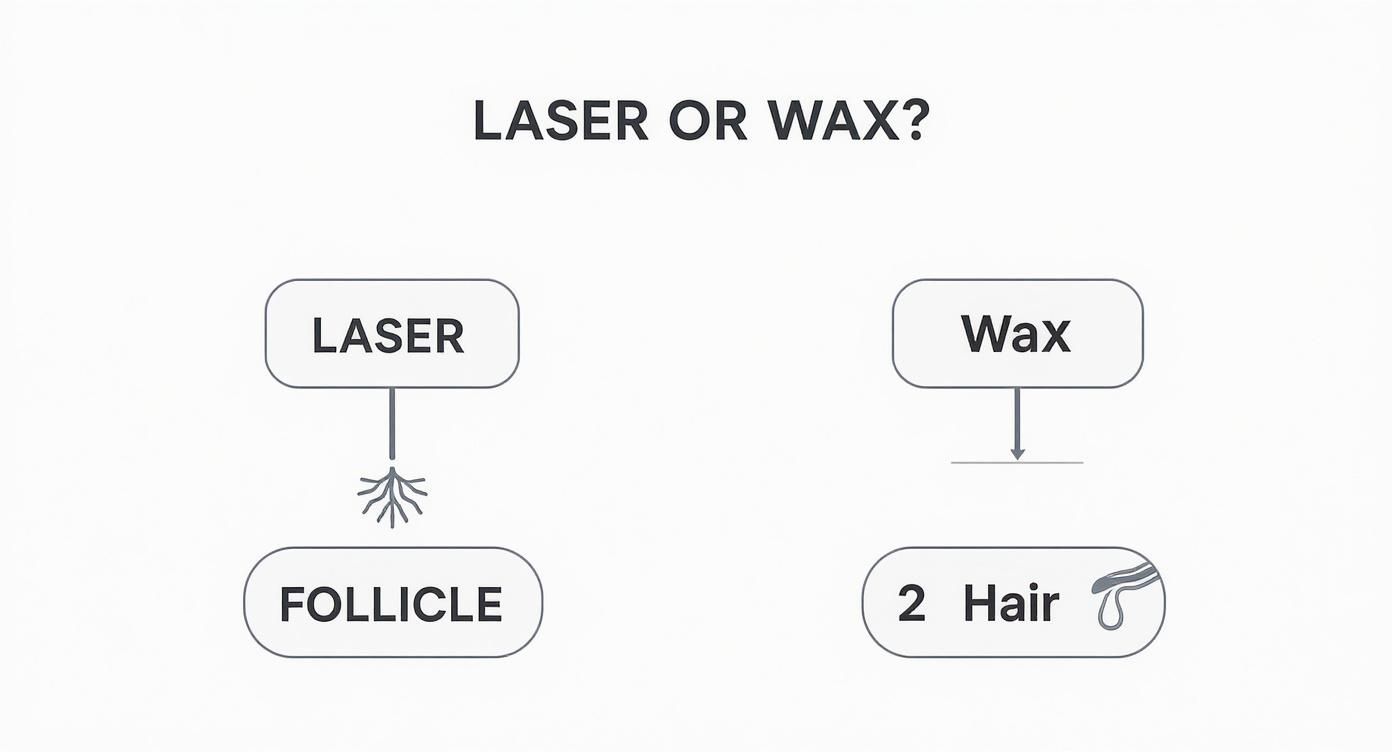
The key takeaway? One method is a strategic, long-term solution, while the other is a recurring maintenance task you're locked into forever.
Permanence and Long-Term Results
This is, without a doubt, the biggest differentiator in the laser vs. waxing debate. Laser hair removal delivers permanent hair reduction, not just temporary removal. After you complete a full series of treatments, most of our clients see a massive drop in hair growth, with many hitting between 70-90% reduction.
This doesn't mean you'll never spot another hair again, but any that does grow back is usually much finer, lighter, and way less noticeable. A quick touch-up session, maybe once a year, is typically all it takes to keep that perfectly smooth finish. If you want to dive deeper into what "permanent" really means, you can learn more about how long laser hair removal results last in our detailed guide.
Waxing, on the other hand, is a temporary fix by design. It rips hair from the root, but the follicle—the tiny factory producing the hair—is left completely unharmed and ready to go again. As a result, hair will always grow back, usually within three to six weeks. This locks you into an endless cycle of appointments and awkward regrowth periods for as long as you want to stay hair-free.
The Pain Factor: A Realistic Look
Everyone’s pain tolerance is different, but there’s a general consensus here. Most people agree that waxing is significantly more painful than laser hair removal. It’s a sharp, intense ripping sensation that gets repeated over and over until the area is clear. Ouch.
Laser hair removal is more often described as a series of quick, hot snaps against the skin, kind of like a rubber band. While there’s some discomfort, it’s over in a flash. Plus, advanced cooling technology, like the kind built into our Splendor X system, makes the whole experience far more comfortable by chilling the skin's surface while the laser works its magic.
A key difference in comfort is progression. With waxing, every single session feels just as intense as the first. With laser hair removal, each appointment gets less painful because there are fewer and finer hairs for the laser to target.
Cost Over a Lifetime: The Real Financial Story
At first glance, waxing definitely looks like the cheaper option. A single session might run you $50 to $100, while a single laser session costs more. But this initial comparison is totally misleading.
To get the real story, you have to think about the lifetime value. Let's imagine we're talking about a Brazilian treatment:
Waxing: At an average of $60 per session every five weeks, you're spending around $624 per year. Over ten years, that adds up to a staggering $6,240—and that cost just keeps going.
Laser Hair Removal: A package of six sessions might be around $1,000 to $1,500. After that, you might need one maintenance session a year at a much lower cost. Your total investment over ten years will be a fraction of what you'd spend on waxing.
The upfront cost of laser hair removal is higher, but it's a finite expense that pays for itself over time. The never-ending nature of waxing makes it far more expensive in the long run.
Side Effects and Skin Health
Both treatments can leave your skin a little unhappy temporarily, but their long-term impact on your skin's health is very different.
Common Waxing Side Effects:
Redness and Irritation: The trauma of ripping hair out often leaves skin red, bumpy, and sensitive for hours, if not days.
Ingrown Hairs: This is the big one. As hair regrows, it can easily get trapped under the skin, leading to painful and unsightly bumps that can even scar.
Broken Hairs: Sometimes the hair just breaks at the surface instead of coming out at the root, which leads to quick-growing stubble and more irritation.
Common Laser Hair Removal Side Effects:
Temporary Redness: The treated area might look a bit pink or feel like a mild sunburn, but this almost always fades within a few hours.
Follicular Edema: Some people notice tiny, minor bumps around the hair follicles right after treatment, which also go away very quickly.
Here’s a crucial point: laser hair removal actually helps reduce and eliminate ingrown hairs. By disabling the follicle, it stops the hair from growing back and getting trapped in the first place. For anyone who constantly battles with ingrowns, this benefit alone makes laser the clear winner.
Choosing the Right Method for Your Skin and Hair
The honest truth? The effectiveness of any hair removal method comes down to your unique combination of skin tone and hair color. It’s a huge factor in the laser hair removal vs. waxing debate, and understanding the science behind it is key to getting safe, beautiful results.
Historically, this is where waxing had an undeniable edge. Because it’s a mechanical process—literally gripping and pulling out hair—it works on everyone. Your hair can be dark, blonde, red, or grey; if the wax can grab it, it’s gone.
But that one-size-fits-all approach comes with its own set of problems, especially for certain skin types.
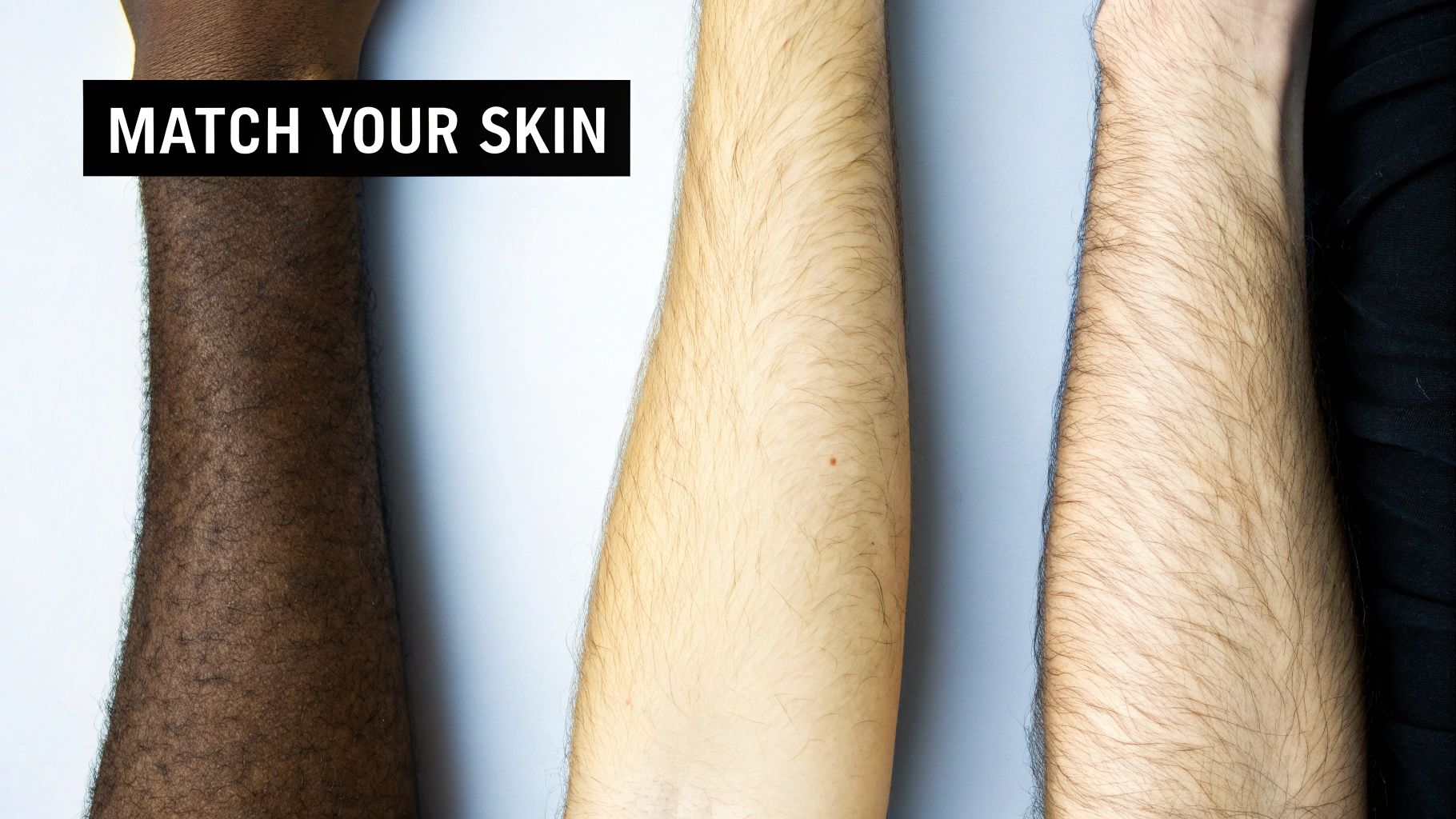
Waxing and Its Impact on Different Skin Types
While waxing works on all hair colors, it can be really harsh on the skin. The forceful pulling action often triggers significant irritation, leading to redness, bumps, and even pinpoint bleeding. This is especially true if you already know your skin is on the sensitive side.
For individuals with deeper skin tones, the risks go a step further. The inflammation from waxing can sometimes cause post-inflammatory hyperpigmentation (PIH), leaving dark spots or patches on the skin long after the redness fades. On top of that, waxing is a notorious cause of painful ingrown hairs—a frustrating issue for anyone, but particularly common for those with coarse or curly hair.
Laser Hair Removal: A New Era of Inclusivity
For years, laser hair removal was incredibly limited. It was really only safe for a narrow profile: people with fair skin and dark hair. The technology needed a sharp contrast between the skin’s pigment (melanin) and the hair’s pigment to work without causing burns or discoloration. This effectively shut out a huge portion of the population.
Thankfully, those days are over. Modern technology has completely changed the game.
The single greatest advancement in laser technology has been its ability to safely and effectively treat the full spectrum of skin tones. This has transformed laser from a niche solution into a truly inclusive option for permanent hair reduction.
Systems like the Splendor X—the technology we trust at NYCLASER—are leading this change. It uses a revolutionary blended wavelength technology, which synchronizes two of the most effective lasers into one pulse:
Alexandrite Wavelength: This is a powerhouse for absorbing melanin, making it incredibly effective for lighter skin tones (Fitzpatrick scale I-III).
Nd:YAG Wavelength: This laser uses a longer wavelength that safely bypasses the melanin at the skin's surface, letting it target the hair follicle deep within darker skin tones (Fitzpatrick scale IV-VI) without risk.
By blending these two beams, we can customize the treatment precisely to your skin and hair profile. This isn't a one-size-fits-all approach; it’s a tailored solution that ensures maximum safety and effectiveness for everyone, from the fairest to the darkest complexions.
Making the Right Decision for You
So, when it comes to laser hair removal vs. waxing, the decision now depends less on your skin’s limitations and more on your long-term goals.
Consider Waxing If:
You have very light blonde, red, white, or grey hair that has no pigment for a laser to target.
You just need immediate, temporary results for a one-off event and aren't ready to commit to a series of treatments.
Consider Laser Hair Removal If:
You have any amount of pigment in your hair (from light brown to black).
You want a safe, effective treatment for any skin tone, from Fitzpatrick I to VI.
You’re tired of battling ingrown hairs, skin irritation, or hyperpigmentation caused by waxing.
Your main goal is a permanent, long-term reduction in hair growth.
With the arrival of advanced systems like Splendor X, the choice is clearer than ever for most people. You no longer have to settle for the irritation and endless cycle of waxing just because of your skin tone.
Which Hair Removal Method Fits Your Lifestyle?
Choosing between laser hair removal and waxing isn't just about the technology—it’s about figuring out which method actually fits your life. Forget the technical jargon for a minute. The real question is what you want for your skin and your schedule, both now and in the long run.
Think of it like this: laser is a long-term investment in future freedom, while waxing is more like a recurring subscription for immediate, temporary smoothness. Both are great options, but they serve completely different needs and priorities.
The Ideal Candidate for Laser Hair Removal
Laser hair removal is for the planner. It’s for the person who’s playing the long game and is ready to trade a series of appointments now for a future with way less maintenance. If the idea of permanently crossing "deal with unwanted hair" off your to-do list sounds like a dream, you’re in the right place.
You’re a perfect match for laser if you:
Want a permanent solution. Your end goal is to pretty much stop thinking about unwanted hair for good. You're ready to commit to a treatment plan to achieve a 70-90% permanent reduction in hair growth.
Are over the cycle. You're tired of the constant loop of shaving, stubble, booking waxing appointments, and dealing with painful ingrown hairs. You're just ready to be done with it all.
Value your time. You see the upfront cost of laser as buying back all the future hours you'd otherwise spend shaving or lying on a waxing table. For a full picture of what the commitment looks like, you can explore the typical laser hair removal timeline here.
Can invest upfront. You get that the initial cost is higher, but you also see how it pays for itself over time, saving you thousands compared to the never-ending expense of waxing.
For this person, laser isn't just an expense—it's an investment in a lifestyle. One with smoother skin, more confidence, and a whole lot less to worry about year-round.
When Waxing Makes More Sense
Even with all the long-term perks of laser, waxing still holds its own for a reason. It delivers that instant gratification and flexibility that a structured laser plan just can't offer in a pinch.
Waxing is probably the better move for you if you:
Need smooth skin, like, yesterday. If a last-minute vacation or a special event pops up, a single waxing session gives you perfectly smooth skin right when you need it. No waiting required.
Have very light hair. Laser technology needs pigment to find its target. If your hair is very light blonde, red, white, or grey, the laser can't "see" it, making waxing the more reliable choice.
Aren't ready for the initial cost. If a bigger upfront investment doesn't fit your budget right now, the lower per-session cost of waxing is a super accessible way to stay on top of hair removal.
The thing about waxing is its simplicity and familiarity. While the laser industry is booming, waxing isn't going anywhere because it’s a quick, budget-friendly fix that people know and trust.
The global hair removal wax market was valued at around USD 10.19 billion in 2023 and is still growing. That tells you that for a lot of people, the straightforward nature and lower initial cost of waxing make it the perfect choice, especially for clearing hair from larger areas efficiently. Ultimately, the best method is always the one that fits your immediate needs, your budget, and your personal beauty philosophy.
Got Questions? We’ve Got Answers.
When you’re weighing laser hair removal against waxing, a few key questions always come up. We hear them from clients every day. Let's clear up any lingering doubts so you can feel 100% confident in your choice.
Does Laser Hair Removal Hurt More Than Waxing?
This is probably the biggest myth we need to bust. While everyone’s pain threshold is different, the honest consensus is that waxing is significantly more painful than any modern laser treatment you'll find today. Waxing is a repeated, sharp, ripping feeling as entire patches of hair are yanked out by the root.
Laser hair removal, on the other hand, is often described as a quick snap—like a rubber band against the skin—that’s over in a millisecond. Our Splendor X system takes comfort even further with its built-in cooling technology that numbs the skin's surface right before the laser pulse, making the whole process much milder.
Here’s the real difference: every single waxing appointment hurts just as much as the first one. With laser, each session gets progressively less uncomfortable because there are fewer and finer hairs for the laser to target.
Is Laser Hair Removal Safe for Dark Skin Tones?
Absolutely, but only if you're using the right technology. Older lasers were a genuine risk for darker complexions because they struggled to tell the difference between the melanin in the skin and the melanin in the hair follicle, which could lead to burns or discoloration.
That’s ancient history with today's advanced systems. The Splendor X laser uses a genius blended wavelength technology. It combines the Alexandrite laser (great for lighter skin) with the Nd:YAG laser, which is specifically engineered to bypass the pigment in the skin's surface and target the hair root safely. This makes it the undisputed gold standard for treating clients with darker skin tones (Fitzpatrick types IV-VI) effectively and without risk.
How Many Sessions Will I Actually Need?
The magic number depends on the area you're treating, your hair's unique growth cycle, and how your body responds. On average, most of our clients achieve 70-90% permanent hair reduction after a series of 6 to 8 sessions, each spaced about 4-6 weeks apart.
Each treatment can only zap the hairs that are in their active growth phase. Since only about 20% of your hair is in that phase at any given moment, multiple sessions are crucial to catch every last follicle at just the right time. For a deeper dive, you can always explore our comprehensive FAQ page for more specific answers.
Why Does Waxing Seem So Much Cheaper at First?
It's true, waxing has a lower ticket price per session, which definitely makes it look more affordable on the surface. A single wax might run you $50-$75, while a laser session costs more upfront. But this is a classic "apples to oranges" comparison—it's totally misleading because waxing is a lifelong, recurring expense.
Think of it this way: laser hair removal is a one-time investment with a definite finish line. Waxing is a subscription that never, ever ends. Over a lifetime, that endless cycle of waxing appointments adds up to be far more expensive than completing a series of laser treatments for results that actually last.
Ready to invest in a lifetime of smooth, carefree skin? The expert team at NYCLASER is here to create a personalized treatment plan for you using the industry's most advanced technology. Book your consultation today and discover our flexible packages.
Comments