
Neckline Hair Removal: Methods, Prep and Results
You catch it in the car mirror at 8am: a shadow of dark hair running from the jaw down the front of your neck, or a patch of fine fuzz at the nape that every ponytail exposes. You shaved it before you left the house. By the afternoon, the collar of your shirt has rubbed the skin pink and the stubble is back.
Neckline hair removal isn't the same job as shaving your legs. The skin there is thin, it folds and moves, and it's one of the few places on the body where laser treatment can occasionally make hair grow back thicker rather than thinner. Getting a good result comes down to knowing which method you're choosing, what a realistic course looks like, and when to walk away from settings that aren't built for your skin.
Neckline Hair Removal Methods Compared
Seven options are worth weighing, and they split into two families: methods that cut or dissolve hair at the surface, and methods that go after the follicle itself.
Method | Typical hair-free time | Sessions or frequency | Permanent | Neckline trade-off |
|---|---|---|---|---|
Shaving | 1 to 3 days | Daily or every 2 to 3 days | No | Stubble and razor bumps on thin neck skin |
Depilatory cream | 3 to 7 days | Every 1 to 2 weeks | No | Chemical irritation on the neck |
Waxing | 2 to 6 weeks | Every 4 to 6 weeks | No | Painful; ingrown hairs on the nape |
Threading | 2 to 4 weeks | Every 3 to 4 weeks | No | Precise on the hairline, slow over larger areas |
Epilator | 3 to 8 weeks | Every 3 to 4 weeks | No | Pulls hair; ingrown risk |
Laser hair removal | Months to years after a course | 4 to 8 sessions, spaced several weeks apart | Long-term reduction, not guaranteed permanent | Works best on dark hair; strict prep rules |
Electrolysis | Permanent for each treated follicle | Many sessions, each follicle treated individually | Yes, per follicle | Slow, because each hair is treated one at a time |
Surface methods get you to the weekend. Shaving takes two minutes and leaves stubble by tomorrow morning. A depilatory cream buys a few extra days, and you pay for them with chemical irritation on skin that's thinner than your cheek. Blade technique matters more on the neck than anywhere else; the case for prepping skin properly before you shave covers why a fresh blade and a single pass beat pressing hard for a close finish.
Root methods buy weeks, not months. Waxing, threading and epilating pull hair out whole, so the neck stays smooth for two to six weeks depending on how fast you grow. The bill comes due on the nape, where curved follicles and tight collars make ingrown bumps the standard complaint. Threading is the most precise of the three along a hairline and the slowest across the whole front of the neck.
Follicle methods change the pattern instead of the schedule. The American Academy of Dermatology laser hair removal FAQs note that laser hair removal became a clinically established cosmetic procedure in the mid-1990s and now covers areas that include the neck. The device pushes energy into the pigment in the hair, which damages the follicle and reduces future growth. After the first treatment, typical reduction is about 10% to 25%, and with repeated sessions regrowth comes back thinner, finer and less noticeable, with many patients free of visible hair for several months or even years.
Two limits are worth saying out loud. Results move with hair color, hair thickness, skin tone, hormonal influences and the growth cycle of the follicles, so no honest provider quotes you a single number. And lasers are generally ineffective against blonde, white, gray or red hair because those colors carry too little target pigment. People of all skin tones can be treated safely when the practitioner has appropriate experience with that skin tone.
The short rule: pick shaving or threading when you need to look right this week. Pick laser or electrolysis when you want months of smooth skin rather than days, and accept that laser means a course.
Who Gets Good Results from Neckline Laser
Four factors decide whether the neck responds: hair color, hair thickness, skin tone and recent tanning. Laser needs pigment to chase, so dark, coarse neck hair gives the strongest target and usually shows the fastest change. Fine, light, blonde, gray or red hair often responds poorly, and electrolysis becomes the more realistic route because it treats each follicle mechanically rather than optically.
Skin tone changes the settings, not the verdict. Mayo Clinic's laser hair removal overview notes that color changes are more likely in Black and brown skin, particularly with sun exposure before or after treatment, because darker skin holds more melanin for the laser to absorb in the epidermis.
That creates a genuine trade-off rather than a marketing line. Lower energy protects the surface of the skin but may not heat the follicle enough to disable it, which can mean more sessions and slower visible progress. Higher energy on the wrong skin type risks a burn or a pigment change that outlasts the hair. The answer sits in an experienced hand, an appropriate wavelength and cooling, not in a single device marketed as universally safest.
Medical screening decides the rest. Keloid or scarring history, herpes outbreaks, photosensitizing products, recent isotretinoin and pregnancy all change the plan, and each one needs to be on the table at consultation. We don't treat pregnant clients with laser at all; that conversation happens before booking, not on the day.
If your hair is light and fine, say so at consultation rather than hoping a course will convert it. A patch test on a small section tells you more in three weeks than any guarantee.
How to Prepare for Neckline Laser Treatment
Preparation is where most disappointing neckline results are decided, long before the handpiece comes out. Work through these steps in order.
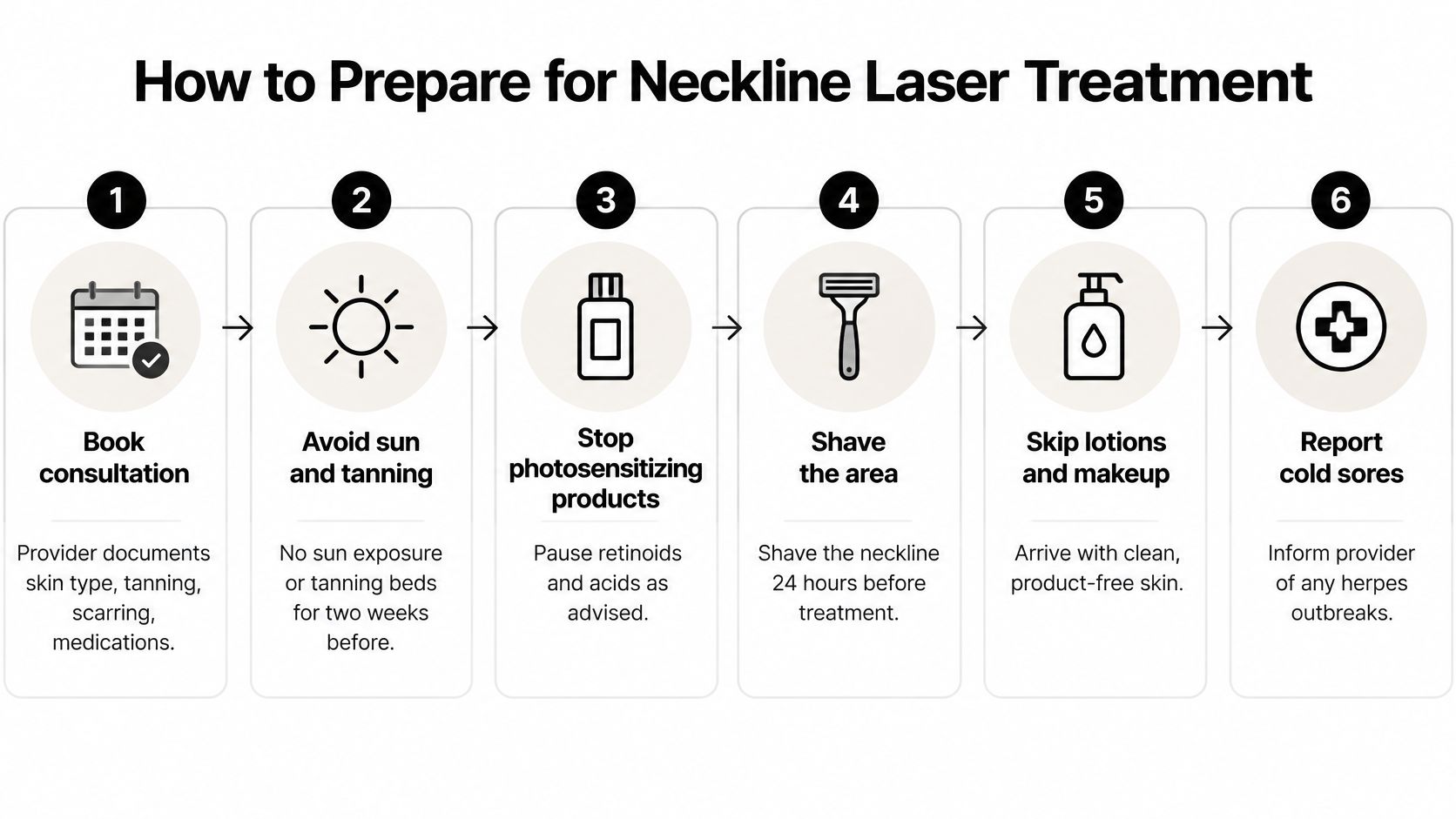
Book a consultation and skin assessment first. The provider documents skin type, recent tanning, scarring or keloid history, medications, photosensitizing products and any history of herpes outbreaks, because any one of those changes the protocol.
Stop waxing, plucking, threading and electrolysis at least four weeks out. Those methods remove the follicle the laser needs to target, and turning up with a freshly waxed neck can cost you a session. Our own rule is 4 to 6 weeks of no hair removal other than shaving.
Cut sun and tanning beds for two weeks. No self-tanner either. Fresh pigment in the epidermis competes with the follicle for the laser's energy and raises the risk of a color change.
Wear broad-spectrum SPF 30 or higher daily. The AAD guidance on preparing for laser hair removal makes this a standing instruction, and the neck catches sun that a jawline and a hat brim often miss.
Clear your medications before you book. Isotretinoin needs clearance first; we won't treat anyone currently on Accutane, Retin-A or Gold Therapy, or within the past six months.
Shave the neckline about a day before. The energy should reach the follicle below the surface rather than be absorbed by surface hair. A day's growth also lets us see exactly where the hair sits so the area is easy to recognize.
The common slip is a last-minute wax before a wedding. If you've had the neck waxed, expect to push the next laser session back.
What ready looks like: clean, recently shaved skin, no new tan, and a provider who has already read your medication list and scarring history.
If you want the shaving detail spelled out, how to shave before laser hair removal covers the blade, the direction and the timing.
Session Day and Aftercare Steps
A neck appointment is short. Most of what determines your result happens away from the table, in the two weeks around it.
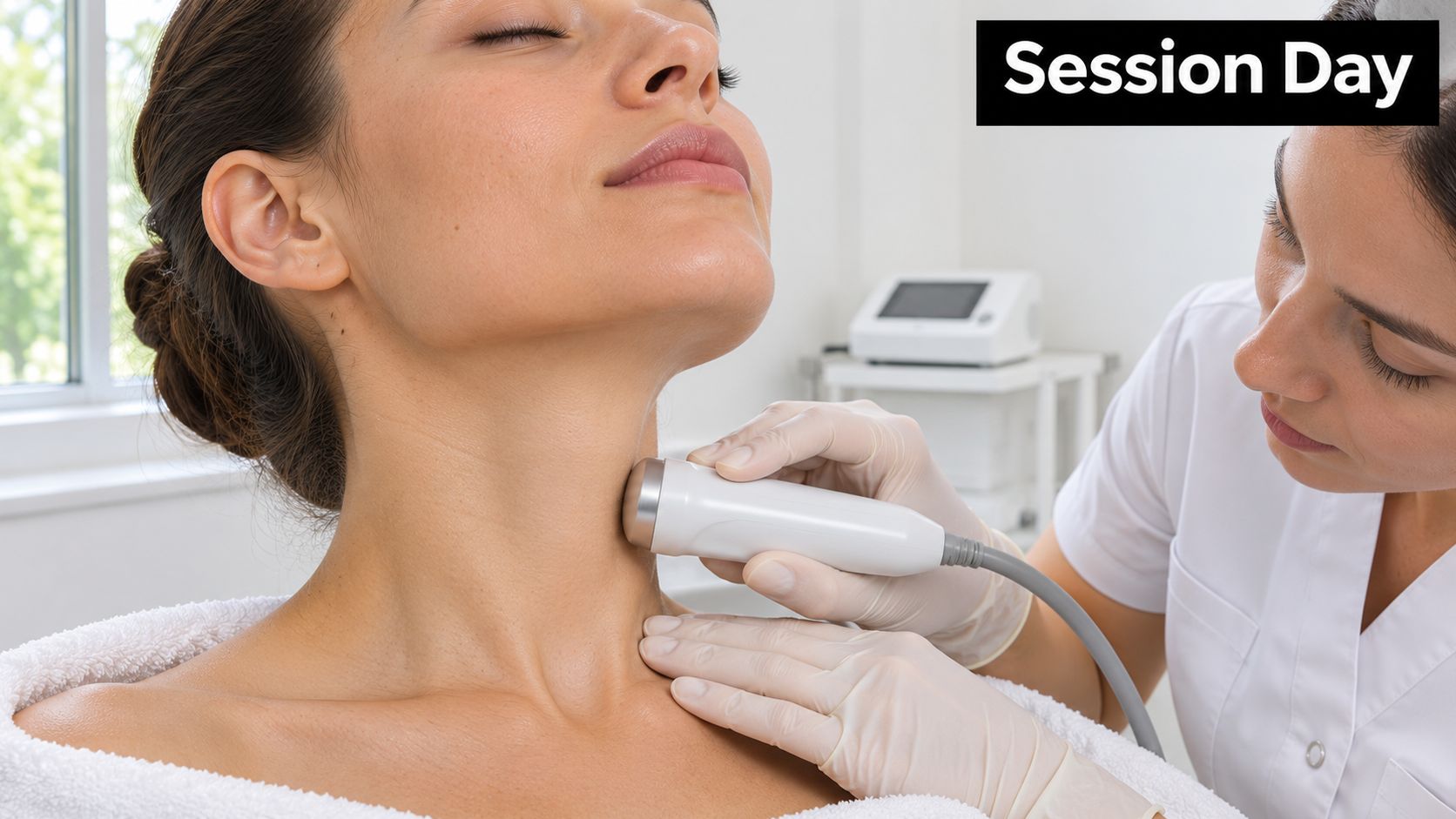
Arrive with the area fully washed and free of makeup, lotion, oil or medication. Product on the skin sits between the laser and the follicle, and residues can heat up in ways you don't want on thin neck skin.
What happens in the room
The technician confirms your skin type and hair color against your consultation notes and checks the area for new tanning, irritation or cold sores. Then the handpiece is set to the agreed energy, with cooling applied before and during each pass to protect the surface while the heat does its work below.
Pulses run across the neck in rows, and they're often described as small, hot snaps. That's normal. What matters is an even response: the provider should be watching the skin for uniform pinkness rather than treating faster through one patch. A neck treatment is slower and more deliberate than the same square footage on a leg, because the skin is thin, it moves, and it sits over structures you don't want to chase with heat.
Treated hair doesn't vanish on the day. It sheds over the following one to three weeks, which is why a client who sees stubble four days later is usually looking at shed, not failure.
Here's a short walkthrough of what a session looks like from the client's side.
The first 48 hours
Cool the area with a compress or a soothing gel if it feels warm, and skip the sauna, the hot shower and the hard workout for the rest of the day. Heat and sweat in the first hours amplify redness.
For two days, keep the neck covered in daylight and apply SPF 30 daily. Don't pick at the small bumps around the follicles, and leave exfoliating acids off the neck until the skin has settled, because a fresh stratum corneum plus glycolic acid equals stinging.
Downtime is typically none, so you can go straight back to work. Photograph the neck in the same light before each session and count stray hairs inside a marked square, so progress is measured rather than remembered.
By the next morning, normal looks like this: pink, slightly warm skin that has settled within hours, maybe a few tiny bumps at the follicle openings. Blistering, spreading redness or dark patches that persist are not normal and need a call to your provider.
How Long Neckline Laser Results Take
Neckline work is a course, and the numbers from a reviewed ruby-laser study show why a single session never tells the story.
Time after treatment | Mean hair reduction | Study context |
|---|---|---|
3 months | 20% | Ruby laser, 51 participants |
6 months | 35% | Ruby laser, 51 participants |
9 months | 42% | Ruby laser, 51 participants |
12 months | 41% | Ruby laser, 51 participants |
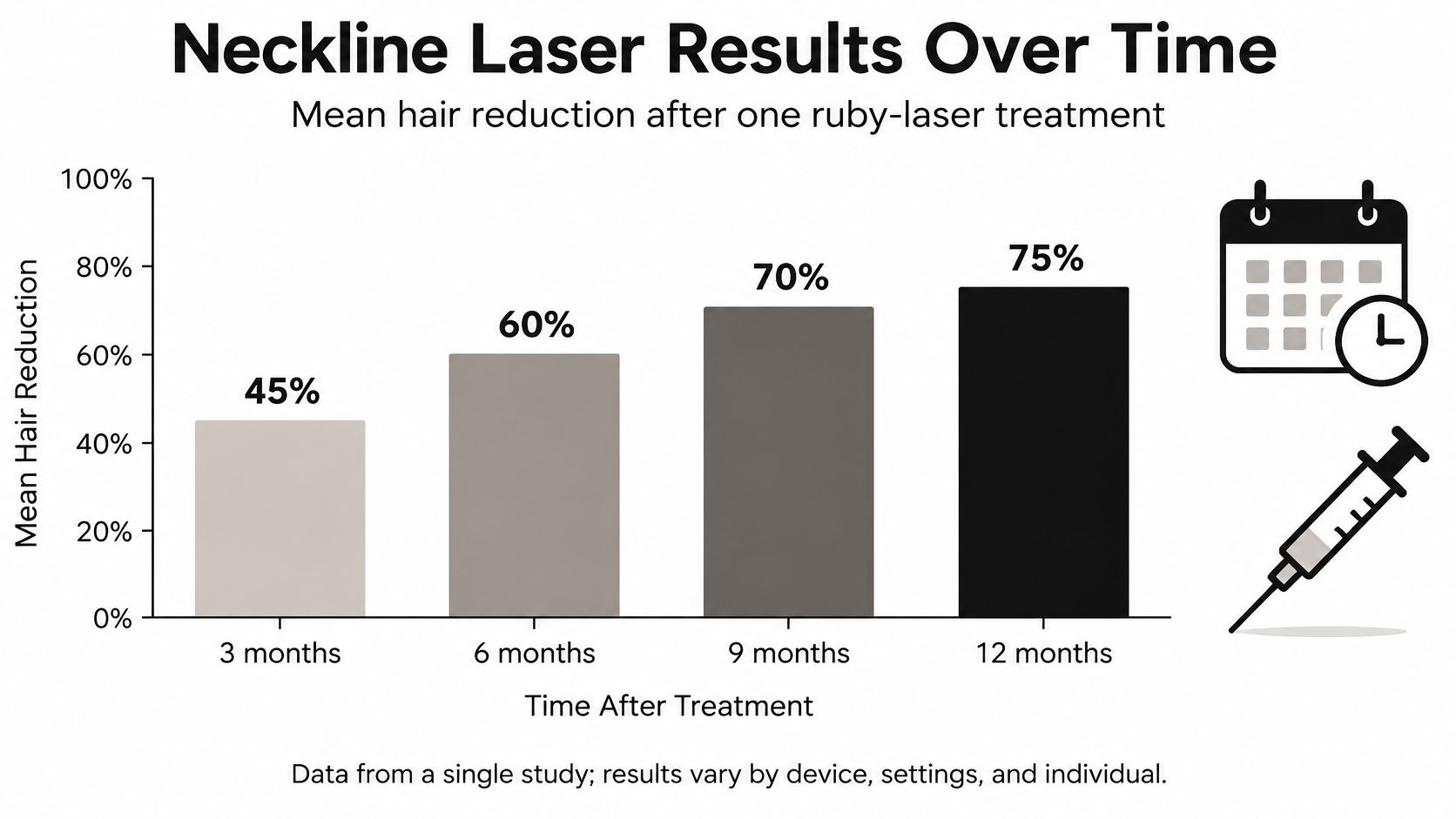
That table comes from one study of 51 participants recorded in a 2006 evidence-based review of laser and light-based hair removal, published via the AAD overview of laser hair removal. Your results will move with the device, the settings and your hair type, so read it as a shape rather than a promise.
The same review described a ruby-laser study involving the chin and neck, where 55% of patients achieved hair reduction and the mean reduction was 21%. It concluded that laser and light-based epilation produces partial short-term reduction, that repeated treatments improve efficacy, and that results can exceed shaving and waxing in selected studies. That's the honest headline: partial, cumulative, and better than the razor over time.
Why one session can't finish the neck
Laser targets follicles in their active growth phase. At any given appointment, a share of the follicles on your neck are resting, and no amount of extra energy reaches them. The AAD puts the typical course at 2 to 6 treatments, with some areas needing 6 or more, which is why the neck is usually planned at roughly 4 to 8 sessions spaced several weeks apart. Going back sooner treats fewer follicles rather than finishing faster.
Regrowth after each session usually comes back finer and thinner, and many people stay free of visible hair for months or even years. Maintenance sessions are common when some growth returns, especially where hormones are involved.
Track it properly: judge the course at session four or five, not session one. If density and caliber haven't dropped by then, the settings or the diagnosis need revisiting.
For a second perspective on how session counts get planned area by area, Ideal Face & Body resurfacing guidance lays out the reasoning behind series length.
Side Effects and When Neck Hair Gets Worse
Most neck reactions are boring and temporary. Redness, mild swelling and small bumps around the follicles settle within hours to a few days, and a cool compress handles the discomfort. Serious reactions are rarer and look different: blistering, burns, infection, or dark and light patches that persist past a few weeks. Those mean stop, call your provider, and get the area looked at rather than treated again on schedule.
The reaction nobody warns you about is paradoxical hypertrichosis, where hair grows back increased or thicker after laser. It's exactly the outcome you paid to avoid, and the face and neck are where it concentrates.
A systematic review and meta-analysis covering 9,733 patients found a pooled prevalence of 3% (95% CI, 1 to 6%), with a strong association with facial and neck sites, against just 0.08% in areas other than the face and neck, as reported in the review of laser-induced hypertrichosis. A 2024 analysis of 7,381 laser hair removal patients found a lower overall incidence of 0.34%, which shows how much reported risk swings with study design and population.
Low risk is not zero risk. On a 3% pooled figure, roughly three in a hundred neck patients see more hair, not less, and no clinic can tell you in advance which side of that line you're on.
Warning signs to watch between sessions
New coarse hair appearing inside the treated zone is the main one, particularly when it's darker and thicker than what you started with. Growth that visibly thickens across visits counts too. Temporary redness and bumps are not the same thing as new hair, and confusing the two sends people into a panic over a normal shed.
If growth does increase, the answer isn't to repeat the identical protocol. The provider should reassess settings and diagnosis, and in many cases continued, properly supervised treatment improves the situation rather than worsening it. Treating sparse, fine vellus hair with energy too low to destroy the follicle is a setup for trouble, which is one reason an experienced assessment matters more than a cheap session.
One useful association: the same 2024 analysis found daily sun protection was linked to lower incidence, with an odds ratio of 0.41. That doesn't prove sunscreen prevents the condition, but it's another reason the SPF habit is non-negotiable.
Some presentations need a doctor rather than a settings change. New coarse hair alongside irregular periods, severe acne, scalp hair loss, voice deepening or other hormonal symptoms points to an endocrine cause that no laser will fix. Recurring razor bumps and irritated follicles deserve the same referral, and what laser can and can't do for razor bumps explains where treatment helps and where it stops.
Decide and Book Your Neckline Laser Consultation
Here's the decision in plain terms. Neckline laser is worth booking if your hair is dark and coarse, you can commit to roughly 4 to 8 sessions spaced several weeks apart, and you clear medical screening. If your hair is light or fine, or you need a smooth neck next weekend, shaving or threading fits better for now.
Run three checks before you book anything: any isotretinoin in the past six months, any tanning in the past two weeks, and any history of keloids or herpes outbreaks. Each one can delay treatment, and finding out on the day wastes a trip.
Then ask three questions at the consultation, and listen for specific answers rather than reassurance.
"Will you start at conservative settings for my skin tone?" A provider who names the wavelength and explains the cooling is thinking about your epidermis, not just the follicle.
"What will you do if my neck hair thickens instead of thinning?" The right answer involves reassessing parameters and monitoring density, not automatically repeating the same session.
"How many sessions do you expect for my hair type?" A range with a reason behind it beats a fixed promise of permanent removal.
This week, if laser is the plan: stop waxing and threading now, start a daily SPF habit on the neck, and book the consultation. Specialist Tamar has over 17 years of experience with laser hair removal, and the Westbury center at 355 Post Avenue, Suite 102 is open Monday through Saturday, 10am to 6pm. Call 516-321-4959 or email INFO@NYCLASER.COM with your medication list, tanning history and any keloid history, and we'll map the neckline from there.
NYC Laser Hair Removal treats the neck as a medium treatment area, with single sessions and 3- or 6-session bundles built around the fact that neckline hair removal is a course rather than a one-off. If your neck hair is dark and coarse and you're ready to stop shaving it every morning, we'll assess your skin type and hair color at consultation, set realistic expectations for reduction, and use Splendor X technology with cooling to keep thin neck skin protected. Visit NYC Laser Hair Removal to book your consultation in Westbury and start with a plan built for your skin tone, not a generic protocol.
Comments