
Laser Treatment for Dark Underarms What to Expect
If you shave regularly and your underarms still look dark, are you seeing hair, pigment, or both? That question matters more than most ads suggest, because laser treatment for dark underarms isn't one single treatment. One laser plan targets hair. Another targets pigment. Booking the first and expecting the second is where disappointment often starts.
Why Dark Underarms Need a Closer Look
Consider a familiar pattern. You've shaved carefully, switched deodorants, tried a brightening scrub, and stopped wearing a favorite sleeveless top because the color still looks uneven in photos. It's natural to assume the razor is the whole problem and that removing hair with a laser will automatically remove the darkness too.
That assumption blends two different issues. Hair related shadow can come from dark hair sitting just under the skin, short regrowth, or dense follicles that make the area look gray even after shaving. Established pigmentation is color in the skin itself, often left after irritation has healed. The underarm can look dark for either reason, and many people have a mix.
Two Goals People Often Confuse
Laser hair removal aims to reduce hair over a course of sessions. As hair becomes sparser, you may shave less often, and less shaving can mean less repeated irritation. That's an indirect benefit, and it can be meaningful if shaving keeps restarting the problem.
A pigment focused laser plan has a different job. It's chosen to address discoloration that's already present, not to stop hair from returning. The settings, treatment endpoint, and safety checks aren't interchangeable just because both use light based technology.
If a consultation promises lighter skin without first asking what's causing the color, the plan is skipping the most important step.
The first decision isn't which package to buy. It's whether your main concern is visible hair, lingering pigment, active irritation, or a combination. Once you separate those goals, the conversation becomes clearer and more honest. You can ask what a treatment can reasonably change, what it probably won't change, and whether you need a medical opinion before any cosmetic appointment.
Identify the Cause Before Choosing Treatment
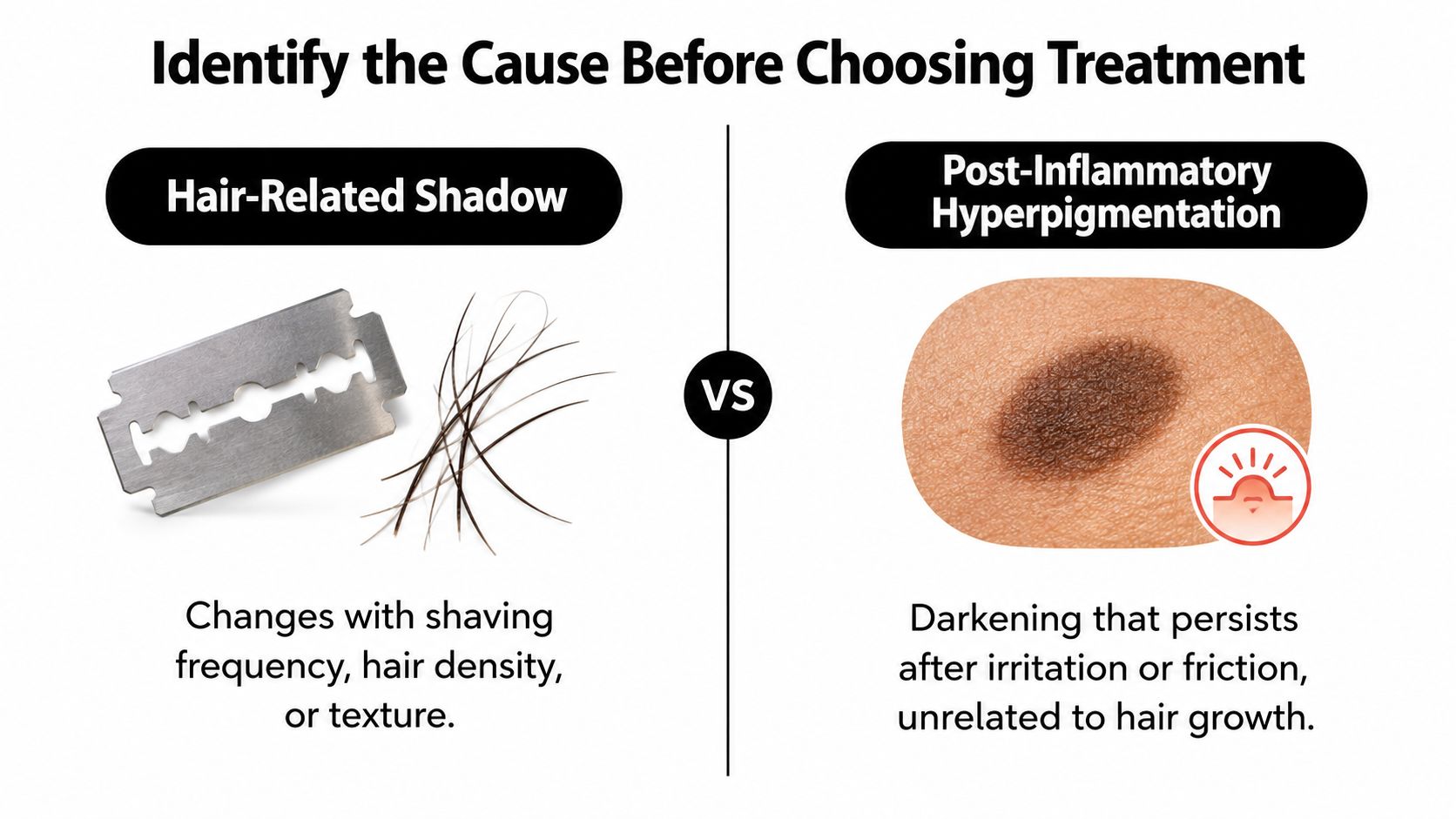
Start by watching how the color behaves. Hair related shadow often shifts with shaving frequency, hair density, and texture. It may look stronger a day or two after shaving and softer right after, and you may see individual dark points where hairs sit.
Pigment behaves differently. It tends to stay visible whether hair is present or not, and it often follows a period of irritation. Shaving friction, folliculitis, picking at bumps, deodorant reactions, and rubbing from clothing can all precede it. If bumps are part of your pattern, reading about an ingrown underarm hair bump and how irritation develops can help you describe what you're seeing at a consultation.
The comparison below separates the two patterns people most often mix up.
When Pigment Is the Main Issue
Post inflammatory hyperpigmentation means darkening that appears after inflammation or injury. Clinical guidance on post inflammatory hyperpigmentation notes that axillary darkening can follow irritation, inflammation, or injury, and it's more common and persistent in darker skin tones, particularly Fitzpatrick types III to VI. That persistence is why stopping shaving for a week may not clear it.
A clinician should ask about recent irritation, deodorant changes, hair removal habits, medications, and any prior pigment changes. Color alone doesn't explain cause. Two underarms can look similar in a mirror and still need very different next steps.
Signs That Need Medical Evaluation First
Don't treat every case as cosmetic. Seek medical assessment before laser treatment if darkness is:
Sudden or spreading: The area changes quickly or keeps expanding without a clear trigger.
Thickened or velvety: The texture feels different from surrounding skin, not just darker.
Itchy or symptomatic: Discomfort, rash, pain, or other symptoms accompany the color.
Unexplained: There's no link to shaving, friction, or a known irritation.
Diffuse or unexplained pigmentation may warrant evaluation for medication effects or systemic disease rather than immediate cosmetic treatment. A cause first framework protects you from paying for hair reduction when the actual issue needs diagnosis.
How Laser Treats Hair and Pigment
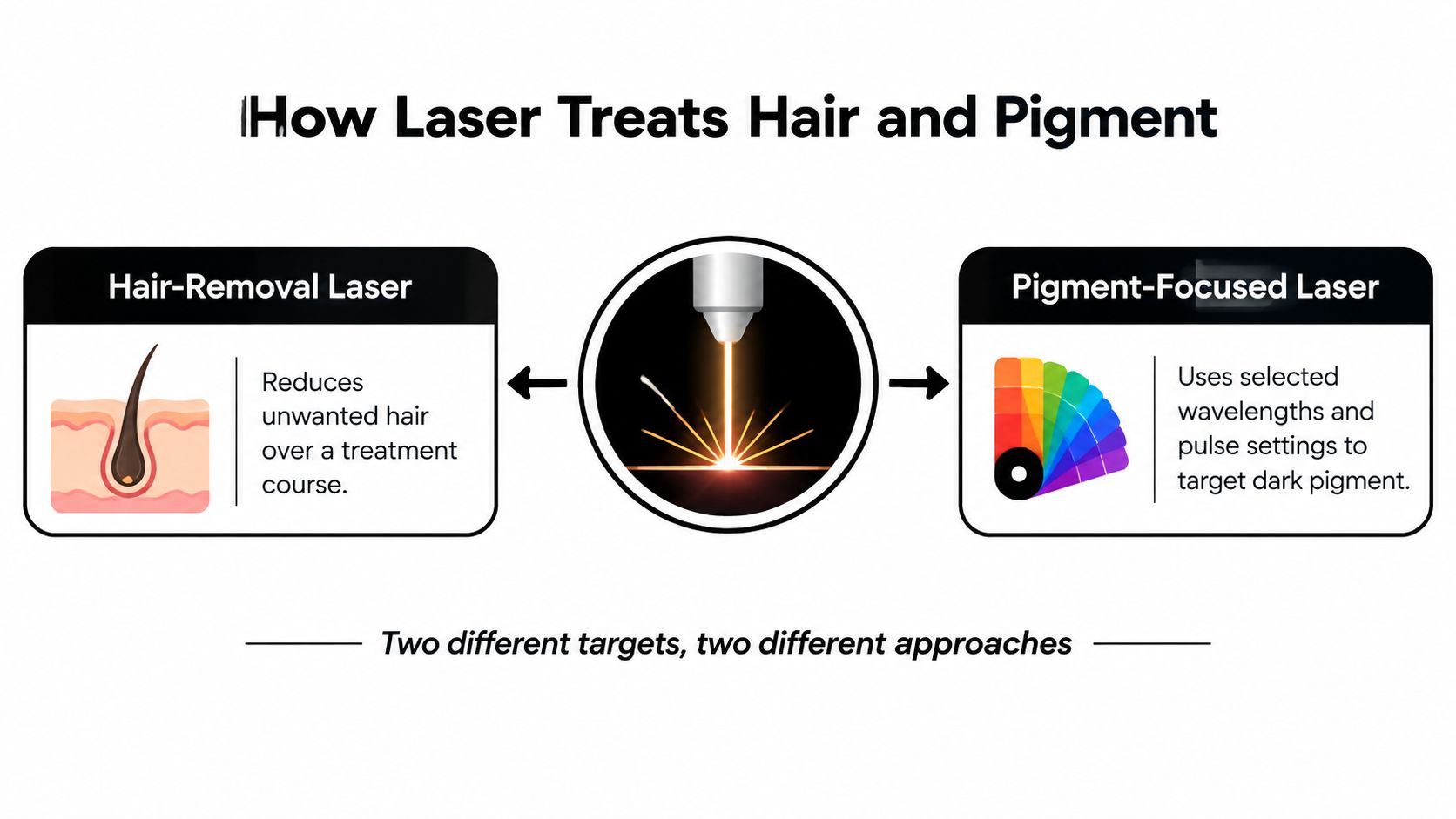
Think of laser treatment as delivering light energy to a chosen target. In hair removal, the target is the follicle, and the goal is long term hair reduction over repeated sessions. In pigment treatment, the target is melanin in discolored skin, and the goal is to reduce visible pigment without injuring surrounding tissue.
This diagram shows why those two targets lead to different treatment plans.
Selective Photothermolysis in Plain Language
Selective photothermolysis means using brief pulses of light that preferentially affect a target, such as melanin containing pigment, while limiting continuous heat to nearby skin. For readers who want broader background before a consultation, ProMD Health Easton's hyperpigmentation guide is a useful overview of how clinicians think about pigment and laser selection. The principle sounds precise, but precision depends on wavelength, pulse duration, fluence, and the skin being treated.
For dark underarms linked to post inflammatory hyperpigmentation, one reported approach is low fluence, nanosecond 1064 nm Q switched Nd YAG. The longer wavelength penetrates rather far and is commonly selected for darker skin phototypes. That doesn't make it interchangeable with a hair removal session, even when the wavelength sounds familiar.
The short video below gives a visual sense of how laser energy interacts with its target.
What a Small Pigment Study Found
In a prospective study of nine women with Fitzpatrick IV to V skin and 18 axillae, low fluence nanosecond 1064 nm Q switched Nd YAG treatment produced 85% to 100% pigment reduction across the affected surface, with improvement maintained three months after treatment. Those results are encouraging, but the study was small, so they can't guarantee the same outcome for every patient or every laser.
That caution matters because too much energy can burn skin or trigger new pigmentation, especially in a friction prone area. If you're weighing both concerns, this overview of laser treatment and hyperpigmentation risks can help you frame better questions about settings and test spots.
What Splendor X Can Treat
Splendor X is the technology NYCLASER uses for laser hair removal, and underarms are among its treatment zones. Its relevance here is through the hair goal, not as a dedicated pigment correction treatment. Keeping that boundary clear helps you judge any recommendation on its actual merits.
If dense hair and frequent shaving are driving your irritation, reducing hair may reduce how often you need a razor. Less shaving can mean fewer episodes of friction, bumps, and inflammation. Over time, that may help prevent new darkening, even though it doesn't promise to erase pigment that's already established.
A Side by Side View
Your main priority | What hair removal can address | What it may not address |
|---|---|---|
Visible shadow from hair | Less dense regrowth over a course | Pigment already settled in skin |
Shaving irritation | Fewer shaving sessions needed | Darkness from another condition |
Established dark patches | Possible indirect benefit if irritation stops | Direct pigment correction |
For a sense of how other clinics describe the underarm hair removal process itself, Yoyime Clinic underarm laser hair removal outlines the treatment area in practical terms. Use resources like that to compare process and questions, not to assume every device or protocol is identical.
Questions to Separate at Consultation
Bring your priorities in order. Is it hair density, fine residual hair, razor bumps, deodorant irritation, or the dark color itself? Each answer points to a different measure of success, and a good clinician should track them separately rather than promise one outcome for all of them.
Single sessions and 3 or 6 session bundles are available, but a bundle shouldn't come before assessment. Your skin tone, hair characteristics, recent irritation, and pigment history should shape whether hair removal is appropriate now, later, or alongside separate pigment advice.
Set Realistic Expectations for Results
The phrase to remember is reduction, not guaranteed removal. Laser hair removal is generally described as long term reduction because some hair can regrow, often finer or lighter, and maintenance may be needed. If a clinic promises that every hair will disappear forever, that promise is too absolute.
Multiple sessions are typical because hair doesn't respond uniformly in one visit. Your outcome also depends on hair color and thickness, skin characteristics, treatment settings, and whether you complete the planned course. Two people treating the same area can progress at different speeds.
What One Hair Reduction Study Showed
In a prospective study of 13 adults with naturally brown or black hair, mean hair count reduction one month after eight monthly diode laser treatments was 47%, 55%, or 73%, depending on fluence. The same study found that at 12 months, reductions remained 44%, 49%, or 65%. Those figures show durable reduction for many participants, but they also show a wide range rather than a single predictable result.
Participant reports added useful texture. In that study, 31% reported complete removal at 12 months and 69% reported finer or lighter regrown hair. Read that carefully. Complete removal was reported by a minority, while changed regrowth was more common, which is exactly why clinicians use the word reduction.
Track Hair and Color as Separate Outcomes
Pigment doesn't always follow the same timeline as hair. You might notice less shadow as hair thins, yet still see a brown patch where inflammation occurred earlier. You might also shave less and feel more comfortable while the color fades slowly, partially, or not much at all if another cause is involved.
Practical rule: Judge hair removal by hair counts, regrowth texture, and shaving frequency. Judge pigment treatment by color change. Don't let progress in one hide a lack of progress in the other.
Take consistent photos in similar light and note irritation episodes between sessions. That record helps your clinician decide whether to continue, adjust settings, pause, or refer you for pigment assessment. It also protects you from buying more sessions based on hope rather than observed change.
Maintenance deserves a direct conversation too. Ask what follow up might look like after an initial course, and what would trigger a change in plan. Realistic expectations aren't pessimistic. They're what let you recognize a good result when you see one.
Protect Darker Skin During Treatment
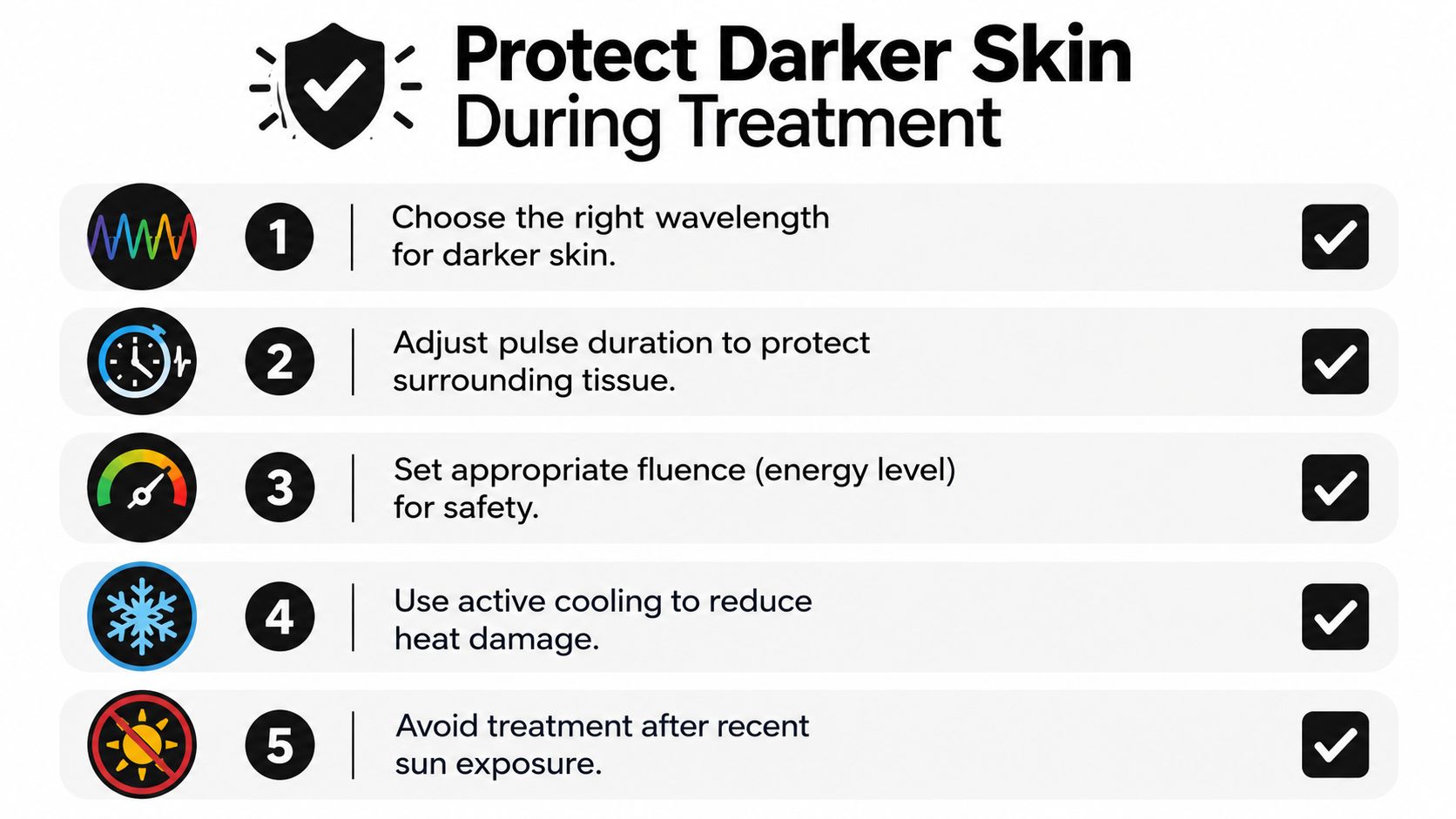
Can dark underarms be treated safely if your surrounding skin is brown or very dark? Often the answer is yes with careful planning, but laser isn't one uniform treatment. Wavelength, pulse duration, fluence, cooling, recent sun exposure, active irritation, and test spotting all influence risk.
Darker skin contains more epidermal melanin, so energy intended for a follicle or pigment target can also affect surface skin. That's why device choice matters so much. Settings that suit lighter skin may be too aggressive for darker phototypes, and a copied protocol is not personalized care.
The checklist below summarizes the safety variables worth discussing before a full session.
Why Wavelength Choice Matters
DermNet guidance on laser therapy in skin of colour identifies long pulsed 1064 nm Nd YAG as the safest established hair removal option because its wavelength reaches the follicle while relatively sparing epidermal melanin. The same guidance notes that post inflammatory hyperpigmentation is reported most frequently in Fitzpatrick IV to VI skin, and appropriate settings and cooling can reduce complications. Other systems require greater caution, and blistering has been reported in darker phototypes.
If skin tone is your main safety concern, this guide to laser hair removal for dark skin gives helpful background for consultation questions. Bring specifics about tanning, prior reactions, and any pigment changes you've had after acne, waxing, or injuries.
Your Pre Treatment Safety Checklist
Phototype assessment: Your clinician evaluates skin tone, baseline pigmentation, and tanning history.
Test spot: A small conservative area is treated and reviewed before a full session.
Personalized settings: Fluence and pulse duration are chosen for your skin, not copied from another client.
Cooling and monitoring: Skin response is watched during treatment, not only afterward.
Pause if irritated: Active deodorant reaction, rash, or inflamed bumps may mean postponing.
Temporary redness can occur, but blistering, burns, worsening pigmentation, or persistent color change warrant prompt professional attention. Ask in advance who to contact if that happens. A clinic that welcomes those questions is giving you safer care than one that promises universal safety.
Prepare and Care for Your Underarms
Preparation starts with calming the area down. Stop picking at bumps, avoid aggressive exfoliation, and tell your clinician about deodorant reactions, shaving irritation, recent sun exposure, active skin conditions, prior laser treatments, and any new pigment changes. Treating already inflamed skin can make assessment harder and may raise risk.
Be specific about timing. If you've recently changed deodorant, waxed, used a strong scrub, or noticed a rash, say so. Small details help your clinician decide whether to proceed, test spot, or wait until the skin settles.
Before Your Appointment
Review your history: Note hair removal methods, irritation patterns, and previous pigment responses.
Protect the barrier: Keep care gentle and avoid picking, squeezing, or harsh scrubbing.
Flag active problems: Mention burning, itching, broken skin, or a new rash before treatment begins.
Ask about products: Confirm what to pause or continue, since protocols vary by clinician.
After Treatment
Follow the instructions you're given rather than borrowing a routine from social media. Avoid rubbing or picking while the skin settles, and watch how the area responds over the following days. Underarms rub against skin and clothing, sweat, and contact deodorant, so gentle handling between sessions matters as much as the appointment itself.
Learn the difference between expected settling and warning signs. Temporary redness may be part of the process your clinician described. Blistering, a burning sensation that escalates, or a new pattern of discoloration should prompt a call. Don't cover a concerning reaction with a lightening product and hope it resolves unnoticed.
Aftercare isn't about doing more to your skin. It's about removing friction, irritation, and guesswork while you and your clinician judge the response.
Between sessions, note whether shaving, a particular deodorant, tight clothing, or workouts seem to restart irritation. That pattern can guide practical changes and may explain why pigment returns. If darkening is sudden, spreading, thickened, itchy, or unexplained, prioritize medical assessment over another cosmetic session.
Choose the Right Path for Your Underarms
You now have three distinct paths, and choosing well means not forcing one treatment to do every job. The right path depends on whether hair, pigment, or an undiagnosed condition is driving what you see.
Three Paths to Consider
Path one is hair reduction. If your priority is less hair, less shadow from regrowth, and fewer shaving related bumps, discuss a laser hair removal consultation, such as Splendor X treatment for underarms. Judge it by hair reduction and shaving frequency first. Any color improvement from reduced irritation is a possible secondary benefit, not the guaranteed endpoint.
Path two is pigment assessment. If dark patches remain regardless of hair, ask whether a qualified laser clinician or dermatologist should assess the pigment separately. Pigment focused treatment is staged rather than instant. In a study of 17 women with axillary post inflammatory hyperpigmentation, at least three sessions were required for excellent patient rated improvement with low fluence 1064 nm Q switched Nd YAG, and improvement persisted for at least six months after the final treatment. That study also found additional sessions were not significantly associated with better results, which supports reassessment instead of automatically adding sessions.
Path three is medical evaluation first. Sudden, unexplained, thickened, spreading, or symptomatic darkening shouldn't start with a cosmetic package. A dermatologist can consider whether the pattern reflects an active skin condition, medication effect, or systemic issue. Treating first and diagnosing later can waste money and may irritate skin that needs different care.
Questions Readers Ask Next
Will laser hair removal lighten my underarms? It might, indirectly, if shaving irritation was feeding the pigment and that irritation stops. It may not lighten established pigment, and the darkness could be unrelated to hair. That's why hair and color should be measured separately from the first visit.
Are at home devices the same as professional treatment? No. Professional care involves selecting wavelength and settings for your phototype, test spotting, cooling, and monitoring skin response. A home device can't assess why your underarms are dark or adjust a plan when pigment, irritation, and hair overlap.
If both plans mention 1064 nm, aren't they the same? Not necessarily. Pigment treatment and hair removal can differ in pulse duration, fluence targets, endpoints, and session logic even when a similar wavelength is involved. Ask what target is being treated and how success will be judged.
When should I see a dermatologist instead? Book medical care if color is sudden, spreading, thickened, itchy, painful, or accompanied by other symptoms, or if laser treatment causes blistering or persistent color change. Those signs deserve diagnosis, not another cosmetic appointment.
For Long Island readers considering path one, the Westbury clinic is at 355 Post Avenue, Suite 101, Westbury, NY 11590, with online booking and Monday to Saturday hours of 10am to 6pm. Flexible single session or 3 or 6 session options exist, but your consultation checklist should come first. Ask about cause, phototype, test spotting, settings, cooling, warning signs, and how hair and pigment outcomes will be tracked separately.
If your goal is reducing underarm hair and the shaving irritation that can accompany it, NYC Laser Hair Removal offers Splendor X laser hair removal in Westbury with single session and multi session options shaped around your skin and hair assessment. Book a consultation to discuss whether hair reduction fits your dark underarm concerns, what test spotting and settings would be appropriate, and whether your pigmentation needs separate medical or pigment focused advice.
Comments