
Laser Treatment for Pores: Options, Results and Recovery
The most popular advice about laser treatment for pores is also the most misleading. You're often told a laser can close, shrink shut, or permanently remove pores in one session. It can't. Pores are normal openings for hair follicles and oil glands, and they don't have muscles that open and close on command.
What treatment can do is make those openings look smaller by firming the skin around them. That change comes from new collagen, and collagen takes weeks to months to build. If you understand that pace, and the pigment risk that rises in darker skin, you'll judge every device and every before-and-after photo far more clearly.
Why Enlarged Pores Respond to Laser Energy
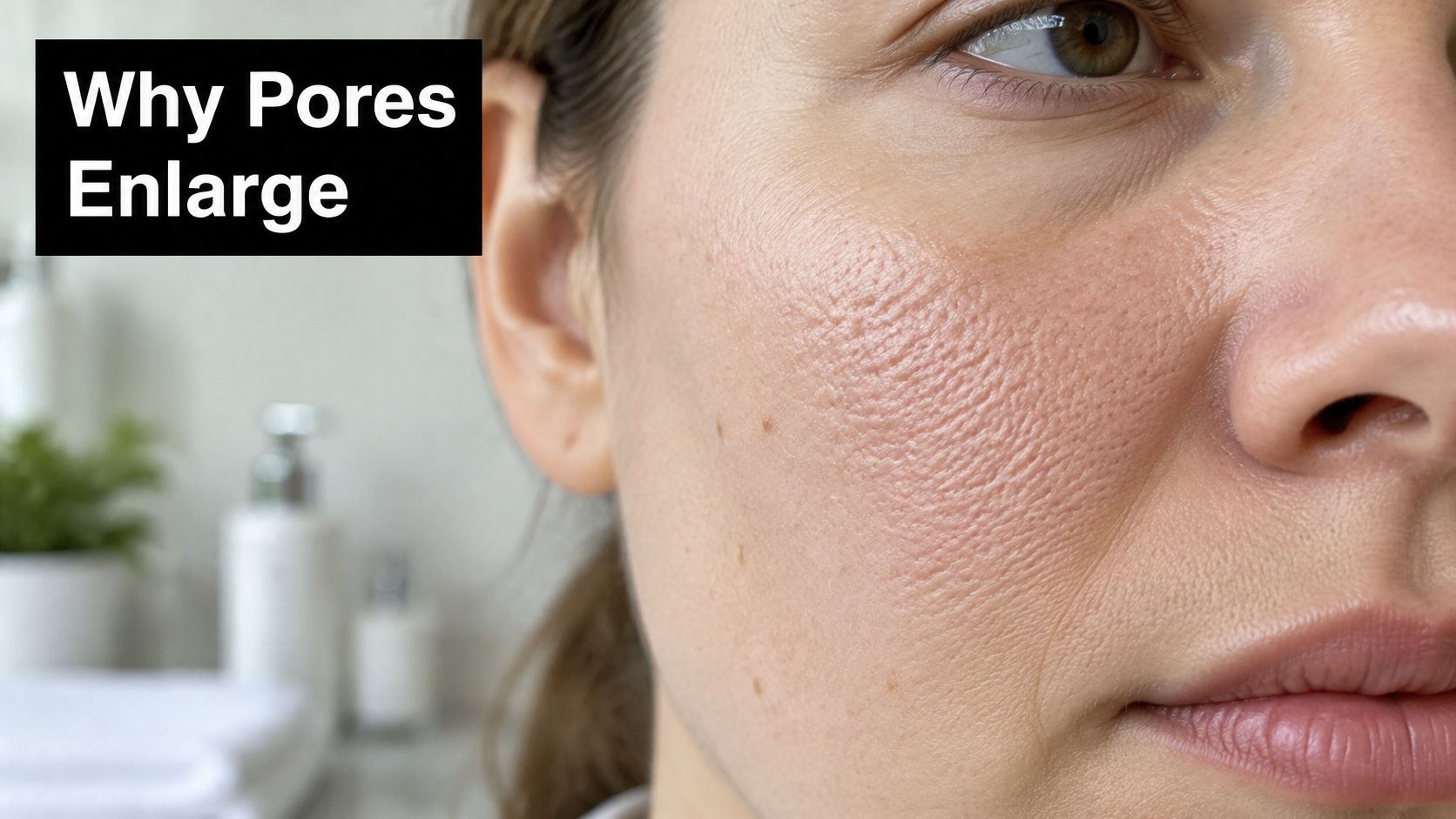
A pore looks large when the tissue around the follicle opening loses firmness. Sebum, sun damage, acne, and age-related laxity all stretch or slacken that rim, so light catches the edge and the opening reads as a crater rather than a pinpoint.
Think of a drawstring bag. The hole looks wide not because the hole itself grew, but because the fabric around it lost tension. Laser treatment for pores aims to restore that tension. It doesn't seal the bag shut.
How fractional injury triggers tightening
Fractional devices split one beam into many tiny columns. Each column creates a microscopic zone of controlled microthermal injury, while untreated skin between columns speeds healing compared with resurfacing the whole surface at once.
Your skin then repairs those columns. It lays down thicker, better organized collagen fibers in the dermis, and that new support can tighten tissue around follicular openings. A dermatology review of fractional ablative CO2 treatment describes this mechanism in patients with Fitzpatrick skin types III to IV who received three treatments at four-week intervals using 7.2 to 9.0 mJ per microbeam and two passes, with an increase in thick collagen fibers on histology.
A pore doesn't disappear. The skin around it gets firmer, so the opening catches less light and looks refined.
Those settings aren't a recipe you can copy between clinics. Fluence, density, pulse structure, and pass count need adjustment for skin type, oil output, scarring risk, and beam geometry. Pushing energy higher may increase remodeling, but it also raises the chance of prolonged redness, delayed healing, and darkening after inflammation, especially in melanin-rich skin.
Oil production also doesn't stop because you had a session. If sebum keeps filling the follicle, or sun keeps breaking down collagen, pores stay more visible. That's why results are described as reduced apparent size and smoother surface irregularity, not removal. Plan for gradual change, and you'll read your progress correctly.
Treatment Options Compared at a Glance
The device name alone cannot predict how much pores will improve. Compare how each treatment delivers energy, the usual treatment schedule, recovery, and the skin types studied. The figures below describe study protocols, not a personalized recommendation.
Pore treatments compared by mechanism, sessions and downtime
Treatment | How It Works | Typical Sessions | Downtime | Best For |
|---|---|---|---|---|
Fractional CO2 laser | Creates tiny columns of heat that stimulate collagen remodeling | Three sessions 4 weeks apart; three to five at 3-week intervals in some studies | About 1 week of flaking and crusting | Deeper pores and texture in lighter to medium skin, with careful settings |
Fractional picosecond 1064 nm with micro-lens array | Delivers non-ablative pulses that stimulate remodeling | Three sessions 4 weeks apart | Mild redness, usually a day or two | Enlarged pores in Fitzpatrick III to IV skin when shorter recovery is preferred |
Carbon-assisted Q-switched Nd:YAG | Carbon particles absorb laser energy at the surface | Three monthly sessions | Mild redness, usually hours to 1 to 2 days | Oily skin with dilated pores; one comparison found less durable improvement than fractional CO2 |
Non-ablative fractional 1565 nm | Heats the deeper dermis in a fractional pattern | A series set at consultation after skin assessment | Mild redness, usually resolves in a few days | Texture refinement with less surface injury; one study found higher pigment risk in darker skin |
Radiofrequency microneedling | Needles deliver radiofrequency energy into the dermis | Three to six sessions 4 to 6 weeks apart | 1 to 3 days of redness and swelling | Pores combined with mild laxity; ask how results vary by skin type |
Microneedling alone | Mechanical micro-channels trigger the skin's healing response | Three to six sessions | 1 to 3 days of redness | Mild pores and texture when a lower-intensity option is being considered |
What head-to-head comparisons show
Fractional CO2 has the strongest comparative record among the studies summarized here. In an 80-patient comparative study reported in a Journal of Cosmetic Dermatology comparison article, three monthly sessions of fractional CO2 laser produced significantly greater and more durable improvement in dilated facial pores than carbon-assisted Q-switched Nd:YAG treatment. The between-group difference was p = 0.01.
A separate comparison in the same summary found fractional CO2 superior to 1064-nm long-pulsed Nd:YAG for pore size. 66.7% of treated cases showed noteworthy to very substantial reduction. That figure describes the study group, not the result an individual can expect.
For broader context on daily care and in-office options, see this pore treatment advice from Neutralyze. If you are comparing resurfacing approaches, this guide to skin smoothing laser options explains where laser treatments fit among texture procedures. Use the table to frame questions about your skin type, treatment settings, and recovery before choosing a procedure.
How Much Pore Improvement to Expect Over Time
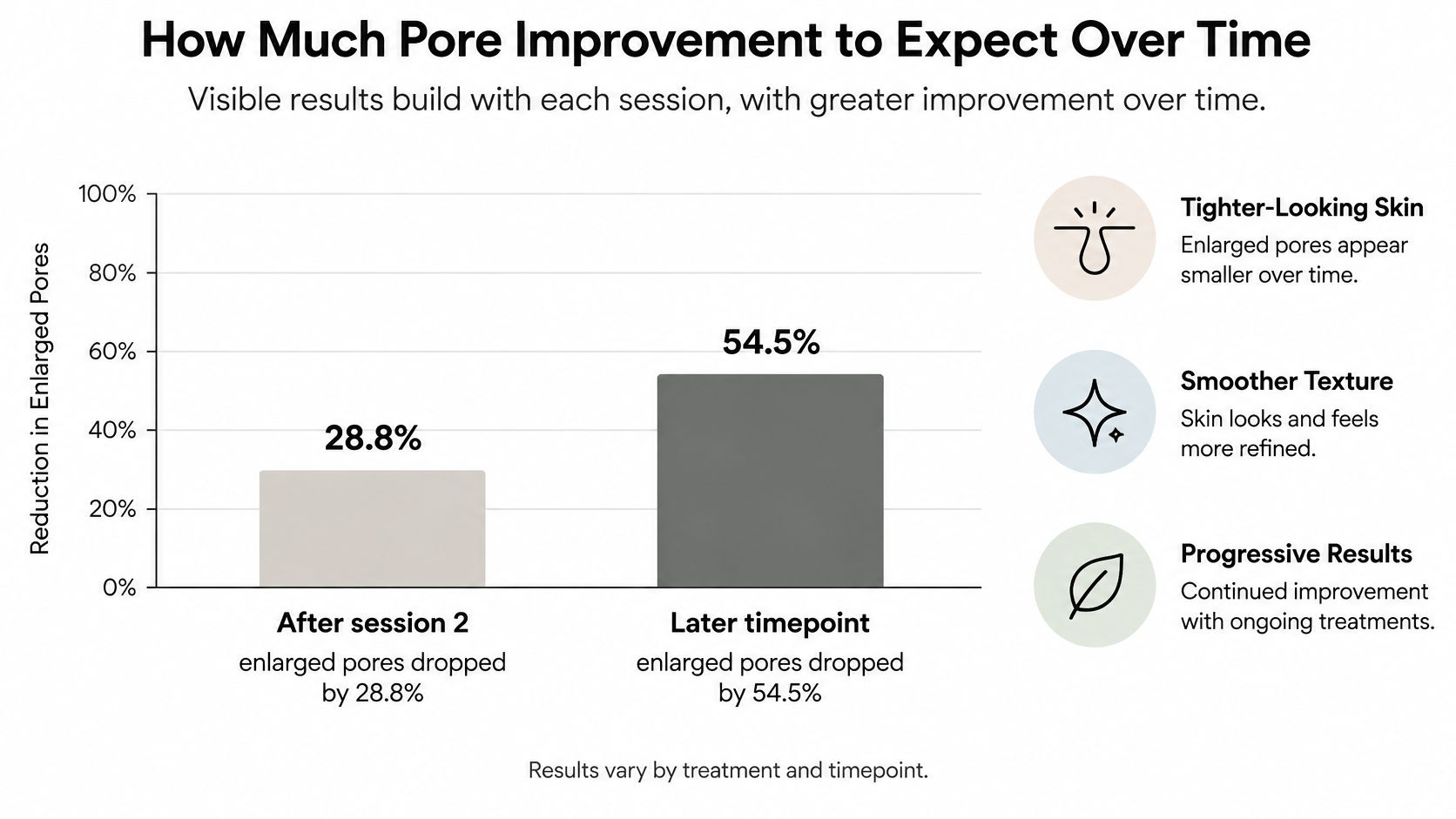
Pore improvement is a slow remodeling process, not an instant tightening. Early changes can understate the eventual result because collagen continues to remodel for months after treatment.
Reported pore reduction by timepoint
Timepoint | Reported Result | Study Context |
|---|---|---|
After the second fractional CO2 session | 28.8% fewer enlarged pores | 35 adults with Fitzpatrick III to IV skin, three sessions |
12 weeks after the final fractional CO2 session | 54.5% fewer enlarged pores | Same study; average pain 3.1 on a 1 to 10 scale |
Six months after a picosecond 1064 nm series | About 30% average reduction | 25 patients, three sessions four weeks apart |
After three to five fractional CO2 treatments | 79% good-to-excellent improvement | Assessment of pore size and skin laxity at three-week intervals |
The 28.8% reduction after the second session and 54.5% reduction 12 weeks after the final session were reported in a clinical study summarized in a 2023 systematic review. The review also describes a separate assessment in which 79% of patients had good-to-excellent improvement in pore size and skin laxity after three to five fractional CO2 treatments. These are study findings, not predicted results for an individual.
A partial change after the second session is expected: collagen remodeling continues after treatment, like a repair process that takes time to finish. The video below illustrates how gradual texture changes differ from an instant surface polish.
A slower, steadier picosecond pattern
A 2021 clinical study of a non-ablative 1064-nanometer picosecond laser with a micro-lens array followed 25 patients through three treatments at four-week intervals and for six months after the final session. Average pore measurements decreased from 1.15652 ± 0.614322 at baseline to 0.8087 ± 0.50515 at six months, an average reduction of about 30% (p < 0.001).
Improvement continued between the one-month and six-month visits (p = 0.013). A lack of obvious change four weeks after the final session does not, by itself, show that treatment failed. Compare photographs taken in the same lighting around 12 weeks after the final session, then assess the longer-term result.
These small studies had no control groups, so their percentages are averages, not promises. Pore appearance can also change over time as oil, sun exposure, and aging affect the skin.
Recovery and Downtime Week by Week
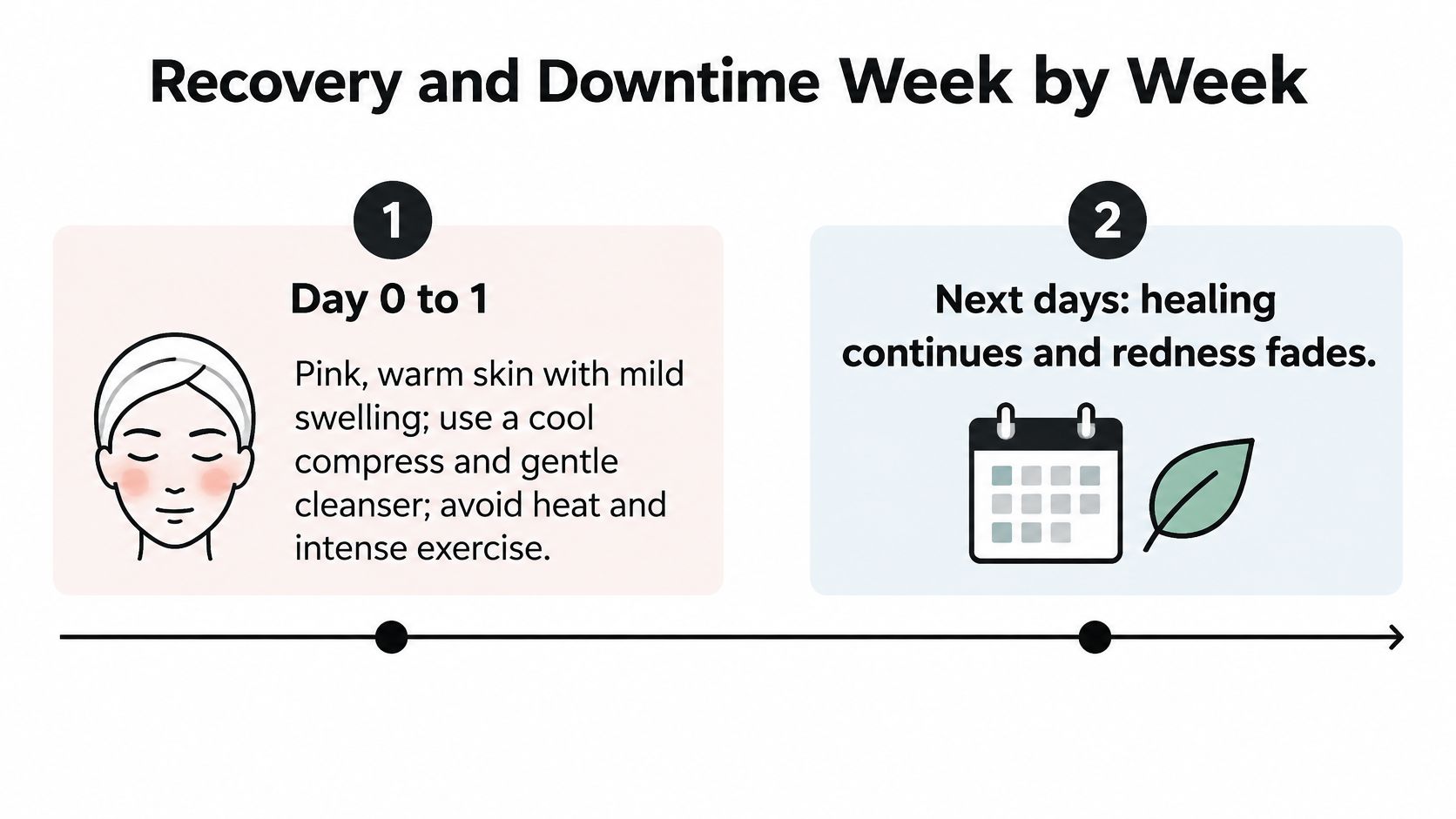
Recovery depends on whether the device breaks the surface. Fractional CO2 sits at the intensive end, while picosecond and many radiofrequency options usually leave redness for hours to a few days. The timeline below maps the first days so normal healing doesn't alarm you.
Days 0 to 7
Day 0 to 1: Expect pink, warm skin with mild swelling. Use a cool compress and a gentle cleanser, and avoid heat, intense exercise, and alcohol for 24 to 48 hours.
Days 2 to 4: After fractional CO2, flaking, crusting, or light oozing is common. Keep the area moist with a plain barrier cream and don't pick, because picking invites marks.
Days 5 to 7: Skin often feels dry and tight as it sheds. Makeup can resume once the surface has closed and the provider confirms it's safe.
In a prospective clinical study summarized in a 2023 systematic review, 35 adults aged 29 to 35 years with Fitzpatrick skin types III and IV received three fractional CO2 treatments at four-week intervals, and average reported pain was 3.1 on a 1 to 10 scale, while erythema, oozing, and edema were generally mild to moderate.
Weeks 2 to 4 and warning signs
Redness fades during weeks two to four while collagen builds underneath, so skin can look calmer before pores look smaller. Daily broad-spectrum SPF 30 or higher protects that new collagen and lowers pigment risk. If you're comparing resurfacing recovery in our area, our guide to CO2 laser treatment on Long Island covers what local patients typically ask about healing time.
Call your provider promptly for spreading warmth, pus, severe pain, or blistering. Those signs aren't routine shedding, and early review matters more than waiting to see if they pass.
Who Is a Good Candidate and Who Should Wait
Laser treatment can improve enlarged pores over time, but pigment risk deserves particular attention in darker skin. The right choice depends on the wavelength, energy settings, and whether the device removes or injures the skin's surface.
A practical candidate checklist
Enlarged pores are the main concern: You're a stronger candidate when the treatment area has no active infection or unexplained skin change.
You can allow time for remodeling: Pore improvement develops over months, so one appointment is not a useful measure of the final result.
You can follow treatment guidance: Sun exposure and product use can affect how skin responds, so discuss preparation and aftercare with your provider.
You are not pregnant: Laser hair removal treatments are not recommended for pregnant clients. Discuss elective laser treatment with a clinician if you are pregnant.
Evidence on pore treatments includes people with Fitzpatrick skin types III and IV. For darker skin, especially types IV to VI, pigment changes require careful discussion before treatment.
The pigment numbers you should see before booking
A comparative study of fractional 1064-nm picosecond and nonablative fractional 1565-nm treatment found that both improved enlarged pores. Post-inflammatory hyperpigmentation occurred on 5.3% of the picosecond-treated sides versus 52.6% with the 1565-nm treatment.
Those figures describe the treatments and participants in that study, not a guarantee of what will happen to you. For Fitzpatrick IV to VI skin, ask how the provider will assess pigment risk, choose settings, and respond if darkening develops.
Avoid sun exposure for 2 weeks before treatment. If pigmentation appears after treatment, contact your provider rather than treating it as ordinary redness.
Wait if you have an active infection, an unexplained skin change, or a medication history that your clinician has not reviewed. In particular, clients must not be on medications such as Accutane, Retin-A or Gold Therapy at present or within the past 6 months before treatment.
Pairing Laser Treatment With Your Skin-Care Routine
Your routine can protect laser treatment for pores or undo it. Work through these steps in order, and note the slip that causes trouble at each stage.
Four weeks before, list every active. Write down retinoids, acids, vitamin C, and any isotretinoin history, then ask which products to pause. The stop window varies by device and clinic, so don't guess. We require that clients must not be on medications such as Accutane, Retin-A or Gold Therapy at present or within the past 6 months before treatment.
Two weeks before, lock in sunscreen. Start daily broad-spectrum SPF 30 or higher and skip tanning beds. Arriving tanned raises pigment risk and may force the provider to lower settings or reschedule you.
On treatment day, arrive bare. Clean skin, no makeup, and no active products that morning. Residue on the surface interferes with even energy delivery and makes assessment harder.
For the first 48 hours, keep it plain. Use a gentle cleanser and fragrance-free moisturizer only. Exfoliating acids on freshly treated skin sting, inflame, and slow barrier repair.
Days 3 to 14, support the barrier. Add a barrier-supporting moisturizer and mineral sunscreen, and hold retinoids until the surface has closed. The common slip is restarting a retinoid because skin looks healed before it feels fully calm.
Between sessions, reintroduce slowly. Gentle options such as niacinamide can support oil control once your provider clears them. Add one product at a time so you know what caused any irritation, and follow our detailed post laser skin care guidance for sequencing.
After the series, shift to maintenance. Salicylic acid or a retinoid, used as directed, helps keep follicles clear so pores stretch less. Book a touch-up when pores creep back rather than restarting a full routine overhaul at home.
Restarting strong actives too early is the most common routine mistake. It irritates healing skin and can trigger the very darkening you're trying to avoid.
Give each phase its full window. Calm, protected skin remodels better than skin that's constantly reacting to a new product.
Confirm the Right Pore Treatment Before You Book
Pore treatments work gradually, so choose a provider based on fit and safety, not a promise of instant closure. Use this table to organize questions for a consultation. Your skin type, pigment history, and treatment goals all matter.
Likely treatment fit by situation
Your Situation | Likely Fit | Why |
|---|---|---|
Enlarged pores with texture and sun damage, lighter skin | Fractional CO2 | Strong remodeling evidence in the studies reviewed |
Enlarged pores with mild laxity | Radiofrequency microneedling | Targets deeper tissue with less surface injury |
Enlarged pores, Fitzpatrick III to IV, shorter recovery wanted | Fractional picosecond 1064 nm | About 30% reduction at six months with mild early downtime |
Darker or pigment-prone skin, Fitzpatrick IV to VI | Provider review before treatment | Pigment risk depends on settings and aftercare, not just the device name |
Mild pores and texture, lowest intensity wanted | Microneedling | A gentler starting point with shorter recovery |
Pregnant, or taking isotretinoin | Wait and discuss with a clinician | Treatment suitability should be reviewed before proceeding |
Questions that reveal a careful provider
Device and wavelength: Which exact device will you use, and why is that wavelength suitable for my skin?
Skin typing: How will you assess my Fitzpatrick type and pigment history?
Patch test: Would a patch test help assess risk for my skin?
Series plan: How many sessions do you recommend, and when will we review progress?
Pigment plan: What steps will you take if darkening appears?
Aftercare: Which products and follow-up visits are included in the price?
Start with your goal, whether that is pore appearance, texture, or laxity. Then discuss skin type and pigment risk, followed by recovery time and budget. Darker skin types, particularly Fitzpatrick IV to VI, may face greater pigment risk, so ask how the provider will adjust treatment and respond to changes in skin tone.
On cost, the American Society of Plastic Surgeons laser skin resurfacing cost page reports an average of $1,829 for laser skin resurfacing. This is a general procedure figure, not a pore-specific price. Ask for per-session and full-series pricing that includes aftercare.
Bring photos taken in natural light, a list of your skin-care products, and questions about how progress will be assessed over time. Pore improvement builds through collagen remodeling over months, so ask when the provider recommends reviewing results. Study averages can help set expectations, but they are not promises for an individual result.
NYC Laser Hair Removal's Westbury team can assess your skin type, explain its laser hair removal services, and discuss whether a consultation fits your goals. The center is located at 355 Post Avenue, Suite 102, Westbury, NY 11590. Contact the team at 516-321-4959 or INFO@NYCLASER.COM.
Comments