
Post Laser Hair Removal Aftercare Guide: What to Expect
You're home from your appointment, your underarms feel warm, and the little bumps around the hairs look more noticeable than you expected. You're wondering whether to apply aloe, take a shower, or call the clinic.
Good post laser hair removal care starts with a simple distinction: mildly irritated skin should gradually feel better, not progressively worse. Keep your routine gentle, watch the direction symptoms are moving, and don't assume that every change in skin color or hair growth is part of normal healing.
Normal Healing Timeline and Warning Signs
Warmth, pinkness, mild stinging, and small raised areas around the follicles can be expected after treatment. The American Academy of Dermatology identifies discomfort, redness, and swelling as the most common effects, generally lasting 1–3 days, and recommends a cool compress for discomfort.
The important distinction is improvement. Tenderness that eases is different from pain that becomes stronger, spreads beyond the treatment area, or returns after the skin seemed to settle.
Post-treatment timeline and when to call
Recovery isn't a rigid calendar. Use the pattern below to decide whether to continue gentle home care or arrange an assessment.
When | What You May Notice | Normal or Call Provider |
|---|---|---|
Day of treatment | Warmth, mild stinging, and pinkness | Usually normal when mild |
During early recovery | Redness, swelling, and tenderness similar to a mild sunburn | Usually normal if steadily fading |
As surface irritation settles | Calmer skin, sometimes with mild dryness or flaking | Moisturize gently; call if irritation increases |
During subsequent shedding | Treated hairs loosen and release gradually | Expected; results build over the treatment course |
Pain isn't settling | Pain that spreads, intensifies, or doesn't improve | Call your provider |
Any time | Blisters, open skin, pus, fever, or infected-looking sores | Call your provider the same day |
Persisting pigment change | A dark or light patch that persists or grows | Photograph the area and book a review |
On treatment day, avoid repeatedly touching the area to check its temperature. During early recovery, compare how it feels with how it felt previously, rather than comparing it with someone else's photographs online.
Later, dryness may become more noticeable as warmth subsides. That isn't a reason to scrub. Hairs can also remain visible before releasing, so don't expect an immediately smooth surface; our guide to laser hair removal shedding explains what that process can look like.
Morning check: Is the discoloration fading, and is the tenderness easing rather than spreading? Improvement is reassuring. A worsening symptom deserves a call, even if another symptom has improved.
What changes for darker skin
Redness can be harder to recognize on pigmented skin. Pay attention to tenderness, swelling, unusual warmth, and a new dusky, grayish, darker, or lighter patch rather than relying on pinkness alone.
StatPearls' laser hair removal reference identifies greater pigment-change risk in Fitzpatrick skin types III–VI and reports older ruby-laser data showing hyperpigmentation in 9.9% of patients versus 2.1% with Nd:YAG. Those historical comparisons help explain why laser selection matters; they aren't a prediction of your personal outcome.
Darker skin isn't more sensitive. Wavelength, energy settings, cooling, recent tanning, and treatment spacing influence how much heat reaches the surrounding skin.
Photograph a new patch in consistent lighting without filters, and note whether its edges expand or its color deepens. Arrange a review for persistent or worsening discoloration rather than trying a bleaching cream or exfoliating acid yourself. Blistering, open skin, or increasing pain needs prompt assessment, not a wait-and-see photo log.
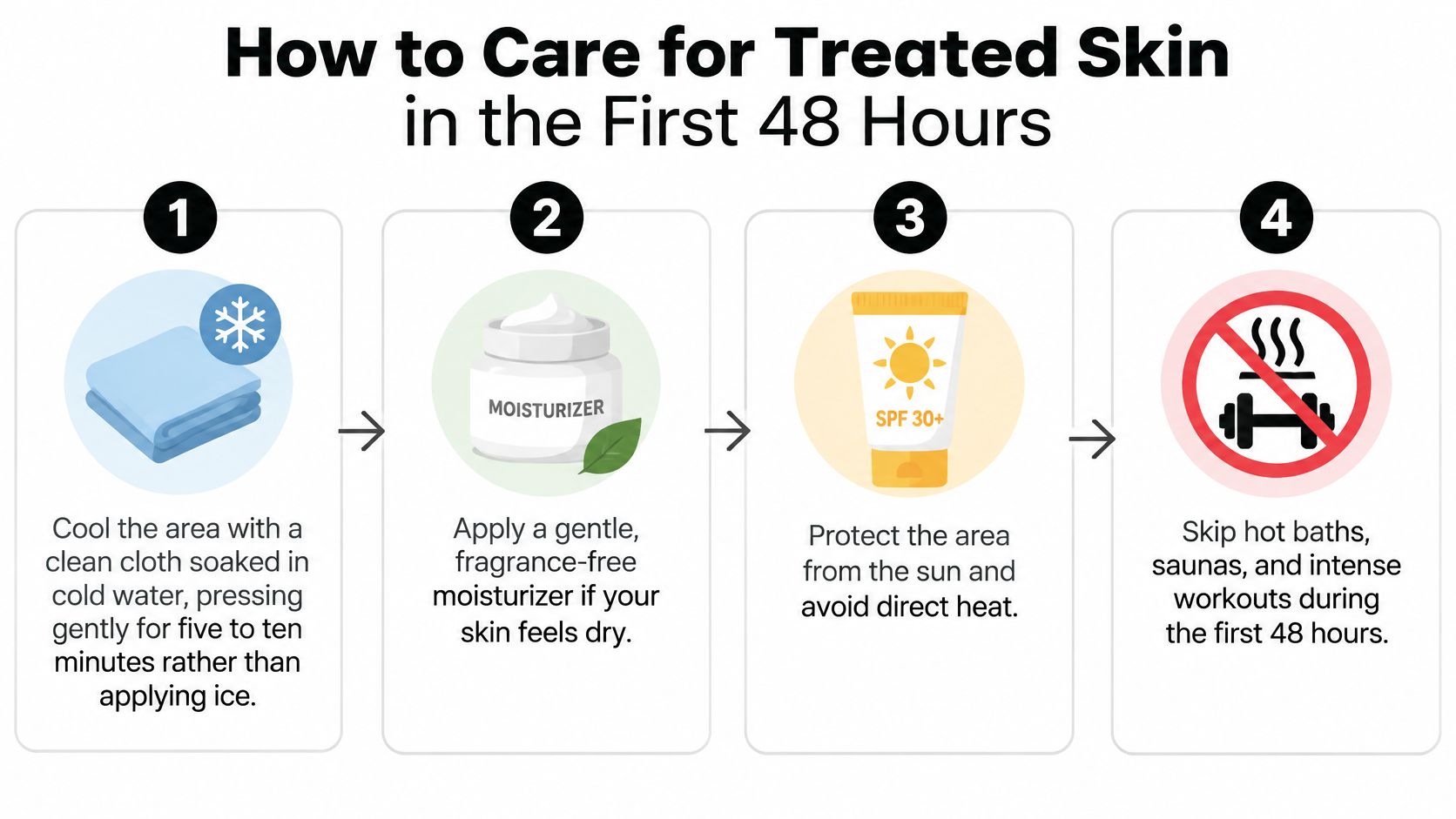
How to Care for Treated Skin in the First 48 Hours
Start with cooling, gentle cleansing, and less friction. Your usual skincare routine may include useful products that are not suitable while the treatment area is irritated.
A simple same-evening routine
Cool before applying products. Soak a clean, soft cloth in cool water, wring it out, and rest it gently against the area. Refresh it when it warms up; don't press hard or apply ice directly, which can injure the skin.
Clean without scrubbing. Use lukewarm water and a mild, fragrance-free cleanser, then pat dry with a clean towel. Fingertips are enough. Leave the cleansing brush, textured washcloth, and loofah out of the shower.
Add a light soothing layer. Once the skin feels cooler, apply a thin layer of plain aloe gel or fragrance-free moisturizer. More product isn't necessarily more soothing; stop if it causes persistent stinging or makes the area feel worse.
Avoid activities that leave the area hot and sweaty. Choose a comfortably lukewarm shower instead of a hot bath, and postpone saunas, steam rooms, hot tubs, and strenuous workouts while the skin remains reactive. Follow your treating clinician's instructions if they call for a longer pause.
Reduce rubbing from clothing. Loose cotton underwear, relaxed trousers, and soft tops are practical choices. After treating the bikini line, a tight waistband can be more irritating than the fabric itself.
Leave bumps and loose hairs alone. Don't scratch, squeeze, pick, or try to help hairs out with tweezers. If itching makes this difficult, contact the clinic instead of experimenting with medicated creams.
Keep the essentials easy to remember with this visual checklist.
The common mistake is restarting too much
Makeup, deodorant, perfume, and body scrubs are easy to reach for out of habit. On reactive skin, fragranced formulas can sting, rubbing can aggravate follicles, and dirty applicators can introduce contamination.
Wait until the area is comfortable and intact before resuming products that aren't essential. If you need makeup for work or deodorant after underarm treatment, ask your treating team what fits your skin's condition rather than covering a painful area and hoping for the best.
Comfortable skin doesn't need an elaborate recovery routine. If every new layer stings, simplify rather than adding another soothing product.
Look for lighter discoloration, less tenderness, and no spreading heat as recovery progresses. Don't use a particular day on the calendar as permission to restart everything if the skin still feels sore.
Sunscreens and Soothing Gels Worth Using
Read the ingredient list before the front-label promises. A product marketed as cooling may contain menthol, and a botanical gel may still contain fragrance or drying alcohol.
For exposed, intact treated skin, choose a broad-spectrum sunscreen you can apply comfortably and consistently. A mineral formula containing zinc oxide or titanium dioxide is a useful starting point when other sunscreens sting, although the whole formula matters more than the mineral-versus-chemical label.
Aftercare products and what to look for
Product | Look For | Avoid | When to Use |
|---|---|---|---|
Mineral sunscreen | Broad-spectrum protection; zinc oxide or titanium dioxide | Added fragrance or a formula that stings | In your morning routine and before outdoor exposure; reapply according to the label |
Pure aloe vera gel | A simple formula without alcohol, menthol, or fragrance | Heavily scented or stinging gels | After cooling, if it feels comfortable |
Fragrance-free moisturizer | Glycerin or ceramides | Retinoids, exfoliating acids, and heavily fragranced formulas | When skin feels dry or tight |
Cool compress | A clean, soft cloth and cool water | Ice directly against skin | For mild heat or stinging |
A sunscreen stick can be convenient for small exposed areas, but dragging it over tender skin may hurt. A lotion is easier to spread gently over larger areas such as legs or the back. Don't apply sunscreen to mucosal surfaces or broken skin; use protective clothing and get clinical advice for damaged areas.
Our guidance on laser hair removal and sun exposure can help you plan outdoor activities without treating sunscreen as permission to sunbathe.
Choose comfort over active ingredients
Aloe is optional, not essential. If it stings, a plain fragrance-free moisturizer may suit you better; neither replaces cooling when the skin feels hot.
Product rule: Use the simplest formula that feels comfortable. Expensive serums don't compensate for heat, friction, or sun exposure.
Keep retinoids, exfoliating acids, and scrubs off the treated area until it has settled. Ask your treating clinician before using hydrocortisone, particularly on the face, groin, or visibly damaged skin.
If you're also considering a separate resurfacing procedure, Aspire for Wellness Together's microneedling guide provides context for that treatment. Don't combine recovery routines or schedule overlapping procedures without having the timing reviewed.
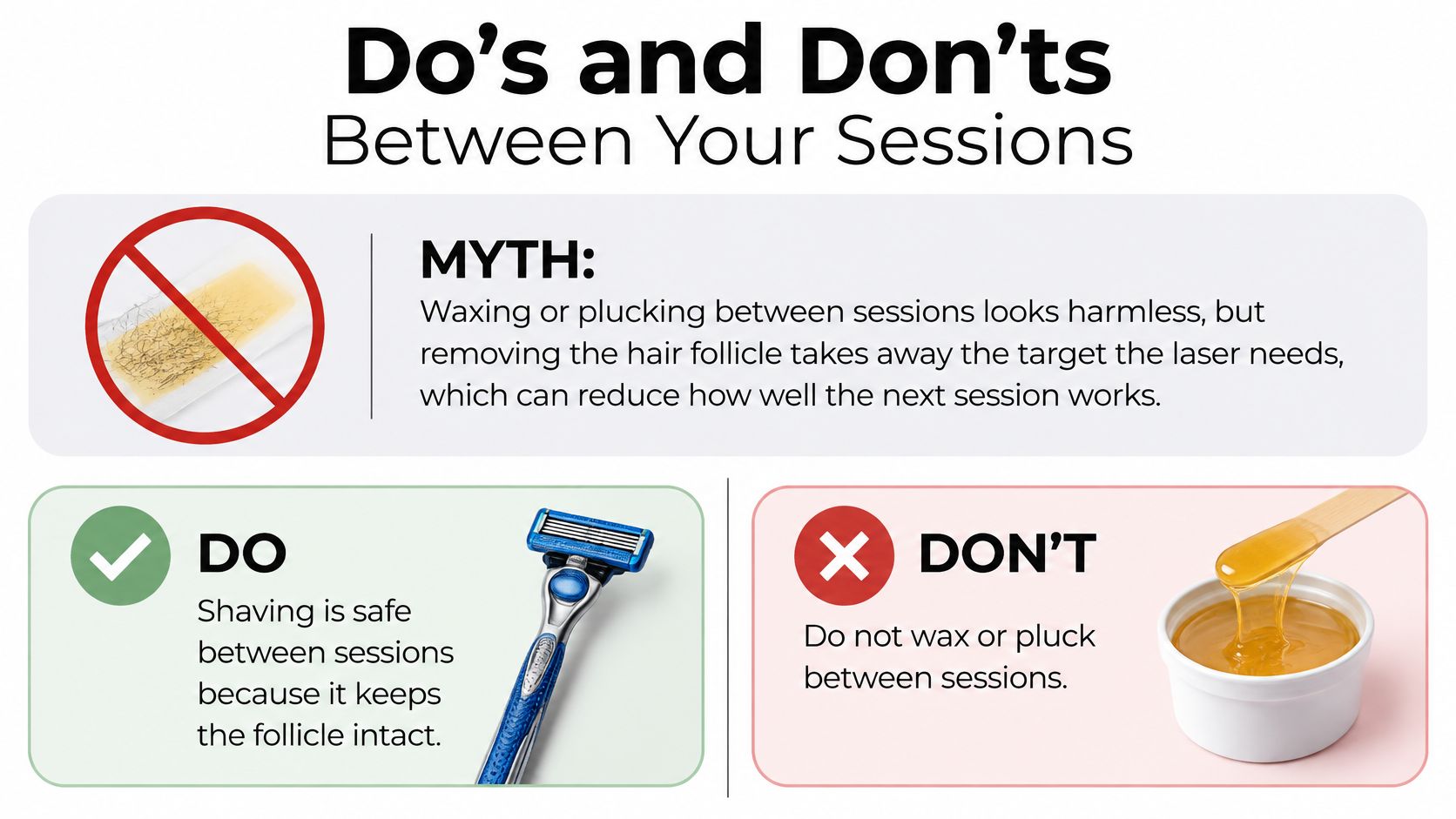
Do's and Don'ts Between Your Sessions
Between appointments, removing hair from the root can make the next laser treatment less effective. Waxing, plucking, and threading remove the hair the laser needs to target. Leave loosening treated hairs alone rather than shaving or pulling them out; once shedding has finished and the skin has settled, follow your clinician's instructions about hair removal before the next appointment.
Keep the next appointment useful
Do keep the skin comfortable. Moisturizer and breathable clothing can reduce dryness and rubbing.
Do protect exposed skin. Use shade, clothing, and sunscreen as part of your daily routine. Consistent sun protection helps limit pigment changes and may also reduce the risk of unwanted hair growth.
Do track progress consistently. Take photos in similar lighting, from the same distance, and at a comparable hair length.
Don't wax, pluck, or thread. Root removal takes away the target needed for laser treatment.
Don't arrive with a new tan. Avoid tanning beds and sun lamps, and tell your clinician about spray tans or self-tanner before treatment.
Don't restart irritating products on sore skin. Wait until the area has recovered and follow your treatment instructions.
Judge reduction over the planned course
Laser hair removal aims for long-lasting hair reduction, not guaranteed permanent removal. Results develop over a course of treatments, and hair cycles, skin response, medications, and tanning history can affect treatment timing. More sessions may improve reduction, but the right number and spacing depend on your individual treatment plan.
At the initial consultation, experienced professionals assess skin type and hair color to create a personalized plan. Tell the clinic about medication changes or new skin reactions before your next appointment.
For a visual companion to between-session care, watch the following video.
When Unexpected Hair Growth Needs a Clinician
Pain, blistering, and discolored patches aren't the only reasons to arrange a review. Hair that becomes progressively coarser, darker, denser, or more widespread also deserves attention, even when the skin feels completely comfortable.
Paradoxical hypertrichosis means new or increased hair growth after treatment. It can involve areas such as the jawline, cheeks, neck, shoulders, back, and upper arms, and it shouldn't be dismissed automatically as shedding.
Document the pattern rather than guessing
A study published in Aesthetic Surgery Journal found 25 cases among 7,381 laser hair-removal patients, an incidence of 0.34%, and reported an association between daily sun protection and lower incidence, with an odds ratio of 0.41. That association doesn't establish that sunscreen prevents unwanted growth, but it gives another reason to take photoprotection seriously alongside its role in limiting pigment changes.
Reported rates aren't uniform: a 2025 prospective facial laser hair removal study by researchers at King Abdullah University Hospital and affiliated institutions reported paradoxical hypertrichosis in 16.2% of participants. Different treatment areas and study populations mean neither figure is a personal risk estimate.
The practical question is whether you're seeing hairs release, untreated hairs continue growing, hormonally influenced regrowth, or a genuine increase beyond the original pattern. You can't reliably diagnose that from a close-up photograph alone.
Record location. Note whether the change is inside the treated area, along its border, or somewhere that previously had finer hair.
Record progression. Take photographs at consistent intervals without filters, and note treatment dates and hair-removal methods.
Record other changes. Mention medication changes and symptoms such as new acne or menstrual changes, which may warrant medical evaluation for hormonal causes.
Review before changing treatment
Don't respond by repeatedly treating the area with a home device, requesting stronger settings, or switching technologies without assessment. More energy isn't automatically the right correction, and conservative settings aren't automatically harmless if they don't suit the hair and skin being treated.
Our explanation of whether hair grows back after laser hair removal can help you describe the pattern, but a clinician should assess a sustained increase. The next step may involve reviewing photographs, the treatment area, previous settings, and possible medical contributors before deciding whether to continue.
Call 516-321-4959 or email INFO@NYCLASER.COM to arrange a clinician review before your next session. Describe what changed and when, rather than reporting that treatment didn't work.
NYC Laser Hair Removal offers personalized laser hair reduction using Splendor X technology, with aftercare guidance to help you manage recovery between appointments. Visit NYC Laser Hair Removal to discuss your skin, treatment goals, and any post-treatment changes before planning your next session.
Comments