
Hair Removal Services Men: A Practical Guide
Shaving your neck before work, managing razor burn along the collar line, and trying to reach the middle of your back with a disposable razor can turn grooming into a recurring chore. If coarse hair causes bumps, itching, or irritation, removing the visible hair isn't always solving the underlying problem. It may be time to consider professional hair removal services for men as a skin-management decision, not just a cosmetic upgrade.
Laser treatment can reduce the need for repeated shaving and help you manage dense growth on areas that are difficult to groom consistently. The right outcome depends on more than choosing a clinic. Device selection, wavelength, hair density, skin tone, treatment timing, and aftercare all influence how safely and effectively the process works.
Why Men Are Upgrading Their Grooming Routines
A typical client doesn't arrive because he suddenly dislikes body hair. He usually arrives after months or years of dealing with the same narrow set of problems. His neck develops bumps after shaving, his chest feels irritated after trimming, or his back becomes uncomfortable under sports equipment and clothing. He may still want some hair left behind, but he wants less density and fewer daily maintenance tasks.
Traditional tools have made male grooming more convenient, but they haven't made it permanent. The first Gillette safety razor, introduced in 1904, helped make shaving at home easier, while Schick's first electric razor, introduced in 1931, made daily facial-hair removal more convenient. Those milestones moved men away from relying only on barber shops and toward mass-market, at-home grooming tools, as described by the Smithsonian's history of hair removal. Laser treatment represents a later shift, from removing the hair you can see to reducing the follicle's ability to produce coarse hair.
The problems that push men toward laser treatment
Shaving cuts the hair at the skin surface. That can leave a rough feel quickly, especially when the hair is thick and fast-growing. It can also aggravate the neck, where curved follicles and repeated blade contact may contribute to ingrown hairs and persistent redness.
Waxing removes hair from the root, but it can be uncomfortable and may not suit a man who wants gradual thinning rather than complete removal. Depilatory creams can be unsuitable for sensitive skin, particularly when used on large areas without professional guidance. Trimming is often the least irritating option, but it still requires regular upkeep and doesn't address follicle-related bumps.
Practical observation: Men often seek laser treatment because they want fewer grooming decisions, not because they want an artificial or completely hairless appearance.
Professional treatment also supports more precise styling. A client may clear the lower neck while keeping a beard, reduce shoulder and upper-back density while retaining a natural chest, or target the areas where friction causes the most trouble. The plan should reflect the desired appearance, not a generic idea of smooth skin.
Daily facial care still matters around treated areas. If you keep a beard or maintain a shaped neckline, gentle cleansing and suitable moisturization can help support the surrounding skin. For additional guidance on maintaining facial hair comfortably, these aloe-based beard care tips from ALODERMA provide a useful complement to a professional treatment plan.
Top Treatment Areas and Expected Results
Men commonly request treatment for the back, chest, shoulders, abdomen, neck, and beard line. These areas don't behave identically. A beard line may require careful contouring, while the back presents a broad surface with dense, sturdy hair and limited visibility during home grooming.
The demand is also recurring rather than occasional. In a 2024 peer-reviewed study of 495 U.S. men, 46.7% reported removing pubic hair at some point in their lives, and 29.2% reported doing so during the previous 30 days, according to the study published in the National Library of Medicine. The same source discusses another academic study in which 69.5% of participants had previously removed upper-body hair and 64% had done so during the last month. These findings help explain why men often consider longer-term reduction for the chest, back, shoulders, and pubic region.
Matching the area to the objective
Treatment area | Hair density | Primary skin benefit |
|---|---|---|
Back and shoulders | Often dense, coarse, and difficult to reach | Less friction, fewer shaving-related bumps, easier maintenance |
Chest and abdomen | Variable, with broad areas of concentrated growth | Reduced daily trimming and improved comfort under clothing |
Neck and beard line | Coarse facial hair with frequent blade contact | Cleaner borders and less repeated shaving irritation |
Underarms | Coarse hair in a sensitive, high-friction area | Less stubble and reduced grooming effort |
Pubic region | Coarse growth with sensitivity and friction concerns | More controlled grooming and fewer repeated removal cycles |
Large trunk areas may show a strong visual change because reducing dense hair changes both the appearance and the feel of the skin. However, a clinic should distinguish between hair reduction and guaranteed permanent hair removal. Laser treatment is designed to damage active follicles and produce lasting reduction, but maintenance may still be appropriate.
Clinical evidence supports a substantial response in dense male trunk hair when the device and settings are properly selected. In a study of diode 810 nm treatment for larger areas such as the back and chest, the reported average hair reduction was 80.6% plus or minus 2.8%, as detailed in the clinical study of diode laser treatment. The same study described a stationary single-pass approach using 20 to 35 J/cm² and a motion technique using 6 to 10 J/cm², illustrating why treatment method must be matched to coverage, density, comfort, and clinical judgment.
What results should feel like
The first useful change may be slower regrowth, softer stubble, or fewer hairs appearing between shaves. Skin texture can improve when repeated razor contact and ingrown-hair cycles become less frequent, but laser isn't a treatment for every type of acne or folliculitis. A qualified provider should assess whether active skin disease, medication, tanning, or another condition needs attention before treatment.
How Splendor X Technology Handles Coarse Hair
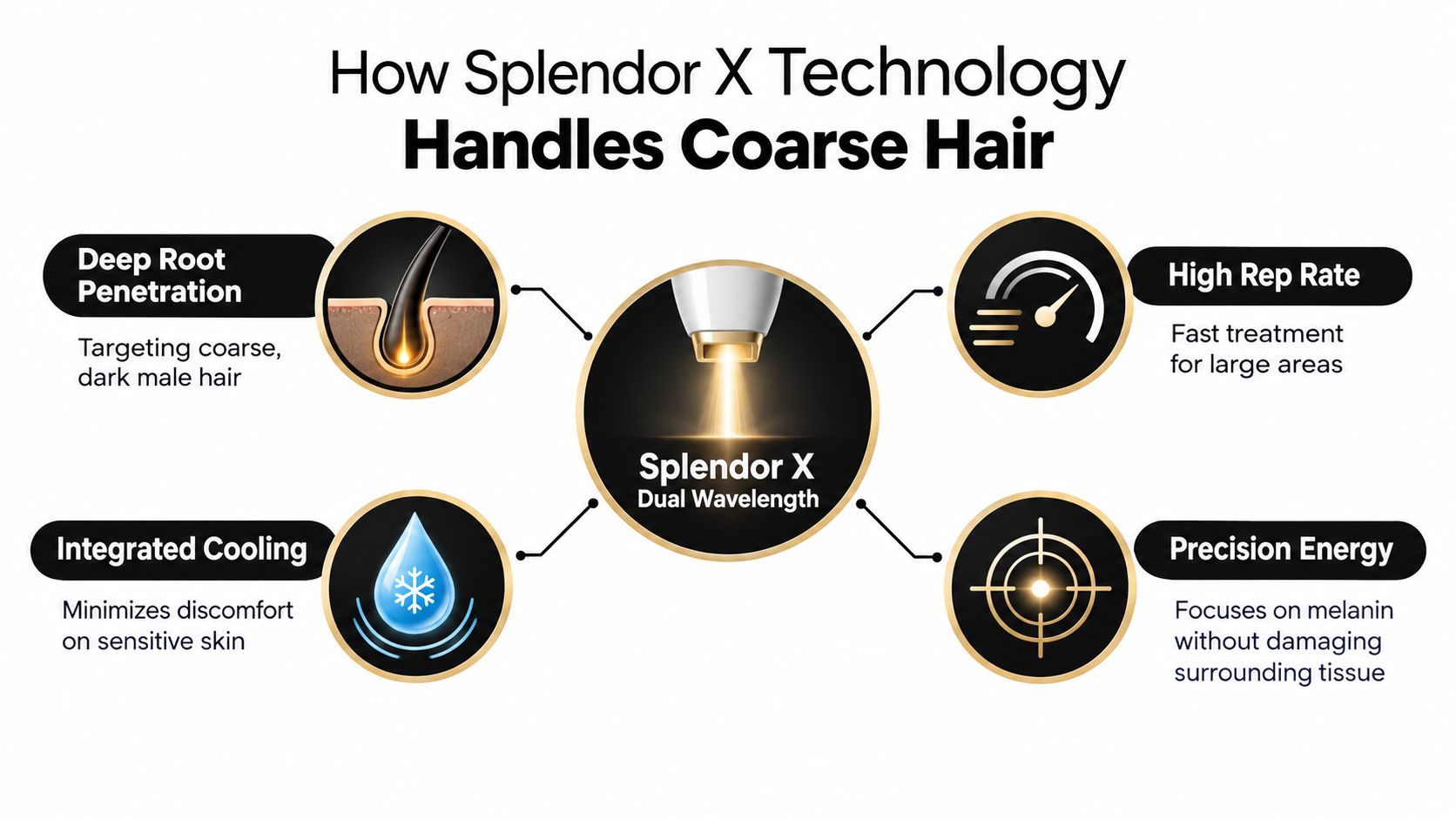
Coarse male hair contains a strong target for laser energy, but its depth and density also make treatment more demanding. The goal isn't to heat the entire surface of the skin. The goal is to deliver controlled energy to melanin in the hair and follicle while limiting unnecessary heat in the surrounding tissue.
Splendor X uses a dual-wavelength approach, combining Alexandrite and Nd:YAG capabilities. In practical terms, this gives a trained operator more ways to adapt treatment to the relationship between hair pigment and skin pigment. Skin tone, tanning history, hair thickness, treatment area, and comfort response should all influence the selected approach.
Why wavelength selection matters
Laser energy is absorbed by melanin and converted into heat. The hair acts like a pathway that helps carry that heat toward the follicle, where the treatment can interfere with future growth. The Mayo Clinic's explanation of laser hair removal notes that treatment works most effectively when hair is in the anagen, or active growth, phase.
Alexandrite energy is often associated with treating suitable lighter skin and dark hair combinations, while Nd:YAG is commonly selected when the provider needs a longer wavelength approach for darker skin tones. The correct choice isn't determined by skin tone alone. A consultation should account for current tanning, undertones, hair color, hair thickness, and the risk of pigment changes.
What the appointment should involve
A responsible treatment process usually includes:
Skin and hair assessment: The provider reviews tone, tanning, medication, previous reactions, and the areas you want treated.
Device and setting selection: The operator chooses an appropriate wavelength and energy strategy instead of applying one preset to every client.
Controlled delivery: The handpiece treats the area systematically, with coverage adjusted for density and sensitivity.
Cooling and comfort management: Integrated cooling can reduce the heat sensation and help protect the skin's surface during pulses.
Response monitoring: The provider observes redness, swelling, discomfort, and other reactions before planning the next visit.
Large, dense areas may benefit from a fast repetition rate and an organized pattern that avoids missed zones. Speed alone isn't a quality measure. A fast session with poor coverage or unsuitable settings can produce an uneven result, while excessive energy can increase irritation risk.
For readers comparing equipment and clinical capabilities, this guide to laser hair removal machines offers further context. The useful question isn't just whether a clinic owns an advanced device. Ask whether the operator understands how to adapt it for coarse hair and diverse skin tones.
Understanding Session Packages and Pricing
Laser pricing usually reflects treatment-zone size, body area, technology, and the number of appointments included. A small zone may mean a limited facial area, while medium, large, and extra-large categories can accommodate progressively broader regions such as the chest, back, or full legs. The clinic should define its zones clearly so you know what the quoted service includes.
A single appointment can make sense when you're testing comfort, treating a limited area, or deciding whether the provider is a good fit. It doesn't represent the full biological process, though. Because laser only affects follicles in a suitable growth stage, one visit can't address every follicle that will eventually become visible.
Single sessions versus bundled care
Payment approach | Useful for | Main limitation |
|---|---|---|
Single session | First appointment, small area, or cautious trial | May cost more per visit and can encourage incomplete treatment |
Three-session bundle | Early treatment planning and moderate commitment | May not cover the entire recommended series |
Six-session bundle | Structured reduction across a larger area | Requires upfront commitment and adherence to appointments |
Packages can offer a lower per-session rate, but the biological value matters more than the discount. A bundle encourages consistent scheduling, which helps the clinic treat new active-growth hairs as they become eligible. It also makes budgeting easier because you can estimate the cost of a defined course rather than paying unpredictably at every visit.
Before purchasing, ask whether the package applies to one zone or multiple zones, whether touch-up appointments are separate, and how long the package remains valid. Confirm whether shaving, consultation, protective eyewear, cooling, and aftercare guidance are included. A low headline price may not be useful if the treatment area is narrowly defined or important follow-up care costs extra.
The guide to laser hair removal pricing and plans can help you compare the structure of single visits and multi-session options. Your consultation should still produce a personalized quote based on the areas you want treated and the density of your hair.
The Biological Timeline for Lasting Reduction
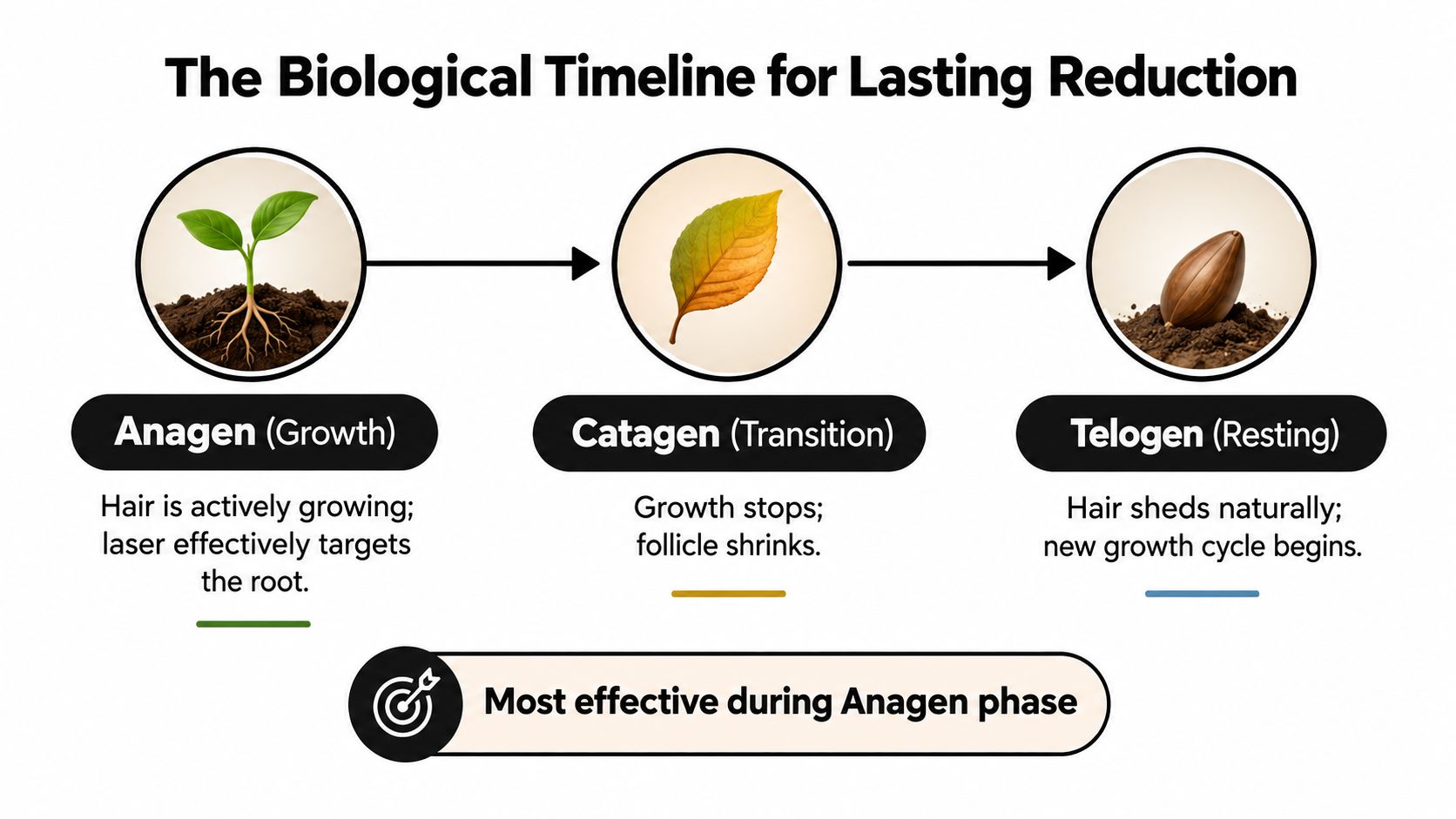
Laser works best during anagen, the active growth phase. During this stage, the hair is connected to the follicle in a way that allows absorbed laser energy to reach the growth structure. Hair doesn't enter this phase all at once, which is why a back, chest, or beard line needs a series of treatments rather than one appointment.
The three phases in plain language
Anagen, or active growth: The follicle is producing hair and is most responsive to laser energy.
Catagen, or transition: Growth slows and the follicle begins to change structure, making it a less suitable target.
Telogen, or resting: The follicle rests before the hair sheds and a later growth cycle begins.
The explanation of the anagen phase provides a useful overview of why timing matters. A provider uses the interval between appointments to allow another group of follicles to enter active growth. Treating too close together may mean many target hairs aren't ready, while waiting too long can make the process less organized.
The Mayo Clinic source cited earlier explains that a first session commonly produces only about 10% to 25% reduction, because the follicles aren't synchronized. That early result shouldn't be mistaken for treatment failure. Cumulative sessions allow the provider to address additional follicles as they move into the responsive phase.
What the timeline feels like
After treatment, some hairs may appear to grow before they shed. That visible hair isn't necessarily new growth. The follicle may be releasing treated material while the skin returns to normal. Your provider can tell you when gentle shaving is appropriate and whether the pattern looks consistent with expected shedding.
Use the recommended interval rather than booking whenever the hair becomes visible. Facial areas may follow a different rhythm from the body, and coarse male hair can respond unevenly across the same zone. A good plan tracks density, texture, skin response, and your grooming goal rather than promising an identical result for every client.
This short video provides a visual introduction to the growth-cycle concept:
Preparation and Aftercare Protocols
Preparation protects the skin before the laser reaches the follicle. Aftercare reduces unnecessary heat, friction, and irritation while the treated area settles. Men often focus on the appointment itself and underestimate how much their shaving technique, workout schedule, sun exposure, and skincare products can affect comfort.
Before the appointment
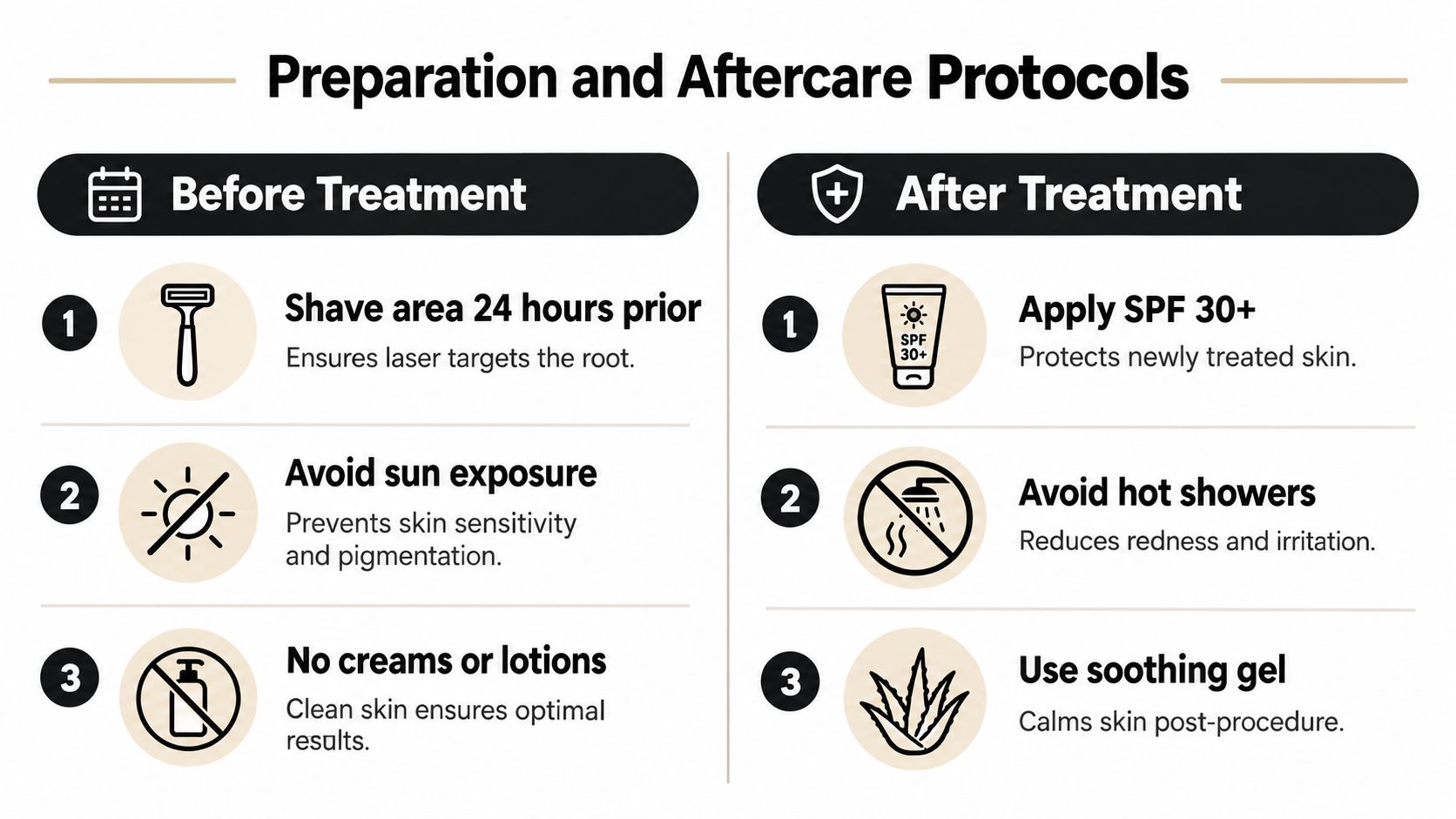
Shave rather than wax: Shave the area as directed by the clinic, often around the day before treatment. The aim is to leave the follicle present while reducing hair above the skin that could absorb heat.
Avoid tanning: Postpone treatment if the area is sunburned, recently tanned, or exposed to intense sunlight. Extra pigment in the skin can change the safety calculation.
Arrive with clean skin: Don't apply creams, oils, deodorant, or fragranced products to the treatment zone unless the clinic tells you otherwise.
Discuss active products: Tell the provider about retinoids, exfoliating acids, acne medication, antibiotics, and any history of pigmentation changes or cold sores.
Don't pluck the root: Waxing, threading, and plucking can remove the target the laser needs to reach.
The clinic may recommend a patch test, especially when your skin tone, tanning status, or treatment history calls for additional caution. Don't conceal recent sun exposure. Accurate information helps the operator choose safer settings or postpone the appointment when necessary.
After the appointment
Redness, warmth, and temporary follicular swelling can occur after treatment. Cool compresses and a bland soothing product may help, but don't apply anything that your provider hasn't approved for the area. Avoid hot showers, saunas, intense exercise, and tight clothing immediately after treatment if they increase heat or friction.
Use broad-spectrum sun protection on exposed treated skin and follow the clinic's instructions about when to resume active skincare. Don't scrub, pick, or pull at shedding hairs. Contact the clinic if you develop severe pain, blistering, spreading swelling, or a reaction that doesn't match the aftercare guidance.
Some clients ask about topical numbing products. Before applying anything, ask the treating provider whether it is appropriate for your area, skin condition, and treatment settings. This MEDISTIK advice on numbing cream with lidocaine offers background for that conversation, but it shouldn't replace instructions from the professional performing your treatment.
Taking the Next Step Toward Smooth Skin
Professional laser treatment makes the most sense when repeated shaving, trimming, or waxing is creating a practical problem. A well-designed plan can reduce dense growth on the back or chest, refine a beard line, and limit the cycle of blade contact that contributes to irritation. The objective doesn't have to be total hairlessness. Many men choose controlled thinning so their skin looks natural and feels easier to manage.
Technology matters, but the operator's judgment matters just as much. Ask how the clinic treats darker skin tones, which wavelength it would select for your hair and skin combination, how it handles tanning, and how it defines a successful result. You should also receive clear preparation instructions, realistic guidance about multiple sessions, and a plan for evaluating your response.
A consultation is the right place to discuss whether laser suits your goals, whether a smaller treatment zone would be more appropriate, and whether another method is better for light or pigment-poor hair. Don't commit to a package until you understand the area covered, session schedule, aftercare expectations, and policy for maintenance visits.
If you're comparing hair removal services for men in Long Island or Nassau County, choose a provider prepared to assess coarse hair, sensitive areas, and varied skin tones rather than treating every client with the same settings. A measured plan will usually serve you better than a promise of instant smoothness.
NYC Laser Hair Removal offers personalized laser hair reduction for men using Splendor X technology across areas such as the back, chest, abdomen, neck, and beard line. Visit NYC Laser Hair Removal to review the available treatment options and book a consultation for a plan matched to your skin, hair, and grooming goals.
Comments