
Aftercare Instructions After Laser Hair Removal
You're home from your session, the skin feels warm and looks a little pink, and you're wondering whether you can shower, work out, or put on moisturiser tonight. That's the gap good aftercare instructions should close. Laser hair removal is often sold as no downtime, and you can usually get back to work, school, and errands right away. It doesn't mean no rules. For the next eight weeks, what you do about heat, friction, products, and sun has a direct effect on comfort, colour changes, and how well the skin settles between sessions. Use this as a dated, skin-tone-aware plan, and treat your clinic's written instructions for your device and skin type as the final word.
Your Day-by-Day Aftercare Timeline
Start with the calendar, not guesswork. This table is the default structure to pin to your bathroom mirror until your next visit.
Window | What to do | What to avoid |
|---|---|---|
Hours 0-24 | Cool the area in short intervals and cleanse gently | Heat, sweating, makeup, rubbing and hot baths |
Days 2-3 | Moisturise with a fragrance-free product; redness and swelling usually settle | Scratching, picking, exfoliants, waxing or plucking |
Days 4-7 | Wear SPF 30+ daily; resume normal exercise once the skin is calm | Direct sun, tanning beds and harsh scrubs |
Weeks 2-4 | Keep up daily sunscreen and watch for any lasting colour change | Self-tanners and bleaching products without clinic approval |
Weeks 5-8 | Continue sun protection; the skin stays sun-sensitive for about 8 weeks | Unprotected sun exposure and tanning |
That eight-week tail is not padding. NHS Grampian's dermatology guidance states that redness and swelling commonly settle within 1 to 2 days, while temporary darkening or lightening may take several months to disappear completely, and treated skin may remain highly sensitive to sunlight for 8 weeks. The same guidance tells patients not to rub, scratch, or injure the area, to let scabs fall off naturally, and to avoid makeup until inflammation settles.
Your first-evening routine
Keep tonight boring. Boring is what calms skin.
Wash your hands first. Cleanse the area with lukewarm water and a mild, fragrance-free cleanser. Your hands carry bacteria and product residue, and freshly treated skin doesn't need either.
Pat dry, don't rub. Use a clean towel and press gently. Rubbing adds friction on top of heat, and friction is what turns mild pinkness into sore, irritated skin.
Cool in short intervals. Wrap a cool pack in a thin cloth and hold it on for up to 2 minutes, then take a 2-minute break. Never put ice directly on skin. Short cooling eases heat without chilling the tissue too far.
Moisturise once skin is cool and dry. Use a light, fragrance-free moisturiser in a thin layer. A heavy, scented cream traps heat and perfume ingredients can sting.
Check before bed and again in the morning. Look for changes in colour, swelling, or heat. You're setting a baseline, so tomorrow you can tell whether things are improving or getting worse.
If you only remember one thing tonight, remember this. Cool briefly, touch gently, and add nothing scented, scrubby, or hot.
Three slips cause most first-night problems. People leave ice on while watching TV, wash with a scented body wash because it's already in the shower, or take a hot shower to relax. Each one pushes irritated skin in the wrong direction. I would set a timer for cooling and move the fragrance-free cleanser to the front of the shelf before your appointment, so you're not hunting for products with warm, sensitive skin.
Bathing, heat, and getting back to exercise
Your first shower should be lukewarm, brief, and gentle. Let water run over the area, cleanse with your hands, and skip washcloths, loofahs, and exfoliating gloves. Avoid hot showers, saunas, steam rooms, and hot yoga for the first 48 hours. Heat brings more blood flow to skin that's already inflamed, which can prolong redness and swelling. As the skin calms over the next few days, you can return to normal showers, but keep patting dry rather than scrubbing.
Exercise follows the same logic. Light activity that doesn't leave you overheated or drenched in sweat is the sensible choice in the first days. From days 4 to 7, normal exercise is reasonable once the skin is calm, not sore, and not developing new redness after a session. If tight leggings, a sports bra strap, or a waistband rub the treated area, change the clothing or change the workout. Sweat itself isn't the enemy, but sweat plus heat plus friction is a poor combination. For area-specific timing, see our guide to exercise after laser hair removal.
By the end of the first week, the hands-on phase is usually complete, and the protection phase begins. Don't mistake that shift for being finished. Pinkness can fade while sun sensitivity remains, and hairs can shed unevenly without meaning the treatment failed. Follow the windows in the table, and if your clinic gave you different timing for your skin type or device, that instruction takes priority over this general plan.
Sun and SPF Rules That Protect Your Results for Eight Weeks
Sun protection is the rule people underestimate most, partly because the skin can look normal long before it behaves normally in UV light. This photo is a useful reminder to read the tube, not just assume any lotion will do.
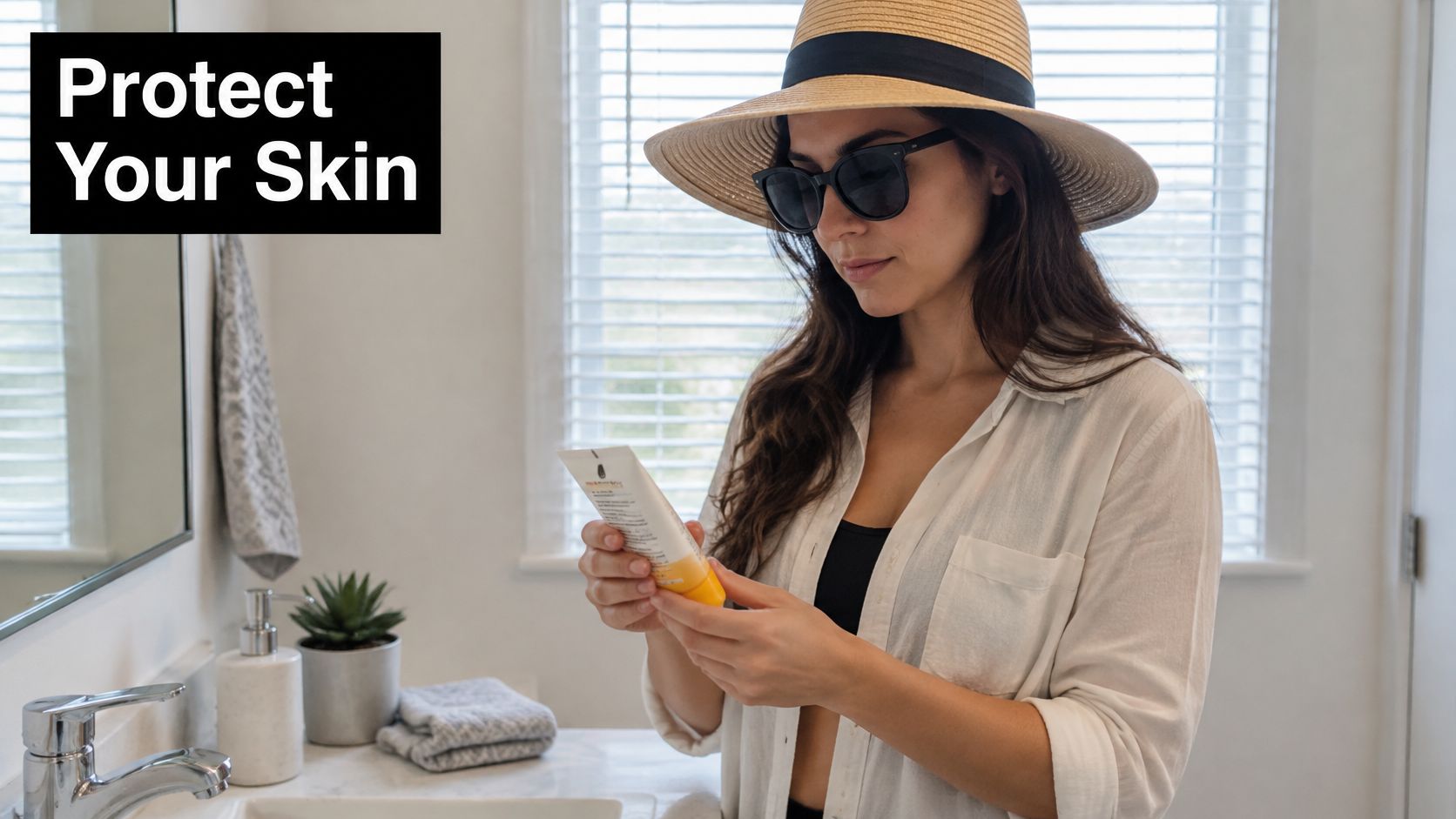
The risk is pigment. Laser energy targets pigment, and after treatment the skin can respond to UV by making a patch darker or lighter. The American Academy of Dermatology laser hair removal FAQs set the standard as avoiding direct sunlight and indoor tanning and using broad-spectrum sunscreen with SPF 30 or higher daily, and note that this matters especially for people with Black or brown skin, where the risk of darkening or lightening is higher with sun exposure before or after treatment. That isn't a reason to avoid treatment. It's a reason to plan the calendar properly.
On duration, you'll see two numbers. Mayo Clinic's laser hair removal guidance recommends protecting treated areas from sun exposure for six weeks or as directed by the clinician and using broad-spectrum SPF 30 or higher daily. This guide uses eight weeks as the working rule because sun sensitivity can last that long after redness fades. If your clinician gives you a longer window, use the longer window.
What protection looks like on a normal day
Say you commute on foot in Nassau County, walk to a station, and spend lunch outside. Sunscreen alone is the weakest version of protection because people apply too little and sweat it off. Cover the treated area with clothing where you can, choose shade on the platform and pavement, apply SPF 30+ before you leave, and reapply after sweating. Cloudy days and winter still count, because UV reaches skin even when it doesn't feel hot. These everyday habits for sun protection are worth building into your routine rather than treating sunscreen as a beach-only product.
If you've tanned in the past two weeks, tell the clinic before your session and expect that the appointment may need to move. A fresh tan changes the pigment picture in the skin, and pushing ahead to keep a package on schedule is a bad trade. Ask which device is being used and how follow-up is set for Fitzpatrick III-VI skin, because device choice and settings affect pigment risk. Our page on laser hair removal and sun exposure covers postponement and tanning between sessions in more detail.
This short video reinforces the same daily habits before you head back outside.
No downtime does not mean no restrictions. It means you can live your normal life while following a short list of important instructions, and sun protection sits at the top of that list for the full eight weeks.
Products to Use and Avoid While Skin Heals
You don't need a new shelf of products. You need four plain items and the discipline to leave the active products alone. Buy them before your appointment so you're not improvising with whatever scented lotion is already open.
Product type | Use it for | Avoid |
|---|---|---|
Fragrance-free gentle cleanser | Washing the area once daily with lukewarm water | Scrubs and cleansers with alcohol or strong fragrance |
Fragrance-free moisturiser | Calming dryness after the first 48 hours | Products with fragrance, retinoids or acids |
Broad-spectrum SPF 30+ sunscreen | Daily protection on cloudy days and in winter too | Skipping days, or relying on sunscreen instead of shade |
Cool compress or ice pack | Easing heat for 2 minutes at a time, with breaks | Ice applied directly to the skin |
Makeup | Only after inflammation has settled | Foundation or concealer on freshly treated skin |
Exfoliants, self-tanners and bleaching creams | Only after the clinician clears them | Glycolic acid, scrubs and tanning products during healing |
The core kit and why plain wins
A fragrance-free cleanser and fragrance-free moisturiser do the daily work. Scented lotions and so-called soothing gels often contain fragrance or alcohol, and both can sting skin that's already reactive. A plain moisturiser supports the barrier while dryness settles. If chemical sunscreens have stung you in the past, a physical, mineral sunscreen may feel better on sensitive skin, but the essential step is broad-spectrum SPF 30+ used every day.
Patch-test anything new. Try it on a small area of untreated skin first, not on the treated area.
Check the ingredient list, not the front label. Words like soothing and calming don't tell you whether a product contains fragrance or drying alcohol.
Keep the kit separate. A small bag with cleanser, moisturiser, and sunscreen stops you reaching for the wrong bottle when you're tired.
Shopping rule: If a product promises to resurface, brighten, peel, tan, or bleach, it waits until your clinic clears it.
What stays in the drawer
Hold makeup until inflammation has settled, because applying and removing foundation adds rubbing to skin that needs less handling. Pause exfoliating acids, scrubs, retinoids, self-tanners, and bleaching creams unless your clinician has specifically cleared them. Acids and retinoids increase sensitivity, scrubs add friction, and tanning or bleaching products interfere with judging true colour change. New products can wait until the clinic has checked your skin at the next visit.
Normal Redness Versus Signs to Call Your Clinic
Most reactions are mild and short. Discomfort, redness, and swelling are generally minor and last one to three days, so a warm, pink area on the first evening is usually the treatment settling, not a complication. The useful skill is sorting that expected response from a change that's moving in the wrong direction.
Symptom | Usually normal | Call the clinic if |
|---|---|---|
Redness and mild swelling | Settles within 1-3 days | Still spreading or worsening after 3 days |
Warmth around the area | Mild, fades within a day | Hot, throbbing or spreading warmth |
Pain or stinging | Mild, eased by cooling | Pain that rises after day two |
Blisters or crusting | Not expected | Any blister, weeping area or new crust |
Discharge or pus | Not expected | Any discharge, which can signal infection |
Colour change | Temporary pinkness or light marks that fade over weeks | A dark or light patch still present after several months |
Fever or feeling unwell | Not expected | Any fever or symptoms that spread |
How to judge the trend
Direction matters more than a single snapshot. Normal healing gets a little better each day, even if it isn't fully gone. Warning signs spread, intensify, or bring something new, such as blistering, crusting, discharge, or fever. Pigment is the slow exception. Temporary pinkness or light marks can fade over weeks, but a dark or light patch that's still present after several months should be checked rather than covered with bleaching products or self-tanner.
If a symptom worsens after two or three days, call that day.
Don't wait for the next session to mention a problem, and don't try to fix blistering or discharge with harsh antiseptics, scrubs, or leftover prescription creams. Take a clear photo in natural light each morning if you're concerned. A dated set of photos helps the clinician see spread, colour, and whether swelling is rising or falling, and it beats trying to describe yesterday's redness from memory. Our overview of the side effects of laser treatment gives more background on uncommon reactions.
For our clients, you can call 516-321-4959 or email INFO@NYCLASER.COM. Save the number in your phone before your first session, while you're calm and not trying to find contact details with a sore area at midnight. A short call early is cheaper, easier, and safer than a week of watching something spread.
Confirm Your Aftercare Plan With Your Clinic
"No downtime" still means eight weeks of rules. I tell clients to leave the visit with dates on paper, not just advice in their head.
Start with three actions before your next session. Write down your session date, the end of your eight-week sun protection window, and the next recommended visit. Tape that timeline to a mirror you use each morning. A note you see beats a thread you have to search.
Book by regrowth, not by habit. The American Academy of Dermatology preparation guidance supports scheduling later sessions around regrowth and hair cycle timing rather than putting every body area on the same calendar, and notes that blonde, white, gray, and red hair generally respond less well because they contain less target pigment. Expect spacing to shift by area, hair colour, and skin type. Shedding or patchy regrowth between visits is normal and is not treatment failure.
Ask three direct questions at checkout. How long does the sun restriction last for your skin tone? Which products should you use or avoid while skin heals? What should you do if colour, pain, or swelling changes between visits?
Device choice belongs in that same conversation. In general terms, long-pulsed Nd:YAG is associated with a lower risk of post-inflammatory hyperpigmentation than IPL, while results across major in-office laser types are broadly similar. For Fitzpatrick skin types III-VI, careful settings and follow-up matter more than the machine name on the door. During our initial consultation, experienced professionals assess your skin type and hair color to create a personalized treatment plan.
The pitfalls are predictable. Do not tan between sessions. Do not ignore inflammation that keeps spreading. Do not add bleaching or exfoliating products on your own to chase a colour change.
If you've consented to text messages, you may receive texts about appointment reminders, general information about the services, and setting up appointments. Text HELP for assistance with text messages, or contact us directly. Book the next visit once regrowth and skin recovery support it, and bring your product list and photos so the plan can be adjusted on facts, not memory.
If you want aftercare instructions built around your skin type, hair colour, and treatment area rather than a generic handout, book a consultation with our Westbury team and we'll assess your plan before your first session. Visit NYC Laser Hair Removal to choose an appointment time and leave with clear dates for treatment, sun protection, and follow-up.
Comments