
Your Guide to Exercise After Laser Hair Removal
So, you're wondering about hitting the gym after your laser hair removal session. The absolute, non-negotiable rule is to wait a minimum of 24 to 48 hours. Think of this brief pause as a crucial part of your treatment—it protects your skin, your investment, and ensures you get the flawless results you're after.
The 48 Hour Rule For Workouts And Laser Aftercare
After your laser treatment, your skin needs a moment to breathe and recover. Picture your hair follicles as tiny, open channels that have just been treated with precise thermal energy. They're sensitive, a little swollen, and much more vulnerable to irritation than usual.
Jumping back into your spin class or weightlifting session too soon introduces a trifecta of problems: heat, sweat, and friction.
Why Heat And Sweat Are The Enemy
A good workout naturally raises your core body temperature and makes you sweat. This combination creates a warm, moist environment on your skin, which is unfortunately the perfect breeding ground for bacteria. When that sweat and bacteria seep into your freshly treated follicles, it can trigger some uncomfortable and unsightly side effects.
Common issues we see from exercising too soon include:
Increased Redness and Swelling: The heat from a workout can amplify and prolong the normal, temporary inflammation that follows a laser session.
Bacterial Folliculitis: This shows up as small, itchy bumps or whiteheads. It's essentially a mild infection of the hair follicles.
General Irritation and Discomfort: The treated area might feel prickly, itchy, or just plain tender if it's aggravated by sweat and heat.
Key Takeaway: That 48-hour waiting period isn't just a random number. It's a clinically backed timeframe that allows the initial inflammation to calm down and gives your follicles a head start on healing, dramatically cutting down your risk of complications.
The Impact Of Friction
Another thing to consider is the friction from your workout clothes. Those tight, synthetic fabrics like spandex or nylon are great for performance but terrible for post-laser skin. They trap heat and moisture right against your body.
As you move, the material rubs against the treated area, causing mechanical irritation that can easily make redness and sensitivity worse. For a much smoother recovery, stick to loose, breathable cotton fabrics for the first couple of days.
The data backs this up. A 2023 survey found that a staggering 72% of patients who exercised within 24 hours reported mild irritation. That number dropped to just 18% for those who waited the full 48 hours. During a workout, increased blood flow can also heighten discomfort in the treated zones.
Mastering this waiting period is step one, but there are other critical rules to follow for a flawless recovery.
To make things even clearer, here’s a quick guide to help you ease back into your routine safely.
Post-Laser Activity Timeline: A Quick Guide
This table breaks down what's safe and what you should skip in the days following your appointment.
Timeframe | Recommended Activity Level | Activities to Avoid |
|---|---|---|
First 24-48 Hours | Rest is best. Gentle walking is okay. | Strenuous cardio, weightlifting, hot yoga, saunas, steam rooms, swimming. |
Days 3-4 | Light to moderate. | Heavy, high-impact workouts. Avoid tight, non-breathable clothing. |
Day 5 and Beyond | Resume normal activity. | Listen to your skin—if it's still sensitive, give it another day or two. |
Ultimately, listening to your body is key. If your skin still feels sensitive after 48 hours, give it another day. A little patience goes a long way in ensuring your laser hair removal journey is a complete success.
Understanding How Exercise Impacts Treated Skin
To really get why hitting the gym right after laser hair removal is a temporary "don't," you have to picture what’s happening just under the skin. During your session, the Splendor X laser delivers a concentrated pulse of heat straight into the hair follicle. That thermal energy is what disables the follicle's ability to grow new hair. It’s a super precise and effective process.
But that heat doesn't just disappear instantly. It leaves the treated follicles and the skin right around them feeling sensitive and a little inflamed. The best way to think about it is like a very targeted, microscopic sunburn. This is a totally normal and expected part of the treatment, but it means your skin needs a calm, cool environment to heal up properly.
The Problem With Heat and Sweat
Jumping into an intense workout too soon throws a wrench in that healing process. When you exercise, two main things happen: your core body temperature goes up, and you start to sweat.
This combo of extra heat and moisture is the perfect recipe for skin irritation. The heat from your workout can actually make the initial redness and swelling from the laser last longer and feel more intense. At the same time, sweat brings bacteria to the skin's surface, which can then sneak into those vulnerable, freshly treated follicles.
This can lead to a few issues we definitely want to avoid:
Bacterial Folliculitis: This is a common one. It shows up as small, red, or white-headed bumps that look a lot like a mild acne breakout. It’s caused by bacteria getting into those open follicles and causing inflammation.
Prolonged Redness and Swelling: The increased blood flow from exercise can keep that post-treatment inflammation going for much longer than the usual few hours.
Potential for Hyperpigmentation: Any time the skin gets significantly irritated or infected, it can trigger your melanin response. This could lead to temporary dark spots, especially on sensitive areas like the bikini line or face. You can get a deeper dive on how to minimize the risk of laser hair removal side effects in our guide.
This brief rest period isn't just a friendly suggestion—it's essential for achieving flawless, long-term results. Skipping it puts your skin at unnecessary risk and can compromise the quality of your outcome.
Friction: A Hidden Irritant
Beyond heat and sweat, there's another sneaky culprit: friction from tight workout clothes. That snug activewear we love can rub and chafe against sensitive, post-laser skin. This only adds to the redness and tenderness. This constant rubbing can feel really uncomfortable and might even lead to minor abrasions on freshly treated skin.
Ultimately, giving your skin a break for at least 48 hours lets the follicles close up and the initial inflammation to fade away. This simple act of patience is your ticket to making sure your journey to smooth, hair-free skin is a safe and successful one.
Your Timeline For Safely Returning To Fitness
Ready to get back to your workout routine? I get it. The key to a successful return to fitness after laser hair removal isn’t about sitting on the couch for a week—it’s about reintroducing movement thoughtfully. A smart, phased approach prevents irritation and protects your investment, ensuring you get the smooth results you’re paying for without any frustrating setbacks.
Think of it as a strategic cool-down for your skin. For the first 48 hours, your options are intentionally limited. This is the most critical recovery window when your skin is at its most sensitive. Gentle, leisurely walking is perfectly fine and can even help with circulation. The main goal here is simple: keep your heart rate low and avoid breaking a sweat.
After that initial two-day period, you can start to slowly ramp things up once your skin has had a chance to calm down.
Moderate Activity After 48 Hours
Once you’ve passed the two-day mark, you can typically ease back into moderate-intensity activities. This is the green light for workouts where you move your body but don’t get overly heated or sweaty.
Good options at this stage include:
Light Jogging: A gentle run on a cool day is usually safe.
Non-Heated Yoga: A restorative or hatha yoga class is a great choice, but definitely skip the hot yoga or intense power vinyasa for now.
Low-Impact Strength Training: Using lighter weights with controlled movements is generally fine.
This infographic breaks down exactly why we tell you to avoid sweat in those early days.
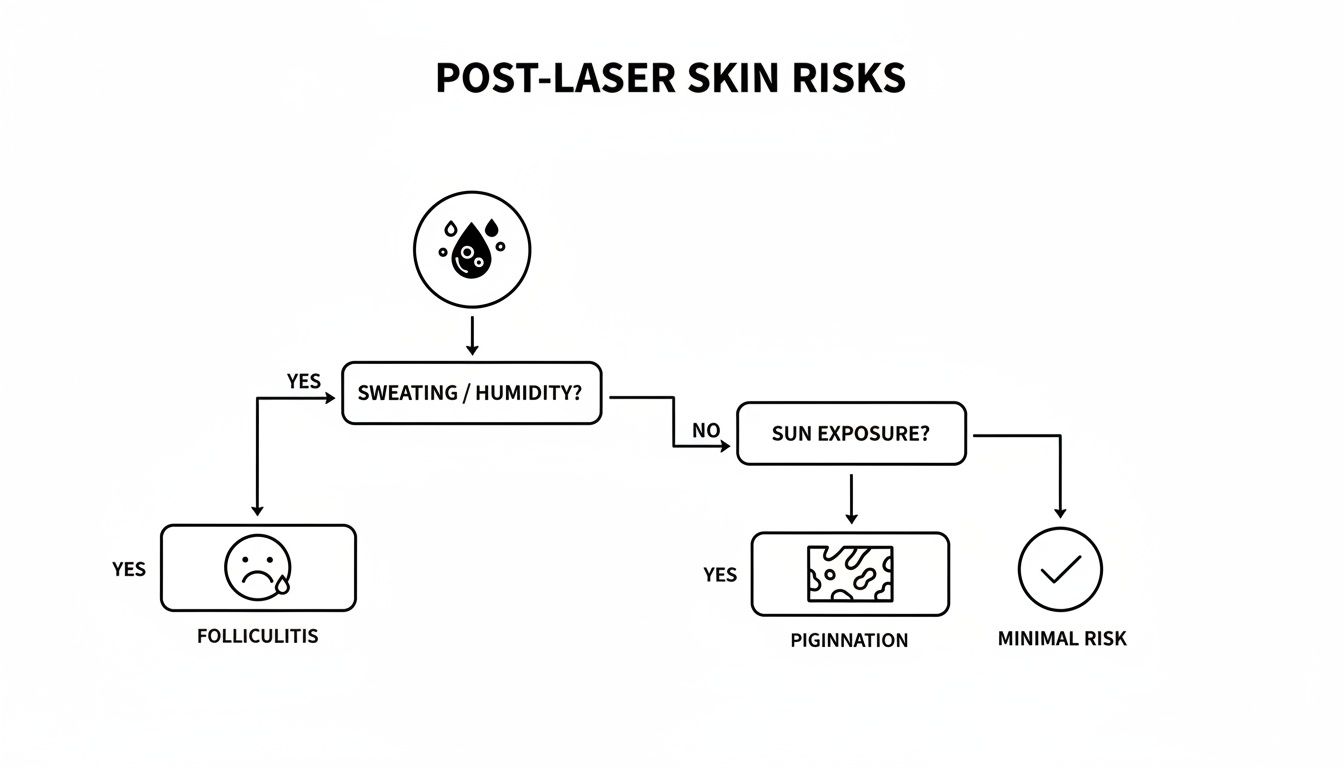
As you can see, sweat can introduce bacteria into those vulnerable follicles, leading to folliculitis (those annoying red bumps). Excess heat and friction can also trigger pigmentation issues, especially if the skin is already irritated.
High-Intensity Workouts After 72 Hours
For the high-intensity enthusiasts out there, a little more patience is required. Workouts that generate significant heat and sweat—like HIIT, spin classes, or heavy lifting—should wait until at least 72 hours post-treatment. These activities dramatically elevate your core body temperature and can easily irritate the still-sensitive follicles.
Here’s why it matters: intense workouts can increase your body temperature by 2-3°C and boost sweat production by a staggering 400%. That’s a recipe for irritation. In fact, a 2022 study found that 28% of patients who jumped back into strenuous exercise within 24 hours developed folliculitis, compared to just 4% of those who waited.
One crucial factor to consider is the treatment area. Larger zones with a higher density of follicles—like the back, chest, or a full Brazilian—receive more laser energy. They often require a more conservative timeline, so waiting the full 72 hours (or even an extra day) is a wise precaution.
Remember, this timeline is a guide. The most important thing is to listen to your body. If your skin still feels tender or looks red after a few days, give it more time to rest before you push it. A few extra days of patience will ensure your skin heals perfectly, setting you up for the best possible long-term results.
For more details on what to expect during this period, check out our realistic guide to laser hair removal recovery time.
Smarter Aftercare For Active Lifestyles
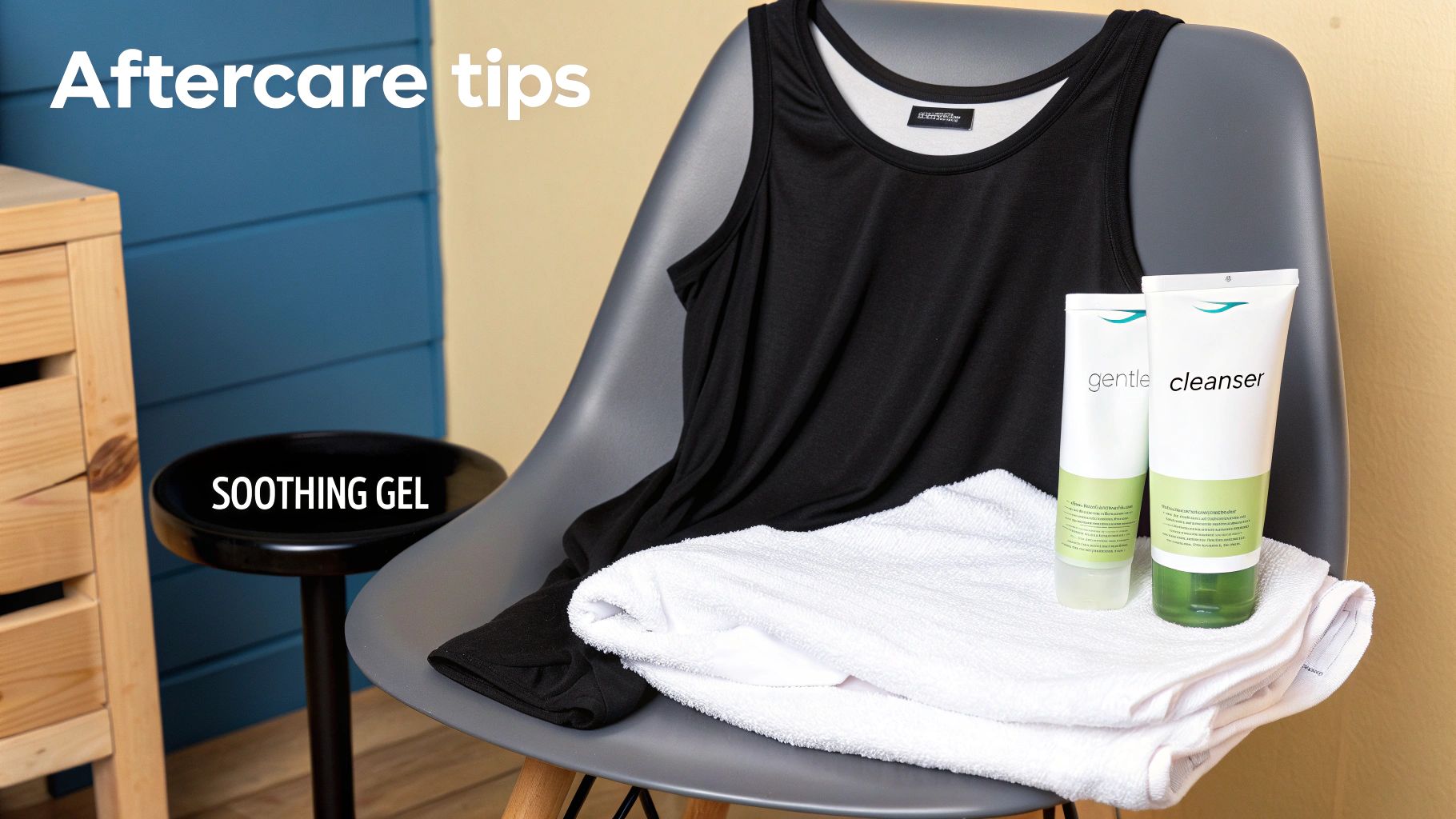
If you're trying to balance a fitness routine with a laser hair removal schedule, smart aftercare is the bridge between a good session and incredible, lasting results. This is about more than just skipping the gym for a day or two; it’s about the proactive choices you make before and after you get back to your workouts. A little thoughtful aftercare goes a long way in minimizing irritation and helping your skin heal beautifully.
Take your workout gear, for example. Those tight, synthetic performance fabrics are great for wicking sweat during a tough session, but they're a huge problem for post-laser skin. They trap heat and moisture right against your treated areas, creating the perfect storm for friction and bacteria to thrive.
Instead, for the first few days—and especially during that first workout back—opt for loose, breathable fabrics like cotton or bamboo. This simple swap lets air circulate, keeping your skin cool, dry, and free from any unnecessary chafing.
Post-Workout Skin Care
Once you've finished your first workout after the recommended waiting period, what you do next is critical. You absolutely cannot let sweat sit on your skin. A proper post-workout cleanse is non-negotiable if you want to prevent clogged follicles and potential breakouts.
Hop in a shower and gently rinse the treated area with cool water as soon as you can. Hot water will only increase inflammation, so keep it lukewarm at most. Use a mild, fragrance-free cleanser to wash away sweat and bacteria without stripping your skin’s protective barrier.
When you're done, gently pat the skin dry with a clean, soft towel. Whatever you do, don't rub. This gentle approach ensures your skin stays calm and clear, setting you up for a smooth recovery.
Skincare Ingredients To Use And Avoid
The products you put on your skin play a massive role in how well it recovers. For the first week after your treatment, it’s best to hit pause on any active or harsh ingredients you might normally use on the treated area.
Products you'll want to temporarily avoid include:
Retinoids (Retin-A, Tretinoin): These powerhouses increase skin sensitivity and should be stopped several days before and after your session.
Harsh Exfoliants: This means physical scrubs and chemical exfoliants like glycolic or salicylic acid. Your skin is sensitive enough already.
Heavy, pore-clogging lotions: Stick to lightweight, non-comedogenic formulas that won't trap heat or clog follicles.
Instead, shift your focus to soothing and hydrating ingredients. Pure aloe vera gel is your best friend here. It’s fantastic for calming any lingering redness or sensitivity. Applying a thin layer provides immediate cooling relief and gives your skin the support it needs to heal.
Technology has come a long, long way. Back in the early 2000s, first-generation lasers often meant 72+ hours of downtime. Their higher energy levels caused blistering in 15-20% of patients who exercised too soon. Modern lasers like the Splendor X we use at NYC Laser Hair Removal are much gentler, but the core principle still holds true: waiting 24-48 hours is still shown to prevent over 80% of common post-treatment issues. You can discover more insights about these essential guidelines to keep your skin happy.
How To Spot And Handle Skin Complications
Let's be real: your skin just had a targeted thermal treatment, so a little bit of a reaction isn't just normal—it's expected. While serious complications from modern laser hair removal are pretty rare, knowing the difference between a standard healing response and a genuine red flag gives you total peace of mind.
Most of our clients leave with some mild redness and a bit of swelling right around the hair follicles. We call this perifollicular edema, and it often looks like tiny, raised goosebumps. It’s actually a great sign! It means the laser did its job and hit the follicles effectively. This reaction almost always calms down within a few hours to a day.
Normal Side Effects Versus Warning Signs
So, what's in the "totally normal" camp? A little tenderness, similar to a mild sunburn, is common in the first 24 hours. But some symptoms are a signal that your skin needs a little more attention.
You'll want to keep an eye out for anything that seems to be getting worse instead of better. Catching an issue early is the best way to keep a minor irritation from turning into a real problem.
Here’s what to watch for:
Redness or Swelling That Won't Quit: If your skin is still significantly red and puffy after 48 hours, or if it seems to be getting more irritated over time.
Blistering or Crusting: The formation of any blisters, scabs, or crusty patches is not a normal part of the healing process.
Pustules or Whiteheads: See little, pus-filled bumps? This could be a sign of folliculitis, which is basically a bacterial infection in the hair follicles.
Changes in Skin Pigment: Any unusual lightening (hypopigmentation) or darkening (hyperpigmentation) that shows up days after the initial redness has faded is something to report.
Important Takeaway: The golden rule is simple: listen to your skin. Normal reactions get progressively better over the first couple of days. Complications tend to stick around or escalate.
When To Contact Your Laser Technician
If you notice any of the warning signs above, please don’t wait and wonder. The absolute best thing you can do is get in touch with your laser hair removal provider. Here at NYC Laser Hair Removal, our technicians are trained to assess these exact situations and give you clear, straightforward advice.
Often, a quick phone call is all it takes to ease your concerns. We might ask you to send a quick photo of the area so we can see what's going on and give you an accurate recommendation. From there, we can suggest the right at-home care—like using a specific soothing cream—or let you know if it's best to pop in for an in-person look. Acting fast keeps your skin healthy and your results right on track.
Your Top Questions About Laser Hair Removal and Fitness
Even with a clear aftercare plan, real life happens. When you're eager to get back to your spin class or yoga studio, a few specific questions always come up. We hear them all the time from our clients, and we've compiled the answers right here.
Think of this as your go-to guide for those "what if" scenarios. Understanding the nuances of how different workouts and body areas react can make all the difference in getting that smooth, irritation-free result you're looking for.
Can I Do Low-Impact Workouts Like Yoga The Next Day?
This is a great question, and the answer often surprises people. While yoga is considered low-impact, a fast-paced vinyasa flow or a heated class will absolutely raise your body temperature and make you sweat. Since heat and sweat are the two main things to avoid right after treatment, we strongly recommend waiting the full 48 hours just to be safe.
After that initial two-day window, a gentle, non-heated yoga or stretching session is totally fine. The goal is always the same: keep your skin cool and sweat-free. If you do opt for some light movement, stick to loose, comfortable clothes and rinse the treated area with cool water right after.
Does The Wait Time Change For Different Body Areas?
Yes, it absolutely does. The size of the treated area and the density of the hair follicles play a huge role in how your skin recovers. Larger zones that absorb a lot of laser energy—think back, chest, or a full Brazilian—are naturally going to be more sensitive afterward.
For these bigger areas, sticking to that full 48-hour rule is non-negotiable. If your skin still feels a little tender, don't hesitate to give it an extra day. On the flip side, smaller areas with less dense hair, like the upper lip or underarms, often feel back to normal much faster. Still, our universal rule of thumb is a 24-hour minimum wait for any area to prevent potential irritation.
The best advice is always to listen to your body. If a treated area—big or small—still feels tender, looks red, or is sensitive to the touch, that’s your skin telling you it needs more time to rest. When in doubt, wait it out.
What About Swimming Pools Or Hot Tubs?
This is a hard no for at least 48 to 72 hours post-treatment. After a laser session, your hair follicles are open and vulnerable, making them an easy target for bacteria and harsh chemicals.
Think about it: the chlorine in pools and hot tubs is designed to kill germs, which means it's incredibly irritating to freshly treated skin. Natural bodies of water like the ocean or lakes are full of bacteria that could lead to an infection. And the high heat from saunas and steam rooms just adds to inflammation, working directly against the healing process. It's best to wait until every last bit of redness and sensitivity is gone before taking a dip.
I Accidentally Exercised Too Soon—What Now?
First off, don't panic. Our aftercare guidelines are designed to minimize risk, not because one slip-up will ruin your results. If you accidentally worked out too soon, the key is to cool and clean your skin as gently and quickly as possible.
Here's what to do:
As soon as you can, gently wash the treated area with cool water and a mild, fragrance-free cleanser to get rid of any sweat.
Carefully pat the skin dry with a soft, clean towel. Whatever you do, don't rub it.
Apply a thin layer of pure aloe vera gel to help calm the skin.
Keep a close eye on the area for the next 24 to 48 hours. If you notice any stubborn redness, unusual bumps, or signs of irritation that don't fade, that's your cue to give us a call for professional advice.
Ready to start your journey to smooth, hair-free skin without disrupting your active lifestyle? At NYC Laser Hair Removal, we use advanced Splendor X technology for comfortable, effective treatments with minimal downtime. Book your appointment online today and let our experts create a personalized plan that fits your goals.
Comments