
Why Your Skin Is Itchy After Laser Hair Removal and How to Stop It
Find yourself wanting to scratch after a laser hair removal session? Don't panic—that feeling is totally normal and, believe it or not, often a great sign the treatment is working exactly as it should. It’s just your body’s natural healing response to the laser’s energy kicking in.
Why Your Skin Itches After Laser Hair Removal
That prickly, sometimes frustrating sensation you feel after a laser session is your skin’s way of saying, “Job well done.” It’s a completely normal part of the healing process and a clear signal that the treatment was effective. Think of it less as a problem and more as confirmation that the laser hit its target.
Imagine a tiny, controlled sunburn focused on each individual hair follicle. The laser sends a precise pulse of light deep into the follicle, where the pigment absorbs it and converts it into heat. That thermal energy is what disables the follicle and stops future hair growth.
The Science Behind the Itch
This targeted heat intentionally creates a small, localized inflammatory response. That sounds a bit clinical, but all it means is your body’s immune system is rushing to the area to start making repairs—which is exactly what we want. This process usually shows up in two very common ways:
Perifolicular Edema: This is the technical term for those tiny, slightly raised red bumps that can pop up around each treated follicle. It’s simply minor swelling and is the hallmark of a successful session.
Histamine Release: As part of this healing cascade, your body releases histamines. These are the same compounds that make a mosquito bite itch.
This combination of minor swelling and histamine release is the main reason you feel itchy after laser hair removal.
Itchiness is one of the most common temporary side effects, and it almost always stems from the skin's natural healing process. Clinical observations show this irritation, along with some redness and swelling, typically fades within a few hours to a couple of days.
In short, the itch is direct feedback that your body is actively healing the micro-damage created by the laser. It's a temporary inconvenience on the path to permanently smooth skin. This reaction isn’t just expected; it confirms the laser did its job. In almost every case, these side effects resolve on their own and are a small price to pay for long-term results. For a deeper dive, you can check out this multicenter prospective study on laser hair removal side effects.
To make it even clearer, here’s a quick breakdown of what’s happening.
Post-Laser Itchiness at a Glance
This table sums up the key points about post-treatment itchiness, so you know exactly what to expect and why it's happening.
Symptom | Primary Cause | Typical Duration | Is It Normal? |
|---|---|---|---|
Mild to Moderate Itchiness | Histamine release during the skin’s healing process. | 24 to 48 hours | Yes |
Small Red Bumps (Perifolicular Edema) | Minor swelling around the treated hair follicles. | A few hours to 3 days | Yes, it’s a sign of effective treatment. |
Warm or Sunburn-like Sensation | The skin’s reaction to the laser's thermal energy. | 2 to 24 hours | Yes |
As you can see, a little bit of itchiness is a standard part of the journey. It's your body's way of confirming that the treatment is underway and healing is in progress.
The Normal Healing and Itching Timeline
Knowing what to expect after a laser session makes the whole healing process feel a lot less stressful. When you start to feel that post-laser itch, it’s incredibly helpful to understand the predictable path your skin is taking. This timeline will help you tell the difference between a totally normal reaction and something that might need a quick call to your provider.
Think of it as a short, three-part journey. It kicks off the moment you leave the clinic, the initial reaction peaks within the first day, and then everything gradually fades over the next week. Each phase has its own distinct feeling, so you can confidently track your skin’s progress.
The First Few Hours
Right after your session, it's completely normal to see some redness and feel a bit of warmth and mild itching. This is the peak of your skin’s inflammatory response—a great sign that the laser successfully zapped the hair follicles. The intensity is highest during this window, often feeling a lot like a mild sunburn.
The First 24-48 Hours
Within the first day or two, you’ll notice those initial symptoms starting to calm down. The redness will begin to fade, and that feeling of heat should disappear. While some itchiness might hang around, it will be noticeably less intense than it was right at the beginning.
Your skin's sensitivity and the treatment area play a huge role here. Sensitive spots like the bikini line might stay tender a bit longer than more resilient areas like your legs. This kind of variation is completely normal.
The timeline below gives you a clear visual of the healing process, showing how the laser's impact leads to that temporary healing phase where itching happens.
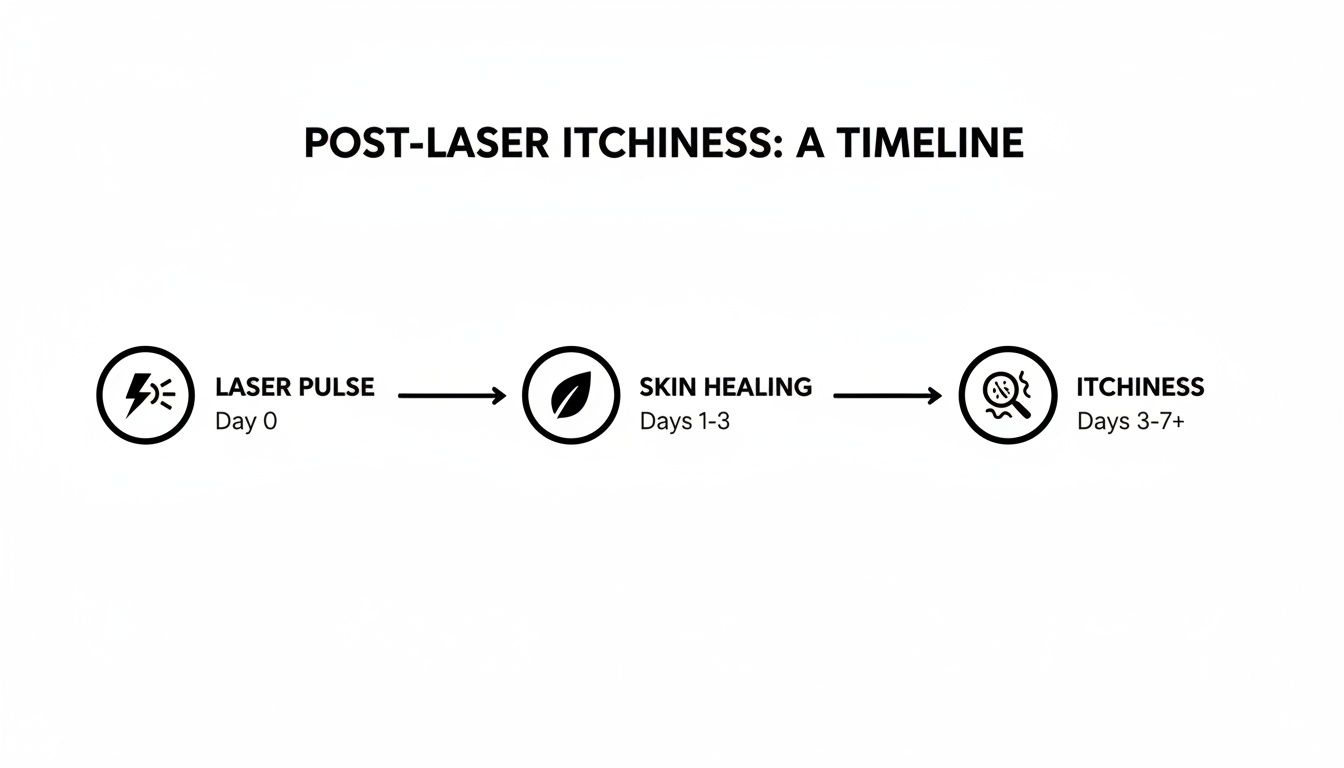
This visual journey highlights that itching isn't a bad sign; it’s a key part of your skin’s recovery as the follicles heal from the targeted laser energy.
The First Week
By the end of the first week, most of that initial irritation should be a memory. Your skin might still feel a little sensitive to the touch, and you may see what looks like stubble popping up. This is actually the treated hair being shed from the follicle—another positive sign that the treatment worked.
Any itchiness that lingers during this time is usually mild and comes and goes. If the itching is severe or seems to get worse after 72 hours, it's always best to check in with your provider. For most people, though, this final stage marks the end of the immediate healing cycle, paving the way for beautifully smooth skin.
How to Soothe Itchy Skin at Home
When you’re feeling that post-laser itch, your first instinct is to scratch. Don't do it! Resisting that urge is the key to a smooth, calm recovery, and thankfully, you’ve got some powerful (and simple) at-home remedies to get you through it. Think of this as your go-to playbook for calming down irritated skin.
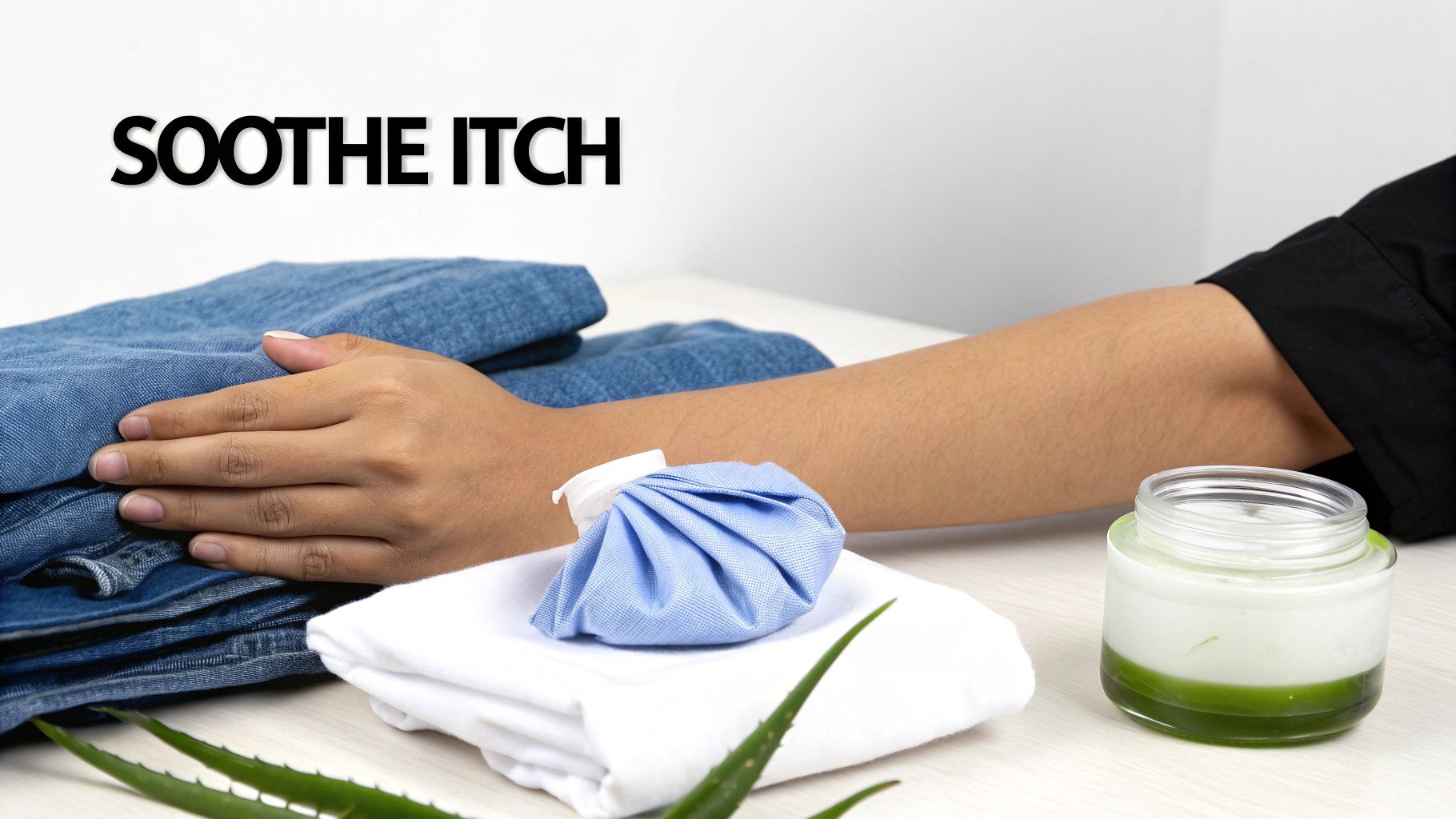
Your number one tool is a cool compress. The cold temperature is fantastic at constricting blood vessels, which immediately dials down the inflammation and swelling around the follicles that are making you itch. It’s like putting ice on a minor burn—it just takes the heat and sting right out of the situation.
Gentle Cooling and Calming Agents
Getting started is easy. Just grab an ice pack or a few ice cubes and wrap them in a clean, soft cloth—a thin t-shirt or hand towel works perfectly. Just remember to never put ice directly on your skin, as you could end up with an ice burn, which is the last thing you need.
Gently press the compress against the itchy spots for 10-15 minutes at a time. Feel free to repeat this a few times a day whenever the itchiness flares up. That cooling sensation brings instant relief and helps quiet the histamine response causing all the fuss.
Once you’ve cooled the area, follow up with a soothing gel or cream to add another layer of comfort. Two of the best options are easy to find and incredibly effective.
Pure Aloe Vera Gel: A true post-laser superstar, aloe is famous for its natural anti-inflammatory and hydrating properties. Smooth a thin layer of pure gel (look for one without added alcohol or fragrances) over the skin to calm redness and itching.
1% Hydrocortisone Cream: For a more stubborn itch, an over-the-counter 1% hydrocortisone cream is your best friend. This mild topical steroid is designed to quickly shut down inflammation and stop the itch signal right at the source. Use it sparingly on the affected spots only.
Remember, the goal is to calm your skin, not bombard it. A gentle touch goes a long way. Avoid vigorously rubbing or massaging these products in; a light, patting motion is all you need.
Simple Lifestyle Adjustments for Comfort
What you do away from your skin matters just as much. Creating a gentle, friction-free environment gives your skin the space it needs to heal without extra stress. Even if you have very sensitive skin, these small changes can make a huge difference in your comfort levels. For a deeper dive, check out our guide to laser hair removal for sensitive skin.
Here are a few simple but powerful lifestyle tweaks to make for the first 48 hours after your treatment:
Wear Loose, Soft Clothing: Skip the skinny jeans and tight leggings. Anything that rubs against your sensitive skin can trap heat and make the itching ten times worse. Opt for breathable, loose-fitting fabrics like cotton that let your skin breathe.
Pat, Don’t Rub: After a lukewarm shower (no hot water!), gently pat your skin dry with a soft towel instead of rubbing. This tiny change prevents friction that can trigger a fresh wave of irritation.
Stay Hydrated: Drinking plenty of water helps your skin heal and stay hydrated from the inside out, which is crucial for supporting its natural repair process.
By combining these cooling tricks with gentle products and a few easy lifestyle adjustments, you can kick that itch to the curb and make sure your recovery is as smooth and comfortable as possible.
Common Mistakes That Worsen Irritation
What you don't do after your laser session is just as important as the soothing steps you take. Your skin is in a delicate healing phase, and a few common activities can quickly turn a mild, manageable itch into a real problem. The goal is to create a peaceful environment for your skin to recover, and that means avoiding certain triggers.
Think of your freshly treated skin like a mild sunburn—you wouldn’t expose it to intense heat or harsh chemicals, right? The same logic applies here. For the first 48-72 hours, steering clear of common stressors is non-negotiable for a calm, comfortable healing process.
Skip Heat and Sweat-Inducing Activities
Heat is one of the biggest culprits for aggravating an itch. When your body temperature rises, you sweat, creating the perfect storm for irritation on sensitive, post-laser skin. The salt in your sweat can sting, and the moisture can invite bacteria, leading to even more inflammation.
For at least 48 hours, be sure to avoid:
Intense Workouts: That high-intensity spin class or heavy lifting session can wait. All that sweat will only make the itching worse.
Hot Tubs and Saunas: Both of these are off-limits. The extreme heat will just amplify any redness and inflammation you already have.
Chlorinated Pools: Chlorine is a harsh chemical that can severely dry out and irritate skin that's trying to heal.
Hot Showers or Baths: Stick to lukewarm water. Hot water strips your skin of its natural oils and will only make the area more inflamed.
Giving your body this simple break allows its temperature to regulate naturally, keeping that histamine response calm and under control.
Resisting the urge to scratch is crucial. Scratching can break the delicate skin surface, introducing bacteria and increasing the risk of infection or even minor scarring. If the area feels itchy, apply a cool compress or aloe vera instead.
Put Harsh Skincare on Pause
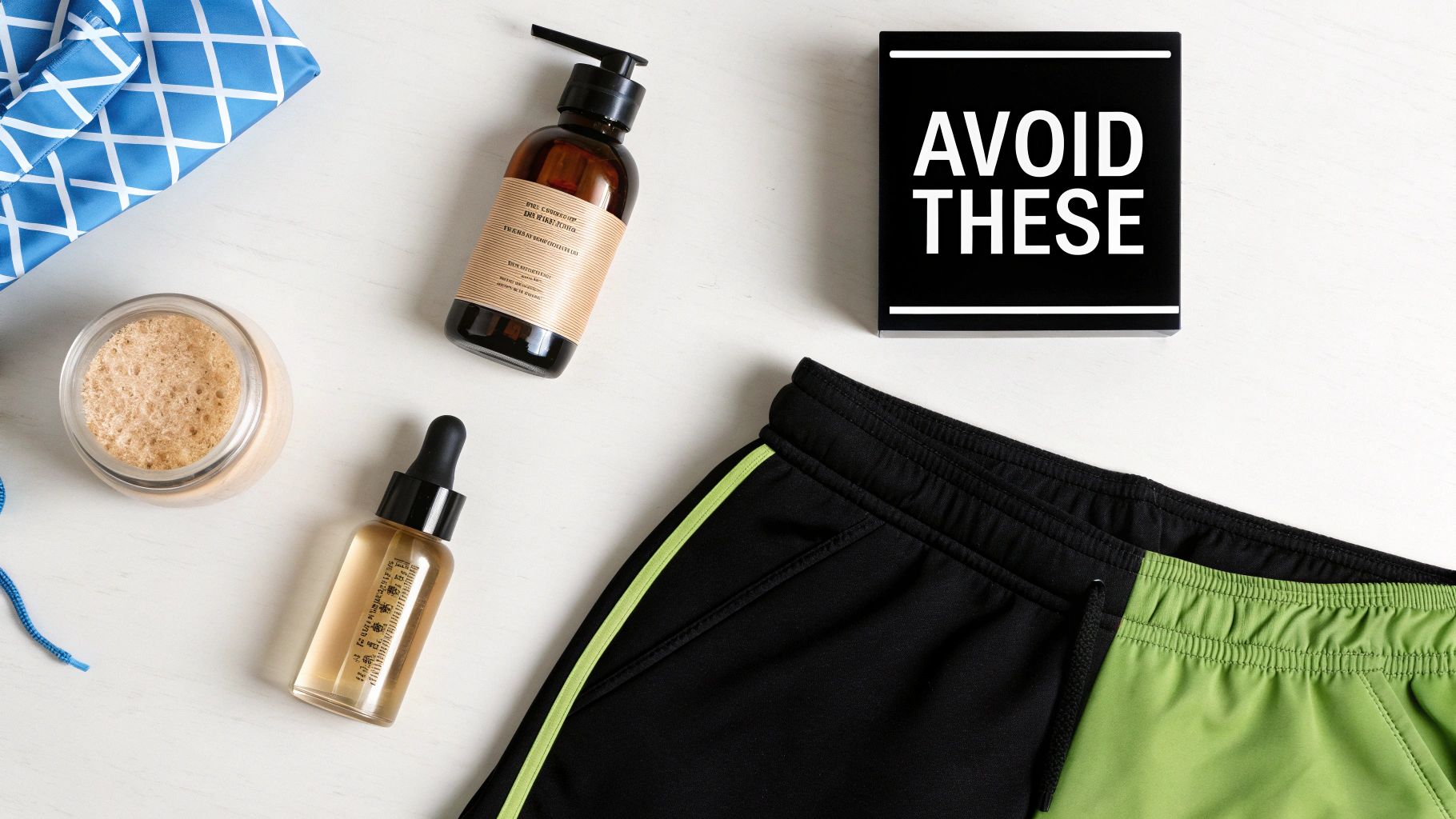
Your skincare cabinet is likely full of powerful products, but many of them are simply too aggressive for your skin right now. You need to temporarily shelve anything that exfoliates or contains strong active ingredients. Using them too soon can cause a significant reaction and make any itching feel much more intense.
Be sure to pause using these products on the treated area:
Physical Exfoliants: Any scrubs with beads, sugar, or salt are far too abrasive for healing skin.
Chemical Exfoliants: This includes products with AHAs (like glycolic acid) and BHAs (like salicylic acid).
Retinoids: Products containing retinol or tretinoin must be avoided, as they speed up skin cell turnover and increase sensitivity.
Products with Fragrance or Alcohol: These common additives are known irritants and can be incredibly drying to compromised skin.
By avoiding these triggers, you give your skin the best possible chance to heal quickly and comfortably. For a complete rundown on post-treatment care, check out these 8 critical rules for what to avoid after laser treatment to ensure your results are flawless.
How Advanced Laser Technology Minimizes Discomfort
Not all laser hair removal treatments are created equal, and the technology used plays a massive role in how your skin feels afterward. While a minor, temporary itch can be a normal part of the healing process, the right laser system can make a world of difference, minimizing discomfort from the very start.
Think of older lasers as a powerful but blunt tool—they got the job done but often left behind more collateral irritation. Modern systems are far more precise. They zero in on the hair follicle with incredible accuracy, which means less unnecessary heat exposure for the surrounding skin. That heat is a primary trigger for the intense inflammatory response that leads to itching.
The Splendor X Cooling Advantage
At NYCLASER, we use the Splendor X system, which has a game-changing feature designed entirely for client comfort: the Dual Cooling System (DCS). This isn’t just a nice-to-have; it’s central to a more pleasant and effective experience.
It works a bit like running a hot pan under cool water for instant relief, but with sophisticated precision. Here’s how it unfolds in a split second:
Before the Pulse: A stream of chilled air is directed onto your skin's surface, preparing and numbing it for the laser energy.
During the Pulse: The cooling continues, actively counteracting the heat as it zaps the follicle.
After the Pulse: A final blast of cool air instantly soothes the area, dramatically reducing the thermal stress that causes redness, swelling, and that familiar itchy after laser hair removal feeling.
This integrated cooling actively manages your skin's temperature in real-time. By preventing the skin from overheating in the first place, the DCS significantly lowers the body’s need to launch a major inflammatory response—the very thing that causes most post-treatment itching.
Technology for Every Skin Tone
Beyond just cooling, the Splendor X uses a special blended wavelength technology (Alexandrite and Nd:YAG) that allows us to safely and effectively treat virtually all skin tones. This is crucial because it ensures the laser’s energy is absorbed by the hair follicle, not the surrounding skin, which further reduces the risk of irritation and side effects.
While noticeable itchiness might impact 10-20% of patients with older technology, clinics using advanced systems with integrated cooling report near-zero complaints. We’ve seen firsthand how this technology can slash itch duration by over 50%. You can learn more about general laser hair removal side effects from the Mayo Clinic's detailed overview.
When You Should Contact Your Specialist
While a little temporary itching is a totally normal part of the healing process, it's crucial to know the signs that something isn't quite right. Trust your gut—if your skin’s reaction feels more intense than a mild, temporary irritation, it’s always better to reach out to your provider. Your peace of mind is just as important as the treatment itself.
Most mild redness and itching should calm down significantly within 48 to 72 hours. If your symptoms are still hanging around or getting worse beyond this point, it's time to make a call. The goal is to know the difference between a standard healing response and a potential issue that needs a professional eye.
Red Flags to Watch For
Don't hesitate to contact your specialist if you experience any of the following. These are not typical side effects and need to be looked at to make sure your skin heals beautifully.
Intense or Unbearable Itching: We're talking about a level of itchiness that cool compresses or your recommended cream just aren't touching.
Severe Pain or Burning: Anything that goes beyond that mild, sunburn-like feeling we expect right after a session.
Blistering or Crusting: The formation of any blisters, scabs, or crusts on the treated skin is a definite reason to call.
Signs of Infection: This includes increased swelling, skin that feels hot to the touch, pus, or any unusual discharge from the area.
Understanding the full spectrum of potential reactions helps you stay informed and in control of your healing. For a deeper dive, check out our complete guide on laser hair removal side effects and what to expect.
Your Top Aftercare Questions, Answered
Got a few lingering questions about what to do after you leave the clinic? We hear these all the time. Here are some quick, straightforward answers to put your mind at ease and help you sail through the recovery process.
Can I Moisturize My Skin If It Itches?
Yes, you absolutely should—but with the right stuff. Reach for a gentle, fragrance-free moisturizer to keep your skin hydrated and help its natural barrier bounce back. Anything with soothing ingredients like aloe vera or ceramides is a fantastic choice right now.
The golden rule for the first 48 hours is to avoid lotions with any active ingredients. That means no retinoids, no glycolic acid (AHAs), and definitely no perfumes. Freshly treated skin is sensitive, and these can easily cause more irritation.
Is It Normal to Have Small Bumps with the Itching?
It sure is. In fact, seeing tiny red bumps pop up along with the itch is a great sign. This reaction is called perifollicular edema, which is just a technical way of saying there's a little bit of swelling around each hair follicle we zapped.
It's the visual proof that the laser hit its mark. Both the bumps and the itchiness are temporary and should fade within a day or two as the inflammation goes down, confirming you had an effective treatment.
Think of it as your body's way of saying, "Mission accomplished."
How Long Should I Avoid Sun Exposure?
Sun protection is completely non-negotiable after your session. You’ll need to avoid any direct, unprotected sun exposure on the treated area for at least two weeks. No exceptions.
Your skin is extra vulnerable during this healing phase, making it much more susceptible to sun damage and hyperpigmentation. If you have to be outside, generously apply a broad-spectrum sunscreen with an SPF of 30 or higher to shield the area. And if you’re out for a while, remember that reapplying is key.
Ready to experience the comfort of advanced laser technology? At NYCLASER, we use the Splendor X system to ensure your journey to smooth skin is as pleasant as it is effective. Book your appointment today and see the difference for yourself at https://www.nyclaser.com.
Comments