
Preventing Ingrown Hair From Brazilian Wax A Practical Guide
An ingrown hair from a Brazilian wax is one of the most common—and annoying—side effects. It’s when a new, weaker hair curls back on itself or grows sideways into the skin instead of straight out of the follicle. This usually happens when dead skin cells clog the follicle’s opening, trapping the hair and causing that telltale red, often painful, bump.
Why Ingrown Hairs Happen After a Brazilian Wax
A Brazilian wax leaves your skin feeling unbelievably smooth because it pulls the hair out directly from the root. While effective, this process can disrupt the hair follicle, which is the main reason you might see an ingrown hair pop up later. As the new hair starts to regrow, it’s often much softer with a finer tip, making it too weak to push through the skin's surface on its own.
And that’s where the trouble begins. If there's any kind of blockage, that little hair gets stuck.
The Main Culprits Behind Post-Wax Bumps
Several factors can team up to create the perfect storm for ingrown hairs. Understanding what they are is the first real step toward preventing them.
Dead Skin Buildup: This is the number one cause. A layer of dead skin cells (keratin) can form a cap over the hair follicle, creating a physical barrier that blocks the hair’s exit route.
Hair Texture and Type: If you have naturally coarse or curly hair, you’re definitely more susceptible. The hair’s natural curl makes it much more likely to bend back and re-enter the skin as it grows. For some, issues like https://www.nyclaser.com/post/uneven-hair-growth-causes-and-treatments-for-balanced-hair can also play a role.
Friction and Pressure: Tight clothing is a major offender, especially synthetic fabrics that don’t let your skin breathe. This creates constant friction against the delicate skin in the bikini area, which can both irritate the follicles and physically force the growing hair back down into the skin.
This visual shows exactly what’s happening under the surface—a hair shaft gets trapped beneath the top layer of skin, leading to inflammation.
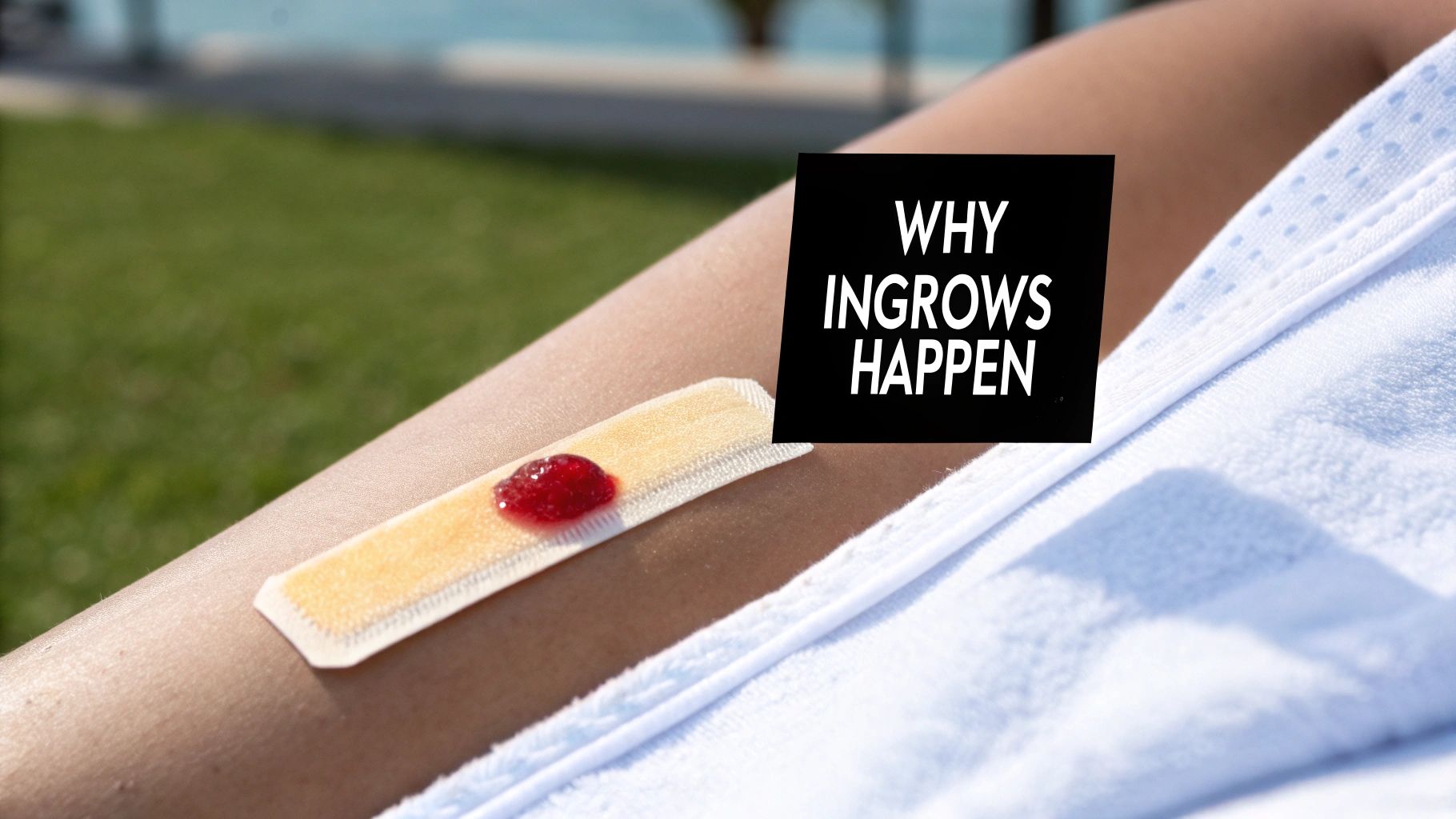
You can see how the hair’s sharp tip pokes and irritates the surrounding tissue, which triggers your body's inflammatory response and creates the red bump you see on the surface.
How Common Is This Problem?
If you’re dealing with this, you are far from alone. Dermatological studies suggest that anywhere from 10% to 30% of people who wax regularly will get ingrown hairs that are noticeable enough to be a clinical concern. The risk is even higher for those with curly hair types. Given how popular Brazilian waxes are, that’s a huge number of people facing this frustrating and repetitive issue.
The core issue isn't the wax itself, but the condition of your skin when the hair starts to regrow. You can get a flawless wax and still end up with ingrowns if you neglect the right aftercare—specifically, exfoliation and moisturization.
Your First Response to a New Ingrown Hair
There it is. That tender, red bump that just showed up after your last Brazilian wax. It’s frustrating, and your first instinct might be to grab the tweezers and start digging. But right now, restraint is your best friend. Going on the attack will only make things worse, inviting more inflammation, a potential infection, and even dark spots or scars that stick around for months.
The goal here is simple: calm the skin down, take the angry red out of it, and gently encourage that trapped hair to find its own way out. The best way to kickstart that process is with a little warmth.

A warm compress can work wonders. Just soak a clean washcloth in warm—not hot—water and press it gently against the bump for 10-15 minutes. Do this a few times throughout the day. This simple step helps soften that top layer of skin, often coaxing the hair to the surface without any aggressive tactics.
Soothing Topicals and Gentle Care
Once you’ve finished with the warm compress, you can follow up with a targeted treatment to help soothe the area even more. You’ll want to reach for something with calming or antibacterial properties.
Tea Tree Oil: This stuff is a natural antiseptic. A tiny bit of diluted tea tree oil can help keep the follicle clean and free of bacteria. Always mix it with a carrier oil like coconut or jojoba oil first, as it's too strong to use on its own.
Mild Hydrocortisone Cream: If the bump is particularly red and itchy, a dab of over-the-counter 1% hydrocortisone cream can give you some quick relief from the inflammation. Just use it sparingly for a day or two.
Salicylic Acid Spot Treatment: A product with salicylic acid is designed to exfoliate inside the pore, which can help clear out whatever is causing the blockage.
Now, while gentle exfoliation is a huge part of preventing ingrowns, you need to hit pause on any physical scrubs when a bump is already inflamed and painful. Scrubbing an angry ingrown will only aggravate it. Just wait until the redness and tenderness have calmed down before you bring a gentle scrub or chemical exfoliant back into your routine.
Here's the cardinal rule for dealing with an ingrown hair from a Brazilian wax: Never use tweezers to dig for a hair that is deep under the skin. Doing so creates an open wound, sends your risk of a nasty bacterial infection through the roof, and can easily cause post-inflammatory hyperpigmentation that lingers for ages.
When to Leave It Alone
Honestly, patience is your most powerful tool here. If you can't see the hair at the surface, just keep up with the warm compresses and let your body do its thing. Trying to force it will only create a much bigger problem. If the bump becomes incredibly painful, starts to swell significantly, or you see signs of infection like pus, it's time to stop the home remedies and call a professional.
Building Your Pre and Post Waxing Ritual
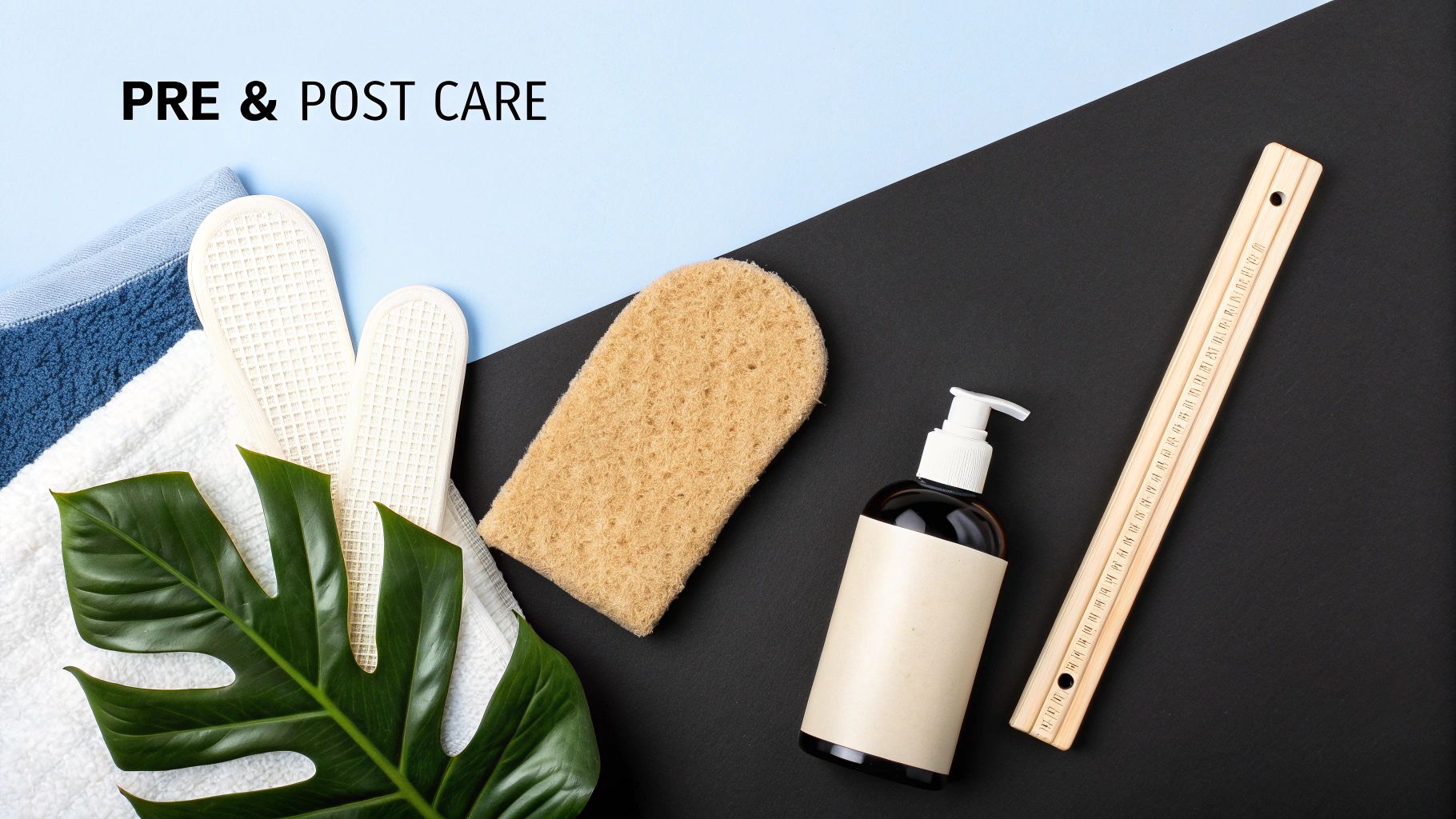
Honestly, the best way to handle an ingrown hair from a Brazilian wax is to stop it from ever showing up. This is where a solid pre and post-waxing ritual becomes your secret weapon—think of it as smart prevention, not damage control.
Success really starts before you even walk into the salon. Prepping the skin properly is like priming a canvas; it sets the stage for a smoother wax, less irritation, and far fewer bumps down the road.
Perfecting Your Pre-Wax Prep
Your pre-wax routine is simple but absolutely non-negotiable. Two things make all the difference: exfoliating and getting the hair length just right.
Exfoliate 24-48 Hours Beforehand: Use a gentle scrub or a chemical exfoliant (like one with glycolic or salicylic acid) to clear away dead skin cells. This helps the wax get a clean grip on the hair and gives new hair a clear path to grow out later. Just don't exfoliate the day of your appointment—it can leave your skin way too sensitive.
Check Your Hair Length: The sweet spot for waxing is about a quarter of an inch, roughly the length of a grain of rice. If it's too short, the wax has nothing to grab onto. Too long, and it's not only more painful but the hair can snap off at the surface instead of being pulled from the root, which is a classic recipe for ingrowns.
Once the wax is done, your focus immediately flips to aftercare. Those first 48 hours are critical. Your skin is vulnerable, your pores are open, and it needs a little TLC.
The First 48 Hours: Your Post-Wax Timeline
During this initial healing window, the goal is simple: soothe the skin and keep bacteria and irritation out. Treat the area gently.
Think of it as a "hands-off" period. Your skin is sensitive and needs to recover, so less is definitely more.
Avoiding friction, heat, and harsh products is paramount. Your skin just went through something pretty stressful; giving it a calm environment to heal will dramatically cut down on redness, bumps, and potential ingrowns.
So, what does that mean in practice?
No Heat or Steam: Skip the hot baths, saunas, steam rooms, and sweaty workouts. Heat just invites bacteria into those open pores.
Avoid Friction: Stick to loose, breathable cotton clothing. Your tightest leggings or synthetic underwear will only trap heat and rub against already angry skin.
Skip the Harsh Products: For the next two days, put away any scented lotions, heavy oils, or exfoliants.
Long-Term Care for Smooth Skin
After that 48-hour recovery window closes, your routine shifts into maintenance mode. This is where you actively work to keep those follicles clear as new, finer hairs start to grow back in.
Start working a chemical exfoliant into your routine about 2-3 times per week. Products with salicylic acid (BHA) or glycolic acid (AHA) are your best friends here. They dissolve dead skin cells without any harsh scrubbing, making it easy for those weaker hairs to break through the surface.
Moisturizing is just as crucial. Skin that’s hydrated and supple is more flexible, which helps hair grow out properly instead of getting trapped. Grab a lightweight, non-comedogenic moisturizer to use daily.
This simple one-two punch of exfoliating and moisturizing is your best defense against the dreaded ingrown hair from a Brazilian wax. It’s not just talk—one multi-salon study even reported a 15% drop in client complaints about ingrowns after they started teaching standardized pre-exfoliation and aftercare. For more on the latest in women's waxing, you can find great info on waxwax.com.
To make it even easier, here’s a simple schedule you can follow to keep your skin happy and bump-free between appointments.
Your Week-by-Week Brazilian Wax Aftercare Schedule
Timeframe | Action Item | Why It's Important |
|---|---|---|
Days 1-2 | Wear loose, cotton clothing. Avoid heat, intense exercise, and scented products. | Your pores are open and your skin is sensitive. This minimizes bacterial exposure and reduces irritation while the skin heals. |
Day 3 | Begin gently exfoliating with a chemical exfoliant (AHA/BHA). | Starts clearing dead skin cells to prevent pores from clogging as new hair growth begins, without being too harsh on recovering skin. |
Week 1 | Exfoliate 2-3 times. Moisturize daily with a non-comedogenic lotion. | Establishes a routine to keep follicles clear and skin pliable, which is key for preventing hairs from getting trapped under the skin. |
Week 2 | Continue exfoliating 2-3 times and moisturizing daily. | Maintains skin health and ensures that as hairs grow longer, they can easily emerge from the follicle without causing bumps. |
Week 3 | Keep up the routine. Check for any stubborn bumps and spot treat if needed. | Consistency is everything. This keeps the skin in optimal condition right up until your next wax appointment. |
Week 4 | Exfoliate 24-48 hours before your next appointment. Ensure hair is ¼ inch long. | Preps the skin for your next session, ensuring a clean wax and starting the prevention cycle all over again for the best results. |
Following a consistent plan takes the guesswork out of aftercare. It turns a reactive problem into a proactive ritual that leaves you with smoother, clearer skin every single time.
Finding Gentle and Effective Home Remedies

When you’re staring down a minor ingrown hair, your first instinct doesn't have to be reaching for a harsh chemical treatment. Your kitchen pantry is often stocked with gentle but surprisingly effective solutions that can soothe irritation and coax that trapped hair to the surface.
These remedies are your best bet for bumps that aren't severely inflamed or showing signs of infection. The whole point is to calm redness, gently exfoliate, and keep the area clean. Before you try anything new, always do a quick patch test on a small, inconspicuous area just to make sure your skin is happy with it.
Natural Exfoliants and Soothers
Mixing up a simple scrub or a calming paste can bring almost immediate relief. These DIY recipes use ingredients known for their antibacterial and anti-inflammatory properties, making them perfect for that sensitive, just-waxed skin.
Gentle Sugar Scrub: Forget those rough, store-bought scrubs. You can easily whip up your own by mixing a half-cup of fine sugar with a half-cup of a skin-loving oil like jojoba or coconut. Gently massage it in a circular motion for about a minute before rinsing. The sugar provides just enough physical exfoliation to clear away dead skin, while the oil leaves everything moisturized.
Soothing Aloe Vera Gel: Pure aloe vera is a true skincare hero, especially for calming angry skin. Just smooth a thin layer of 100% pure aloe vera gel directly onto the bump. Its cooling effect feels amazing, and its natural enzymes help dial down the irritation to kickstart healing.
A quick word of advice: the key here is consistency and a light touch. Over-scrubbing or using undiluted essential oils will only make things worse. Always treat your skin gently.
Antiseptic and Anti-Inflammatory Pastes
For a bump that feels a little more stubborn or irritated, a simple paste can help draw things out and reduce that tell-tale swelling. These are easy to make and apply as a targeted spot treatment.
Tea tree oil is a classic for a reason—its natural antiseptic qualities are fantastic. But this stuff is potent. It must be diluted to avoid irritating or even burning your skin. Mix just one or two drops into a tablespoon of a carrier oil (like coconut or jojoba), then dab it onto the ingrown hair with a cotton swab.
Another great kitchen-cupboard fix is a simple baking soda paste. Just mix a little bit of baking soda with enough water to create a thick, spreadable consistency. Apply it to the ingrown hair, let it sit for about five minutes, and then rinse it off completely. Baking soda is great for easing any itching and calming some of the inflammation from an ingrown hair after a Brazilian wax.
When You Should See a Dermatologist
Most of the time, an ingrown hair from a Brazilian wax is just a minor annoyance you can handle at home. But every now and then, a simple red bump decides to become a bigger problem.
Knowing when to put down the tweezers and call in a professional is crucial. It’s the key to preventing a small irritation from turning into a serious infection or even a scar. Your body is pretty good at sending signals when something’s wrong—you just have to know how to read them.
Signs of an Infection or Cyst
If you spot any of the following, it's time to book an appointment with a dermatologist. These are red flags that the hair follicle is more than just irritated; it's likely infected or has developed into a cyst, which is a deeper, sac-like pocket under the skin.
Significant Pain: We're not talking about a little tenderness. This is a throbbing, persistent pain that makes you wince when you touch it.
Intense Swelling: The bump grows noticeably larger, feels hard under the surface, and the skin around it gets puffy and inflamed.
Pus Formation: You can see a white or yellow head forming. That's a clear sign of a bacterial pile-up.
Warmth: The skin around the ingrown hair feels hot to the touch, much warmer than the surrounding area.
Don't wait on this. If a bump becomes extremely painful, grows rapidly, or you start running a fever, get medical attention right away. These are signs of a more serious infection, like a boil or abscess, that needs to be handled by a pro.
What to Expect at Your Appointment
A trip to the dermatologist for an ingrown hair is straightforward and nothing to stress about. They have the right tools and, more importantly, the expertise to fix the issue safely and cleanly, which drastically reduces your risk of scarring.
Depending on how severe the situation is, your dermatologist has a few options. If it’s a standard infection, they’ll likely prescribe a topical or oral antibiotic to knock out the bacteria. For serious inflammation, a steroid cream or even an injection can bring down the swelling and redness almost immediately.
For a really stubborn, deeply trapped hair or a cyst, they can perform a minor in-office procedure. Using a sterile needle or a tiny blade, they’ll make a careful incision to either release the hair or drain the fluid. This is absolutely not something to try at home—that’s how you end up with deep scars and hyperpigmentation.
If you're already dealing with dark spots from past battles with ingrowns, a dermatologist can help with that, too. They can recommend treatments like chemical peels or prescription creams to fade the discoloration. And if you're just plain tired of the whole cycle, they can walk you through more permanent solutions. Many people end up exploring laser hair removal to stop ingrowns at the source, and you can learn more about the potential laser hair removal side effects to decide if it's the right move for you.
Exploring Long-Term Solutions Like Laser Hair Removal
If you’ve tried everything—religiously exfoliating, moisturizing, and living in breathable cotton—but still find yourself in a constant battle with painful bumps, it might be time to look beyond temporary fixes. When you’re dealing with chronic ingrown hairs from Brazilian waxes, sometimes the best approach is to address the root cause, not just the symptoms.
This is where laser hair removal comes in. It’s a completely different game. Instead of ripping hair out, it uses concentrated light to target and damage the hair follicle itself. When the follicle can no longer produce hair, the problem of it getting trapped under the skin is gone for good.
How Laser Hair Removal Works
The process is incredibly precise. The laser's energy is absorbed by the pigment (melanin) in your hair, which then converts to heat. This heat travels down the hair shaft and zaps the follicle, seriously slowing down its ability to regrow hair.
It's a long-term strategy for smoother skin, and it's clear people are looking for it. The market for ingrown hair treatments is projected to hit an impressive USD 4.70 billion by 2035, which tells you just how many of us are searching for lasting relief. You can see more on this growing demand and its link to hair removal trends at FutureMarketInsights.com.
Is It the Right Choice for You?
Before you jump in, there are a few things to keep in mind. The effectiveness of laser hair removal has historically relied on the contrast between skin and hair color, but modern technology has changed the game, making it much safer and more effective for a wider range of skin tones.
For instance, advanced lasers like the Nd:YAG are specifically designed to be safe for deeper complexions. They bypass the melanin in the skin to focus only on the hair follicle, which dramatically reduces the risk of discoloration.
A typical treatment plan involves a series of sessions—usually 6 to 8 spaced a few weeks apart—to make sure we catch each hair in its active growth phase. While the upfront investment is higher than a wax, many find the freedom from both unwanted hair and chronic ingrowns to be well worth it. If you're weighing your options, our in-depth guide comparing laser hair removal vs. waxing can help you decide.
Got Questions About Brazilian Wax Ingrown Hairs?
When you're aiming for perfectly smooth skin, dealing with ingrown hairs can feel like a frustrating setback. Let's clear up some of the most common questions that pop up, so you can handle your aftercare with total confidence.
A lot of people ask if they'll ever be completely free from those dreaded bumps. Here's the honest truth: even with a flawless aftercare routine, you might still get an occasional ingrown hair. It's especially common if your hair is naturally curly or coarse, since its structure makes it more likely to curl back into the skin instead of growing straight out.
The good news is that with consistent waxing, your hair often grows back finer and less dense over time, which really helps. But if you find that a painful ingrown hair from a Brazilian wax is a constant battle no matter what you do, it might be time to think about other long-term solutions.
How Soon After a Brazilian Wax Can I Start Exfoliating?
This is probably the most critical timing question, and getting it right makes all the difference. You absolutely need to wait at least 48-72 hours after your appointment before you even think about exfoliating.
Right after a wax, your skin is stressed, and the hair follicles are wide open. Exfoliating too early is a fast track to serious irritation, redness, and even tiny scrapes on your skin’s surface. Just give it a couple of days to calm down and heal.
Once you’re past that initial 48-hour window, you can get back to gentle exfoliation 2-3 times a week. This is the key habit that stops dead skin cells from building up and trapping new hairs under the surface.
Is It Ever Okay to Tweeze an Ingrown Hair?
I know, the temptation to dig it out is real. But you need to resist. Going after a deep ingrown hair with tweezers is usually a recipe for disaster. It's an open invitation for bacteria, which can lead to a nasty infection, permanent scarring, or those stubborn dark spots called post-inflammatory hyperpigmentation.
So, is there ever a time it's okay? Yes, but the window is incredibly narrow.
The Exception: If you can see a tiny loop of hair sitting clearly above the skin and the area is not red, swollen, or painful, you might be able to free it.
The Safe Method: Use a pair of sterilized, fine-point tweezers to gently lift the loop and guide the trapped end out. Do not pluck the hair out. You're just releasing it.
If you feel any resistance or pain, stop immediately. It's just not worth the risk. For pretty much every other situation, sticking with warm compresses and your chemical exfoliants is the safer, more effective path to clear skin. Your future self will thank you.
At NYC Laser Hair Removal, we believe you deserve smooth skin without the constant worry of ingrown hairs. If you're tired of the endless cycle of waxing and bumps, laser hair removal offers a lasting solution by targeting the follicle directly. Visit us online to book your consultation and discover a more permanent path to clear, confident skin. Learn more about our services.
Comments