
Uneven Hair Growth Causes And Treatments For Balanced Hair
Have you ever noticed the hair on one side of your head seems to grow faster or fuller than the other? Or maybe you've spotted patches that just won't catch up in length, no matter what you do. It’s a common frustration, but it's more than just a bad hair day—it's a sign that your scalp's natural growth rhythm is out of sync.
This imbalance can leave you feeling confused and worried. But getting to the root of the problem starts with understanding what’s really going on beneath the surface.
Decoding The Frustration Of Uneven Hair Growth
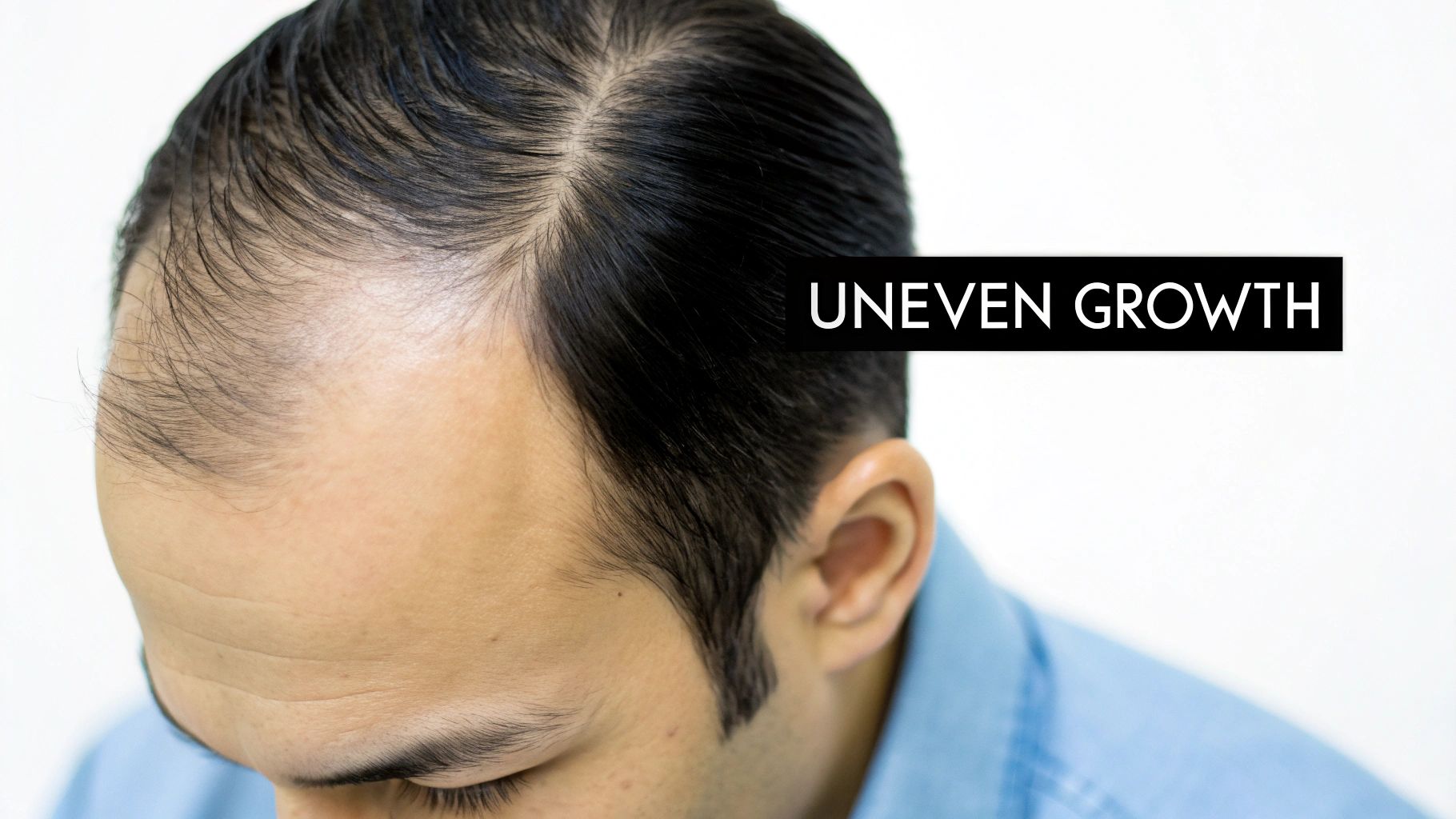
When your hair grows unevenly, it means different parts of your scalp are experiencing different conditions. It’s a bit like tending to a garden—for plants to thrive uniformly, every patch of soil needs the right mix of sunlight, water, and nutrients. If one section is in the shade while another gets full sun, you'll end up with a patchy, imbalanced landscape. Your scalp is no different.
Your Scalp As A Garden
Think of your hair follicles as the "seeds" in your scalp's garden. A whole host of factors, both internal and external, can turn different areas of your scalp into unique micro-environments. In some zones, follicles get everything they need to flourish. In others, they struggle to survive.
For instance, your genetics might act like poor soil quality in specific spots, like the temples or crown, making them prone to thinning over time. Hormonal shifts can be like a sudden drought that only affects certain parts of the garden, causing hair to shed prematurely. And an autoimmune response? That’s like a pest that selectively attacks some plants while leaving others completely untouched.
The real issue isn't always that your hair has stopped growing completely. It's that the growth cycles across your scalp have fallen out of sync. Some follicles might be stuck in a prolonged resting phase while others are actively growing, creating that visible difference in length and density.
Quick Guide To Uneven Hair Growth Patterns
To make sense of what you might be seeing in the mirror, it helps to identify the pattern. Different causes create distinct types of unevenness.
Here’s a quick table to help you spot the most common patterns and understand what might be behind them.
Pattern Type | Common Appearance | Primary Cause |
|---|---|---|
Pattern Thinning | Gradual thinning at the temples, crown, or part line. | Androgenetic Alopecia (genetic hair loss). |
Patchy Bald Spots | Distinct, round, or oval patches of complete hair loss. | Alopecia Areata (autoimmune condition). |
Localized Breakage | Thinning along the hairline or where hair is pulled tight. | Traction Alopecia (physical stress from hairstyles). |
Diffuse Shedding | Widespread thinning that can appear patchy or uneven. | Telogen Effluvium (stress, illness, hormonal shifts). |
This table is just a starting point, but recognizing these signs is the first step toward finding a targeted, effective solution.
The Main Culprits Behind The Imbalance
Throughout this guide, we'll dive deeper into the primary drivers that throw your scalp's delicate ecosystem off-kilter. The most common factors we see include:
Androgenetic Alopecia: Better known as male or female pattern baldness, this is a genetic condition where hair follicles in certain areas shrink, producing finer, shorter hairs over time.
Alopecia Areata: This autoimmune disorder happens when the body’s own immune system mistakenly attacks healthy hair follicles, leading to those tell-tale circular bald patches.
Traction Alopecia: Purely physical stress from tight hairstyles like braids, ponytails, or extensions can damage follicles along the hairline, causing breakage and thinning right where the tension is highest.
Telogen Effluvium: A major shock to your system—like a serious illness, surgery, or significant emotional stress—can push a large number of hairs into the shedding phase all at once, leading to sudden, patchy thinning.
By understanding what uneven hair growth really is and what causes it, you can shift from feeling frustrated to feeling empowered. This guide is designed to give you a clear path to identifying the patterns on your own scalp and exploring evidence-backed solutions that will help restore balance and encourage healthier, more even growth.
The Hidden Reasons Your Hair Grows Unevenly
To get to the bottom of patchy or uneven hair growth, you have to look deeper than the surface. Think of your scalp like a garden—different soil conditions, watering schedules, and stressors can cause one area to thrive while another struggles. A mix of internal and external factors can create these unique growth environments across your head.
Let's break down the most common culprits. Each one works differently, leading to the distinct patterns of thinning you might be seeing. Figuring out the "why" is the first step toward finding the right solution.
Genetic Blueprint: Androgenetic Alopecia
For many people, the tendency for uneven hair growth is literally written in their DNA. Androgenetic alopecia, which you probably know as male or female pattern baldness, is a genetic condition where certain hair follicles are programmed to shrink over time.
Think of it like a dimmer switch for your hair. In specific areas—usually the hairline, temples, and crown for men, or along the part line for women—a hormone called dihydrotestosterone (DHT) attaches to sensitive follicles. This tells them to miniaturize, so with each new growth cycle, the hair that comes out is finer, shorter, and weaker.
This doesn’t happen all at once. It’s a slow, predictable thinning that creates a clear contrast between the healthy, robust hair on the sides and back of the head and the diminishing hair in the affected zones. The result is that classic pattern of uneven density.
This condition is incredibly common. For instance, male pattern baldness varies globally, with some populations being more affected than others. A great example is Spain, where 44.50% of men experience this type of hair loss. The scale is massive; in China, an estimated 250 million people—that's roughly one in six—are dealing with hair loss, showing just how much genetics can influence uneven growth.
Autoimmune Mix-Up: Alopecia Areata
Sometimes, the body's own defense system gets its wires crossed. Alopecia areata is an autoimmune condition where your immune system mistakenly identifies healthy hair follicles as a threat and attacks them.
Imagine it as a "friendly fire" incident on your scalp. This attack triggers inflammation that slams the brakes on the hair growth process, forcing the follicle into a dormant state and causing the hair to fall out. The result is often perfectly smooth, round, or oval bald patches that can pop up anywhere.
These patches can appear suddenly, seemingly out of nowhere. While the hair in the surrounding areas keeps growing normally, these targeted zones stay bare, creating a very stark and noticeable form of uneven hair growth. In some cases, the hair might regrow on its own, but the condition can also come and go.
In alopecia areata, the follicle itself isn't destroyed—it's just temporarily "switched off" by the immune system's misguided attack. This is why treatments that calm the immune response can often successfully awaken these dormant follicles and restore growth.
Physical Stress: Traction Alopecia
Not all uneven hair growth comes from what’s happening inside your body. Sometimes, the cause is purely mechanical. Traction alopecia is hair loss caused by constant, repetitive tension on the hair follicles.
This is a common issue with hairstyles that pull the hair tightly, such as:
Tight ponytails or buns
Cornrows and braids
Hair extensions or weaves
The constant pulling physically damages the hair follicle and can even cause permanent scarring over time, preventing hair from ever growing back in that spot. This kind of hair loss usually shows up along the hairline, temples, or any area where the hairstyle pulls the hardest, leading to thinning and breakage in very specific, localized patterns.
The Impact Of Systemic Stress: Telogen Effluvium
Ever gone through a period of intense shedding after a major life event? That’s likely telogen effluvium, a type of hair loss kicked off by a significant shock to your system. This shock can be physical (like surgery, a major illness, or childbirth) or emotional (like intense stress or grief).
This stressor signals a large number of your hair follicles—up to 30-50% in severe cases—to prematurely shift from their growing phase (anagen) into the resting phase (telogen). About three months later, all those hairs shed at once. Because the shedding is widespread but not always perfectly uniform, it can create an overall sense of thinning that looks patchy and uneven across the entire scalp.
While telogen effluvium is usually temporary and stops once the stressor is gone, it’s a powerful reminder of how your overall health is directly connected to the rhythm of your hair’s growth cycle. It also shows how a single trigger can affect different parts of your scalp with varying intensity. The science behind how your body responds to stimuli is complex, and you can get a better feel for how some treatments counteract this by checking out our guide on the science and process of laser technology.
How To Assess Your Scalp Health At Home

Before you can tackle uneven hair growth, you have to get to know your own scalp. Think of it as gathering intel—the more you understand your specific patterns, the more productive your conversation with a professional will be.
These simple home checks will help you collect the clues you need to figure out what’s really going on up there.
The Detective Work Begins: Your Hair Pull Test
Your first move is to play detective. The easiest place to start is by checking your shedding rate with a quick "hair pull test."
It’s straightforward: Gently take a small section of about 40-60 hairs between your thumb and forefinger. Pull firmly but slowly, starting from the base and sliding all the way to the tips.
If more than 10% of those hairs (around 4-6 strands) come out easily, it could signal active shedding, which is often seen in conditions like telogen effluvium. Try this on a few different spots—the top, sides, and back—to see if the shedding is concentrated in one area.
Create a Visual Diary
Memory can be tricky, but photos don't lie. A visual diary is one of the most powerful tools you have for tracking changes over time, giving you objective proof of any progress or decline.
Consistency is everything here. To create a reliable record:
Pick Your Angles: Always shoot from the same spots. The must-haves are the front (hairline), the top (showing your part line and crown), and both sides (focusing on the temples).
Use Consistent Lighting: Natural daylight is your best friend. Stand in the same spot, in the same room, at the same time of day to avoid misleading shadows that can mimic thinning.
Stick to a Schedule: Snap your photos once a month. It's frequent enough to catch meaningful shifts without making you obsess over it daily.
This simple habit helps you spot the slow, creeping changes of pattern baldness or notice the more sudden appearance of patchy loss that points to other causes.
Get a Closer Look at Your Scalp
Beyond how much hair you have, the condition of your scalp itself offers major clues. Part your hair in several sections and use your phone’s camera or a mirror to get a really good look at the skin underneath.
A healthy scalp should look calm with an even skin tone. If you see redness, inflammation, or stubborn flakes, it’s a sign that something more than typical hair loss might be happening. These scalp conditions can directly interfere with the hair growth cycle.
When you're doing your check-up, keep an eye out for these specific signs:
Redness or Irritation: This could point to an inflammatory scalp issue.
Excessive Flakes or Scales: Often a sign of dandruff or something more persistent like seborrheic dermatitis.
Changes in Hair Texture: Are the new hairs growing in thinner, wispier, or more brittle? That's a classic sign of follicle miniaturization.
Pain or Tenderness: Your scalp shouldn't hurt. Any discomfort is worth noting, as it’s not a typical symptom of common hair loss.
By doing these checks regularly, you’re not just guessing anymore—you’re collecting valuable data. This information will be incredibly useful when you decide it’s time to bring in a professional.
When You Should See A Hair Loss Professional
While keeping an eye on your hair at home is a great first step, some signs are more than just a bad hair day—they’re your body’s way of saying it’s time to call in a professional. Think of these symptoms as red flags telling you that a dermatologist or trichologist needs to take a closer look.
Ignoring these signals can allow a treatable condition to get worse, so don't wait. If you notice any of the following, your next move should be booking an appointment.
Critical Signs That Demand Expert Attention
Not all uneven hair growth is created equal. Some symptoms are far more urgent and strongly suggest a medical diagnosis is needed to figure out what’s really going on and stop further loss.
Here are the key red flags to watch for:
Sudden, Rapid Shedding: Are you finding alarming clumps of hair in the shower drain or on your brush? If the shedding feels like it happened overnight, it points to an aggressive trigger that needs to be identified quickly.
Distinct Bald Patches: The sudden appearance of perfectly smooth, round, or oval bald spots is a classic sign of alopecia areata. This is an autoimmune condition that requires a specific, professional treatment plan.
Scalp Discomfort: Hair loss shouldn't hurt. If you’re experiencing burning, constant itching, tenderness, or can see redness and inflammation on your scalp, it’s a sign of an active skin condition or infection.
These symptoms often point to problems that won't go away on their own. They require targeted medical help. For instance, alopecia areata, which is often behind patchy baldness, saw its worldwide incidence jump by 49.14% between 1990 and 2019. It now affects about 160 million people globally, a statistic highlighted in research on Frontiers in Immunology.
What To Expect During A Consultation
Walking into a specialist's office can be a little nerve-wracking, but knowing what’s coming can make all the difference. The goal of that first visit is simple: to get an accurate diagnosis. Your specialist will essentially become a detective, piecing together your history and using diagnostic tools to uncover the root cause.
Your consultation is a team effort. Your job is to share the story of your hair loss, and the professional’s job is to use their expertise to read the signs and figure out what’s causing it.
The process usually breaks down into a few key steps:
Detailed Medical History: Get ready to talk about your overall health, diet, recent stress, and any medications you’re taking. Every detail helps paint a clearer picture.
Physical Scalp Examination: The specialist will use a magnifying tool to get an up-close look at your scalp and individual hair follicles.
Potential Diagnostic Tests: If the cause isn’t obvious, they might suggest blood tests to check for things like hormonal imbalances or nutritional deficiencies. In some cases, a small scalp biopsy might be needed to examine the follicles under a microscope. You can get a better sense of what to expect from different procedures in our guide on potential side effects and how to minimize risk.
Proven Treatments To Restore Balanced Hair Growth
Figuring out how to fix uneven hair growth can feel like navigating a maze. The good news is that there are science-backed treatments that genuinely work to bring back balance to your scalp. The right path for you really depends on what’s causing the imbalance in the first place, which is why getting a professional diagnosis is so critical.
Once you know the why, you can start exploring some seriously effective options. We're talking about everything from easy-to-find topical solutions to the advanced laser therapies we perform in our clinic. Some treatments are designed to block the hormones that cause thinning, while others focus on waking up dormant follicles and getting them back into their growth phase. It’s all about matching the solution to your specific situation.
Over-The-Counter And Topical Solutions
For many people, the journey starts with an over-the-counter (OTC) treatment. These are the products you can grab without a prescription, and they’re often the first line of defense when you notice things are looking a little sparse.
The most famous of these is Minoxidil, the active ingredient you’ll find in products like Rogaine. Think of it as a wake-up call for your hair follicles. It’s a vasodilator, which means it widens the blood vessels around your follicles. This simple action boosts blood flow, delivering a fresh supply of oxygen and nutrients right where you need it most. This can nudge sleeping follicles back into their active growth (anagen) phase and help them stay there longer, resulting in fuller, thicker-looking hair over time.
Minoxidil doesn’t get to the root of genetic hair loss, but it does a fantastic job of counteracting its effects by creating a healthier, more fertile environment for your hair to grow. It’s especially effective for androgenetic alopecia at the crown and along the part line.
Prescription Medications For Deeper Intervention
When OTC products just aren’t cutting it, prescription medications can offer a more powerful approach. These treatments work from the inside out to tackle the hormonal triggers behind hair loss.
For men, Finasteride (you might know it by the brand name Propecia) is a go-to pill. It works by blocking the enzyme that turns testosterone into dihydrotestosterone (DHT)—the hormone notorious for shrinking hair follicles. By dialing down DHT levels, Finasteride can slow, stop, or even reverse this miniaturization process, giving hair a chance to grow back thicker and stronger.
For women dealing with hormonal imbalances, a doctor might prescribe Spironolactone. It functions in a similar way, shielding the hair follicles from the damaging effects of androgen hormones.
This chart can help you pinpoint when it's time to bring in a professional to find the right path for you.
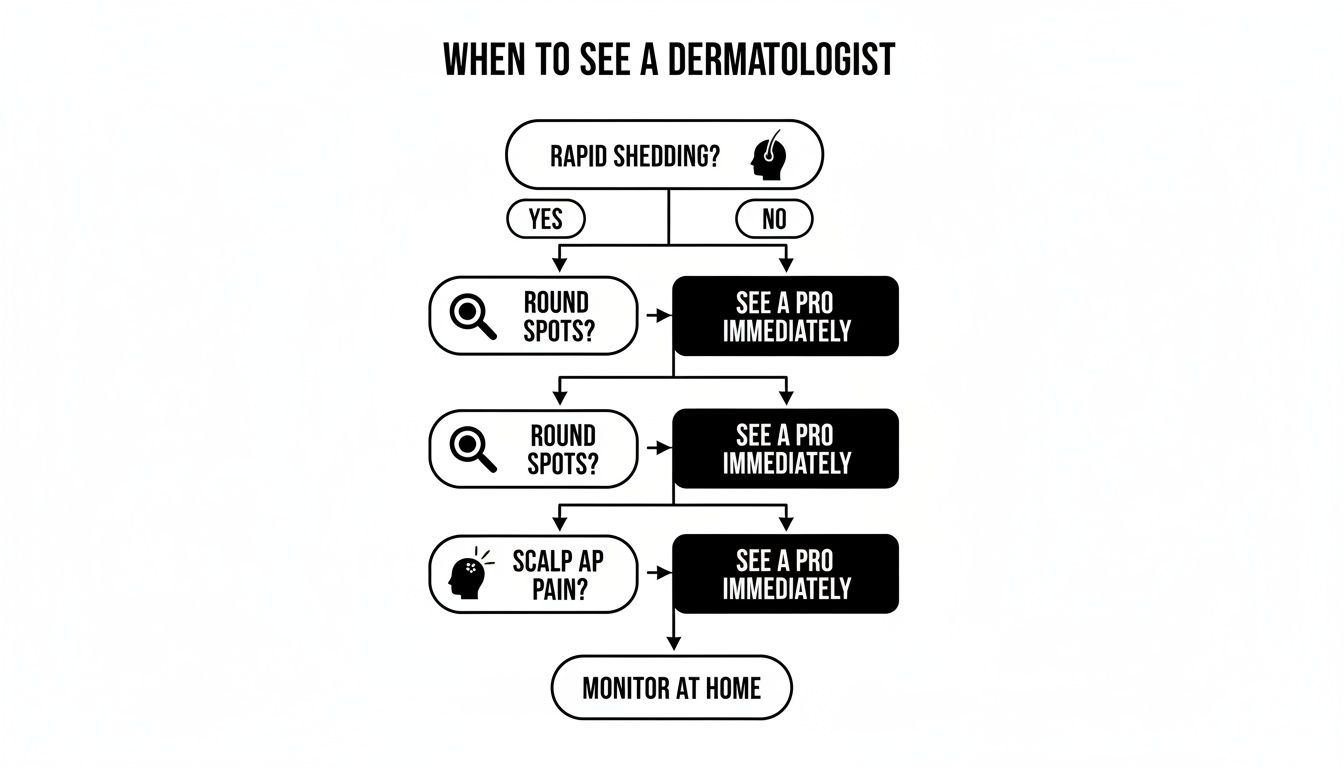
As you can see, certain red flags—like sudden, rapid shedding or any pain on your scalp—are clear signs that you need an expert opinion before trying any treatment.
Advanced In-Office Laser Therapy
If you're looking for a non-invasive but potent solution, advanced laser therapy is an exciting option. Known as low-level laser therapy (LLLT), this technology uses targeted light energy to kickstart cellular activity within the hair follicles—a process called photobiomodulation.
Here at NYC Laser Hair Removal, we use the Splendor X laser, a system that elevates this technology to the next level. What makes it special is its blended wavelength technology, which combines two types of lasers (Alexandrite and Nd:YAG). This dual approach allows us to safely and effectively boost circulation and awaken dormant follicles on a wide range of skin tones and hair types.
This process essentially re-energizes the cells responsible for hair growth, encouraging them to produce thicker, healthier hair. It's a gentle and painless way to create a more supportive environment for growth across your entire scalp, helping to even out density and bring back that feeling of fullness. While many people think of lasers for removal, their power in hair restoration shows just how versatile they are. To get a better sense of what laser technology can do, check out our guide on how long laser hair removal results last in our guide.
Comparing Treatments For Uneven Hair Growth
Choosing the right treatment comes down to balancing effectiveness, commitment, and cost. Each option has its own strengths and is better suited for different causes of uneven hair growth.
This table gives you a clear side-by-side look at your choices to help you make an informed decision.
Treatment Option | How It Works | Best For | Average Time to See Results |
|---|---|---|---|
Minoxidil (Topical) | Increases blood flow to the scalp, stimulating follicles. | General thinning, early-stage pattern baldness. | 3-6 months |
Finasteride (Oral) | Blocks DHT production to stop follicle miniaturization. | Male pattern baldness (receding hairline, crown). | 3-6 months |
Splendor X Laser Therapy | Uses light energy to stimulate cellular activity and circulation. | Diffuse thinning, androgenetic alopecia, weak follicles. | 4-6 months |
Spironolactone (Oral) | Reduces the impact of androgen hormones on follicles. | Female pattern hair loss linked to hormones. | 6+ months |
Often, the most powerful strategy is actually a combination of treatments. For instance, pairing a topical solution like Minoxidil with in-office laser therapy can create a multi-pronged attack on hair loss, tackling the problem from both the outside in and the inside out. A consultation with a specialist is the best way to build a personalized plan to get you back to balanced, healthy growth.
Everyday Habits For Healthier Fuller Hair
Medical treatments get the best results when they’re part of a bigger picture. When you back up professional care with smart daily habits, you create the perfect environment for your follicles to thrive and finally get a handle on uneven hair growth.
Think of your scalp like a garden. A professional treatment is like a powerful, specialized fertilizer, but your everyday choices—your diet, stress levels, and styling habits—are the sunlight, water, and rich soil that make everything flourish. A few simple, consistent changes can make a world of difference.
Nourish Your Hair From The Inside Out
The link between what you eat and the health of your hair is direct and incredibly powerful. Your hair follicles are made of some of the fastest-dividing cells in your body, and they need a constant supply of nutrients to build strong, healthy strands. If your diet is lacking, your hair is one of the first places you'll see it.
To give your hair the building blocks it needs, focus on getting enough of these key nutrients:
Iron: This mineral is a must-have for producing hemoglobin, which is responsible for carrying oxygen to your cells—including the ones that kickstart hair growth.
Zinc: Zinc is a major player in hair tissue growth and repair. It also helps keep the oil glands around the follicles working just right.
Biotin: A famous B-vitamin for a reason, biotin is essential for producing keratin, which is the core protein your hair is made of.
While a good supplement can fill in the gaps, a food-first approach is always your best bet. A balanced diet packed with lean proteins, leafy greens, fruits, and healthy fats gives your body the full spectrum of vitamins and minerals it needs for great hair.
Get a Handle on Your Stress Levels
Chronic stress can absolutely wreck your hair. When you’re constantly stressed out, your body pumps out more of the hormone cortisol. High cortisol levels can shove a huge number of hair follicles into the resting (telogen) phase all at once, leading to a noticeable increase in shedding.
Finding ways to manage stress that actually work for you isn't just good for your mind—it's a non-negotiable part of any solid hair care routine. Simple practices like daily meditation, hitting the gym, or even just taking a quick walk around the block can help lower cortisol and keep stress-related shedding in check, giving your hair a real chance to stay in its growth phase longer.
Adopt Smarter Hair Care Practices
Finally, how you treat your hair from the outside matters just as much as what’s going on inside. Physical stress from rough handling and tight styles leads to breakage and thinning, making uneven growth look even worse.
This screenshot from Johns Hopkins Medicine debunks a few common hair loss myths, and it really drives home the point that our daily habits are a huge factor.
The big takeaway here? It’s not things like frequent shampooing or wearing a hat that are the real culprits. It’s the harsh chemical treatments and constant physical tension that do the real damage. So, steer clear of tight hairstyles like high ponytails or braids that can cause traction alopecia, and switch to gentle, sulfate-free products that clean your scalp without stripping away its protective natural oils.
Got Questions About Uneven Hair Growth? We’ve Got Answers.
Even after you understand the basics, a few questions always pop up. It’s completely normal. Here are some of the most common ones we hear from clients, with straightforward answers to help clear things up.
Can Uneven Hair Growth Fix Itself?
Honestly, it depends entirely on what’s causing it. If the culprit is a temporary stressor—like a tough project at work or an illness—you might be dealing with Telogen Effluvium. The good news is that this kind of hair loss often sorts itself out within a few months once the stress is gone.
But for conditions driven by genetics or hormones, it's a different story. Androgenetic alopecia (classic pattern baldness) won't fix itself; it's a progressive condition that requires consistent treatment to keep it in check. The same goes for autoimmune issues like alopecia areata. While some people see spontaneous regrowth, many need a hand from a professional to wake those dormant follicles back up.
The bottom line? If the problem is coming from an ongoing internal factor like your genes or hormones, it almost never gets better without a targeted plan.
Are There Hairstyles That Can Hide Thinner Spots?
Absolutely. A great hairstylist can be your secret weapon here. The right cut and style can work wonders, creating an illusion of volume and cleverly camouflaging areas where your hair isn't as dense.
For example, if you’re noticing thinning at the crown or along your part, adding some soft layers can instantly build body and provide more coverage. If a receding hairline is your main concern, a textured fringe or a style with a bit more lift on top can make a huge difference. The key is finding a stylist who really understands how to work with your specific hair growth pattern, not against it.
How Long Does Treatment Usually Take?
Think of it less like a quick fix and more like a long-term commitment, especially for chronic conditions like pattern baldness. Because the root cause—whether it's genetic or hormonal—doesn't just disappear, stopping treatment usually means the hair loss will start up again.
Advanced treatments like Splendor X laser therapy are a perfect example. You’ll typically start with a series of sessions to really kickstart new growth. After that, you’ll move to periodic maintenance appointments to keep those results going strong. These follow-ups are essential for keeping the follicles energized and happy over time. Your specialist will work with you to map out a long-term plan that fits seamlessly into your life.
Ready to stop guessing and start a personalized plan to bring back your hair’s balance? The experts at NYC Laser Hair Removal are here to help you achieve fuller, healthier-looking hair with the latest technology. Book your consultation today and take the first real step toward a solution that works for you.
Comments