
Post Laser Hair Removal Bumps: Causes, Care & Fixes
Immediate redness and swelling around each follicle are normal treatment endpoints that usually fade within several hours to a few days. Itchy papules or pustules that first appear 5–7 days after treatment may indicate laser-induced folliculitis, which needs different care from routine post-treatment swelling.
You've probably noticed the texture while checking your skin in the mirror, perhaps expecting it to look completely smooth after your appointment. Instead, there are tiny red bumps, mild swelling, or even a few whiteheads around the treated follicles. That appearance can be unsettling, but bumps after laser hair removal don't all mean the same thing.
The useful questions are when the bumps appeared, what they look like, how they feel, and whether they're improving. Immediate follicle-centered redness often reflects a normal inflammatory response. Delayed itchy papules or pustules may reflect folliculitis, while blistering, spreading redness, severe pain, or persistent pigment changes need professional assessment.
Understanding Post Laser Hair Removal Bumps
You check the treated area after your appointment and find tiny red bumps instead of uniformly smooth skin. That pattern can represent a normal response to laser energy, delayed folliculitis, or a problem that needs clinical review. The useful distinction comes from timing, appearance, sensation, and whether the skin is settling.
Perifollicular edema is temporary swelling around individual follicles after they absorb laser energy. Erythema is the associated redness. Both may look more pronounced where hair is dense, including the underarms, bikini line, face, and neck. Small, evenly distributed bumps that appear immediately or soon after treatment and gradually improve over several hours to a few days usually fit this expected endpoint.
Delayed itchy papules or pustules suggest a different process. A clinical case report described lesions developing within 5–7 days after long-pulsed Nd:YAG treatment and resolving over 2–4 weeks (clinical case report on post-laser folliculitis). Bumps that multiply, become painful, spread beyond the treated follicles, blister, or leave persistent pigment changes should be assessed by a qualified professional rather than managed as routine swelling.
Why the same treatment can look different
Skin type, body area, hair thickness, shaving history, cooling, number of passes, and treatment settings all influence the response. Coarse or curly hair, prior shaving-related folliculitis, pili multigemini, inadequate cooling, excessive passes, or overly aggressive fluence can make inflammation more visible.
One appointment may produce mild pinkness, while another leaves prominent follicle-centered bumps. That difference alone does not establish that treatment was unsafe or ineffective. It does signal that the provider should review the skin's response before choosing future settings.
Practical rule: Immediate, uniform swelling that is settling differs from delayed pustules that multiply, hurt, or spread.
Keep hands clean before touching the area, avoid unnecessary contact, and clean the skin without scrubbing. For practical hygiene guidance, see BacteriaFAQ.com on MRSA prevention.
Immediate Home Care Steps for Calm Skin
The first instinct is often to attack the bumps with exfoliating acids, acne treatments, a rough washcloth, or a strong antiseptic. That usually adds friction and chemical irritation to skin that is already reactive. A calmer routine gives the follicles room to settle.
During the first day
Wash the area gently with lukewarm water and a mild, fragrance-free cleanser. Use clean hands rather than a scrub, loofah, brush, or textured cloth, then pat dry with a clean towel. A cool, damp compress can ease warmth or itching. Don't place ice directly on the skin.
Wear loose, breathable clothing over treated areas. Skip shaving, picking, waxing, deodorant on treated underarms, and products that trap heat or moisture. Occlusive balms, heavily fragranced lotions, and unapproved antibiotics or steroids can complicate the picture and may cause additional irritation.
If you need to work the next day, you can generally keep the routine simple: cleanse gently, avoid rubbing the area, and choose clothing that doesn't press against it. For underarms, leave deodorant off until the skin no longer feels tender or reactive.
Over the next two to three days
Avoid activities that raise heat, sweat, or friction around the treated follicles. That includes strenuous workouts, saunas, steam rooms, hot tubs, very hot showers, and tight synthetic clothing. If you exercise despite mild residual redness, shower promptly afterward with lukewarm water and avoid scrubbing.
Hold retinoids, glycolic acid, salicylic acid, abrasive scrubs, and other active products until your provider says the skin has recovered. Daily sun protection matters on exposed areas because additional UV exposure can worsen irritation and pigment changes. Use a broad-spectrum sunscreen suitable for your skin, and follow your clinic's specific instructions in NYCLASER's post-laser skin-care guidance.
If razor irritation is part of the pattern, review advice on how to prevent razor burn on sensitive skin, then discuss shaving technique with your laser provider. Don't assume every bump should be treated like razor burn. Laser-related inflammation and shaving-related irritation can overlap, but they don't always respond to the same products.
When to Seek Professional Care
A few bumps the same day as treatment may reflect routine perifollicular edema. Judge the reaction by its timeline, appearance, symptoms, and direction of change, rather than by the presence of bumps alone.
More consistent with routine inflammation | Contact the treating clinic or a dermatologist |
|---|---|
Mild redness around individual follicles | Redness that spreads quickly |
Small, even swelling soon after treatment | Fever or feeling generally unwell |
Mild warmth, tingling, or sensitivity | Marked or increasing tenderness |
Improvement over hours or a few days | Abscess-like lesions, drainage, or extensive pus |
No blistering or broken skin | Burns, blisters, open wounds, or heavy crusting |
Temporary roughness without lasting color change | Persistent or pronounced pigment change |
Timing is useful, but delayed symptoms need separate attention. Itchy papules or pustules appearing several days later can indicate laser-induced folliculitis rather than immediate perifollicular edema. In a published case report of post-laser hair removal folliculitis, numerous lesions developed 5–7 days after treatment and resolved over 2–4 weeks. A reaction that looked uncomplicated on day one can therefore require assessment later.
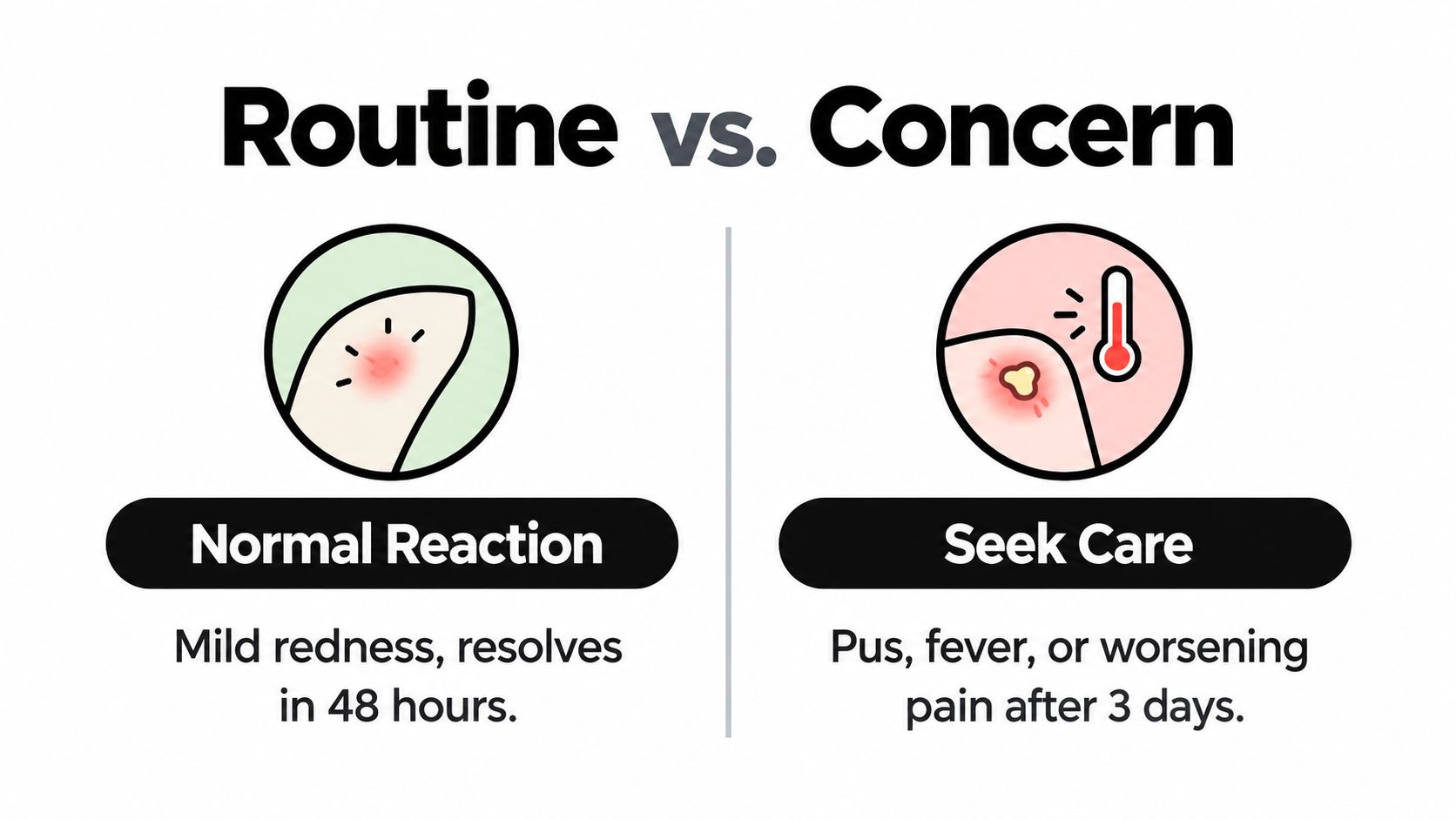
Contact the treating clinic first if the reaction is localized but unfamiliar, or if you suspect the treatment settings or aftercare played a role. Arrange dermatology assessment for severe, recurrent, or spreading lesions, especially when bacterial folliculitis, infection, and thermal injury are difficult to distinguish.
Treat suspected burns as a medical concern, not as ordinary cosmetic irritation. Review the critical indicators for skin burns and seek prompt advice for blistering, broken skin, escalating pain, or substantial color change.
The Clinical Evidence Behind Bumps and Folliculitis
A bump's timing and appearance often reveal more than its size. Research recognizes folliculitis as a possible cutaneous complication of light-assisted hair removal, with reactions varying by skin type, treatment area, device, and treatment parameters. The evidence supports assessing the pattern rather than treating every post-treatment bump as a complication.
Post-laser folliculitis has been estimated at approximately 6.4% in clinical literature, and reported cases are generally mild and transient. Shaving can contribute by irritating follicular walls or allowing cut hair shafts to re-enter the skin. Coarse or curly hair, pili multigemini, previous shaving-related folliculitis, repeated passes, inadequate cooling, and overly aggressive fluence can make inflammation more noticeable.
Temporary inflammation and longer-term improvement
A randomized split-face comparison involving 20 men with pseudofolliculitis barbae found that both long-pulsed alexandrite laser and IPL reduced papules. The alexandrite-treated side reached about 80% improvement after 7 sessions, while the IPL side achieved roughly 50% improvement after 10–12 sessions (randomized comparison of alexandrite laser and IPL). During one year of follow-up, maintenance occurred approximately every 6 months for the alexandrite side and about every 3 months for the IPL side.
The clinical trade-off is straightforward: treatment may produce short-lived perifollicular inflammation while reducing recurrent shaving-related papules over time. Persistent, spreading, or pustular lesions warrant a provider's assessment rather than repeated home treatment. NYCLASER's guidance on laser hair-removal folliculitis offers practical questions to raise during that discussion.
Professional Treatment Options at NYCLASER
Recurrent bumps need a clinical review when they persist, spread, form pustules, or appear after the expected early redness has settled. A qualified provider can assess their timing, distribution, shaving routine, treatment area, skin response, and settings. That assessment helps determine whether to modify the next session, postpone treatment, or refer you for medical care.
NYCLASER uses Splendor X technology and adapts treatment plans to the client's skin, hair, treatment area, and goals. This individualized review is particularly useful on the face, jawline, and neck, where folliculitis can resemble increased hair growth. It also helps assess concern about paradoxical hypertrichosis, a rare but recognized increase in hair growth concentrated on facial and neck sites.
A systematic review found a pooled prevalence of about 3%, while a prospective 2025 study of facial Alexandrite treatments reported 16.2% in its specific population. These figures should not be applied broadly to every person or device (systematic review of paradoxical hypertrichosis).

A single session may suit someone assessing tolerance, while a structured package allows consistent monitoring and maintenance. Session count is only one factor. The plan should also include clear aftercare, reaction tracking, and an escalation route when home care fails.
Prevention Strategies for Long-Term Smooth Skin
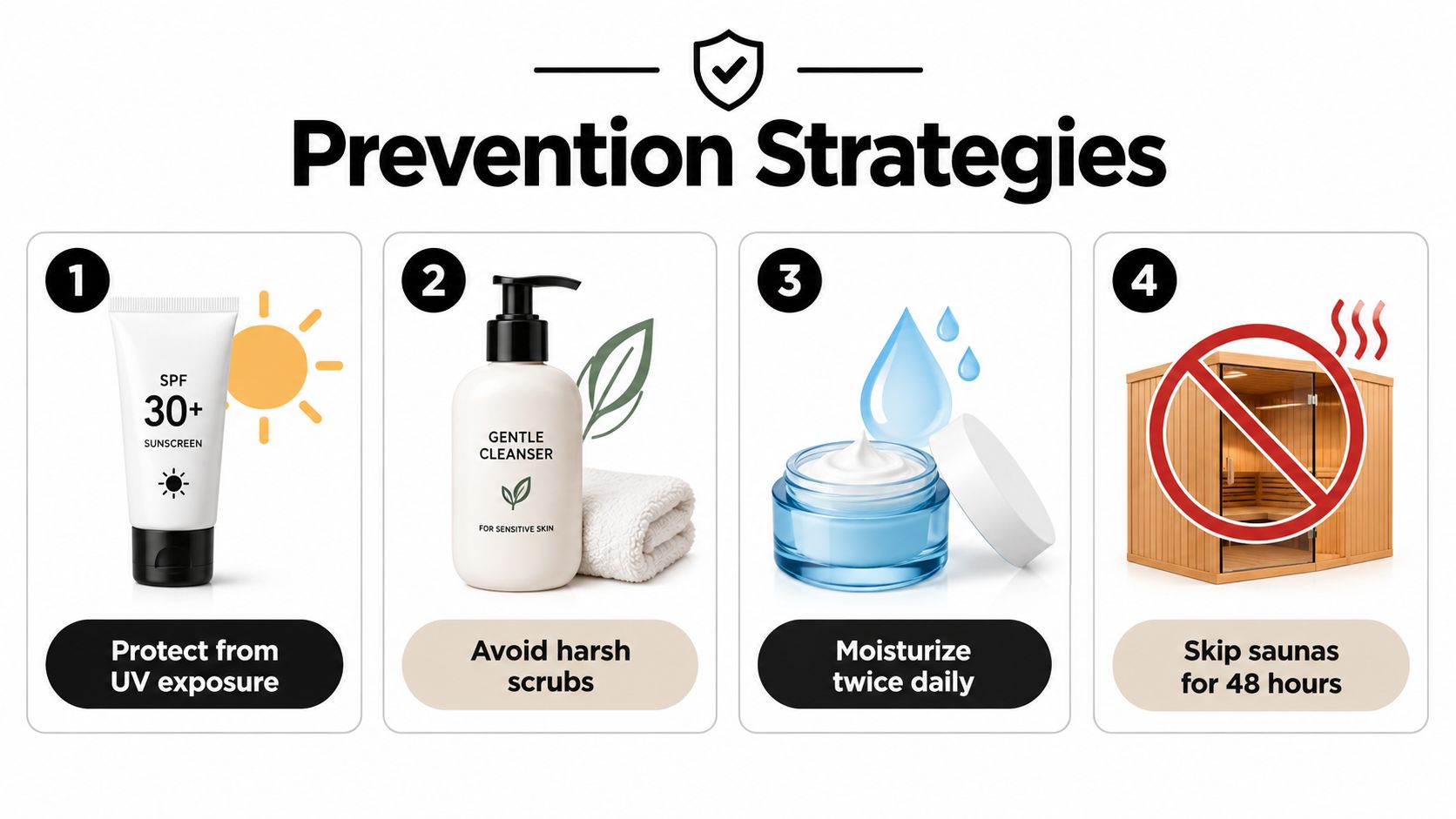
Prevention starts between appointments. Use the same gentle routine after each session, even when the previous reaction was mild. Hormonal shifts, shaving, seasonal heat, sun exposure, and treatment settings can change how follicles respond from one visit to the next.
Keep the routine deliberately simple
Use a gentle cleanser and bland moisturizer once the skin tolerates them. Avoid harsh scrubs and aggressive exfoliation while follicles remain tender. After recovery, ask your provider whether a gentle enzyme exfoliant suits your skin. Stronger products can increase irritation and pigment changes rather than prevent bumps.
Apply sunscreen consistently to exposed treatment areas. In the facial Alexandrite study cited earlier, regular sunscreen use was associated with lower paradoxical hypertrichosis prevalence in that specific population. The association does not establish the same outcome for every patient.
Humidity and friction also matter in Long Island and Nassau County. Change out of damp workout clothes promptly, choose breathable fabrics, and avoid activities that repeatedly rub sensitive treated skin. A maintenance schedule may reduce frequent shaving, which can help limit razor irritation and recurring ingrown-hair patterns. See NYCLASER's advice on preventing ingrown hairs for practical guidance.
Keep a consistent photographic record of unusual reactions. Note when bumps began, whether they itch or hurt, and whether they are spreading. Timing helps separate expected perifollicular swelling from delayed folliculitis, while spreading redness, increasing pain, drainage, or persistent bumps warrant professional assessment rather than continued home care.
NYC Laser Hair Removal offers personalized laser hair-reduction plans with Splendor X technology, single sessions, and multi-session options for the face, underarms, back, and full legs. If bumps keep returning or the reaction is unclear, visit NYC Laser Hair Removal to review your skin response and select an appropriate treatment plan.
Comments