
Laser Hair Removal Pain Level: What It Feels Like and How to Prepare
Most clients are pleasantly surprised by the laser hair removal pain level. They usually describe it as a quick, warm snap—almost like a rubber band flicking against the skin. That brief sensation is actually a good sign; it means the laser is effectively targeting the hair follicle.
Thanks to modern cooling technology, the entire experience is far more comfortable than it used to be.
Putting the Sensation into Perspective
Let's clear the air on the biggest myth: laser hair removal is not some excruciating, unbearable ordeal. Of course, everyone's pain tolerance is a bit different, but the feeling itself is incredibly fast and targeted.
It's nothing like the prolonged, ripping feeling of a wax strip. A single laser pulse is over in a millisecond. That key difference is why so many people prefer it for long-term hair reduction. The goal isn’t to feel nothing at all—that quick snap confirms the laser's thermal energy has found its target.

Here at our Long Island clinic, we use advanced devices like the Splendor X by Lumenis, which comes with a built-in cooling system. It chills the skin an instant before each pulse, which dramatically dulls the sensation of heat and keeps you comfortable.
How Does It Compare to Other Methods?
To give you a real-world idea of what to expect, it’s helpful to compare laser hair removal to other common grooming habits. The consensus among our clients is clear: the brief discomfort is a tiny price to pay for such lasting, smooth results.
Key Takeaway: The sensation is less about "pain" and more about a temporary, sharp heat. Modern technology makes sure this feeling is over in a flash and totally manageable, placing it miles ahead of old-school methods like waxing.
Comparing Laser Hair Removal Pain to Other Methods
Here’s a quick reference to put the sensation in context. See how the pain levels stack up against other common hair removal techniques.
Hair Removal Method | Common Sensation | Pain Scale (1-10) | Duration of Sensation |
|---|---|---|---|
Laser Hair Removal | Quick, warm snap like a rubber band | 3-6 | Milliseconds per pulse |
Waxing | Sharp, tearing pull; lingering sting | 6-9 | Several seconds per strip |
Epilating | Multiple, continuous plucking sensations | 6-8 | Ongoing during treatment |
Tweezing | Sharp, localized pinch | 3-5 | Per individual hair |
Shaving | Generally painless; risk of nicks | 1-2 | None (unless cut) |
As you can see, while not entirely sensation-free, laser hair removal sits comfortably in the lower-to-mid range of the pain scale, offering a much more tolerable experience than waxing or epilating for most people.
Understanding the Science Behind the Sensation
To really get why laser hair removal feels the way it does, it helps to know what’s happening right under your skin. That quick, warm "snap" you feel isn’t random—it's the sound of success, a sign the laser is doing its job perfectly. Think of it as the feeling of concentrated light converting to heat the second it zaps its target.
The technical term for this is selective photothermolysis. It sounds complicated, but the idea is simple. The laser sends out a specific wavelength of light that is laser-focused on one thing: the pigment (melanin) in your hair. When that light hits the dark, pigment-rich follicle, the energy is absorbed in a flash, creating a tiny burst of heat that damages the follicle’s ability to regrow hair. Meanwhile, the surrounding skin has less pigment, so it’s left cool and untouched.
Different Lasers, Different Feelings
Not all lasers are built the same, and the type of device your specialist uses definitely plays a role in the sensation. Each laser technology operates at a unique wavelength, which makes it a better match for certain hair and skin combinations. The big three you'll hear about are Alexandrite, Diode, and Nd:YAG.
If you want to go deeper into how this all works, check out our guide on how laser hair removal works. It breaks down the entire process behind getting that smooth finish.
The laser's wavelength is key because it dictates how deep the energy goes and how strongly the pigment absorbs it. This is why each one feels a little different.
Clinical research actually confirms this. One study comparing the main laser types found that on a 4-point pain scale, the Diode laser scored a 2.0 and the Alexandrite a 2.3—both indicating a very mild and easily tolerated discomfort. The Nd:YAG, which is the go-to for darker skin tones, came in at a higher but still manageable 3.5. You can read the full research about these laser pain findings to learn more.
Why That Sensation Is a Good Thing
Ultimately, that quick snapping feeling is your confirmation that the treatment is working. It means the laser has found the hair follicle and delivered the exact amount of heat needed to shut it down. The sensation is controlled, incredibly fast, and a completely normal part of getting the results you want.
Here’s a quick breakdown of what that feeling really means:
Precision Targeting: The laser is hitting the melanin in the hair follicle right on the money.
Effective Energy Delivery: Enough heat is being generated to actually disable the follicle.
Progress Toward Smoothness: Each one of those snaps means one less hair will be growing back.
Once you understand the science, you can reframe the sensation. It's not just "pain"—it's proof of progress. Every pulse brings you one step closer to the smooth, hair-free skin you’re after.
What Factors Influence Your Personal Pain Level
The sensation of laser hair removal isn't a one-size-fits-all experience. While one friend might barely feel a thing, another might describe it as more noticeable. This difference comes down to a few key variables that are unique to you, your body, and the specific area being treated.
Understanding these factors gives you a much clearer, more realistic expectation of what your sessions will actually feel like. Of course, your personal pain threshold is a major player, but several other elements contribute to the sensation you'll experience.
Treatment Area and Hair Density
One of the biggest factors is where on your body you're getting the treatment. It's just a fact that different areas have varying levels of sensitivity based on skin thickness and the number of nerve endings packed into that spot.
Less Sensitive Areas: Thicker-skinned spots like the legs, arms, stomach, and back are generally the least sensitive. Many clients describe the sensation here as a very light, quick flick of a rubber band.
More Sensitive Areas: Areas with thinner skin and higher nerve concentrations, such as the upper lip, underarms, and especially the bikini line or a full Brazilian, will naturally be more sensitive.
Similarly, the thickness and density of your hair really matter. A coarse, dense patch of hair contains more pigment, which means it absorbs more of the laser's energy. This creates more heat, and that can translate to a stronger zapping sensation, especially during your first few sessions when the hair is at its thickest.
Skin Tone and Hair Color
The science behind laser hair removal is all about contrast. The laser needs to easily distinguish between the dark pigment in your hair follicle (the target) and your lighter skin. The greater the contrast, the more efficiently the laser can zap the hair without affecting the surrounding skin.
This principle is why people with fair skin and dark hair often report a very low pain level. The laser has an easy, direct target, allowing it to work effectively with less energy—which means a more comfortable pulse for you.
This infographic breaks down the core process, showing exactly how the laser beam targets the follicle to generate that pinpoint of heat.
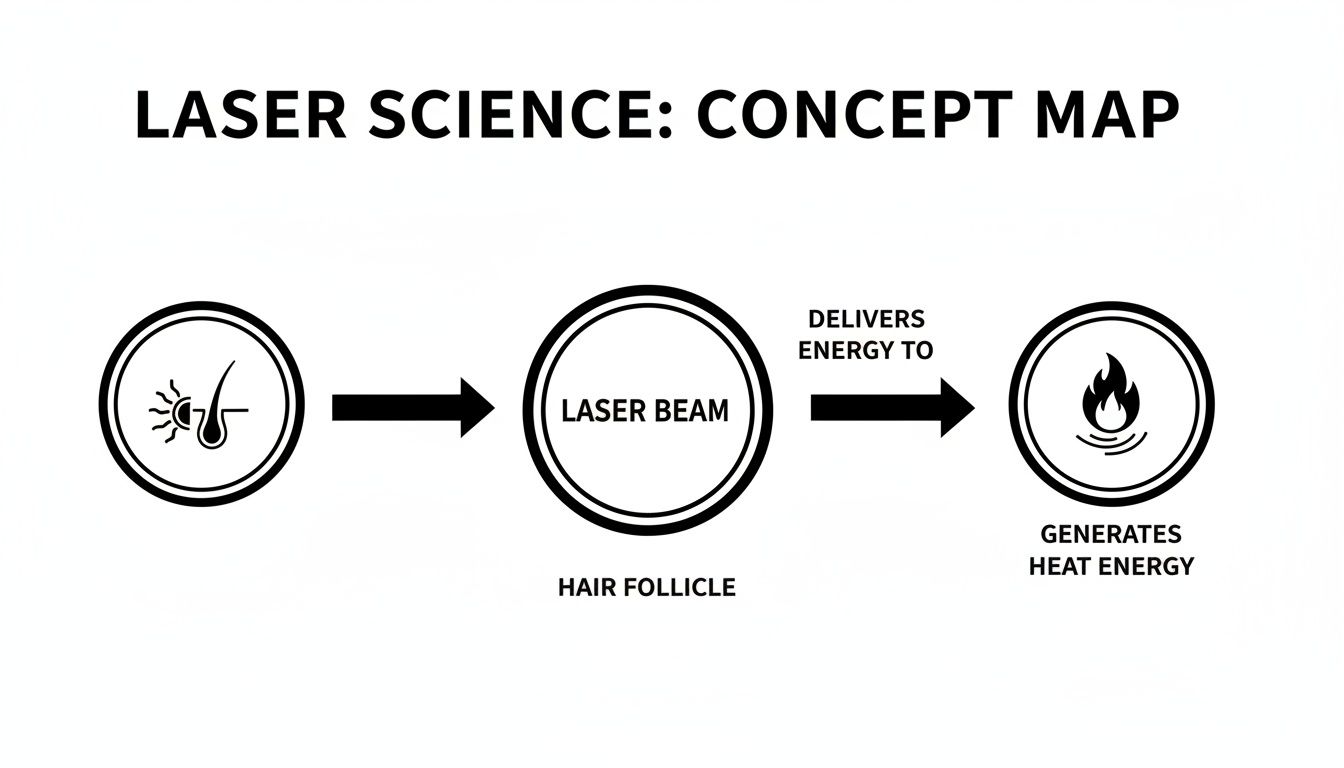
You can see the direct line of action—from light to follicle to heat—which is the source of the sensation. The good news is that modern lasers, like the Splendor X we use in our Westbury clinic, are designed to work safely and effectively on a much wider range of skin tones, but that fundamental principle of targeting pigment remains.
Other Personal Factors to Consider
Beyond anatomy and tech, a few other personal elements can influence how comfortable you feel during a session.
Hormonal Fluctuations: Your body’s sensitivity can definitely change throughout your menstrual cycle. Many women find their skin is more sensitive just before or during their period, so you might want to schedule your appointments for the week after.
Caffeine Intake: Stimulants like caffeine can heighten your body's overall sensitivity. It’s a smart move to skip your morning coffee or energy drink on the day of your treatment to help keep any sensations to a minimum.
How Modern Technology Makes Treatments More Comfortable
If you’ve heard horror stories about laser hair removal from a decade ago, it’s time for a reality check. Today’s technology has completely changed the game, engineering the entire process for maximum comfort and effectiveness. The laser hair removal pain level people experience now is worlds away from what it used to be.
Modern devices are built with a deep understanding of how skin reacts to heat and light. The goal isn't just to zap hair away; it's to do it so comfortably that you’ll actually look forward to your sessions. This mindset has led to some incredible advancements that prioritize your experience from start to finish.
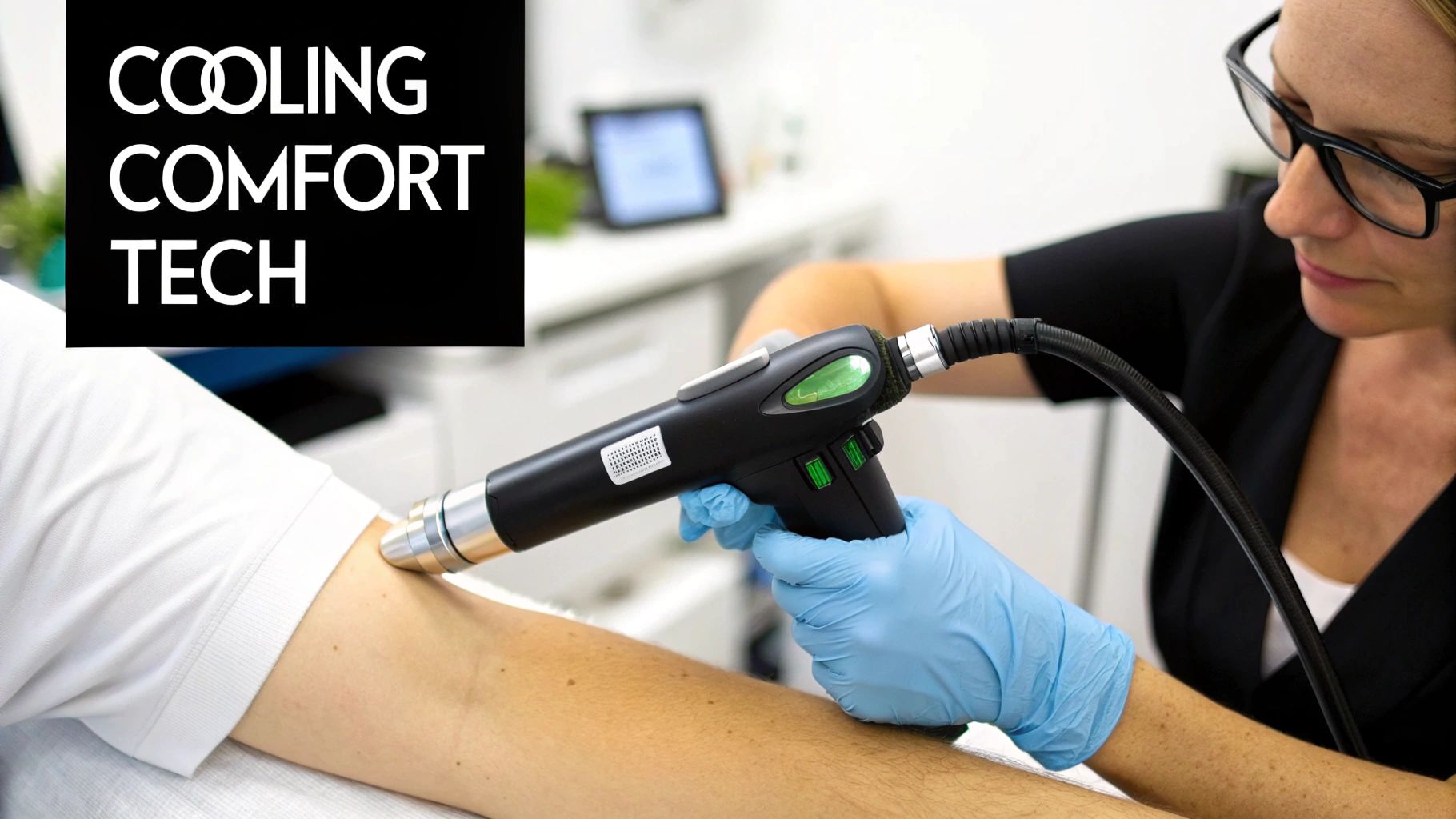
The Splendor X and Its Cooling Advantage
A perfect example of this evolution is the Splendor X by Lumenis—the exact system we proudly use at our Nassau County clinic. Its secret weapon for comfort is the integrated Dual Cooling System (DCS). This isn't just an add-on; it's a core part of the treatment handpiece itself.
Imagine a continuous stream of chilled air flowing over your skin, cooling it just milliseconds before, during, and after each laser pulse hits. This technology basically acts as a preemptive numbing agent. It keeps your nerve endings so busy registering the cold that they barely notice the heat from the laser.
This constant cooling is what turns a potentially sharp, hot sting into a quick, dull snap. It’s the difference between a tolerable treatment and one you barely think about.
This is a huge leap from older methods that relied on messy gels or inconsistent blasts of cold air. With a system like Splendor X, comfort is built directly into every single pulse, ensuring a consistent and manageable experience no matter what area you’re treating.
Why Advanced Cooling Matters
Choosing a clinic with state-of-the-art equipment is about more than just getting good results—it's about making sure your journey to smooth skin is as safe and pleasant as possible. Advanced cooling technology brings several key benefits that directly impact the laser hair removal pain level.
Preemptive Numbing: By chilling the skin an instant before the laser fires, the system minimizes the heat sensation before your brain can even fully register it.
Enhanced Safety: The cooling protects the epidermis (the top layer of your skin) from thermal damage, which drastically reduces the risk of side effects, especially for sensitive skin types.
Consistent Comfort: Unlike external cooling methods, an integrated system provides uniform cooling with every single pulse, meaning no surprise "hot spots" during your session.
Modern laser hair removal has successfully debunked the old pain myths. Most of our clients describe the feeling as a 'mild stinging or snapping sensation,' and even that is significantly minimized by today's technology. As FDA-approved treatments since 1995, serious issues are exceedingly rare, with most people achieving 70-90% permanent hair reduction. If you want to learn more, check out these common laser hair removal facts and myths to see how far the technology has really come.
Ultimately, this focus on comfort means you can get the results you want without the dread or anxiety that used to come with the procedure.
Preparing for a More Comfortable Laser Session
You have more control over your comfort during a laser session than you might think. While today’s technology has dramatically reduced the laser hair removal pain level, a few simple prep steps can make your experience even smoother. Taking the time to get your skin ready ensures the laser can do its job efficiently, which means less discomfort and better results for you.
Think of it like setting the stage for success. A painter primes a canvas for a reason—it creates the perfect surface for the paint to adhere to. In the same way, prepping your skin gives the laser a clear, direct path to the hair follicle without any distractions.
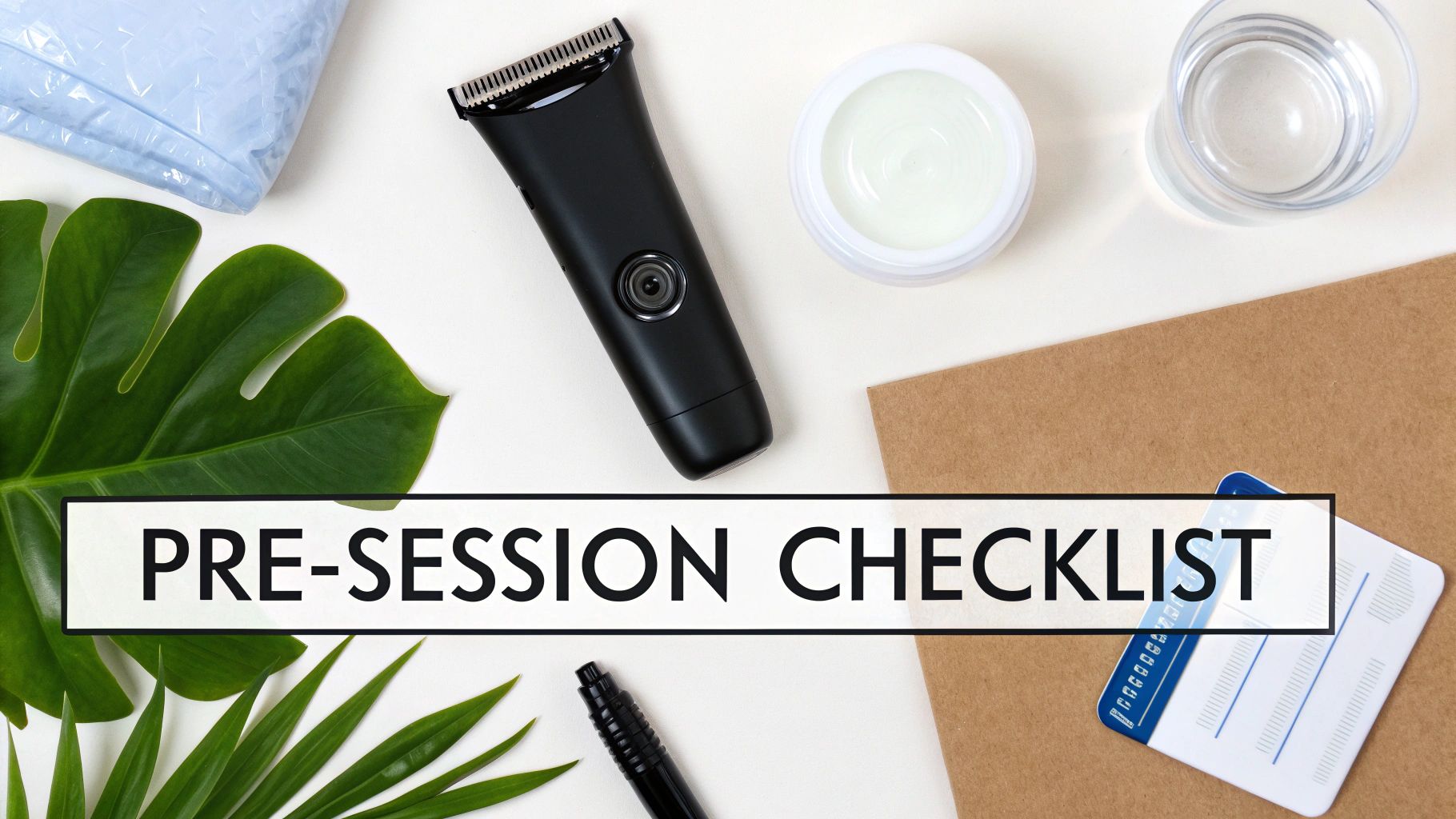
Your Pre-Session Comfort Checklist
Follow these guidelines, and you’ll walk into your appointment feeling confident and ready. Each of these steps is designed to lower your skin's sensitivity and boost the laser's performance.
Shave, Don't Wax: This is non-negotiable. You need to shave the treatment area 24 hours before you come in. Shaving cuts the hair at the surface but leaves the root in the follicle, which is exactly what the laser needs to target. Absolutely no waxing, tweezing, or epilating, as these methods rip the entire root out, leaving nothing for the laser to find.
Avoid Sun Exposure: Keep the area out of the sun and away from tanning beds for at least two weeks before your session. Tanned or (even worse) sunburned skin is extra sensitive and can react poorly to the laser, making the treatment more uncomfortable and increasing the risk of side effects.
Skip the Stimulants: On the day of your appointment, hold off on the coffee, energy drinks, or any other stimulants. They can actually heighten your body's sensitivity, making you much more aware of the laser's quick, snapping sensation.
Stay Hydrated: Drink plenty of water in the days leading up to your session. Skin that's well-hydrated is healthier and more resilient, which definitely helps create a more comfortable experience overall.
For a complete walkthrough of all the essential do's and don'ts, check out our comprehensive guide on how to prepare for laser hair removal.
The Role of Numbing Creams
Topical numbing creams are always an option, but honestly, they’re rarely needed with advanced machines like the Splendor X. Its built-in cooling system does most of the work.
However, if you're treating a notoriously sensitive spot like the Brazilian or you just know you have a very low pain threshold, it's something you can discuss with your technician. If you do go this route, apply a thick layer 30-60 minutes before your session begins and be sure to follow the product’s instructions perfectly.
What to Expect During and After Your Treatment
Knowing exactly what happens during a laser hair removal session can make a world of difference, turning any nervousness into confidence. From the moment you walk in, our entire focus is on your comfort and ensuring you feel completely prepared.
Your journey kicks off with a consultation where a specialist assesses your skin and hair to dial in the perfect settings for you. We'll do a quick patch test, which not only confirms the settings are right but also gives you a little preview of the sensation. Just before we begin, a cooling gel is applied to the skin—think of it as the first layer of comfort.
During Your Session
Once we start, your technician will glide the laser's handpiece over the treatment area. With each pulse of light, you'll feel a quick, warm snap against your skin. It’s a sensation that’s over in an instant.
Thanks to the advanced cooling system built right into our Splendor X device, that fleeting warmth is immediately chased by a soothing coolness. It’s this technology that makes the whole process so manageable from start to finish.
The best part? The sensation actually gets easier with every session you have. As your hair becomes finer and more sparse, there's less pigment for the laser to target. This means that snapping feeling becomes noticeably milder over time.
After Your Appointment
Right after your session wraps up, it's completely normal to see some mild redness or feel a bit of warmth in the area, much like a minor sunburn. This is a great sign! It shows that the laser successfully targeted the hair follicles. This feeling usually fades within just a few hours.
Calming the skin is simple. A bit of aloe vera gel or a cool compress works wonders. We also recommend avoiding hot showers, saunas, and intense workouts for the first 24 hours to give your skin a smooth recovery. For a complete rundown, check out our guide to laser hair removal recovery time.
When clients compare it to waxing, the feedback is consistent: this temporary sensitivity is far milder. Even in more delicate areas like the Brazilian zone, most people describe the feeling as a quick, manageable snap—nothing like the sharp, lingering pull of a wax strip.
Your Top Questions About Laser Hair Removal Pain, Answered
When you're thinking about laser hair removal, the question of "how much does it hurt?" is always front and center. Getting straight, honest answers is the best way to feel confident and know exactly what to expect when you walk in for your session.
One of the most common things we hear is, "Is it worse than waxing?" While they both get rid of unwanted hair, the feeling is a world apart. Waxing is a sharp, prolonged tear that leaves the whole area stinging. Laser hair removal, on the other hand, is a series of incredibly fast, targeted snaps—like a rubber band flicking against your skin—that are over in a millisecond. Most people find that quick snap way easier to handle than the lingering ache of a wax strip.
Does the Pain Get Better or Worse Over Time?
This is a great question, and the answer is one our clients love to hear: it absolutely gets better. With every single session, the laser damages the hair follicles, causing the hair that grows back to be finer, lighter, and more sparse.
Because there's less pigment and density for the laser to target, less heat is generated in the follicle. That means the snapping sensation becomes much milder with each appointment. Your first session will always be the most intense, but it gets progressively more comfortable from there.
Key Insight: The journey to smooth skin gets easier with each step. As your hair thins out, so does the sensation, making later sessions significantly more comfortable than the first.
Can I Take Painkillers Before My Appointment?
It’s completely normal to want to do everything you can to make your session comfortable. While it’s smart to think ahead, you’ll want to avoid blood-thinning pain relievers like aspirin or ibuprofen. These can increase your chances of bruising after the treatment.
If you’re really worried about sensitivity, the best thing to do is talk to your technician. They can let you know if an acetaminophen-based pain reliever, like Tylenol, would be a safe choice for you to take before you come in.
Ready to experience the modern, comfortable approach to smooth skin for yourself? At NYC Laser Hair Removal, our advanced Splendor X technology is designed for minimal discomfort and maximum results. Book your consultation at our Westbury, Long Island location by visiting nyclaser.com.
Comments