
Laser Hair Removal Armpits: What to Expect
You're standing in front of the bathroom mirror at 6 a.m., shaving quickly before work, already wondering whether the afternoon gym session will leave you with stubble, redness, or both. For many Long Island clients, underarm hair removal becomes a repetitive cycle of shaving, irritation, deodorant, and last-minute touch-ups. Laser hair removal for armpits can interrupt that cycle, but it works best when you plan for a series of treatments and understand that long-term reduction isn't the same as guaranteed permanent removal.
Underarms are a practical area to treat. They're small, clearly defined, and often contain coarse, pigmented hair that responds well to laser energy. The trade-off is the upfront commitment. You'll need enough sessions to reach follicles during the right growth phases, followed by occasional maintenance if regrowth appears.
Why Long Island Clients Consider Armpit Laser Hair Removal
A Manhasset or Garden City morning often starts with a quick shave before commuting. Deodorant, work, errands, and a workout follow, while friction and sweat can leave the skin irritated. By afternoon, rough regrowth may already be noticeable.
Repeated shaving can create shadowing, razor bumps, and redness. Waxing usually lasts longer, but it requires growing the hair out and can feel harsh on sensitive underarm skin. Depilatory creams provide another temporary option, although reactive skin may not tolerate them well.
Practical observation: Underarm clients rarely want a dramatic beauty transformation. They usually want fewer daily decisions about shaving, irritation, and visible regrowth.
Why the underarm is a manageable treatment zone
The underarm is a small treatment area, so appointments are generally shorter than treatments for legs, backs, or chests. A technician can work through both sides systematically without the positioning and repeated passes larger areas require. That makes scheduling easier around commuting, work, family responsibilities, and exercise.
Underarm hair also often has the pigment and coarser texture that make it responsive to laser treatment. The area's size keeps the appointment practical, but the treatment still requires a planned series rather than a single visit. Hair grows in cycles, so follicles respond at different appointments.
The upfront commitment is the main trade-off. Package pricing may make a treatment course more manageable than paying for isolated visits, but the right comparison is with the ongoing cost and time of shaving, waxing, or buying replacement products. Ask how many sessions the clinic typically recommends, what maintenance visits may cost, and whether the package covers follow-up treatments.
The decision behind the appointment
Many clients seek laser after trying several at-home methods and deciding that temporary smoothness no longer justifies the upkeep. Laser targets the follicle instead of only cutting or pulling the visible hair, which can reduce how often the area needs attention.
Results vary with hair color, skin tone, hormones, and treatment consistency. The practical goal is substantial, durable hair reduction, not a promise that every follicle will be removed forever. For Long Island clients, the decision usually comes down to accepting the initial series in exchange for less routine grooming later.
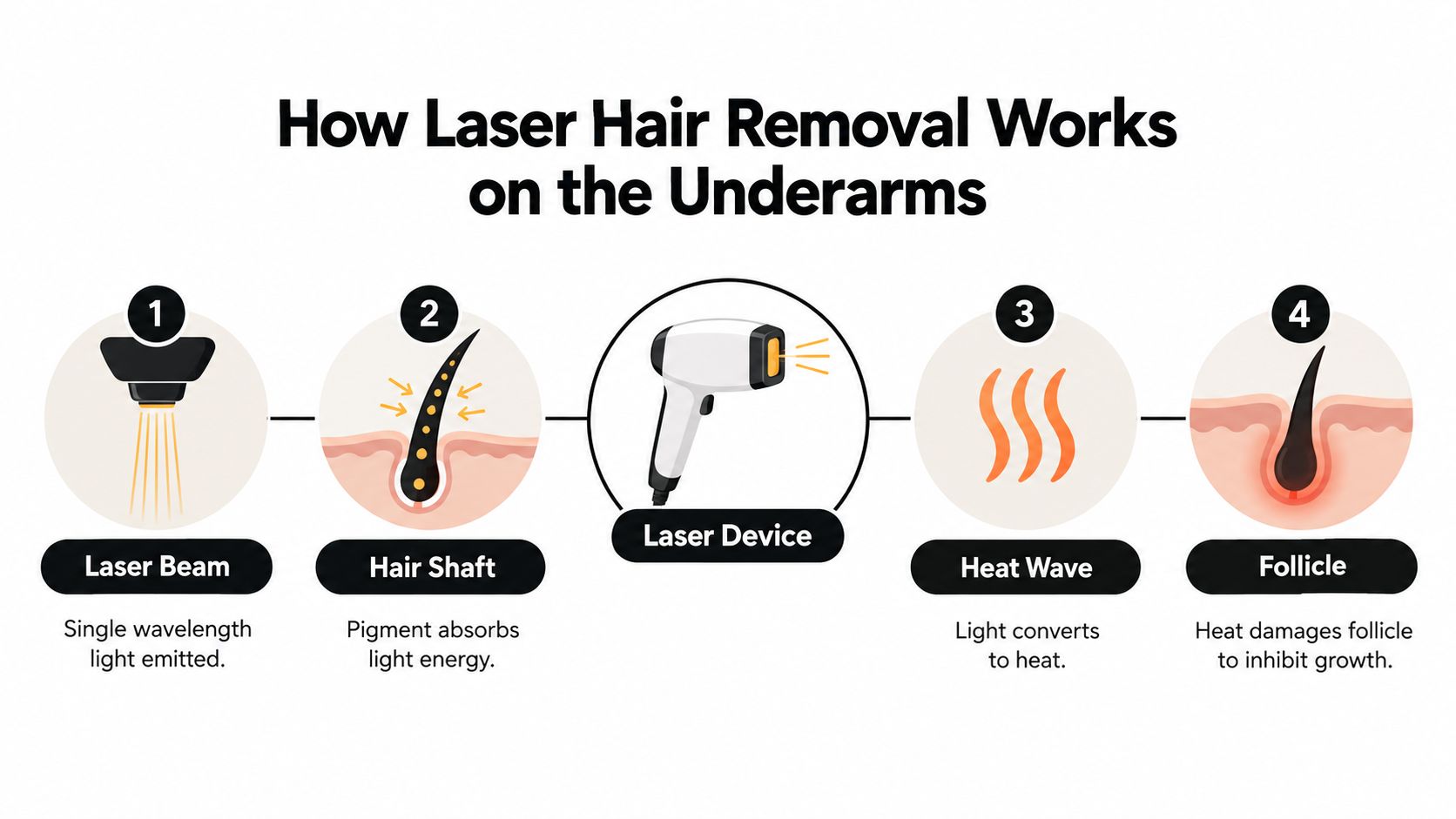
How Laser Hair Removal Works on the Underarms
Laser hair removal uses light to heat the pigmented portion of the hair and affect the follicle beneath the skin. The device emits a selected wavelength, the hair pigment absorbs that energy, and the resulting heat travels toward the follicular structures responsible for future growth.
Think of a follicle as a small candle and the laser pulse as a focused flame aimed at the wick. The goal isn't to burn the skin around the candle. It's to deliver enough controlled heat to the pigmented hair pathway and weaken the follicle's ability to produce a strong new hair.
How wavelength selection changes the approach
The dual-wavelength Splendor X platform used at NYCLASER can switch between Alexandrite at 755 nm and Nd:YAG at 1064 nm. Those wavelengths interact differently with melanin, so a trained provider can select the approach based on skin tone, hair characteristics, and treatment response.
Underarm laser is not a one-setting procedure. The technician considers the contrast between the hair and surrounding skin, the condition of the skin on the appointment day, and how the area responded previously. Recently tanned skin, active irritation, or an unsuitable hair color can change whether treatment should proceed.
For a broader explanation of laser platforms and wavelength selection, see this guide to laser hair removal technology.
The small-zone format also affects the practical experience. There's less skin to prepare, fewer passes to complete, and usually less interruption to your day than treatment on a large body region. The smaller area may reduce the session cost compared with larger zones, but you still need repeated appointments because follicles don't all grow at the same time.
The laser pass is brief, but the biological process is gradual. Hair that isn't actively growing during a session may not absorb enough energy, which is why a course works better than trying to judge the treatment after one visit.
How Many Sessions You Really Need
Underarm treatment requires a series because laser energy works most effectively when a hair is in its active growth phase. Follicles cycle independently, so the hair visible on one appointment doesn't represent every follicle that may eventually produce underarm hair.
A practical starting expectation is six to ten sessions for substantial clearance, while some clients need up to twelve when the hair is dense, coarse, hormonally influenced, or difficult to treat because of past waxing and plucking. A recent clinical FAQ-style source describes underarms as typically requiring about nine to twelve sessions spaced four to six weeks apart, with coarse or hormonally driven hair sometimes needing more (Mayo Clinic guidance on laser hair removal).
A useful planning range
The table below is a starting framework, not a promise. Your provider may adjust the schedule according to shedding, regrowth, skin response, and the density remaining after each visit.
Hair Type | Typical Sessions Needed | Spacing Between Sessions | Maintenance Touch-Ups |
|---|---|---|---|
Fine | 8–12 | 4–6 weeks | Occasional, based on regrowth |
Medium | 6–10 | 4–6 weeks | Periodic, based on regrowth |
Coarse | 6–10, sometimes more | 4–6 weeks | Periodic, with closer monitoring |
The number of sessions isn't a measure of whether the treatment is working. A coarse, dark hair may respond visibly because it contains more target pigment, but a dense area can still require repeated coverage. Fine hairs may be less efficient targets even when the overall area appears easy to treat.
Hormones can change the schedule
Underarm hair responds to androgen activity, so clients with PCOS, thyroid conditions, or other hormonal fluctuations may see more persistent regrowth. That doesn't automatically rule out treatment. It means the initial course and later maintenance plan may need to remain flexible.
A four-to-six-week interval gives the provider a chance to treat newly active follicles rather than returning too soon, when many potential targets are still dormant. Sticking to the schedule matters more than adding unnecessary early appointments.
What the Appointment Actually Feels Like
An underarm appointment usually starts with a review of your health history, medications, recent sun exposure, skin condition, and previous hair-removal methods. The provider may take photos for charting, inspect both axillae, and confirm that you haven't waxed or plucked the area since the treatment plan began.
You'll wear eye protection before the handpiece is placed against the skin. Depending on the device and clinic protocol, the provider may use cooling or a conductive product to improve comfort and protect the surface layer. The technician then makes controlled passes across the underarm, adjusting positioning so the curved area receives even coverage.
What the sensation is like
Most patients describe the pulse as a snap or rubber-band sensation, often around 3 to 5 out of 10, although sensitivity varies. Hairier or more reactive underarms can feel sharper, while clients with less dense hair may notice only brief warmth.
A complete visit is commonly described as taking roughly 15 to 20 minutes, with the laser pass itself taking under five minutes per side. The exact timing depends on consultation, preparation, device settings, and how carefully the provider needs to work around the contours of the area.
You may hear the device fire and notice the smell of singed hair. That odor comes from the treated surface hair, not from the skin being burned. Underarms can also feel warmer than another small zone because the skin is thin and the area is sensitive to heat and friction.
For practical strategies that can make treatment easier, review this laser hair removal pain management guide.
What happens before you leave
After the passes are complete, the technician checks the skin for expected signs such as redness and perifollicular edema, which looks like small raised areas around treated follicles. A soothing product or cooling measure may be applied before you get dressed.
Mild redness is common after treatment, but the provider should explain what falls within the expected response and what would justify a call to the clinic. You'll generally leave without a recovery period, while keeping the area free from irritating products until the skin has settled.
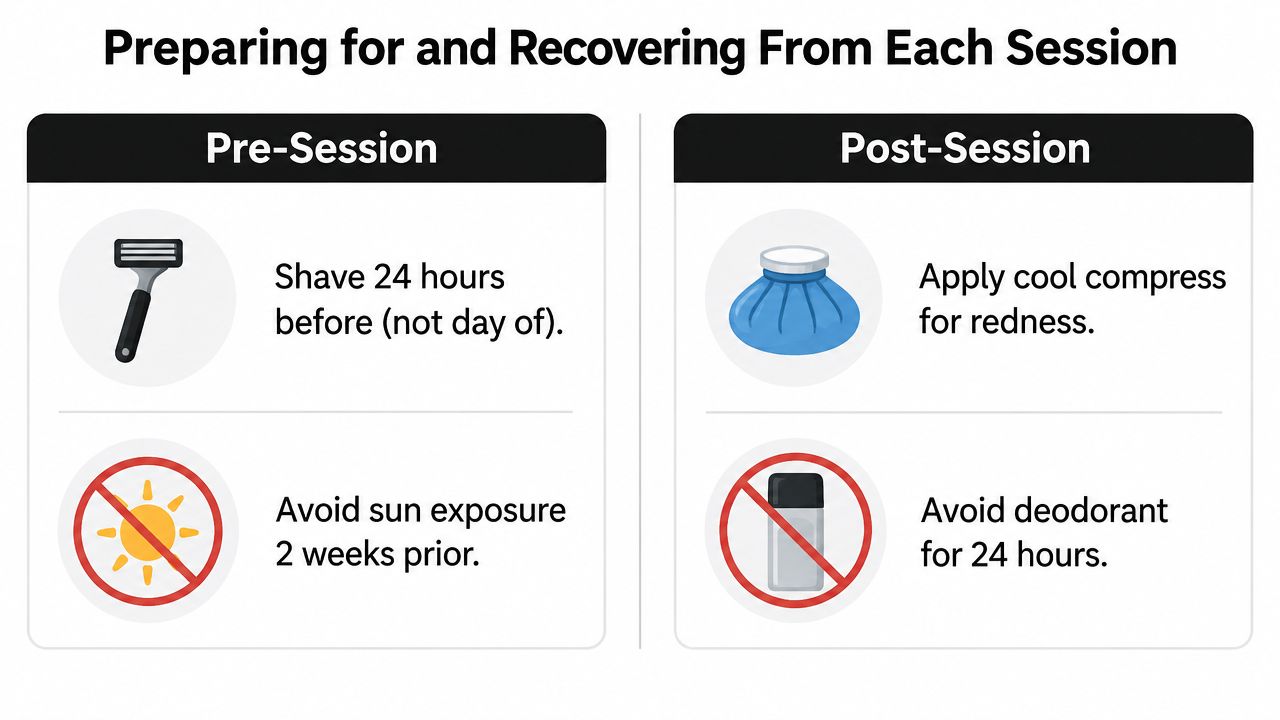
Preparing for and Recovering From Each Session
Preparation affects both comfort and treatment quality. The goal is to leave the follicle present beneath the skin while removing excess surface hair that could absorb energy before it reaches the target.
Before the appointment
Follow the clinic's specific instructions, but a practical timeline includes:
Shave 24 hours before: Shaving the day before leaves the area tidy without creating the fresh razor irritation that same-day shaving can cause.
Skip deodorant that morning: Deodorant and antiperspirant can contain fragrances, alcohols, or other ingredients that may irritate freshly treated skin.
Pause active products: Avoid retinoids and exfoliating acids such as AHAs on the area for roughly five to seven days unless your provider gives different instructions.
Avoid tanning: Stay away from intense sun exposure and tanning beds for about two weeks before treatment.
Stop waxing and plucking: Shaving is compatible with a laser course, while pulling out the follicle's hair removes the target the laser needs.
After the session
Redness and slight swelling can last for a few hours. A cool compress may help, but don't press ice directly against the skin.
For the first 24 to 48 hours, avoid deodorant if the area remains sensitive, along with intense workouts, hot showers, saunas, and swimming. Heat, sweat, chlorine, and friction can all make the treated skin feel more irritated. Wear a loose, breathable top when possible.
Skin-care rule: If a product stings on untreated skin, don't apply it to freshly lasered underarms.
Hold off on exfoliation and harsh scrubbing for about a week. If the underarm may be exposed to sunlight, use appropriate SPF, even though clothing often covers the area. The small treatment zone is convenient because there are fewer products and less surface area to manage than with a full-leg or back session.
For a fuller preparation checklist, use this guide to what not to do before laser hair removal.
Real Results and Long-Term Maintenance
Laser hair removal should be described as long-term hair reduction, not guaranteed permanent removal. A published report found a mean 75.07% hair reduction at six months across treated body areas, with thinner hair and more vellus hairs also reported. For underarms, that usually means durable follicle damage and finer regrowth, while some hair may remain (published findings on laser hair reduction and hair changes).
Underarms often respond well when the hair is dark and coarse. Independent reporting on a randomized trial involving women with Fitzpatrick IV to VI skin found that five sessions with a long-pulsed 1064 nm Nd:YAG laser produced a 79.4% reduction in underarm hair counts at six months, compared with 54.4% on the IPL comparison side. The report stated that reduction remained in the 70% to 90% range twelve months later, with temporary side effects (reporting on laser hair removal in darker skin types).
What “finished” usually means
Underarms rarely look uniformly sparse immediately after the final appointment. Regrowth typically becomes slower and thinner first. Some treated hairs shed, while others emerge later because they were not in the active growth phase during that session.
A practical endpoint is less shaving and finer, less noticeable hair. Residual follicles can still produce visible growth, particularly when hormonal changes activate previously untreated follicles or when naturally lighter hairs respond less strongly.
Maintenance belongs in the budget
Many clients schedule a touch-up every six to twelve months, although the interval depends on regrowth and clinical guidance. A maintenance visit addresses the limited hair that returns after the main series. It does not usually mean starting the entire course again.
Some clients need touch-ups less often, while others return sooner. Include that possibility when comparing package options and judging the total commitment. Normal regrowth does not automatically mean the treatment failed, but it does mean the result requires occasional upkeep.
Small-Zone Pricing and Package Options
Underarms are usually categorized as a small zone, which makes them less expensive per appointment than medium or large areas such as the bikini line, legs, back, or chest. The important comparison isn't only the advertised session price. It's the total cost of reaching a useful level of reduction, plus the possibility of later maintenance.
Clinics commonly offer three payment approaches: a single visit, a smaller starter bundle, or a larger course package. A package can reduce the effective per-session price, but the exact savings and treatment terms vary by clinic and promotion. Don't assume a bundle is automatically economical if it includes more visits than your hair and skin profile require.
Compare the commitment
Option | Sessions | Typical Per-Session Cost | Best For |
|---|---|---|---|
Single session | 1 | Clinic-specific | Testing comfort, evaluating response, or occasional maintenance |
Starter package | 3 | Often lower than individual visits | Mild hair, prior treatment, or clients still assessing commitment |
Full-course package | 6 | Usually the lowest effective rate of the three | First-time clients planning a structured reduction course |
The package terms matter as much as the headline price. Confirm the treatment window, expiration policy, rescheduling rules, whether consultations or touch-up assessments are included, and what happens if your provider changes the recommended interval.
Promotional pricing may appear on NYC and Long Island clinic websites, so ask for a current quote rather than relying on an old advertisement. Before paying, confirm that the quote is for underarms specifically, identify the device being used, and ask how the provider evaluates suitability for your skin tone and hair color.
NYC Laser Hair Removal lists underarms as a treatment area and offers single sessions alongside 3- and 6-session bundles using the Splendor X platform. That structure can suit clients who want either a trial appointment or a planned series, but your consultation should still determine whether the package matches your expected course.
A single session makes sense when tolerance is your main concern. A three-session option may suit someone maintaining previous results. A six-session package is a more logical starting point for a first-time client who understands that additional treatments may still be needed.
Is Underarm Laser Right for You
Underarm laser is usually a strong fit when the hair is dark, terminal, and visibly different in color from the surrounding skin. It's less effective on very light, red, white, or gray hair because the laser needs pigment to absorb and carry the energy toward the follicle.
Your skin condition matters too. Recently tanned skin, active irritation, and certain products can increase the need to postpone treatment or modify the plan. A consultation should cover your skin tone, hair color, medical history, medications, previous waxing or plucking, and whether patch testing is appropriate.
The commitment is practical but real. Plan for a structured series, commonly six to eight appointments spaced four to six weeks apart for clients with suitable hair, while recognizing that denser, coarser, or hormonally influenced hair may require more. Results should be measured as substantial long-term reduction, not total permanence.
Budget planning is simpler when you compare the likely full course with the cost of ongoing shaving, waxing, or products over time. Small-zone pricing can make underarms more accessible than larger treatment plans, particularly when a package fits your needs.
Choose a clinic that explains wavelength selection and skin safety rather than promising identical results for everyone. A dual-wavelength platform such as Splendor X can give the provider more options for matching treatment to different skin tones, but the device alone doesn't replace proper assessment, conservative settings when needed, and consistent follow-up.
Book a consultation when you're ready to review your hair and skin profile, discuss comfort, confirm the treatment schedule, and receive a current package quote. The best plan is the one you can follow consistently and afford to maintain.
NYC Laser Hair Removal offers underarm treatment with Splendor X technology, single appointments, and 3- or 6-session packages for clients in the Long Island area. Visit NYC Laser Hair Removal to review the treatment options, arrange a consultation, and build an armpit laser schedule around your work and gym routine.
Comments