
Best Way to Get Rid of Arm Hair: 8 Methods
What's the best way to get rid of arm hair if you want more than a few smooth days, but don't want unnecessary irritation or endless maintenance? The answer depends less on a single “best” method and more on the trade-off you're willing to make between immediate smoothness, comfort, longevity, cost, and the amount of skin being treated.
Shaving and depilatory creams prioritize convenience. Waxing and sugaring remove hair from the root, so regrowth usually takes longer. Threading and tweezing offer precision for small areas or stray hairs. Electrolysis targets individual follicles, while laser hair removal is designed for longer-term reduction across larger areas such as full arms.
Your skin sensitivity, hair color and thickness, recent tanning or sun exposure, pain tolerance, and willingness to attend repeated appointments should guide the decision. A method that works well for a small patch may be impractical for both arms. For Long Island readers comparing professional treatment, NYCLASER offers full-arm and partial-arm laser options, while the roundup below also covers practical at-home and temporary choices.
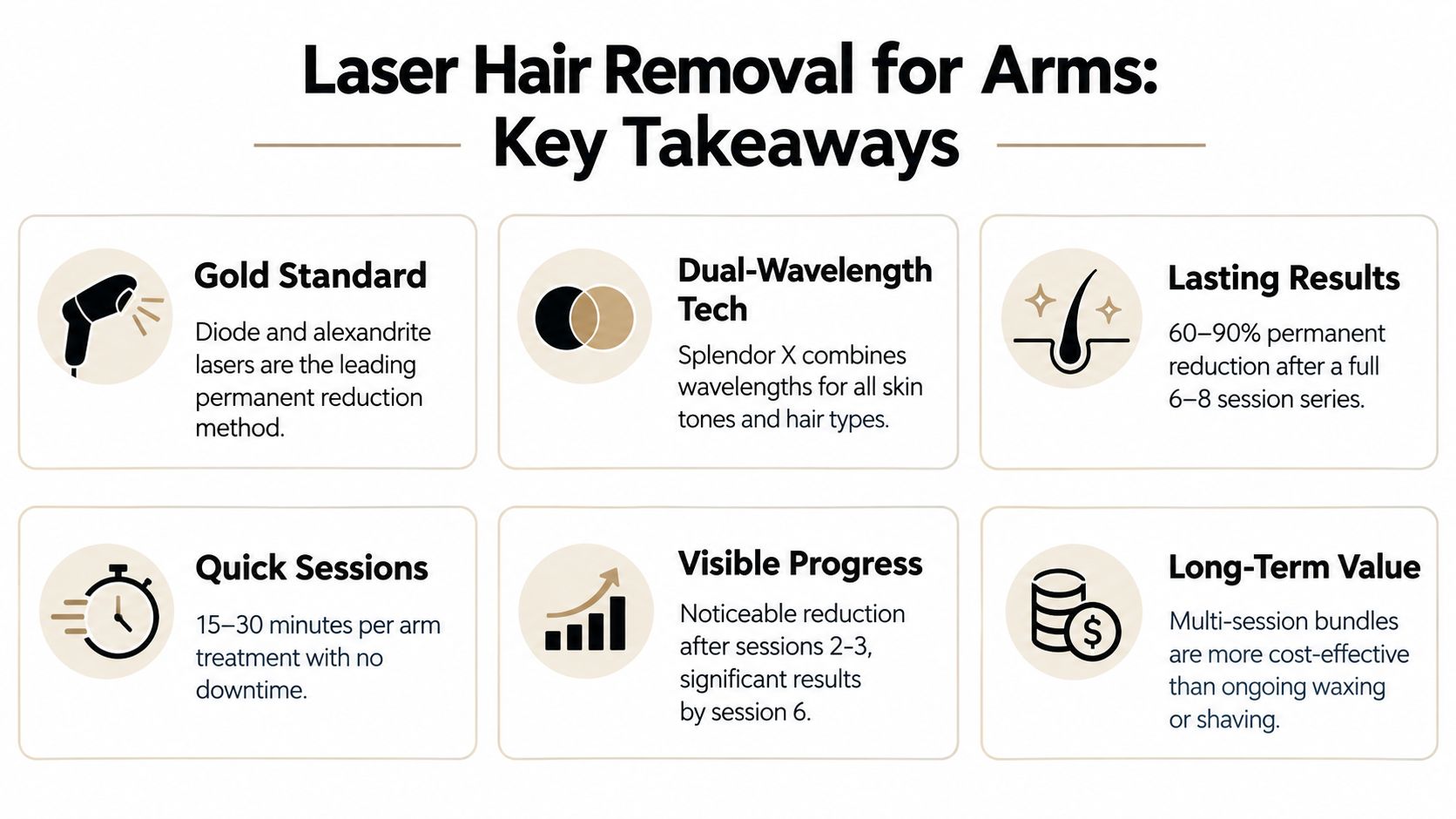
1. Laser Hair Removal With Diode and Alexandrite Technology
Laser hair removal is usually the strongest choice for someone who wants long-term arm-hair reduction rather than temporary smoothness. The device directs concentrated light toward melanin in the hair, heating the follicle and reducing its ability to produce visible regrowth. It works best when the hair contains enough pigment for the laser to target, so dark, coarse hair generally responds more predictably than very light or fine hair.
A 2015 evidence-based review concluded that laser and light-based epilation can produce partial hair reduction lasting up to 6 months after treatment, with better results when sessions are repeated. The same review found these methods outperform shaving and waxing for longer-term reduction, which supports laser as a practical option when you're treating a broad area and want to reduce routine upkeep. The review of laser and light-based epilation also makes an important distinction: laser aims for reduction, not a guarantee that every arm hair will disappear permanently.
Who gets the best fit
Skin tone and hair contrast matter. StatPearls notes that Fitzpatrick skin types I to IV with dark hair have traditionally achieved the best outcomes because there's less competing melanin in the skin. Newer systems can also be selected for darker skin, but the provider's device settings, experience, and safety assessment remain essential.
Expect a series of appointments because hair grows in cycles. Shave before treatment rather than waxing or plucking, avoid tanning and unnecessary sun exposure between sessions, and follow the clinic's instructions for sunscreen and moisturization afterward. Mild temporary redness can occur, but professional arm treatments typically involve little disruption to normal activities.
For a Long Island consultation, review laser hair removal on arms at NYCLASER. NYCLASER offers treatment zones that include half arms and full arms, with care using Splendor X technology at its Westbury location.
2. Waxing
Do you want smoother arms for weeks rather than days without committing to a laser series? Waxing removes hair from the root, so it generally lasts longer than shaving. The trade-off is more discomfort, temporary skin reactions, and the need to allow some regrowth before the next appointment.
For both arms, professional waxing is usually more practical than tweezing. An esthetician can cover a broad area efficiently. Soft wax is spread thinly and removed with a strip, while hard wax sets on the skin and is lifted away directly. People with sensitive skin can ask whether hard wax is appropriate, though no formula eliminates the possibility of irritation.
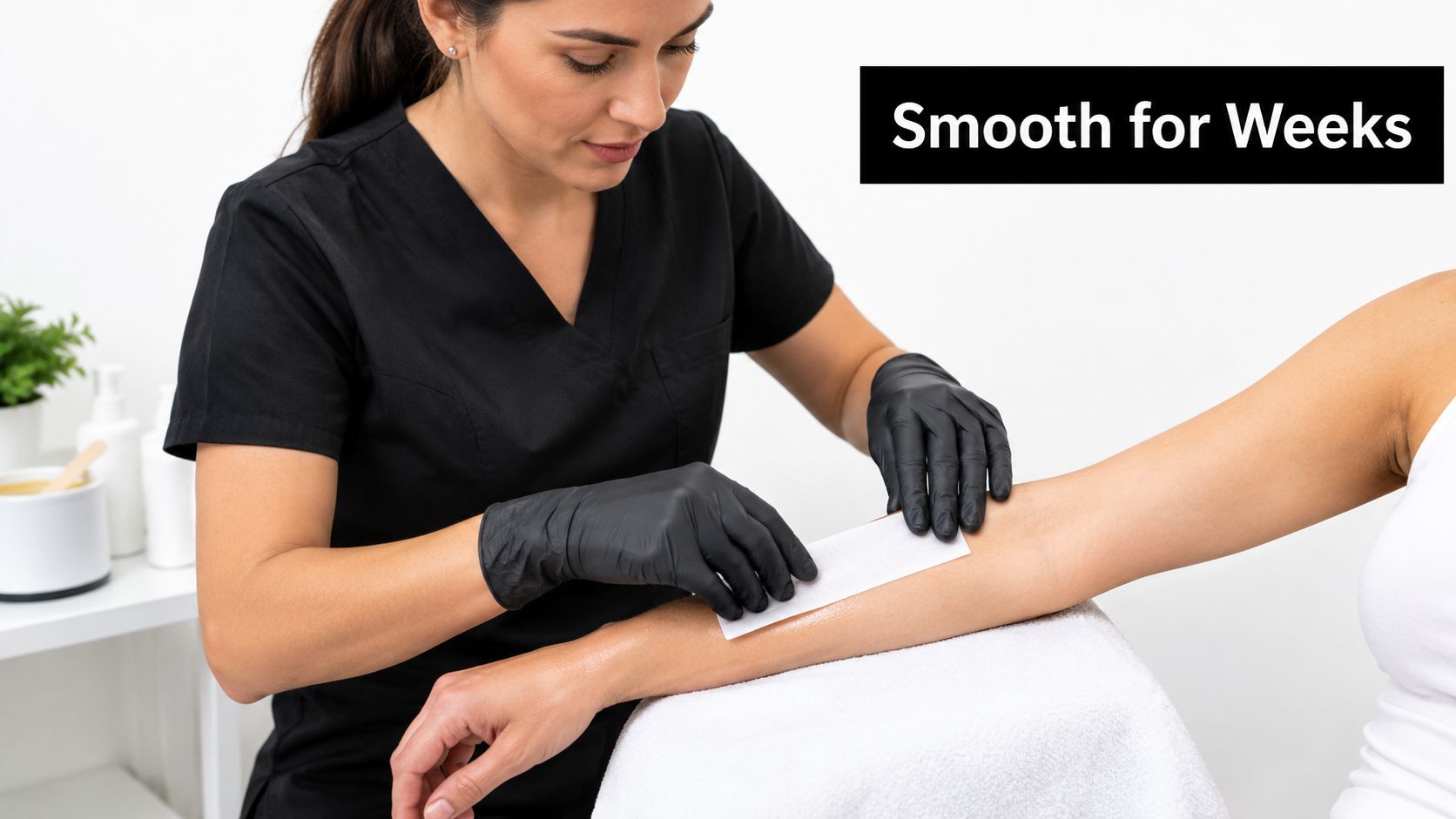
The trade-off between smoothness and recovery
Redness, tenderness, and small bumps can appear temporarily. If your skin reacts easily, book the appointment away from an important event. After treatment, avoid intense heat, swimming, heavy friction, and strong sun exposure for a short period. Apply a gentle moisturizer, and skip fragranced products while the skin feels sensitive.
Arrive with clean, dry arms. Light exfoliation beforehand may help limit trapped hairs, but vigorous scrubbing can increase irritation. Do not wax sunburned, scraped, inflamed, or recently sensitized skin.
Practical rule: Waxing suits anyone who wants root-level removal across both arms and can accept visible regrowth between appointments. It is less suitable if you want consistently smooth skin every day or dislike waiting for enough hair to return.
A salon is generally the safer choice for full arms, especially for a first treatment. An at-home kit may be reasonable for a small patch, but uneven temperature, repeated passes, and insufficient skin tension can worsen irritation. Waxing also has no established medical hygiene advantage over leaving hair in place. The clinical overview of hair removal methods describes waxing as a common consumer method for temporary root-level removal, so choose it for longer-lasting cosmetic smoothness.
3. Shaving
If you need smooth arms today, shaving remains the most accessible answer. A razor cuts hair at the skin surface, so it doesn't change the follicle or slow the underlying growth cycle. The result is immediate, inexpensive, and easy to control, but it requires regular upkeep and can produce prickly regrowth sooner than root-removal methods.
Shaving works particularly well for a small area, a one-time occasion, or anyone who doesn't want to commit to a longer treatment plan. It also avoids the appointment burden of waxing, laser, and electrolysis. The drawback is that a full-arm routine can become repetitive, especially if your skin becomes dry or irritated with frequent passes.
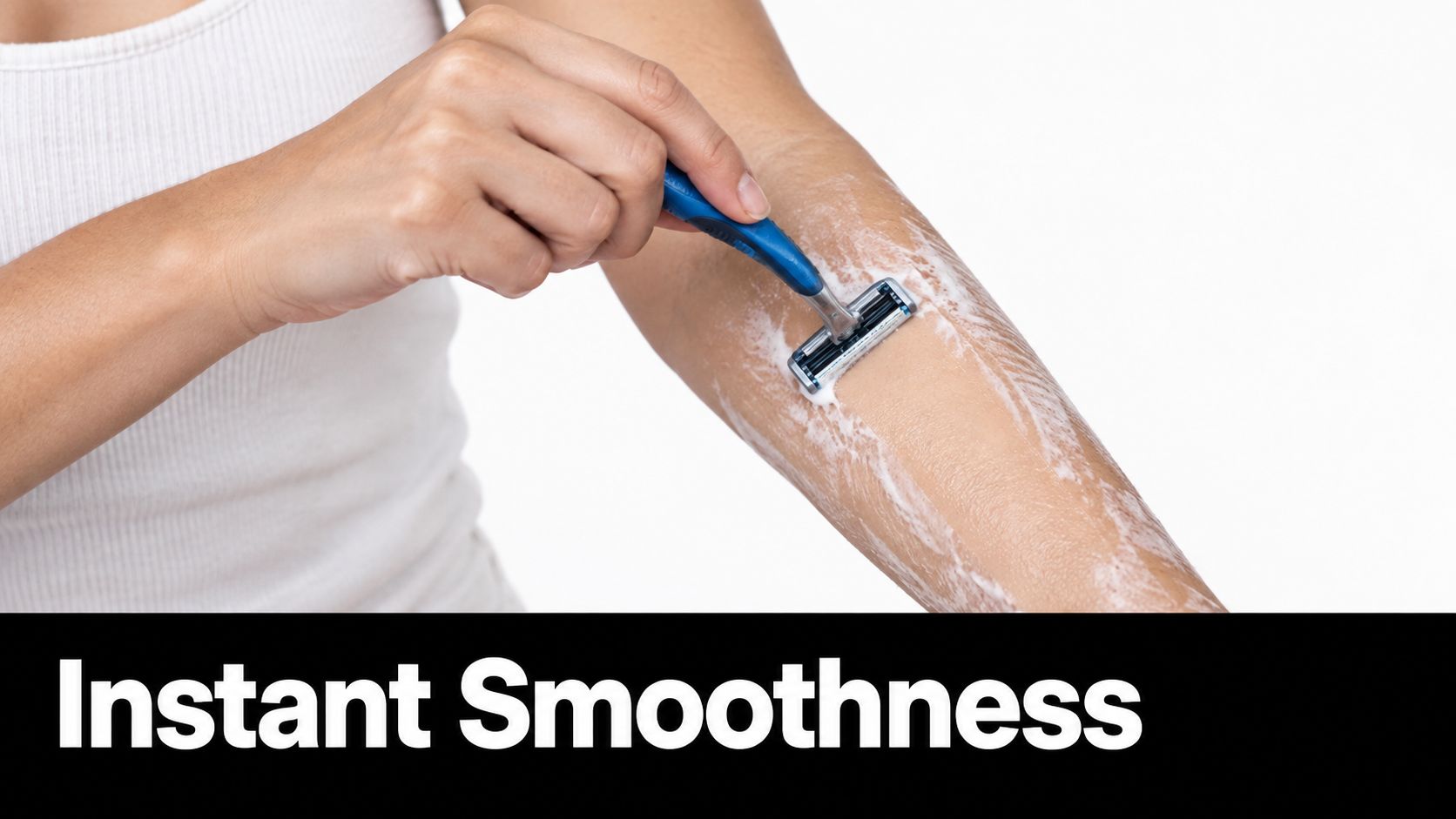
How to get a closer, calmer shave
Start with a warm shower or rinse to soften the hair. Apply a shaving cream or gel, then use a clean, sharp blade with light pressure. Shave in the direction of growth first, especially if your skin is sensitive, and avoid repeatedly dragging the razor across the same area.
Use short, controlled strokes around the elbows and wrists, where uneven surfaces make accidental pressure more likely. Rinse the blade often and moisturize after patting the arms dry. A fragrance-free product is usually a safer choice immediately after shaving than a heavily scented lotion.
For a more detailed explanation of preparation and technique, see NYCLASER's guidance on whether it's okay to shave your arms.
A razor won't make hair grow back thicker or faster. It can feel coarser because the blade creates a blunt tip, but the follicle itself hasn't been altered. If you develop persistent bumps, burning, or ingrown hairs, reduce pressure and frequency, replace the blade, and consider whether a different method would suit your skin better.
4. Depilatory Creams
Depilatory creams dissolve hair at or just below the skin's surface by breaking down its protein structure. Products such as Nair and Veet can cover both arms without waxing's pulling sensation. They suit people who want a quick application and accept results that last only briefly.
The trade-off is chemical irritation. A formula that feels comfortable on one body area may sting on another, and leaving it on beyond the stated time can intensify a reaction. Avoid use on broken, sunburned, freshly exfoliated, or already irritated skin.
Patch testing isn't optional
Apply a small amount to an inconspicuous area and follow the product's patch-test instructions before treating the full arm. If significant redness, swelling, blistering, or continuing discomfort develops, rinse thoroughly and seek medical advice. Do not try to neutralize the cream with another cosmetic.
For a small patch, depilatory cream can be quick and practical. Full-arm use is also possible, but it requires even coverage, careful timing, and enough rinsing to remove all residue.
Use dry, product-free skin: Lotions, oils, and residue can interfere with consistent coverage.
Follow the timing instructions: Check a small area first, then remove the cream when directed.
Rinse thoroughly: Do not scrub aggressively after the hair loosens.
Moisturize afterward: Choose a gentle, fragrance-free product if your skin feels dry.
Allow recovery: Do not reapply more often than the label permits.
Results are temporary because the cream acts on visible hair rather than removing the follicle. The method usually involves little physical discomfort and no planned downtime, but irritation can make aftercare more demanding. It also may not suit sensitive skin or anyone who reacts to the formula's ingredients.
Hair removal by shaving, clipping, or depilatory cream is primarily a cosmetic choice, not a substitute for infection prevention. what hair-removal cream does explains how these products work before you choose a formula. Depilatories make the most sense for a small or medium area when speed matters and careful patch testing is acceptable.
5. Threading
Threading is highly precise but usually isn't the best way to get rid of hair across both full arms. A twisted cotton or polyester thread catches individual hairs and pulls them from the follicle. The technique is familiar from eyebrow and facial grooming, and some skilled practitioners also use it for smaller body areas or isolated patches.
Its greatest advantage is control. A threader can remove a defined strip or a few unwanted hairs without spreading product over the surrounding skin. That makes it useful for someone who wants to tidy a small forearm area, refine an edge, or remove a visible cluster without committing to a full-arm treatment.
Precision comes with time
Threading can feel pinching or sharp, particularly when the hair is coarse or the skin is sensitive. The discomfort is usually localized, but treating a large surface area can become slow and tiring. For full arms, waxing, sugaring, or laser generally makes more practical sense because those methods cover larger zones more efficiently.
Choose a practitioner who regularly threads body hair rather than assuming facial experience automatically translates to arm treatment. Clean technique matters, and the skin should be free from sunburn, active irritation, or open areas. Afterward, use a simple soothing product such as aloe vera and avoid rubbing the area.
Threading also works as a maintenance method between larger treatments. If laser has reduced most of the hair but left a few isolated strands, threading can remove those hairs without shaving the entire arm. If you're prone to post-treatment bumps, ask the practitioner how they prepare the skin and whether threading is suitable for your hair texture.
This method is best for small areas, defined patches, and people who value precision over speed. It's less suitable when the goal is uniform full-arm smoothness with minimal appointment time.
6. Sugaring
Sugaring resembles waxing because it removes hair from the root, but the paste is made from sugar, water, and lemon juice. The paste is applied at body temperature and removed to lift the hair from the follicle. Many people choose it because the formula is simple and biodegradable, while others prefer the way a trained practitioner controls the application and removal.
For full arms, sugaring can provide a longer smooth period than shaving or depilatory cream. It still requires regrowth before the next appointment, and the pulling sensation can be uncomfortable. The result depends heavily on hair length, hair strength, skin condition, and the specialist's technique.
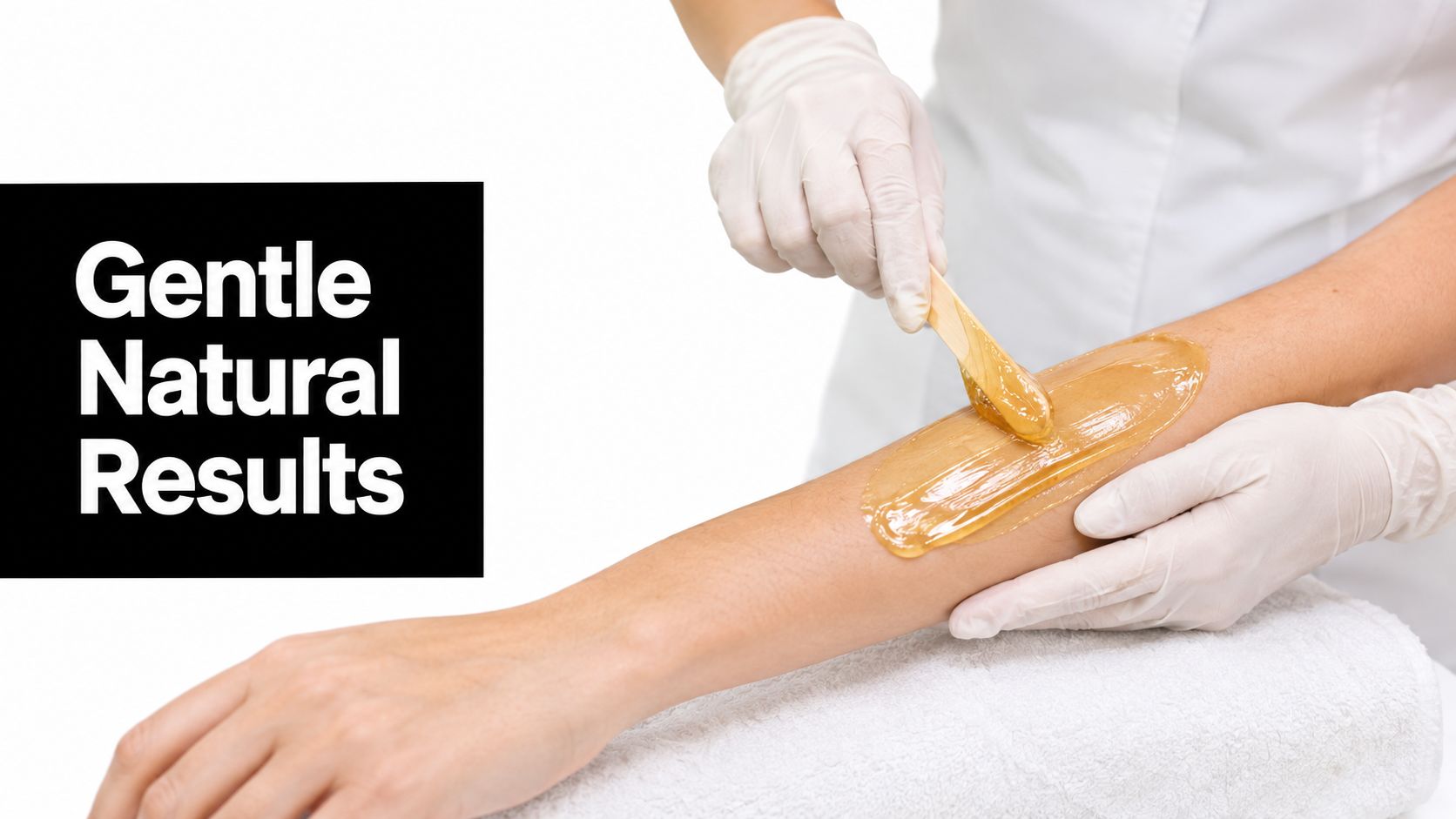
When sugaring earns its place
Sugaring suits people who want root-level removal but are concerned about the feel of conventional waxing or the ingredients in some products. That doesn't mean it can't irritate sensitive skin. Redness, tenderness, and temporary bumps remain possible, especially if the skin is dry, recently exposed to sun, or repeatedly treated.
Prepare with gentle exfoliation rather than harsh scrubbing, and arrive with clean skin free from heavy oils. Afterward, avoid hot water, vigorous exercise, swimming, and tight friction for a short period. Daily moisturization between appointments can help keep the skin comfortable, while gentle exfoliation later may help reduce trapped hairs.
Sugaring is a grooming choice, not a permanent follicle treatment. Pick it when you value several weeks of reduced hair and can accept recurring appointments.
For a small patch, an experienced professional can make the service quick and controlled. For full arms, ask whether the salon regularly treats that area and what aftercare it recommends. If your hair is very fine or sparse, shaving may be simpler, while laser may be worth discussing if you want a longer-term reduction strategy.
7. Plucking and Tweezing
Tweezing is the most precise option in this list because you remove one hair at a time. That precision is useful for a stray dark hair, a few uneven strands, or touch-ups after waxing or laser. It's not realistic for full arms unless the area is exceptionally small and you're willing to spend a great deal of time on it.
Use sharp, aligned tweezers from a reputable brand such as Tweezerman or Revlon. Clean the tool with rubbing alcohol before use, wash your hands, and pluck after a shower when the skin and hair are clean. Grip the hair close to the skin and pull in the direction of growth rather than yanking sideways.
Best for maintenance, not transformation
Tweezing can cause redness, tenderness, or an ingrown hair if you break the hair instead of removing it cleanly. Don't keep digging at a hair that won't release. That behavior can injure the skin and create more inflammation than the original strand justified.
After plucking, apply a mild moisturizer or aloe vera. Wait before exfoliating, then use gentle exfoliation later if your skin tolerates it. Avoid tweezing over irritated skin, active rashes, or areas that have recently received a treatment that makes the skin more sensitive.
The method is particularly helpful when you're maintaining a larger plan. For example, someone may use laser to reduce overall arm density and tweezers for an occasional hair that remains visible. Someone who waxes may use tweezers for a single regrowth strand instead of booking an early appointment.
Choose tweezing when precision matters more than speed. If you want uniform results across the forearms, another method will save time and reduce repeated handling of the skin.
8. Electrolysis
Electrolysis treats individual follicles with a fine probe and electrical current designed to destroy hair-producing cells. It's the most targeted option here and is commonly chosen for isolated hairs, facial areas, or final cleanup after broader hair reduction. Because the practitioner must treat follicles one by one, it becomes slow and labor-intensive across full arms.
That slow pace is the central trade-off. Electrolysis can suit someone with a small patch, a few persistent hairs, or hair that doesn't respond well to light-based treatment because it's very light or lacks sufficient pigment. It also requires repeated visits as different hairs enter a treatable growth phase.
Make the consultation count
Ask whether the electrologist is licensed or certified where required, how they manage hygiene, and how much area they can reasonably treat in one appointment. A short session may focus on a limited patch rather than both arms. Large-area treatment can require a prolonged course of appointments, so clarify the likely maintenance burden before beginning.
After treatment, mild redness or tenderness may occur. Follow the practitioner's instructions, avoid unnecessary sun exposure during the immediate recovery period, and don't pick at the skin. A soothing product may help, but only use products the provider considers appropriate for the treated area.
Electrolysis makes more sense for precision and permanence at the follicle level than for rapid full-arm coverage. If your arms have widespread dark hair and you want density reduction, laser is generally more efficient as a first-stage approach. Electrolysis can then address individual hairs that remain, provided your practitioner agrees that the combination suits your skin and goals.
Arm Hair Removal: 8-Method Comparison
Method | 🔄 Implementation Complexity | ⚡ Resource & Time | ⭐ Expected Effectiveness | 📊 Ideal Use Cases | 💡 Key Advantages / Tips |
|---|---|---|---|---|---|
Laser Hair Removal (Diode & Alexandrite) | Moderate, trained clinician, multi-session | High initial cost; 15–30 min sessions; 4–6 week intervals | ⭐⭐⭐⭐☆, 60–90% permanent reduction after full series | Large areas (full arms/legs); long-term reduction | Long-lasting; cost-effective over time; avoid sun; consider 6-session bundle |
Waxing | Low, salon or DIY, single-session | Low–moderate cost; 45–60 min; repeat every 3–6 weeks | ⭐⭐⭐, smooth 3–6 weeks | Medium/large areas; routine salon visits | Affordable per session; exfoliate before; painful for some; ingrown risk |
Shaving | Very low, self-administered | Minimal cost; 5–10 min; repeat every 1–2 days | ⭐⭐, immediate, temporary (days) | Fast touch-ups; travel; low commitment | Quick and painless; use sharp blades; moisturize; replace blades often |
Depilatory Creams (Chemical) | Very low, at-home application | Low cost; 10–15 min; lasts 3–7 days | ⭐⭐⭐, longer than shaving, temporary | At-home broad-area removal; painless option | Patch test first; ventilate area; follow timing instructions |
Threading | Low–Moderate, skilled practitioner | Low cost; efficient for small areas; slow for large areas | ⭐⭐⭐, 2–6 weeks | Precision facial work; small arm areas or touch-ups | Precise and chemical-free; find experienced threader; not practical for full arms |
Sugaring (Sugar Paste) | Low–Moderate, specialist technique | Moderate cost; 30–60 min; repeat every 3–6 weeks | ⭐⭐⭐⭐, comparable to waxing, gentler | Sensitive skin; eco-conscious clients; large areas | All-natural; less painful and fewer ingrowns; seek trained practitioner |
Plucking (Tweezing) | Very low, DIY, one hair at a time | Minimal cost; extremely time-consuming for large areas | ⭐⭐⭐, 3–6 weeks; impractical for full arms | Stray hairs; precision touch-ups | Precise and cheap; sterilize tweezers; best for maintenance, not bulk removal |
Electrolysis | High, licensed electrologist, follicle-by-follicle | High cost; very time-consuming (many sessions/hours) | ⭐⭐⭐⭐⭐, truly permanent per treated follicle | Small areas, final touch-ups, light/gray hair | Only FDA-approved permanent method; expect long treatment plan; choose certified practitioner |
Choose the Method You Can Maintain
The best way to get rid of arm hair is the method whose trade-offs you can live with after the first treatment. A razor may be the right answer if you want immediate smoothness, low upfront cost, and complete control at home. Depilatory cream can offer a painless short-term alternative, but only after a careful patch test and strict timing.
Choose waxing or sugaring when you want root-level removal and several weeks of reduced hair, and you're comfortable with pulling, temporary redness, and waiting for enough regrowth before the next appointment. Threading and tweezing are better for smaller areas, defined patches, and stray hairs. Neither is efficient for uniform full-arm treatment.
Electrolysis is the precision choice for individual follicles and hairs that are difficult to target with light-based methods. It demands patience because the practitioner treats follicles separately and multiple sessions may be needed as hair cycles through growth phases. For a few stubborn hairs, that precision can justify the time. For widespread arm hair, it may create a heavier maintenance burden than you want.
Laser hair removal is the most practical option for readers prioritizing long-term reduction across full arms. Clinical evidence supports repeated treatment for longer-lasting partial reduction, but expectations matter. Laser can reduce hair density and thickness without removing every visible hair, and finer regrowth may still show under certain lighting or against particular skin tones. A 2025 study across body areas, including arms, reported 75.07% hair reduction at six months, while noting that hair density itself remained unchanged and treated hairs often became finer vellus hairs. The 2025 clinical study also reported slight average pain and temporary redness or edema that resolved within days.
Your hair and skin combination deserves individual attention. A 2024 study of vellus hair reported mean hair reduction of 36.51% and hair-thickness reduction of 39.44%, but concluded that vellus-hair removal efficacy wasn't statistically significant in that study. The vellus-hair research reinforces why fine, light arm hair needs a realistic consultation rather than a generic promise. At the same time, newer all-skin-type laser data reported mean hair reduction of 45.5% in skin types I to IV and 40.3% in skin types V to VI at three months, with no serious adverse events in that study. StatPearls' laser hair-removal guidance provides additional context on why melanin contrast, device selection, and settings matter.
Before committing, weigh skin sensitivity, recent sun exposure, hair color, hair thickness, treatment area, discomfort, downtime, appointment frequency, and repeat cost. If you're in Long Island or Nassau County, NYCLASER provides Splendor X laser hair-reduction treatments for areas including full arms, with single sessions and multi-session packages available. Review the treatment options and booking details before deciding whether professional laser care fits your routine.
If you're considering a longer-term solution for arm hair, NYC Laser Hair Removal offers Splendor X treatments for half arms and full arms at its Westbury, Long Island location. Visit NYC Laser Hair Removal to review treatment areas, packages, clinic hours, and online booking options.
Comments