
Dark Skin Care Routine: A Practical Daily Guide
Most advice on a dark skin care routine starts in the wrong place. It pushes brightening serums first, as if the smartest move is to chase pigment after it shows up.
I disagree. Prevention matters more than correction in melanin-rich skin.
Darker skin doesn't need less care. It needs better sequencing, less irritation, and more discipline around inflammation. In a 2022 multi-center survey on skin-of-color skincare needs, the top concerns were acne and blemishes for 40% of respondents, dry skin for 32%, and pigmentation or dark spots for 26% (skin-of-color skincare needs survey). That lines up with what I see constantly. Breakouts, dryness, and leftover marks drive routine decisions far more than vague anti-aging promises.
If your skin is deeper in tone, every pimple, ingrown, scratch, overused acid, and too-hot treatment has a chance to leave a visible reminder behind. That's why the best dark skin care routine isn't the most aggressive one. It's the one that keeps your skin calm enough to stop new discoloration from forming in the first place.
Why Dark Skin Needs a Different Routine
The old myth says melanin-rich skin is naturally protected, so you can relax about skin care. That idea causes a lot of damage.
Yes, deeper skin tones may burn less easily than very fair skin, but that does not mean they're immune to discoloration. In dark skin, the bigger issue is often post-inflammatory hyperpigmentation, also called PIH. Skin gets irritated. Melanocytes respond. A mark lingers long after the original trigger is gone.
The real target is inflammation control
A smart dark skin care routine focuses on reducing the chain reaction that creates stubborn marks. That means fewer harsh scrubs, fewer impulsive peels, less picking, and less product stacking.
Recent dermatology guidance on PIH in skin of color puts prevention first: calm inflammation, wear daily broad-spectrum sunscreen, and add lower-irritation actives slowly before reaching for stronger options (updated review on PIH in skin of color). That's the right framework.
Bottom line: In deeper skin tones, the injury often fades before the pigment does.
This is also why treatment choices matter beyond products. Anything that creates extra friction or heat can become a pigment problem if it isn't handled carefully. If you're considering hair removal as part of your routine, it helps to understand how melanin-rich skin responds differently to energy-based treatments, which is why this guide on laser hair removal for African American skin is worth reading before you book anything.
Your routine should reflect actual skin priorities
A lot of people with darker skin aren't trying to get lighter. They're trying to get clearer, smoother, calmer, and more even. Industry survey coverage published in 2025 found that 74% of people with dark skin said it is hard to find skincare products suited to their skin tone, and 67% of people with dark brown skin identified a healthy glow and radiance as their top skincare goal, compared with 51% of pale or fair-skinned consumers (coverage of skincare priorities by skin tone). That gap matters.
So stop building your routine around “brightening” marketing. Build it around barrier support, breakout control, and pigment prevention. That's what pays off.
Building Your Morning and Evening Routine
A dark skin care routine falls apart fast when the order is wrong. The goal is to keep skin calm enough that every breakout, shave bump, or irritated patch does not turn into a mark that hangs around for months.
Build your routine around prevention first. Fading products matter, but they should sit on top of a low-trauma routine, not try to rescue a messy one.
Your morning routine
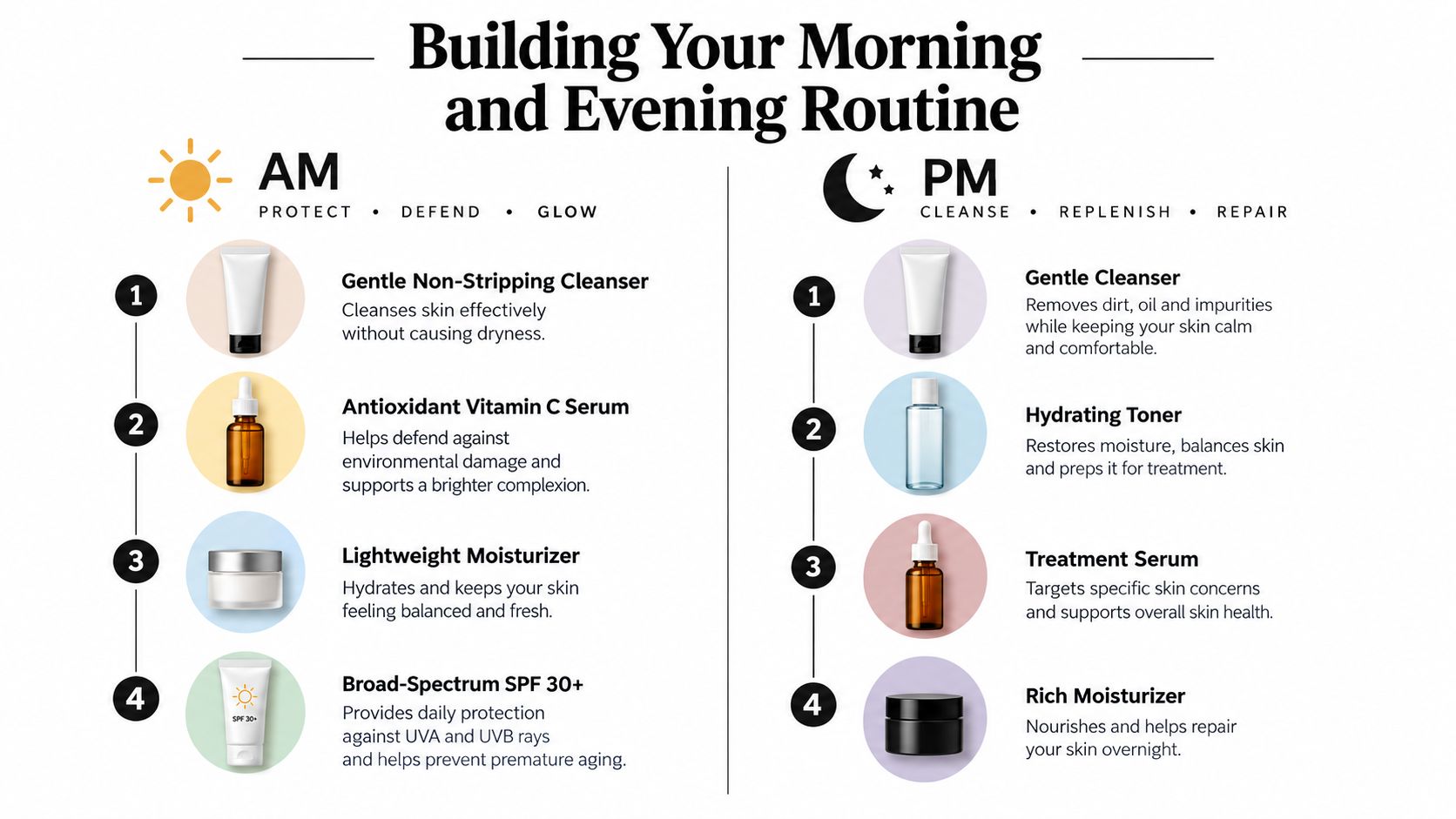
Morning care should reduce inflammation, support the barrier, and protect against the triggers that make discoloration stick.
Cleanse gently, or just rinse if you woke up dry. Use a low-foam or cream cleanser that leaves your skin comfortable. Tight, squeaky skin means you stripped too much.
Use one calming treatment. Niacinamide, azelaic acid, or a non-irritating antioxidant serum makes sense here. Skip strong acids first thing in the morning.
Moisturize while skin is still slightly damp. Gel-cream works for oilier skin. If you run dry, use a cream with ceramides, glycerin, or squalane.
Apply broad-spectrum SPF 30 or higher. Cover the full face, ears, neck, and any other exposed skin.
That is enough. A long morning lineup usually creates more friction than progress.
Your evening routine
Night is where people sabotage themselves. They scrub harder, pile on actives, and call it treatment. That is exactly how melanin-rich skin ends up with more post-inflammatory hyperpigmentation.
Start by taking off the day without friction. If you wear sunscreen, makeup, or heavier skincare, use an oil or balm cleanser first, then follow with a mild water-based cleanser. Use your hands. Skip cleansing brushes, rough washcloths, and grainy scrubs.
After cleansing, use one treatment step. One. If your skin is still getting new breakouts or irritation marks, calm that cycle first with azelaic acid, niacinamide, or another low-irritation option before you chase stronger correction. Then apply moisturizer generously.
A routine that stings is not doing extra credit. It is setting up your next dark mark.
Dry corners around the mouth, flaking near the nose, and reactive patches need extra protection, not more actives. Add a plain occlusive over those spots after moisturizer if needed. That small fix keeps the barrier intact and makes consistency easier.
Here's a helpful demo if you want to see a routine flow in action:
The routine order that makes sense
Use this sequence and stop rearranging it every time a new product shows up.
Morning - Cleanse lightly: Wash without stripping. - Treat once: Pick one low-irritation serum. - Moisturize: Reduce water loss and support the barrier. - Protect: Finish with sunscreen every day.
Evening - Remove buildup: Start with oil cleansing if needed. - Cleanse gently: Use a mild second cleanse. - Use one active: Do not stack exfoliants, retinoids, and acids in the same routine. - Moisturize well: Calm skin heals with less pigment fallout.
Choosing Actives That Fade Dark Marks Safely
Dark marks do not fade faster because you used more actives. In deeper skin tones, they often last longer because you irritated the skin on the way there.
That is the mistake to cut first. Post-inflammatory hyperpigmentation responds best when you prevent fresh inflammation, keep the barrier steady, and use low-trauma actives in a boring, repeatable order.
Start with low-irritation pigment control
For melanin-rich skin, I would rather see you use one calm corrective for three consistent months than bounce between exfoliating acids, retinoids, and spot-fading serums every few nights. Guidance for skin of color regularly points to niacinamide, azelaic acid, kojic acid, alpha arbutin, and tranexamic acid as useful options, with the same warning attached every time. If it burns, stings, or keeps your skin red, stop using it and reassess (skin-of-color skincare advice on exfoliation and pigment actives).
A lot of acne and pigment advice still is not built around darker phototypes. That is exactly why copying aggressive routines from lighter-skinned creators goes wrong so often.
Active ingredients for dark skin compared
Active | Irritation Risk | Best Use Time | Safe Introduction |
|---|---|---|---|
Azelaic acid | Low to moderate | Morning or night | Start a few nights weekly, then increase if skin stays calm |
Niacinamide | Low | Morning or night | Usually easy to use daily |
Tranexamic acid | Low to moderate | Night | Start on alternate nights |
Vitamin C | Moderate | Morning | Use after cleansing, reduce frequency if it stings |
Alpha arbutin | Moderate | Morning or night | Introduce after barrier is stable |
Kojic acid | Moderate to higher | Night | Use cautiously and avoid combining with too many other actives |
Low-strength retinoid | Moderate to higher | Night | Add only after your skin handles the rest of the routine well |
Combinations that cause trouble
The fastest way to make a fading mark hang around longer is to layer too many correcting products in the name of progress. Common offenders are acid toner plus retinoid, scrub plus pigment serum, or vitamin C in the morning followed by exfoliating acids and a retinoid at night before your skin has built any tolerance.
Keep it simple. Pick one lead corrective first. Azelaic acid is usually the smartest first move if you still break out or get marks easily. Tranexamic acid is a strong second option if your skin is fairly calm and you want extra help with uneven tone. Niacinamide fits well as support, not as an excuse to add everything else too.
Exfoliation needs restraint. Start chemical exfoliants only a few times per week, not nightly, and only if your skin is already stable. If you are tempted by stronger resurfacing, read about PIH risks after chemical peels before you let anyone sell you an aggressive peel schedule.
Practical rule: Start with azelaic acid or tranexamic acid. Add niacinamide if you want support. Use vitamin C in the morning only if your skin stays calm. Bring in retinoids later, after you have stopped creating new irritation.
Sun Protection That Goes Beyond SPF
Dark skin does not need less sun protection. It needs smarter sun protection.
If your routine is focused on fading marks but you skip sunscreen, you keep feeding the same cycle. UV and visible light can keep post-inflammatory hyperpigmentation active long after the breakout, ingrown hair, or rash is gone. That is why melanin-rich skin responds better to calm, consistent protection than to aggressive brightening layered on top of daily exposure.
What to use and how to wear it
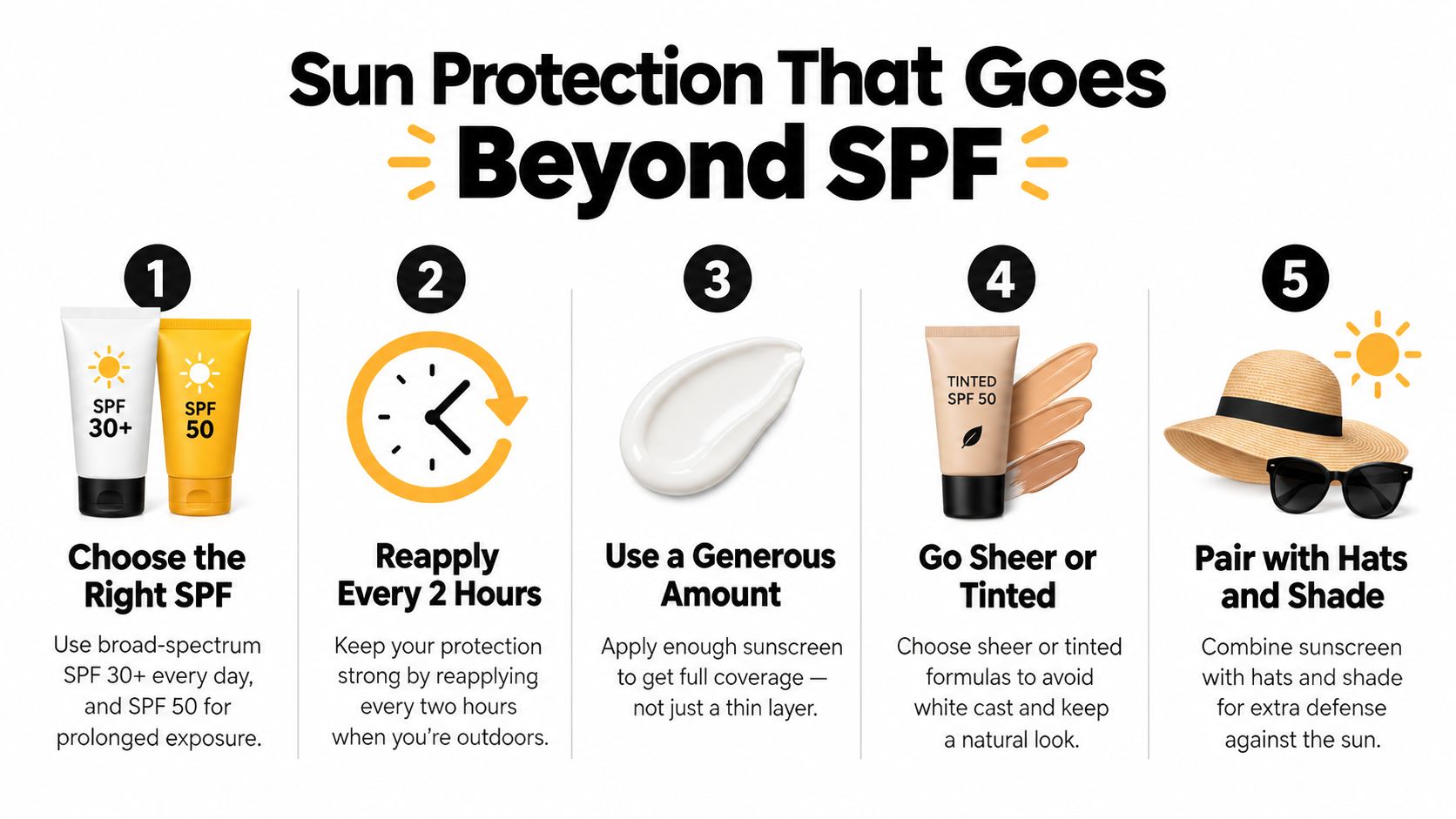
Use broad-spectrum SPF 30 or higher every morning on all exposed skin. If you spend real time outside, pick the higher SPF that you will apply generously without fighting the texture or white cast.
For deeper skin tones that mark easily, tinted mineral sunscreen deserves special attention. Visible light can worsen discoloration, especially lingering acne marks and shave bumps. Formulas with iron oxides help cover that gap, which is why they are often a better daily choice than a standard untinted sunscreen if pigmentation is your main problem.
Application matters just as much as the label. Put sunscreen on as the last step of your morning routine. Let moisturizer settle first, then press sunscreen over the face, ears, hairline, jawline, neck, and the back of the hands. Do not rub hard around active spots or healing marks. Friction is one more hit your skin does not need.
A few rules keep it effective:
Reapply every 2 hours when outdoors. Reapply sooner after heavy sweat, swimming, or towel drying.
Cover the forgotten zones. Ears, neck, chest, eyelids, and hands are common places where marks linger because product never reaches them.
Use shade and clothing on purpose. A hat, sunglasses, and avoiding the strongest midday sun do more for pigmentation control than chasing stronger acids.
Protect treatment windows carefully. If you book heat- or light-based procedures, read this guide on sun exposure before and after laser hair removal so you do not trigger extra irritation or uneven pigment afterward.
Sunscreen is not the glamorous part of a dark skin care routine. It is the part that stops you from creating fresh discoloration while the rest of your routine does its job.
Weekly and Seasonal Adjustments
The best routine isn't static. It shifts with weather, sweat, indoor heat, and how reactive your skin feels that week.
A routine that changes without falling apart

Take a typical client with acne marks and combination skin. In summer, their base routine stays the same: gentle cleanser, targeted serum, moisturizer, sunscreen. What changes is texture. Heavy cream starts to feel greasy, so we switch to a lighter gel-cream and stay stricter about removing sunscreen at night without over-cleansing.
In winter, that same person suddenly feels dry, tight, and dull. People make a bad call and add more exfoliation before they fix the barrier. Wrong move. First, switch to a richer moisturizer, add a balm or occlusive at night if needed, and cut back anything that stings.
A weekly rhythm that actually works
Don't stack all your strong products on the same night. Rotate them.
A practical rhythm looks like this:
Night 1: Azelaic acid or tranexamic acid
Night 2: Recovery night with moisturizer only
Night 3: Retinoid if your skin already tolerates it
Night 4: Recovery night
Night 5: Gentle exfoliant if your barrier has stayed calm
Night 6: Moisturizer-focused reset
Night 7: Pigment serum again
That pattern keeps the routine active without pushing it into irritation.
Calm skin is easier to even out than overworked skin.
Seasonal switches that make sense
Use your skin's behavior, not the calendar, as your cue.
In humid weather: Choose lighter hydration and avoid adding extra oils just because someone online swears by them.
In dry weather: Increase moisturizer weight and seal flaky areas at night.
During transition months: If skin looks dull but feels stable, add one exfoliation session weekly before increasing to a second.
After long outdoor days: Use a bland recovery night instead of forcing an active.
If your skin has been calm for two straight weeks, then you can test a chemical exfoliant carefully. If it hasn't, hold off. A dark skin care routine should adapt, but it should never become chaotic.
Common Mistakes That Prolong Pigmentation
Most stubborn dark marks aren't staying because your serum is too weak. They're staying because your habits keep retriggering the same problem.
The mistakes I see most often
Common Mistake | Why It Prolongs Pigmentation | Corrective Move |
|---|---|---|
Scrubbing with gritty exfoliants or rough tools | Friction irritates skin and can trigger more discoloration | Use a soft cloth if needed and keep exfoliation gentle and infrequent |
Picking acne, ingrowns, or bumps | Extra trauma leaves a bigger mark than the original issue | Hands off. Use a warm compress and a soothing serum instead |
Layering too many actives at once | Barrier damage leads to stinging, peeling, and more PIH | Introduce one active at a time and give it room to work |
Skipping sunscreen indoors or on cloudy days | Existing marks stay activated longer | Apply tinted broad-spectrum sunscreen to exposed areas daily |
Buying harsh lightening products from random sellers | Unregulated formulas can irritate or damage the skin | See a board-certified dermatologist for stronger pigment care |
Stop trying to scrub marks away
If you have deeper skin and you're using walnut scrubs, rough cleansing brushes, or abrasive gloves on the face, stop. Those methods don't “polish” your skin. They irritate it.
This is especially important for anyone dealing with acne and dark marks together. The evidence base for acne treatment in skin of color is still limited, so cautious routines are favored over aggressive ones. That's exactly why guidance for darker skin warns against over-treating with frequent exfoliation and harsh products, since irritation can prolong pigmentation instead of fading it, as noted earlier in the article.
Picking and over-treating create the same problem
People love to blame pigmentation on one breakout, but then they pick it, dry it out, attack it with acids, and wonder why the mark hangs around. The breakout started the issue. The routine made it worse.
If you've had any in-office pigment work or are planning it, proper aftercare matters just as much as the treatment itself. This guide on after-laser pigmentation care covers the kind of post-treatment caution deeper skin tones need.
If a product stings every time you use it, your skin is not “adjusting.” Your skin is objecting.
The central rule stays the same. Calm, consistent sequencing beats aggressive stacking. Every time.
Your Simple Daily Checklist
You don't need a 10-step shelf. You need a routine you'll follow without damaging your barrier.
Morning checklist
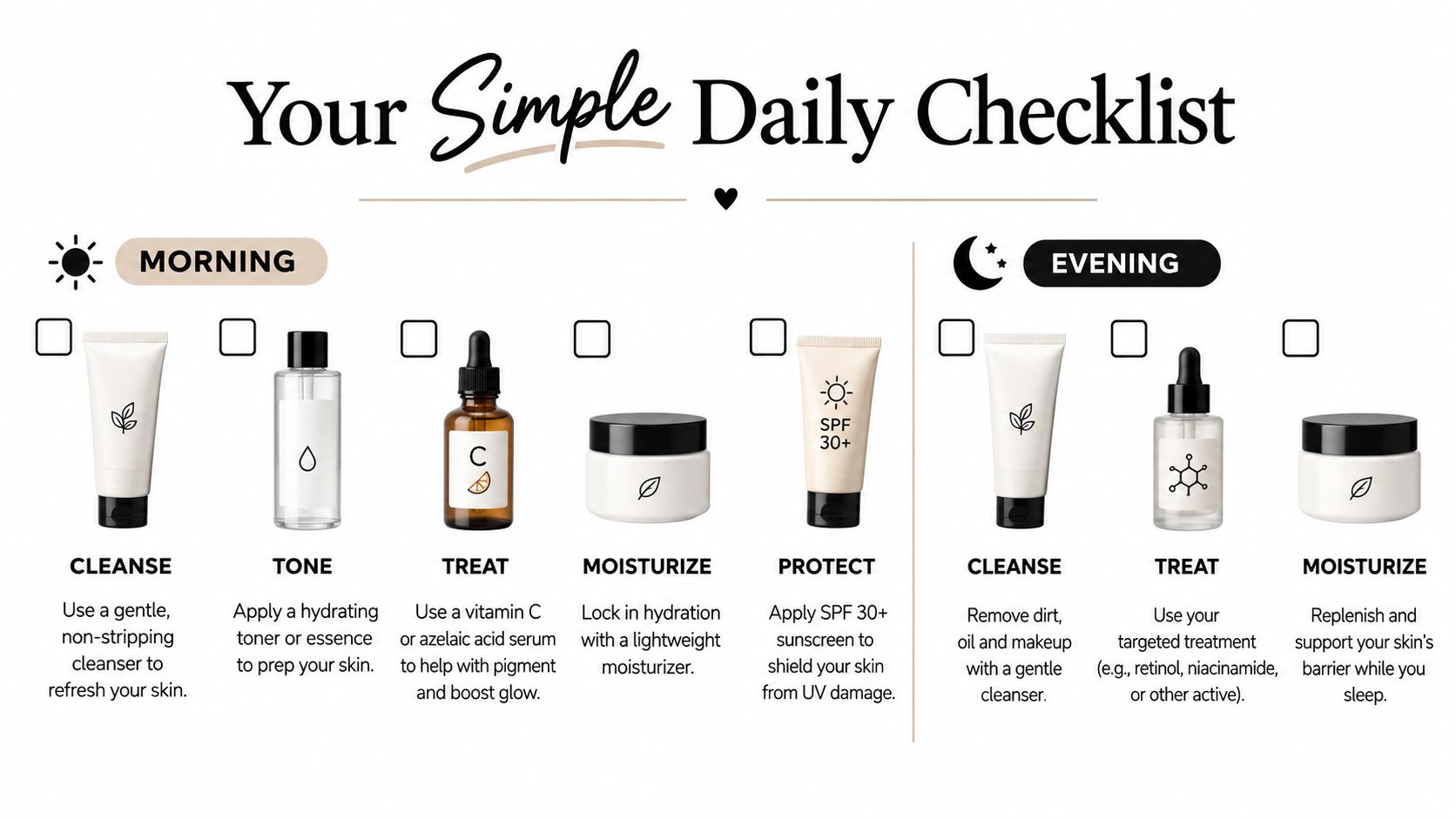
Use this in order:
Gentle cleanse: Wash without stripping.
Hydrating layer if needed: Toner or essence if your skin runs dry.
Preventive serum: Vitamin C if tolerated, or azelaic acid if your skin prefers a calmer route.
Moisturizer: Look for ceramides, glycerin, or squalane depending on texture preference.
Daily sunscreen: Broad-spectrum SPF 30+ with visible-light support if PIH is a concern.
If you're outside, reapply on schedule. Don't negotiate with that step.
Evening checklist
Keep nights simple enough that you won't skip them when you're tired.
First cleanse if needed: Oil or balm to remove sunscreen.
Second cleanse: Gentle face wash.
One treatment only: Retinoid, azelaic acid, tranexamic acid, or exfoliant. Not all of them.
Night moisturizer: Use a richer one if your skin gets tight or flaky.
Weekly guardrails
This is what keeps the routine effective instead of reactive:
Exfoliate lightly: Once or twice weekly at most, depending on tolerance.
Don't stack strong acids: More actives don't mean faster fading.
Take a barrier week when needed: If your skin stings, burns, or feels tight, pause the extras and go back to cleanser, moisturizer, and sunscreen.
A good dark skin care routine should feel boring in the best way. Steady. Repeatable. Low-drama.
Skin that stays calm usually evens out faster than skin that's constantly being forced into recovery.
That's the rule worth remembering.
NYC Laser Hair Removal helps clients with diverse skin tones reduce the irritation, ingrowns, and repeated friction that can feed post-inflammatory hyperpigmentation in the first place. If you want a more skin-conscious approach to smoother skin with personalized treatment and modern technology, visit NYC Laser Hair Removal.
Comments