
Laser Hair Removal After Tanning: Safe Timing Guide
You came back from the beach in Montauk, or maybe you've got a spray tan booked for a wedding weekend in Garden City, and now the laser appointment is sitting on your calendar right in the middle of it all. That's the problem with laser hair removal after tanning. People aren't usually trying to break the rules, they're just trying to keep up with Long Island summer life and still get smooth skin that stays smooth.
The right answer depends on what kind of tanning you mean. UV tan, fresh sunburn, and self-tanner are not the same thing, and they don't create the same risk or the same wait time. When clients treat them as one category, they either cancel too late, show up with skin that's not ready, or get told to reschedule because the laser can't safely do its job on skin that's changed color.
Why Timing Matters Before Your Laser Session
A lot of people ask the wrong question first. They want to know whether tanning is “bad” before laser, but the better question is, what kind of tanning happened, and how fresh is it? A client who spent the afternoon on Jones Beach, a client with a visible sunburn, and a client who used a self-tanner on Tuesday night are walking into three different situations.
The practical issue is contrast. Laser hair removal works best when the hair follicle stands out clearly from the surrounding skin, and tanning changes that balance. If you're already planning around beach days, outdoor sports, or a spray tan before a big event, you need a timing map, not a generic warning.
Practical rule: if your skin looks darker than it did at your last visit, or it feels hot, tender, or newly irritated, the appointment needs a closer look before anyone turns the machine on.
Start by naming the type of color change
The first step is simple. Ask whether the color came from UV exposure, from inflammation after a burn, or from a product sitting on the surface of the skin. Those three tracks lead to different decisions.
UV tan: this means actual pigment change in the skin from sun or a tanning bed.
Fresh sunburn: this means the skin barrier is irritated and still recovering, even if the tan hasn't fully appeared yet.
Self-tanner or spray tan: this is surface color, which can often be removed, but still needs to be completely gone before treatment.
That distinction matters because the laser responds to pigment, not intent. If the skin is darker from the sun, the device has to work around more melanin in the epidermis. If the skin is burnt, the problem is no longer just color, it's tissue injury. If the color is cosmetic product, the problem is interference with what the laser sees on the surface.
For Long Island clients, this usually shows up in the same week, one person has a boat day, another has a beach wedding, and somebody else uses a fake tan to look even for an event. The fix isn't the same in every case, so the next sections separate the tracks cleanly.
How Tan and Melanin Change Laser Safety
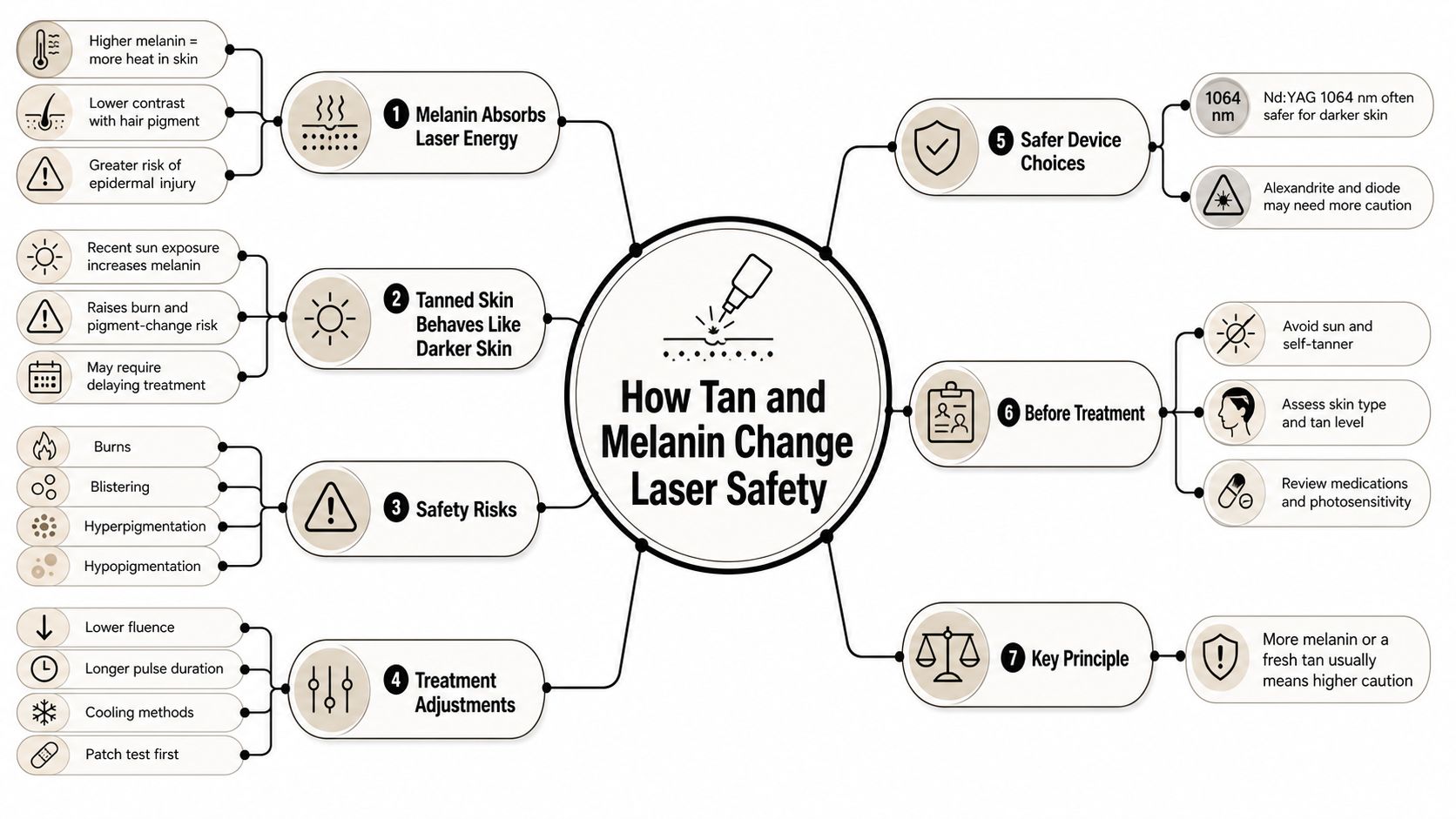
A tan changes the skin's melanin load, and that changes how laser energy moves through the skin. The follicle is still the target, but extra pigment in the epidermis adds more competing absorption at the surface. In practice, that means the clinician has less room to work with, because more of the energy can be taken up before it reaches the hair root.
Medical guidance reflects that trade-off. Tanned skin can be harder to treat and can carry a higher risk of side effects, especially when the skin is recently darkened from sun exposure or when the tone is still shifting after tanning. Cleveland Clinic notes that tanned skin can reduce effectiveness and raise the chance of complications, and it also reports hyperpigmentation in about 17% of patients, hypopigmentation in 1%, and scarring in 1 in 800 after laser treatment on tanned or sun-exposed skin. Those numbers do not mean laser is off the table in every case. They show why skin tone changes have to be treated as part of the procedure itself, not as a minor detail. Cleveland Clinic laser hair removal guidance
What the laser is competing against
Tan skin is harder to treat because epidermal melanin increases, so the skin itself becomes a stronger competitor for the laser's energy. That raises the chance of surface heating, and the settings often need to be adjusted downward for newly tanned areas to lower the risk of burns or pigment change. Peer-reviewed dermatology literature and technical reviews describe the same basic issue, the laser has to distinguish between the follicle and surrounding pigment, and that distinction gets less clean as the skin darkens. Technical explanation of melanin competition in tan skin
That is why recently sun-exposed skin often gets a wait recommendation. The device is being conservative for a specific reason. It is trying to avoid sending heat into the wrong chromophore.
Why the risk isn't just redness
The common mistake is to assume the only concern is a short-lived pink reaction. The full risk picture is broader. On recently tanned skin, the main concerns are burns, blistering, hyperpigmentation, hypopigmentation, and scarring. When the skin already carries extra surface pigment, the laser has a harder time separating the follicle from the surrounding tissue with enough precision.
The safest session is the one where the skin tone is stable, calm, and close to baseline. Any recent darkening makes the treatment more technical.
Treatment outcomes also depend on stable contrast over time, not just on the single pulse that fires during the visit. Clinical review data show a single treatment can reduce hair by 10%–40%, repeated treatments by up to 90%, and studies have reported 37%–72% reduction after 1 to 3 treatments at 3 months, with 38%–49% reduction still seen 1 year after 3 sessions. Those results depend on the same basic principle. The hair has to stand out clearly enough from the surrounding skin for the laser to do its job. Clinical review of laser hair reduction outcomes
Sun Tan vs Sunburn vs Spray Tan
A real UV tan, a fresh sunburn, and a spray tan are easy to lump together, but they don't belong in the same bucket. Each one affects treatment differently, and each one calls for a different kind of decision before the appointment.
Wait Times by Type of Tan | Minimum Wait | Prep Before Session |
|---|---|---|
UV tan | Wait until visible tan has faded and skin is back near baseline | Avoid more sun, keep the area covered, and let the provider assess skin tone |
Fresh sunburn | Do not treat until fully healed and no tenderness remains | Cool the skin, avoid exfoliation, and reschedule if the area is still inflamed |
Self-tanner or spray tan | Remove completely before the visit | Exfoliate gently and make sure no pigment remains on the skin |
UV tan is about contrast loss
A sun tan changes the actual skin pigment. That lowers contrast and makes the laser less selective. It also means the device may need different settings, which is why a fresh tan often pushes the appointment out rather than being handled casually.
If you've been on the beach, at a pool, or outdoors enough to darken the area you want treated, the question isn't whether the skin looks “a little brown” or “not that brown.” The question is whether the clinician can safely read the target area with enough confidence to treat it without heat spilling into the skin.
Fresh sunburn is a separate problem
Sunburn is not just tan skin turned up a notch. It's inflamed tissue, and inflamed tissue is not ready for laser. The barrier is compromised, the skin can feel hot or tender, and any added energy risks making the reaction worse. Even if a sunburn looks mild, if it still stings or feels tight, that area should stay off the laser table.
Spray tan and self-tanner are different again
Self-tanner and spray tan are usually treated as surface pigment issues. They're not the same as UV tanning, but they still matter because the laser sees pigment on the skin surface. That's why a clean, fully exfoliated baseline matters before the appointment.
If you're trying to keep the look of color between sessions, the practical question isn't “Can I tan?” It's “Can I remove this product fully before the next visit?” That's the standard that keeps the treatment accurate.
Recommended Wait Times and Patch Tests
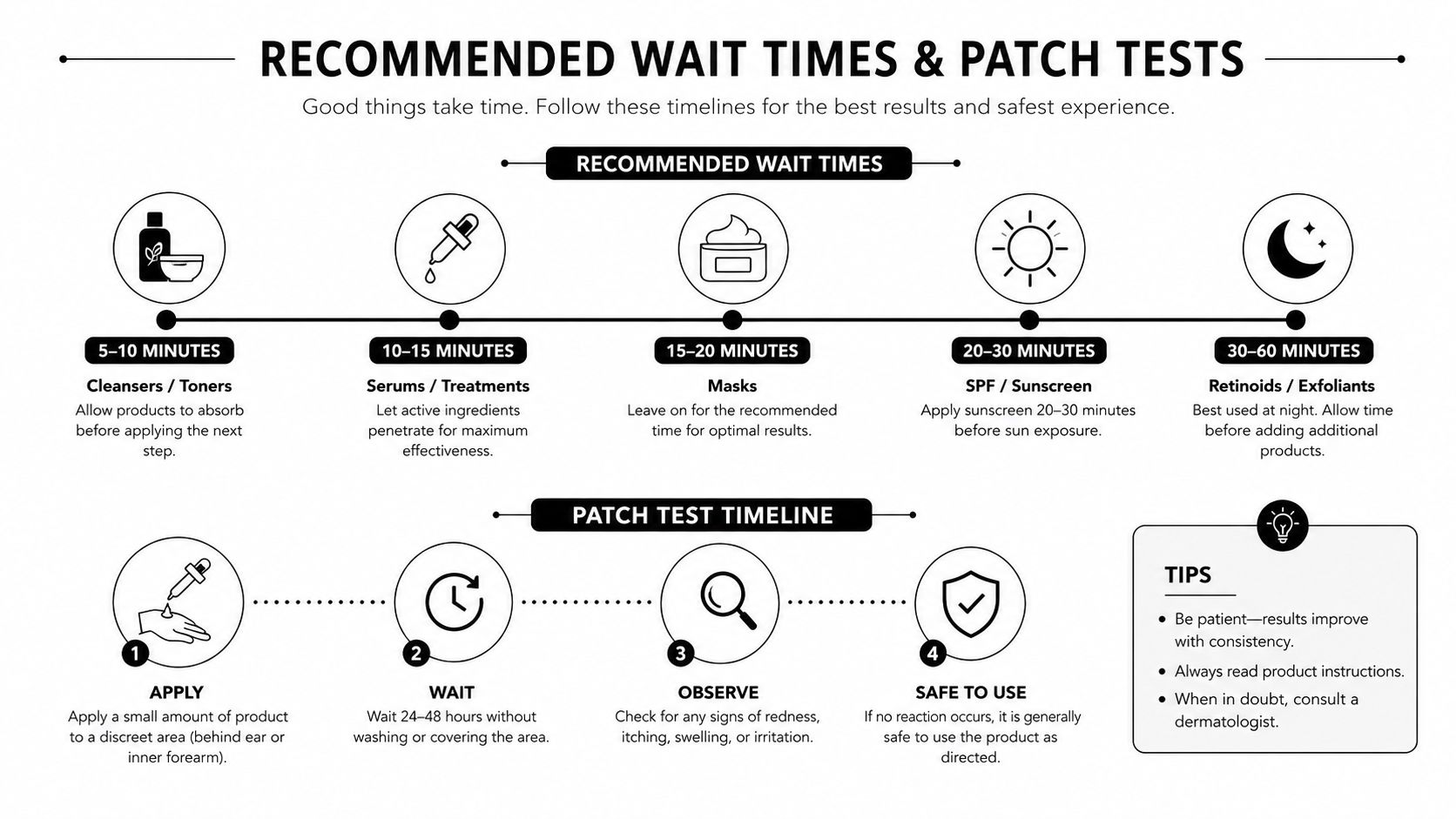
The most useful way to think about timing is this, the skin has to look like itself again before the session. That means no lingering bronzing, no hot or tender sunburn, and no mixed-tone patchiness from recent sun exposure or self-tanner.
For clients who are midway between a tan fading and an appointment approaching, a patch test is the safest bridge. A small test area gives the clinician a chance to see how the skin reacts before committing to a full treatment area. That matters most when the skin tone is not fully back to baseline or when different parts of the body have faded at different speeds.
When a patch test earns its keep
A patch test is useful when the skin tone is changing, uneven, or recently exposed. It is also smart when someone has a history of pigment sensitivity, because the clinical question is not just whether treatment is possible, but what setting keeps the surface safe.
The treatment still needs enough contrast to work, and the setting has to respect the state of the skin. That's why a patch test is often the decision point rather than the entire appointment. One small square can prevent a full-area reaction.
Clinic habit that saves headaches: if the color on the skin came in from the sun, or the skin is still peeling, hot, or spotty from tanning, test first and treat later.
How to plan the calendar
The simplest plan is to book with enough room for real life. If you have a beach weekend, a wedding spray tan, or a vacation where you know you'll be out in the sun, put the laser appointment on the side of the calendar where the skin has already settled.
For practical patient guidance on sun exposure timing around appointments, use the clinic's detailed guide on laser hair removal and sun exposure. It's the right reference when you're trying to decide whether a date needs to move or a patch test makes more sense.
The main point is simple. A session should be scheduled against the skin you have that day, not the skin you had last month or the skin you hope to have next weekend.
How Splendor X Handles Tanned and Diverse Skin
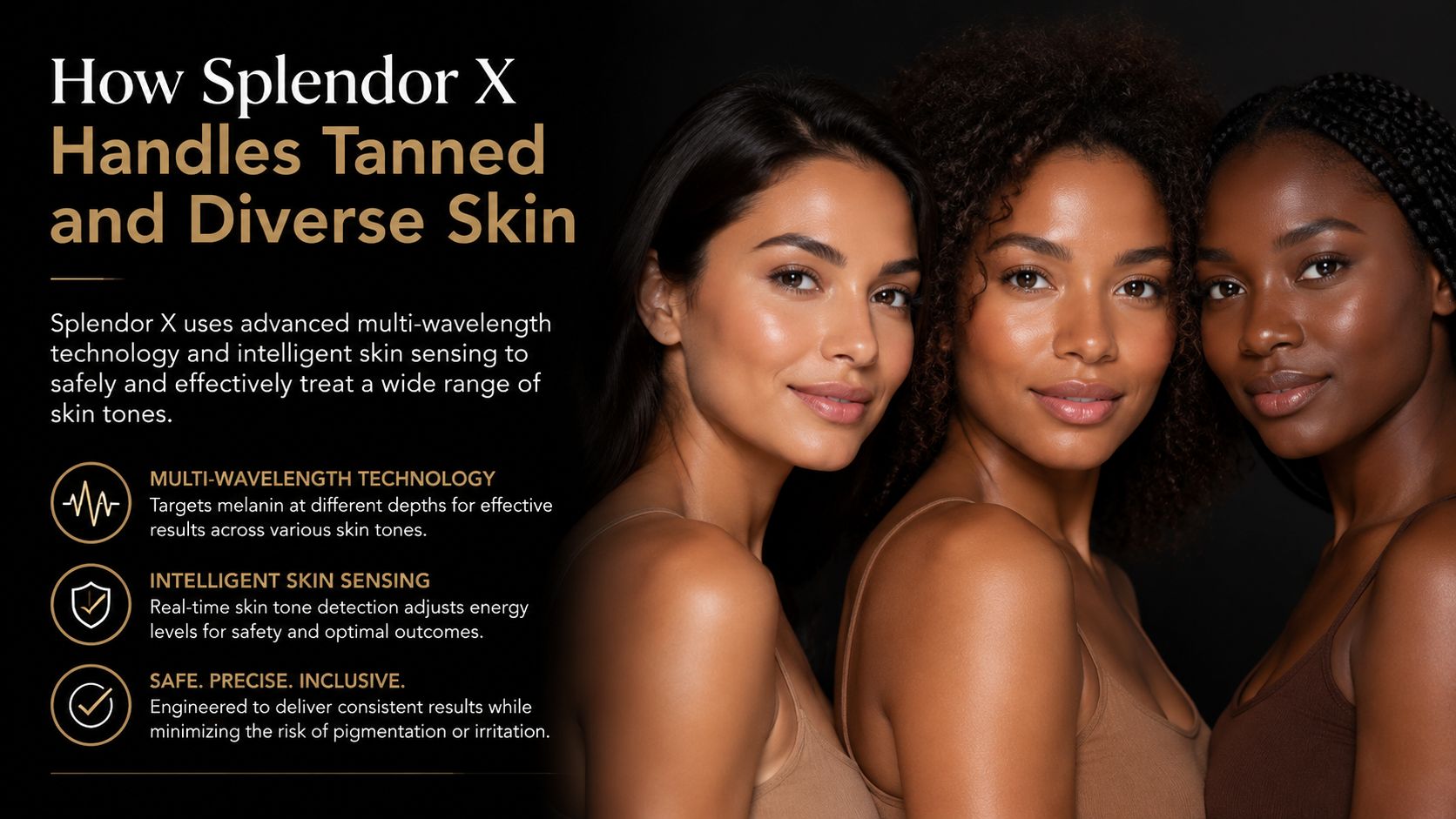
On Long Island, I see every kind of skin tone walk through the door, and the machine has to match that reality. Splendor X is built around a dual-wavelength platform, Alexandrite and Nd:YAG, so the clinician can choose a path that fits the skin in front of them instead of forcing one approach on everyone. In practice, that matters for fair, medium, deeper, and recently tanned skin, because the treatment choice changes with the pigment profile on the day of the visit.
The main technical issue is still melanin. When epidermal melanin is higher, the clinician adjusts settings downward to protect the surface while still targeting the follicle. That is part of why Nd:YAG is usually the safer choice when the skin carries more pigment, since the longer wavelength is less likely to overreact at the surface. For a clear look at the platform itself, the clinic's overview of Splendor X technology explains how the machine is set up for that kind of decision-making.
What the dual wavelength changes in practice
A dual-wavelength platform gives the clinician a broader toolset for choosing how to treat safely when tone, density, and recent sun exposure vary from client to client.
That matters when someone has:
Darker baseline skin: the clinic can use the wavelength that better respects surface melanin.
A recently faded tan: the provider can judge whether the area is ready and choose a safer setting.
Mixed tone across one body area: the treatment plan can be adjusted region by region instead of using one blanket approach.
Why this still doesn't mean “go ahead” on a fresh tan
Splendor X does not make timing irrelevant. If the skin is still visibly darkened from sun exposure, or if a burn is still healing, the safer choice is still to wait. The machine helps when the skin is ready enough to treat, not when the skin is still changing.
The practical value of the platform is control, not permission. A skilled provider gets more room to work with diverse skin, but that margin still depends on the condition of the skin that day. It improves the clinic's ability to choose carefully, and that is what matters when the goal is safe treatment rather than a rushed session.
Aftercare Rules for Tanning Post Session
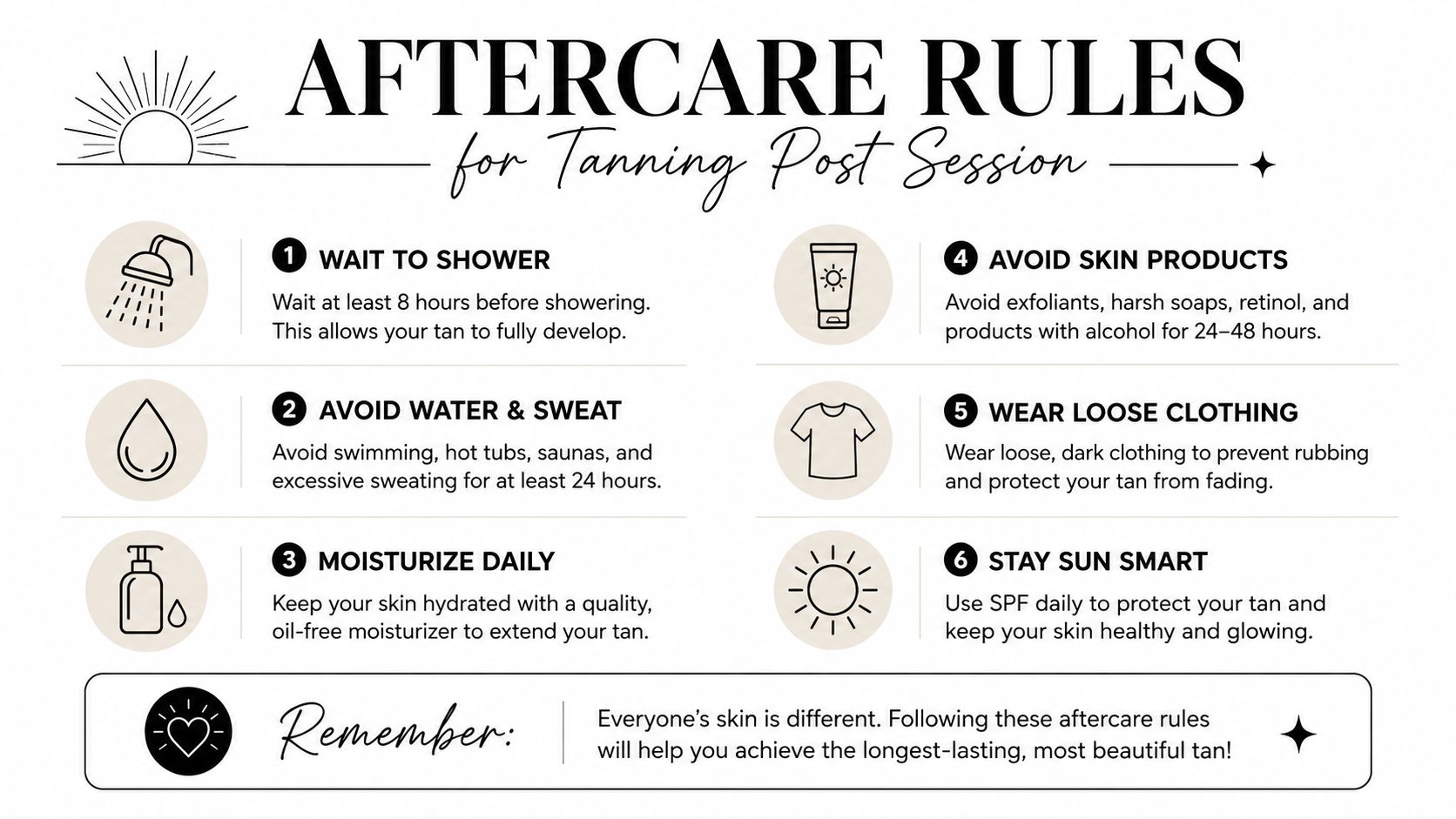
After a session, the skin is temporarily more sensitive, so the rules stay strict even if the area looks calm. Post-treatment UV exposure is a documented risk multiplier, because more sun or tanning exposure can trigger inflammatory pigment changes, prolonged erythema, and slower recovery. Post-treatment tanning risk after laser hair removal
What to avoid right away
The treated area should stay away from direct sun, tanning beds, and intentional tanning while it settles. That doesn't mean you have to stay indoors forever, it means you should stop treating the area like it's business as usual for a bit.
Use broad-spectrum sunscreen daily: apply it to exposed treated skin anytime you're outside.
Cover the area when you can: lightweight clothing helps when the day is long.
Skip hot, reactive products: anything that irritates skin right after a session can make recovery messier.
Do not rush a spray tan: wait until the skin is fully calm and no longer sensitive.
For practical pigmentation aftercare guidance, the clinic's page on after laser treatment for pigmentation is useful if you're already seeing color change and want to know what's normal versus what needs a call.
What recovery should feel like
Mild warmth or temporary redness can happen after treatment. What shouldn't be ignored is ongoing burning, worsening tenderness, blistering, or a patch that keeps getting darker after sun exposure. That's when a client should stop guessing and contact the clinic.
Short version: if the skin feels fragile, protect it. If it starts looking more irritated after sun, heat, or a tanning product, back off and let it recover.
Spray tan timing is the easiest part to get wrong because it feels cosmetic, not medical. The safe approach is to wait until the skin is no longer reactive, then make sure the skin is clean and fully healed before any product goes on. That keeps the aftercare from undoing the session you just paid to have done correctly.
Booking Your Series Around Long Island Summers
A typical Nassau County client plans this around real life, not around a perfect calendar. A 32-year-old from Garden City might start with a consultation in late spring, get a patch test if the skin tone has already shifted, and then begin a series that needs room for beach weekends, weddings, and outdoor plans.
The booking logic is simple. Body areas usually move in spaced sessions, and clients who come in with a mid-series sunburn or surprise spray tan usually need a check before the next treatment. If the skin tone is off, the session waits. If the skin is stable, the plan continues.
That's where practical logistics matter. NYCLASER's Westbury location keeps hours Monday through Saturday, and the clinic offers single sessions plus 3- or 6-session bundles for people who want a clear treatment plan and better consistency across the series. The appointment flow stays easier when clients book ahead of summer events instead of trying to squeeze laser between vacations.
The win is not just convenience. It's avoiding the common pattern where one beach weekend causes the next session to slide. That's how a treatment series gets messy.
Frequently Asked Questions on Tanning and Laser
Does a tanning bed base tan count the same as a sun tan?Yes. Mayo Clinic and the AAD both emphasize that sun exposure and tanning beds increase side effects like skin color changes, blistering, and scarring, especially in darker or recently sun-exposed skin. Mayo Clinic laser hair removal guidance
If I missed the wait window once, is the whole series ruined?No. One bad timing choice usually means rescheduling, not starting over. The issue is keeping the skin safe enough for the next session.
Can I shave between sessions if my skin was recently tanned?Yes, shaving is still the usual choice, but be gentle if the skin is irritated. Avoid waxing or plucking, since the laser needs the follicle present for treatment.
What if I have an event the week after my appointment?Plan the event around sun protection, not tanning. If the event involves outdoor exposure, cover the treated area and keep pigment changes in mind when choosing your timing.
If you're comparing clinics and want a useful outside resource on how to choose book-ready aesthetics leads, this guide from Transactional LLC is relevant because it shows how patients behave when they're ready to book, not just when they're browsing.
If you're trying to time laser safely after a tan, a sunburn, or a spray tan, NYC Laser Hair Removal can help you make the call before you risk a bad session. Visit NYC Laser Hair Removal to review treatment options, ask about Splendor X, and book a visit when your skin is ready.
Comments