
How to Stop Ingrown Hairs for Good
So, what’s the secret to stopping ingrown hairs? It’s not about one magic product, but a combination of two key habits: gentle exfoliation to clear away dead skin that can trap hairs, and smarter hair removal techniques—like always shaving with the grain.
These simple adjustments to your routine can prevent hairs from curling back or growing sideways into the skin, which is exactly what causes those frustrating red bumps in the first place.
Understanding Why Ingrown Hairs Happen
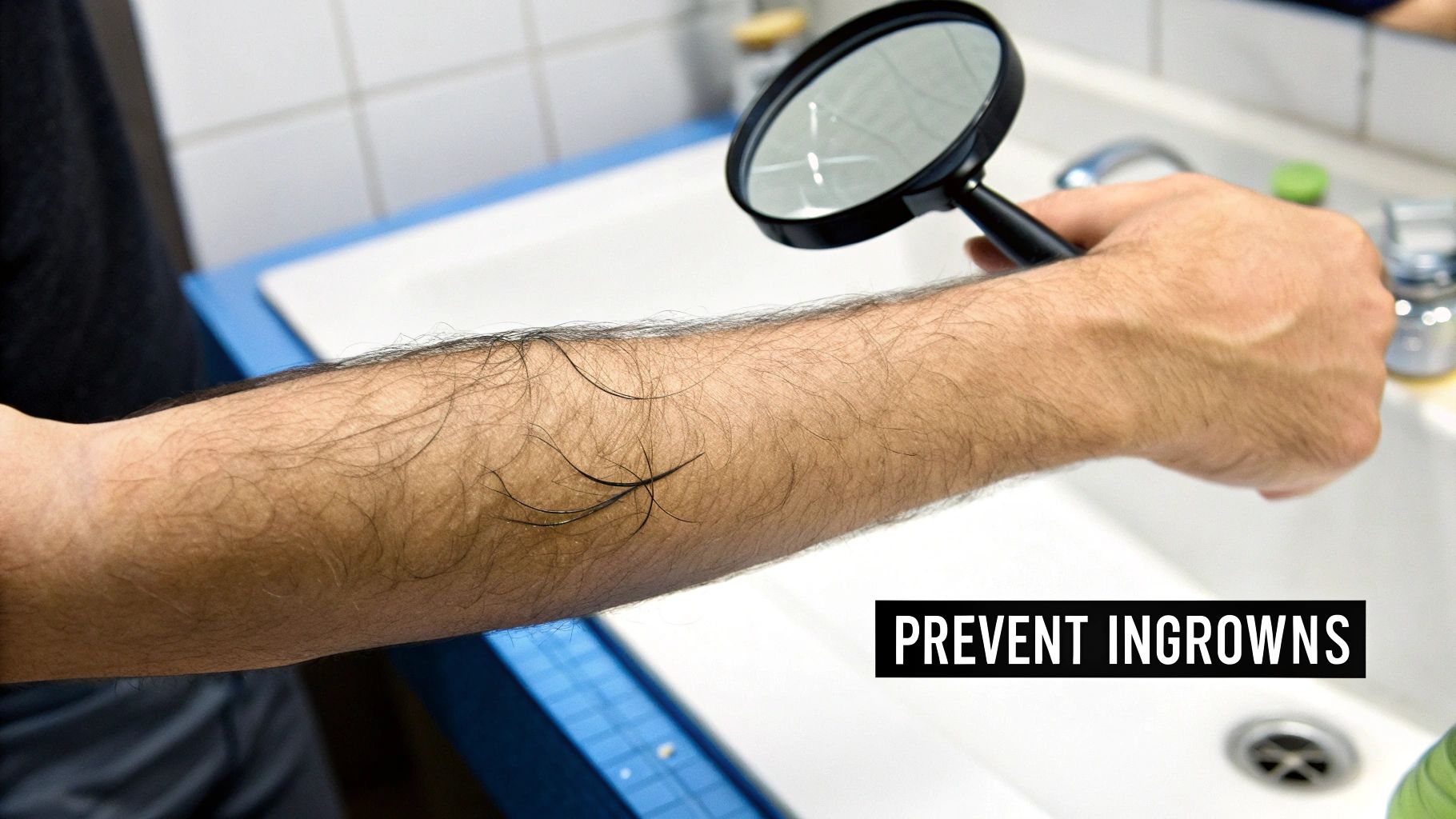
An ingrown hair, known in the medical world as pseudofolliculitis, is basically a hair that’s lost its way. Instead of growing up and out of the follicle as it should, it gets trapped. It either curls back down into the skin or grows sideways just beneath the surface.
Your body sees this trapped hair as a foreign object and springs into action, triggering an inflammatory response. That’s what leads to the redness, swelling, and sometimes pus-filled bumps that can be itchy and even painful.
If you feel like you're constantly battling these bumps, you’re far from alone. This is a massive global issue, with the market for ingrown hair treatments projected to explode from USD 1,902.5 million in 2025 to USD 4,703.7 million by 2035. That surge tells you just how many people are desperate for a real solution.
The Main Culprits Behind Ingrown Hairs
A few key factors are usually at play when hairs get trapped under the skin. Figuring out which ones affect you is the first step toward clear, smooth skin.
Your Hair Type: People with coarse or curly hair are just naturally more prone to ingrowns. The hair’s curl pattern makes it much more likely to bend back toward the skin as it grows out.
Your Hair Removal Method: Shaving too close to the skin can cut the hair at a sharp, aggressive angle. This makes it easy for the sharpened tip to pierce the follicle wall as it regrows. Waxing and tweezing can be just as problematic, often breaking hairs below the skin's surface, where they can easily get stuck.
Dead Skin Buildup: A layer of dead skin cells (keratin) can act like a physical barrier, blocking the hair follicle’s opening. This forces the growing hair to find another path—usually sideways.
Your hair’s natural growth cycle also has a big say in how it behaves after being removed. You can get a deeper understanding by exploring our guide on the hair growth cycle and how it impacts different treatments.
Key Takeaway: Ingrown hairs aren’t just bad luck. They're a direct result of your hair texture, how you remove it, and your skin's condition. By addressing these root causes, you can dramatically cut down on bumps and finally achieve consistently smoother skin.
A little proactive care goes a long way. Here’s a quick-reference guide to help you build a routine that keeps ingrown hairs at bay.
Your At-a-Glance Guide to Preventing Ingrown Hairs
Prevention Tactic | How It Works | Best For |
|---|---|---|
Daily Gentle Cleansing | Washes away sweat, oil, and bacteria that can clog follicles and cause inflammation. | All skin types, especially oily or acne-prone areas like the face, chest, and back. |
Chemical Exfoliation (2-3x/week) | Uses acids (AHA/BHA) to dissolve the "glue" holding dead skin cells, preventing blockages. | People with sensitive skin, coarse hair, or those prone to razor bumps on the bikini line and neck. |
Physical Exfoliation (1-2x/week) | Uses a brush, scrub, or mitt to manually slough away dead skin from the surface. | Tougher, less sensitive skin on areas like the legs, arms, and chest. Avoid on the face. |
Shaving With the Grain | Cuts hair in the direction it grows, leaving a blunt tip that's less likely to pierce the skin. | Everyone who shaves, especially those with curly or coarse hair in sensitive areas. |
Moisturizing Daily | Keeps skin soft and pliable, making it easier for new hairs to break through the surface. | All skin types, particularly after showering or hair removal to lock in hydration. |
Sticking to these habits consistently is your best defense. By keeping your skin clean, exfoliated, and hydrated, you create an environment where hair can grow out freely, just as it’s supposed to.
Upgrading Your Hair Removal Routine to Avoid Bumps
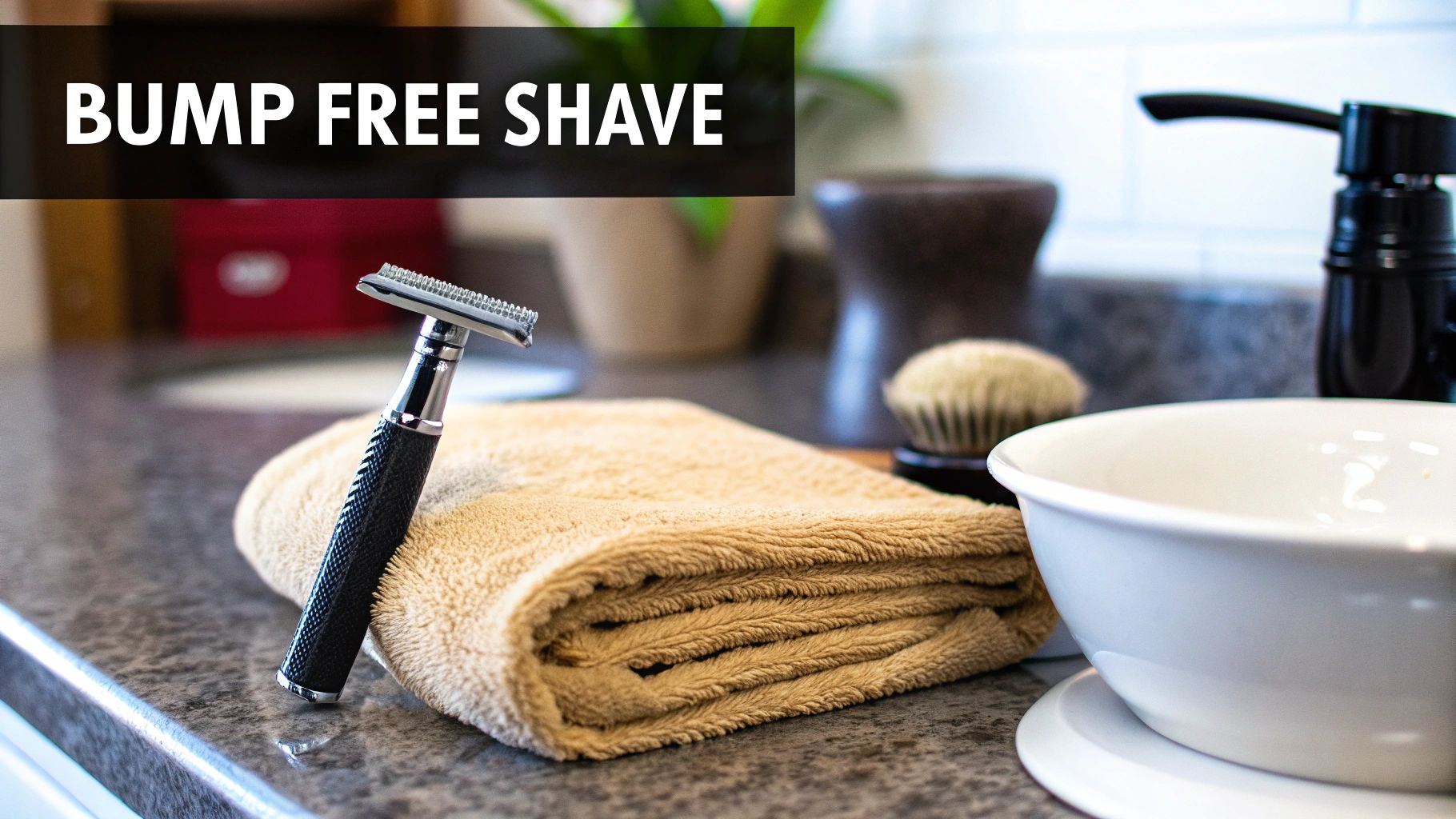
Let's be honest: how you remove your hair is the single biggest factor in the fight against ingrowns. A few small tweaks to your routine can be the difference between perpetually bumpy skin and a smooth, clear surface. It all starts with setting the stage before you even think about removing the hair.
Prep is everything. Before you pick up a razor or head to a wax appointment, always start with clean, damp, and warm skin. A quick, warm shower or even just applying a warm, moist towel for a few minutes will soften both the skin and the hair. This makes it more pliable and much easier to remove cleanly without a fight.
Mastering the Art of Shaving
Shaving is probably the most notorious culprit for causing ingrown hairs, but it doesn't have to be. The right tools and techniques change the entire game. First thing's first: ditch the cheap, multi-blade disposable razors. They're literally designed to lift the hair up before cutting it below the skin's surface—a perfect recipe for an ingrown hair.
Instead, switch to a sharp, clean razor, ideally one with a single, high-quality blade. A fresh blade glides over the skin with way less friction and gives you a clean cut without yanking on the hair. This one swap alone can dramatically reduce irritation and the odds of hairs getting trapped.
The direction you shave in matters. A lot. Shaving against the grain might give you that ultra-smooth feeling for a day, but it also creates a sharp, angled tip on the hair that can easily pierce right back into the skin as it grows.
Pro Tip: Always shave with the grain, following the natural direction your hair grows. It might not feel as baby-smooth initially, but it’s the best way to prevent those sharpened hair tips that lead to bumps and inflammation.
This is especially critical for people with certain hair types. Research actually shows that shaving triggers up to 80% of ingrown hairs in high-risk groups, like those with tightly coiled or curly hair. A condition called pseudofolliculitis barbae, for example, affects over 50% of Black men who shave frequently, causing painful razor bumps that can even lead to scarring if not managed correctly.
Best Practices for Waxing and Epilating
If waxing or epilating is more your style, your pre- and post-care routines are your best defense against ingrowns. These methods pull hair from the root, but if a hair breaks off below the surface during the process, it’s almost guaranteed to become ingrown.
To keep breakage to a minimum, make sure your hair is the right length—about a quarter of an inch is perfect. If it's too short, the wax or epilator can't get a good grip. Too long, and it's more likely to snap instead of pulling out cleanly. Gently exfoliating a day or two before your appointment also helps by clearing away dead skin, giving you a much cleaner pull.
After your session, aftercare is non-negotiable. Your skin is sensitive and the follicles are wide open, making them vulnerable to irritation.
Wear Loose Clothing: For the first 24-48 hours, stick to soft, breathable fabrics like cotton. Anything tight will create friction and trap sweat, which is a recipe for irritation.
Apply a Cool Compress: To calm down any immediate redness and inflammation, a cool compress or a soothing gel with ingredients like aloe vera can provide instant relief.
Avoid Heat and Sweat: Skip the hot showers, saunas, and intense workouts for at least a day. Sweat can carry bacteria straight into those open follicles.
By treating your skin gently before and after, you create an environment where hairs can grow back properly, without getting trapped. For more detailed tips, check out our complete guide on preventing ingrown hairs after a Brazilian wax.
The Power of Exfoliation in Your Daily Skincare

Here's a hard truth about preventing ingrown hairs: what you do between hair removal sessions matters more than the hair removal itself. Your daily skincare is what creates an environment where new hairs can grow freely, and exfoliation is the absolute cornerstone of that routine.
Think of it like this: your skin is constantly shedding dead cells. When that cellular debris piles up, it forms a microscopic barrier over your hair follicles. It’s like putting a lid on a jar, effectively trapping new, weaker hairs under the surface. Exfoliation simply removes that lid, clearing the path for healthy growth.
Without it, even the most meticulous shaving technique will fall short. It’s the single most proactive step you can take to shift from constantly treating bumps to preventing them from ever showing up.
Choosing Your Exfoliation Method
Not all exfoliation is created equal. The two main camps—physical and chemical—work in completely different ways, and picking the right one depends on your skin type and the specific area you're treating.
Physical Exfoliants: These are the scrubs, brushes, and mitts of the world. Think sugar scrubs, dry brushes, or loofahs that manually buff away dead skin cells from the surface. They provide instant gratification but can easily be overdone, especially on delicate skin.
Chemical Exfoliants: These use gentle acids (like glycolic, lactic, or salicylic) to dissolve the "glue" holding dead skin cells together, allowing them to shed naturally. They work a little deeper and are often a much better match for sensitive areas prone to irritation.
Expert Insight: For tricky areas like the bikini line, underarms, or face, a chemical exfoliant with salicylic acid is a game-changer. It’s oil-soluble, which means it can actually get down inside the pore to clear out blockages. Plus, its natural anti-inflammatory properties help calm any existing redness.
For tougher skin on your arms or legs, a gentle physical scrub might be all you need. The key is always to listen to your skin. If it’s red, raw, or irritated after, you’ve gone too far.
Creating Your Skincare Ritual
Once you've found your perfect exfoliant, consistency is what brings the results. You don’t need to do it every day—in fact, that’s a fast track to irritation. Stripping your skin will only make things worse.
Aim for two to three times per week, ideally on the days you aren't shaving or waxing to give your skin a break.
Your routine should be simple:
Cleanse First: Always start on clean skin to wash away surface-level oil and grime.
Exfoliate Gently: Apply your product in light, circular motions. Don’t scrub like you’re trying to remove a stain; let the ingredients do the work for you.
Rinse and Pat Dry: Use lukewarm water and gently pat your skin dry with a fresh, clean towel.
The final, non-negotiable step is to moisturize. Every single time. Exfoliation leaves your skin perfectly primed to soak up hydration. A good, non-comedogenic (meaning it won't clog your pores) lotion or cream keeps your skin soft and flexible. That suppleness makes it much easier for new hairs to push through the surface without getting stuck, bringing your prevention routine full circle.
How to Safely Treat an Ingrown Hair When One Pops Up
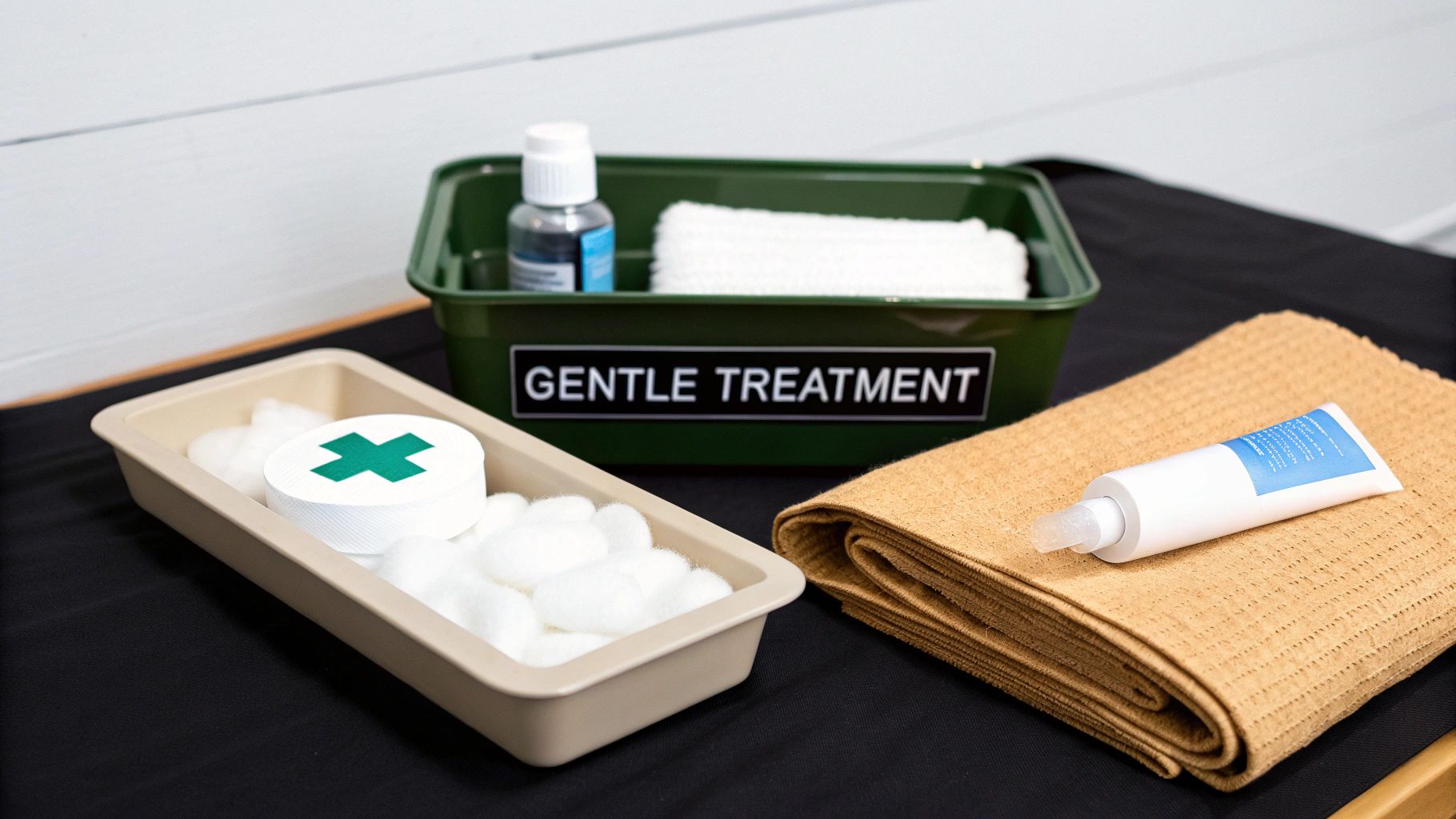
Even with the best prevention routine, a stubborn bump can still show up. When it does, what you do next makes all the difference between a quick, clean heal and a dark spot or scar that sticks around for months.
First rule: resist the urge to squeeze. Don't pick at it, and definitely don't go digging with your fingernails or unsterilized tweezers.
Attacking an ingrown hair almost always backfires. You risk introducing bacteria, which can lead to a painful infection. You can also cause enough trauma to the skin to trigger post-inflammatory hyperpigmentation—those frustrating dark marks that linger long after the bump is gone. The goal here is to gently coax the trapped hair out, not wage war on your skin.
The Gentle Approach: Releasing a Trapped Hair
Your best friends in this situation are warmth and patience. Applying a warm compress to the area for 10-15 minutes a few times a day works wonders. The heat and moisture soften that top layer of skin and help calm the inflammation, giving the hair a much easier path to the surface.
If you can see the hair tip looped just under the skin after a day or so of compresses, you can try to free it. This is a delicate operation, so you'll need the right tools and a steady hand.
Sterilize Your Tool: First things first, clean a pair of fine-tipped, pointed tweezers or a small, sterile needle with rubbing alcohol. This is non-negotiable for preventing infection.
Gently Free the Tip: Carefully slide the sterile tip under the visible loop of the hair and gently lift it out from under the skin.
Do Not Pluck: Your only job is to release the embedded tip. Don't pull the entire hair out from the root. Plucking can damage the follicle and set you up for the next hair to grow back even more crooked.
Once the hair is free, cleanse the area with a bit of mild soap and water. You can also apply a tiny dab of an over-the-counter hydrocortisone cream to help with any lingering redness.
It's also interesting to know that what we typically call "ingrown hairs" are very different from a true medical rarity. The clinical term "ingrowing hair" refers to an incredibly rare condition where thick, straight hairs burrow deep into the skin, a phenomenon seen almost exclusively in Asian men. Only a handful of cases have ever been documented. You can read the full research on these rare ingrowing hair cases to see the difference. This just highlights why learning how to stop the far more common ingrown hairs we all deal with is so important.
Key Takeaway: If an ingrown hair is deep, extremely painful, or shows signs of infection like pus or significant swelling, leave it alone. Don't try to be a hero. These are clear signs it's time to see a dermatologist or your doctor, who can safely handle it without causing scarring.
Considering a Permanent Solution with Laser Hair Removal
If you're fed up with the endless cycle of shaving, exfoliating, and treating bumps, it might be time to think about a long-term fix. While daily prevention helps, it’s a constant battle. For anyone seeking a definitive end to ingrown hairs, laser hair removal is the most powerful and lasting solution available.
Instead of just managing the symptoms, laser hair removal gets to the source of the problem: the hair follicle itself. The technology sends a concentrated beam of light directly into the follicle, where the pigment in your hair absorbs it. That light energy converts to heat, which damages the follicle and dramatically slows its ability to grow new hair.
It’s a simple equation: no new hair means no hair to curl back into the skin and cause trouble. This is why laser is hands-down the most effective way to stop ingrown hairs for good, especially in chronic hot spots like the bikini line, underarms, and beard area.
How Laser Treatments Eliminate Ingrown Hairs
The process is strategic. Because the laser targets melanin (the pigment in your hair), it works best when the hair is in its active growth phase. This is the sweet spot when the hair is firmly connected to its root, giving the laser's energy a direct path to do its job.
Since not all your hairs are in the same growth phase at once, you'll need a series of treatments to catch each follicle at the right time. With every session, more follicles are successfully disabled. You'll notice a huge reduction in hair density and, more importantly, way fewer ingrowns. Any hair that does manage to grow back is usually finer and lighter, making it far less likely to cause irritation.
The Long-Term Advantage: Laser hair removal doesn't just treat the bumps you have now; it systematically dismantles the factory that creates them. By eliminating the hair follicle, you eliminate the possibility of an ingrown hair forming in that spot ever again.
For a deeper dive into the science behind the smoothness, our article on how effective laser hair removal is for permanent results breaks it all down.
Splendor X: A Solution for All Skin Tones
In the past, laser hair removal was really only an option for people with light skin and dark hair. Thankfully, technology has come a long way. Modern systems like the Splendor X have completely changed the game.
Splendor X uses a unique dual-wavelength system, blending Alexandrite and Nd:YAG lasers in a single pulse. This allows your technician to customize the treatment precisely to your skin tone and hair type, making it a safe and effective option for virtually everyone—including people with darker complexions who were previously told they weren't good candidates.
Temporary Fixes vs. Laser Hair Removal
Let's be honest, the daily grind of shaving and waxing gets old. Here’s a quick look at how those temporary methods stack up against a permanent solution.
Method | Ingrown Hair Risk | Cost | Longevity |
|---|---|---|---|
Shaving | High | Low (Ongoing) | 1-3 Days |
Waxing | Moderate to High | Moderate (Ongoing) | 3-6 Weeks |
Epilating | Moderate | Moderate (One-time tool) | 3-4 Weeks |
Laser Hair Removal | Very Low to None | Higher (Initial investment) | Years (Permanent Reduction) |
For anyone dealing with the constant pain and frustration of ingrown hairs, making the switch to laser hair removal isn't just an investment in your skin—it's an investment in your comfort and confidence. It’s about finally ending the cycle of irritation for good.
Got Questions? We’ve Got Answers
Even with the best game plan, a few questions always come up on the path to smoother skin. Here are the answers to the most common queries we hear from clients dealing with stubborn ingrown hairs.
Can I Just Pluck It Out?
The urge is undeniable, but please, step away from the tweezers. Forcibly digging out or plucking an ingrown hair is one of the worst things you can do. It damages the hair follicle and the delicate skin surrounding it, which almost always leads to more inflammation, a higher risk of infection, and potential scarring or dark spots.
Worse yet, you might break the hair off below the surface. This just sets you up for an even deeper, more painful ingrown during the next growth cycle.
Expert Tip: The best approach is patient and gentle. Use warm compresses to soften the skin and continue your gentle exfoliation routine to help the hair surface on its own. If you can see the hair tip, you can use a sterile needle or fine-tipped tweezers to gently lift it out from under the skin—but never, ever pluck it from the root.
Are Some People More Prone to Ingrown Hairs?
Absolutely. Genetics and hair type are huge factors here. If you have coarse, thick, or curly hair, you're naturally more susceptible to them. The curl pattern of the hair shaft makes it incredibly easy for it to bend back and poke into the skin after being cut short from shaving.
This is why we see certain conditions pop up more in specific populations. A great example is pseudofolliculitis barbae, a chronic inflammatory issue caused by ingrown hairs on the face. It's especially common in men of African or Hispanic descent who shave regularly, simply because their hair texture is predisposed to curling back into the skin.
How Long Does an Ingrown Hair Take to Go Away?
A minor ingrown bump, if you leave it alone and treat it gently, will usually clear up on its own in about one to two weeks. The trick is to stop all hair removal in that area to avoid making things worse. Just stick with your gentle exfoliation and keep the skin moisturized. This gives the skin time to heal and lets the hair work its way out naturally.
However, if that bump gets very large, painful, or looks like it's filled with pus, that’s a red flag for a possible infection. That kind of situation may need a doctor's attention and will definitely take longer to heal.
For anyone who feels like they're in a constant battle with ingrowns, the problem is cyclical. One bump heals, and another one appears right after the next shave or wax. This is exactly why a long-term solution that gets to the root of the problem—the hair follicle itself—is the only way to truly break the cycle for good.
Ready to finally break free from the endless cycle of bumps and irritation? At NYC Laser Hair Removal, we use advanced Splendor X technology to safely and effectively eliminate the hair follicles that cause ingrown hairs. Learn more and book your consultation for smooth, clear skin at https://www.nyclaser.com.
Comments