
First Time Laser Hair Removal: Your Complete Guide
You've booked your first laser hair removal appointment, but the closer it gets, the more questions appear. Will it hurt? Should you shave? What if your skin reacts? And why does every clinic talk about a series of treatments instead of one quick fix?
Those concerns are normal. A well-run first appointment should replace uncertainty with a clear plan, from the consultation and skin assessment to preparation, treatment, aftercare, and scheduling. Laser hair removal is a process, not an instant erase button, and understanding the physical and psychological journey makes the experience much easier to manage.
Your First Consultation and What to Expect
Many nervous first-timers expect to walk in and immediately lie down for treatment. In a careful clinic, the first appointment starts with conversation. A practitioner reviews your goals, examines the treatment area, considers your skin tone and hair characteristics, and asks about medical history, medications, previous hair-removal methods, and any tendency toward pigmentation or irritation.
That assessment matters because laser settings must be individualized. Hair pigment, hair thickness, skin tone, recent tanning, and the treatment zone all affect how a practitioner approaches the session. A clinic that promises identical settings for everyone is skipping an important safety step.
What a proper consultation includes
You should leave knowing:
What will be treated: The practitioner should confirm the exact boundaries of the zone, especially for areas such as the bikini line, Brazilian area, face, or abdomen.
How your skin will be managed: Ask whether the clinic performs a patch test or treats a small discreet area before proceeding more broadly.
What results mean: Laser treatment reduces hair growth over a series. It doesn't guarantee that every follicle will stop producing hair permanently.
What to disclose: Mention medications, active skin conditions, recent sun exposure, tanning products, and any history of unusual scarring or pigment changes.
A good consultation also gives you space to ask direct questions. Ask which device and wavelength may be used, who performs the treatment, what happens if your skin reacts, and how the clinic handles follow-up care. For darker skin tones, device selection and practitioner experience deserve particular attention. Recent literature supports long-pulsed 1064 nm Nd:YAG as a safer option for Fitzpatrick IV to VI, while 755 nm Alexandrite is generally strongest for lighter skin, making customization more important than a generic device label (clinical review of wavelength selection).
Practical rule: If the consultation feels rushed, your questions are dismissed, or no one discusses skin-specific risk, pause before purchasing a package.
Essential Prep Steps Before Your Appointment
Preparation protects both the treatment target and your skin. The follicle must remain present for the laser to affect it, while recently tanned skin can be more vulnerable to pigment complications.
Several weeks before treatment
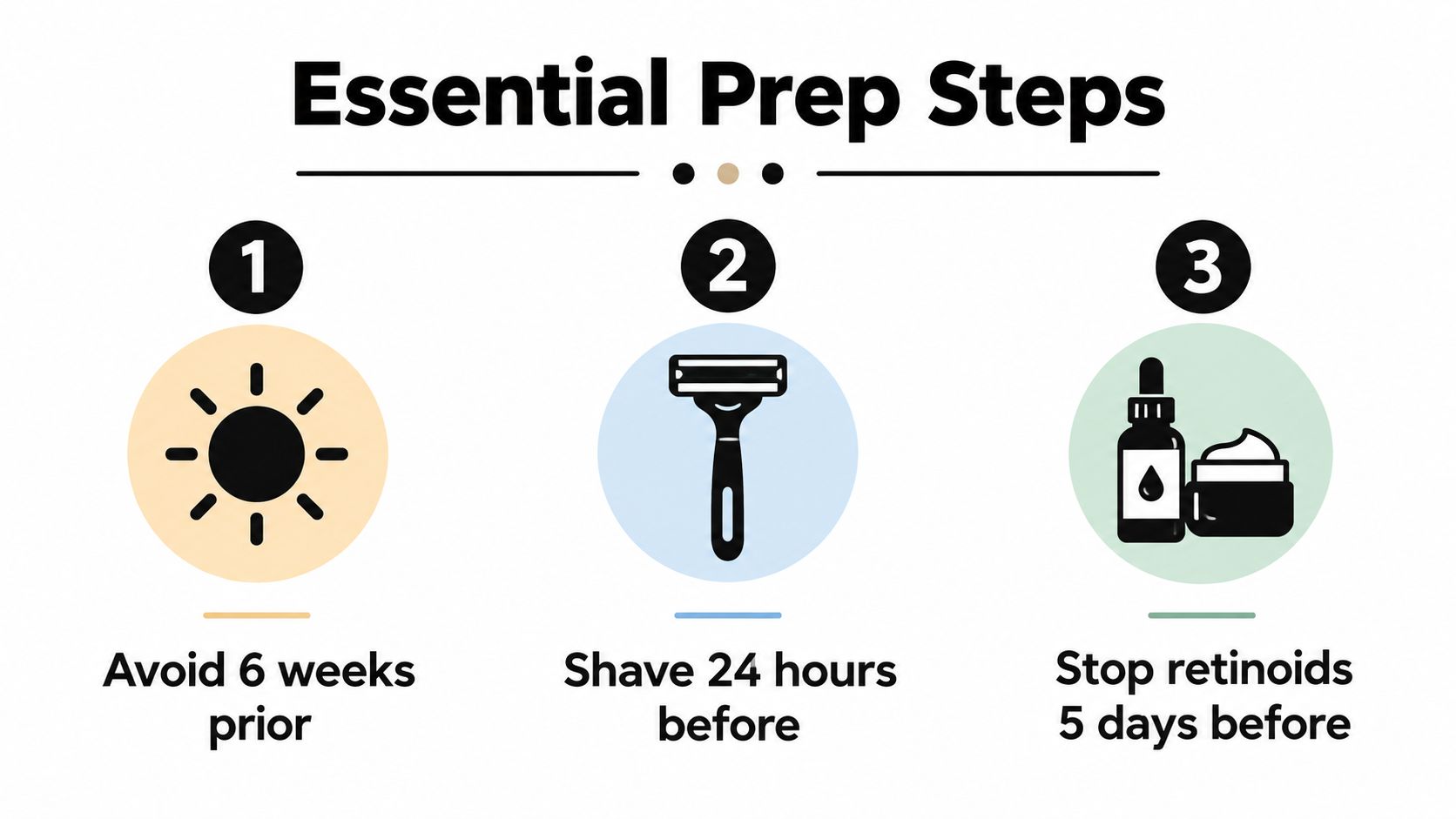
Stop waxing, plucking, threading, or electrolysis four to six weeks before the appointment. These methods remove the follicle target that the laser needs, which can reduce treatment effectiveness. Shaving is different because it cuts hair at the surface while leaving the follicle in place.
Avoid deliberate sun exposure and tanning. Darker, tanned skin can absorb more laser energy and raise the risk of burns or pigment changes, so tell the clinic if you've recently been in strong sun or used a self-tanner. The Mayo Clinic's laser hair removal guidance also emphasizes preserving intact follicles and avoiding tanning before treatment.
Shortly before you arrive
Shave the area shortly before treatment. Some practitioners prefer slight stubble, which can mean shaving two to three days before the appointment, while others accept or request a clean shave on arrival. Follow your clinic's exact instruction rather than guessing. The purpose is to prevent excess surface hair from absorbing energy while keeping the follicle available below the skin.
Keep the area clean and free from products unless your provider says otherwise. Arrive without heavy creams, oils, deodorant, makeup, or self-tanner on the treatment zone. If you've been told to pause a prescription or active skincare product, follow the clinic's specific medical guidance rather than making changes independently.
Use this simple final check:
Hair removal method: Shave only, unless your practitioner gives different instructions.
Skin condition: Reschedule or contact the clinic if the area is sunburned, irritated, cut, or unusually sensitive.
Questions: Bring a short list, including pain control, settings, aftercare, and your follow-up schedule.
Clothing: Wear loose, comfortable clothing that won't rub the treated area afterward.
Walking Through Your First Session Timeline
The treatment room usually feels more clinical than intimidating. You'll change if needed, expose only the treatment area, and settle into a position that lets the practitioner work systematically.
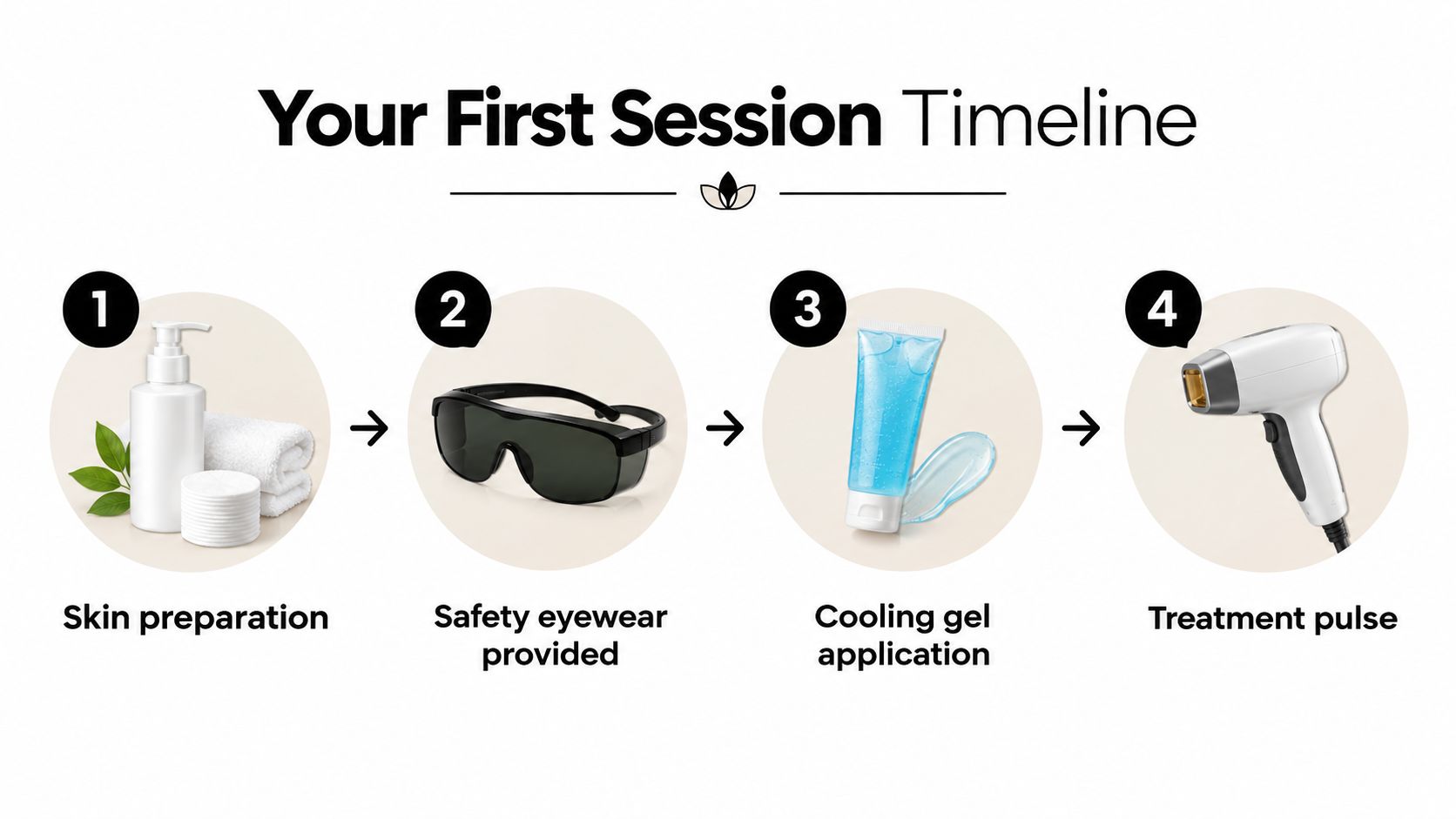
The skin is cleansed first. Protective eyewear follows, because laser light requires proper eye protection even when the treatment zone is far from the face. Depending on the device and area, the practitioner may apply cooling gel or use integrated cooling while checking the skin and confirming the settings.
What the pulses feel like
The first pulse often gets your full attention. Many people describe a quick snap, prickling heat, or warm elastic-band sensation. You may notice the smell of singed surface hair, which can be normal, but sharp or escalating pain should be reported immediately.
The practitioner moves across the zone in an organized pattern, checking your response and adjusting technique when appropriate. Smaller areas feel brief, while larger zones require more repositioning and repeated passes. Your appointment may also include a final inspection and instructions about redness, cooling, and what to avoid afterward.
You can watch this first-session procedure overview to become familiar with the visual sequence before you arrive.
The emotional shift often happens halfway through. Once you realize the practitioner is checking in, explaining each step, and treating the area methodically, the appointment becomes less mysterious. You don't need to endure discomfort in silence. Tell the practitioner if the sensation feels too intense, if you feel overheated, or if you need a short pause.
Managing Pain and Understanding Realistic Results
You may feel tense before the first pulse, especially when treating a sensitive area. Pain depends on the zone, hair density, skin sensitivity, device, and settings. Coarser hair and more sensitive skin can produce sharper sensations than broad, less reactive areas. Modern systems may use contact cooling, chilled air, or other comfort features, while older approaches can feel hotter and less even.
Laser hair removal is not completely painless. The practical goal is discomfort that stays brief, controlled, and appropriate for your skin response. Tell the practitioner when the sensation becomes too intense. They can review the settings, cooling, pace, or brief pauses instead of asking you to tolerate unnecessary discomfort.
Some clinics use systems such as Splendor X, which offer treatment technology and cooling features that can support a customized approach. Ask which comfort measures your provider uses, because the device brand alone does not determine your experience. A guide to types of pain patches explains broader approaches to everyday discomfort, but do not apply any product to the treatment area unless your practitioner approves it.
What one session can and can't do
Your first appointment is a useful beginning, not a finished result. Clinical evidence reports about 10% to 40% hair reduction after one treatment, while repeated treatments can reach as much as 90% reduction. Short-term studies report 37% to 72% reduction at three months after one to three treatments (clinical outcomes review).
The range reflects the hair-growth cycle. Laser works most effectively when follicles are in a responsive growth phase. Hair color, thickness, skin tone, hormonal influences, treatment area, and device selection also affect the response.
Your first appointment should provide information as well as reduction. Your skin response and shedding pattern help the practitioner refine future treatments.
Do not judge the outcome from the mirror immediately afterward. Some treated hairs remain visible before shedding, while untreated follicles may keep producing hair. Assess progress over the following weeks by looking for slower regrowth, patchiness, texture changes, and a clearer overall pattern. These observations also help you discuss whether your treatment schedule or package still matches your goals.
Aftercare Instructions for Smooth Recovery
You leave the clinic with skin that may look pink, feel warm, or show small swollen spots around individual follicles. Mild redness and swelling commonly settle within one to three days (clinical review of outcomes and adverse effects). A mild sunburn-like sensation can occur during the same period.

Your immediate routine
Apply the gentle, fragrance-free moisturizer or soothing product recommended by your clinic. Keep the area clean, avoid rubbing or scratching, and wear loose clothing when fabric will contact the treated skin.
For the initial recovery period, limit heat, friction, and irritation. Avoid hot baths, saunas, very hot showers, intense exercise, and harsh exfoliation until your provider says they are appropriate. The right timeframe depends on the treatment zone and your skin's response, so follow the clinic's instructions rather than a generic schedule.
Use careful sun protection throughout your treatment course, and avoid tanning. Recently treated skin can react more strongly to sunlight, increasing the risk of unwanted pigment changes.
Shedding isn't failed treatment
Visible hairs may remain for a while after treatment. They can appear to grow before loosening and shedding. Do not tweeze or wax them, because removing the hair from the follicle can interfere with later sessions. Shaving is generally the practical option between appointments and leaves the follicle available for continued treatment.
Call the clinic if you notice blistering, severe or worsening pain, infection symptoms, pronounced swelling, or troubling pigment changes. Scarring and temporary or lasting hyperpigmentation or hypopigmentation are less common, but risk rises when settings do not suit the skin or sun exposure is poorly controlled. Follow-up advice should be based on your actual skin response, not appearance alone (dermatology review of laser safety and adverse effects).
Choosing the Right Package and Treatment Zones
Package decisions become easier when you separate area, goal, and commitment. A single session lets you evaluate comfort and skin response, but a multi-session plan usually makes more sense for a treatment designed around recurring growth cycles. Clinical summaries commonly describe complete courses as requiring six to eight sessions (market and treatment overview).
A bundle can offer a lower per-session cost and keep your appointments consistent. The trade-off is upfront commitment. If you've never had laser treatment, ask whether the clinic offers a consultation, patch test, or single-session option before buying a larger package. Confirm expiration rules, cancellation terms, maintenance pricing, and whether the package applies to the exact zones you want.
Common Treatment Zones and Categories
Zone Category | Typical Areas Included |
|---|---|
Small | Upper lip, chin, fingers, toes |
Medium | Underarms, bikini line, neck |
Large | Full arms, half legs, chest, abdomen |
Extra large | Full legs, back, combined large-area treatments |
The category isn't universal, so compare the actual treatment boundaries rather than relying on labels. An upper lip and a full Brazilian aren't interchangeable just because both may appear on a clinic menu. Review whether sensitive areas, perimeters, and surrounding hair are included.
For a smaller target, review the clinic's small-area laser hair removal option and compare it with the cost of purchasing a broader bundle. If your goal includes several zones, ask whether a combined plan offers practical savings without committing you to areas you won't use.
Choose a package that matches your likely consistency. An unused bundle isn't a bargain, while paying for isolated sessions can become inefficient if you already know you'll complete the course.
Frequently Asked Questions for New Clients
When will I see the full result?
A first visit can feel promising, then uneven regrowth may create doubt. Shedding and gradual reduction are normal. Cleveland Clinic reports that clients commonly need two to eight sessions, scheduled about four to eight weeks apart (Cleveland Clinic's laser hair removal guidance). Your practitioner should set the next appointment according to the treatment area's growth cycle, not just a fixed calendar.
Is laser hair removal safe for darker skin?
It can be, provided the clinic selects suitable settings and assesses your skin carefully. Long-pulsed 1064 nm Nd:YAG is generally used more cautiously for Fitzpatrick IV to VI. Recent tanning, sun exposure, device choice, and practitioner experience all affect the plan. Ask about wavelength selection and patch testing before treatment.
What should I do about regrowth?
Shave between visits when needed. Avoid waxing, plucking, threading, and electrolysis because they remove the follicle target required for later sessions. Visible hair may be shedding after treatment or may come from follicles that did not respond during the previous visit.
What questions should I ask before booking?
Ask who performs the treatment, how the clinic assesses skin tone, which technology it uses, and how it handles reactions. Confirm aftercare guidance and package terms before paying, especially if your first appointment may change your preferred treatment areas. The NYC Laser Hair Removal FAQ offers useful preparation questions, but your consultation should address your skin and hair characteristics directly.
NYC Laser Hair Removal provides consultations, Splendor X treatments, and treatment zones from small to extra-large in Westbury and surrounding Long Island. Review your goals, then book a consultation with NYC Laser Hair Removal to choose a suitable session plan.
Comments