
Can you tan after laser hair removal? Key facts and safety tips
The short answer? A hard no. You absolutely should not tan right after laser hair removal. Think of your post-treatment skin as being in a temporary "no-tan zone." Hitting the beach or a tanning bed too soon is one of the biggest risks you can take, undermining your investment and setting your results back.
Why Your Skin Needs a Break from the Sun

After a laser session, your skin is in a delicate healing phase. The laser’s energy focuses on the melanin within your hair follicles, a process that makes the surrounding skin temporarily extra sensitive. This heightened sensitivity means it's far more vulnerable to UV radiation from the sun or a tanning booth.
The Risks of Tanning Too Soon
Ignoring the recommended waiting period isn’t just a small slip-up; it can cause some serious, long-lasting problems. Your skin is working overtime to recover, and throwing UV exposure into the mix can derail the whole process and lead to some pretty nasty side effects.
The main concerns are:
Hyperpigmentation: The appearance of dark spots or patches on the treated skin.
Hypopigmentation: The opposite problem—a loss of skin color that leaves light spots.
Blistering and Burns: Your skin is much more likely to suffer a severe sunburn.
Compromised Results: Tanning can actually make your future laser sessions less effective.
Dermatology guidelines are crystal clear on this: avoid tanning for at least two weeks after your treatment. Your skin is just too susceptible to UV damage during this window. Skincare experts and clinics nationwide warn that tanning too early can trigger pigmentation issues that might stick around for 6–12 months or even longer, not to mention the risk of burns in sensitive areas. You can learn more about what the pros say about summer laser hair removal safety on satorilaser.com.
It all comes down to a simple principle: healthy, calm skin responds best to laser treatments. When you give your skin the time it needs to heal away from the sun, you’re actively protecting your results and preventing complications down the road.
To make it even clearer, here's a quick breakdown of why patience is so important.
Tanning After Laser Hair Removal At a Glance
The table below sums up the risks of rushing back into the sun versus the rewards of waiting.
Action | Potential Risks | Recommended Wait Time | Benefits of Waiting |
|---|---|---|---|
Tanning immediately after treatment | Hyperpigmentation, burns, blistering, ineffective future sessions | Minimum of 2 weeks (4 weeks is even better) | Flawless results, even skin tone, reduced risk of side effects |
Ultimately, following the recommended timeline is the best way to ensure you get the smooth, beautiful skin you’re investing in.
Why Tanning and Laser Treatments Do Not Mix
To get why you absolutely can't tan right after a laser session, you first have to understand how the tech works its magic. Laser hair removal is built on a simple, brilliant principle: the laser sends out a beam of light that’s drawn to the melanin, or pigment, inside each hair follicle.
That light instantly converts to heat, which zaps the follicle and stops it from growing new hair.
Think of it this way: the laser is on a mission to find a dark target (your hair) against a light background (your skin). This contrast is key. It lets the laser deliver its energy with pinpoint accuracy, leaving the surrounding skin untouched. But here’s the catch—this process makes your skin extra sensitive, even if it looks and feels perfectly fine on the outside.
The Role of Melanin in Your Skin
When you get a tan, your skin ramps up its melanin production as a defense mechanism against UV rays. This darkens your skin, which completely changes the "background" the laser has to work with. All of a sudden, that clear, helpful contrast between your hair and skin is gone.
Exposing freshly treated, sensitive skin to the sun is like throwing gasoline on a fire. The UV rays hit your pigment-producing cells, which are already in a delicate, hyper-aware state from the laser treatment. This can confuse them, causing them to produce melanin in a really unpredictable and uneven way.
When the laser can't tell the difference between the melanin in your hair and the melanin in your tanned skin, it might target your skin by mistake. This doesn't just make the treatment less effective—it seriously cranks up the risk for unwanted side effects.
The Dangers of UV Exposure Post-Treatment
When UV radiation meets skin that’s sensitized from a laser treatment, it can trigger a few outcomes that will compromise your results and your skin's health. Honestly, it’s a risk that just isn't worth taking.
The main concerns we watch out for are:
Hyperpigmentation: This is when dark spots or patches appear. The overstimulated melanin cells go into overdrive, depositing too much pigment in clumps and creating discoloration. To learn more, check out our guide on how to manage hyperpigmentation from laser treatments.
Hypopigmentation: On the flip side, the trauma from sun exposure can sometimes damage pigment cells so badly they just stop working. This leaves you with light or white spots where your skin has lost its natural color.
Blistering and Burns: After a laser session, your skin's natural shield against the sun is temporarily down. This makes it way more vulnerable to a severe sunburn, which can easily lead to blisters, permanent scars, and a lot of pain.
At the end of the day, a little patience is all it takes to get the smooth, even-toned skin you're investing in. Avoiding the sun ensures your skin heals beautifully and is ready for your next session, keeping you on the fast track to your hair-free goals.
How a Tan Before Your Appointment Affects Results
We talk a lot about post-treatment care, but what about the prep before you even walk through our doors? Honestly, showing up with a tan is one of the biggest (and most avoidable) mistakes we see. It directly impacts both the safety and the effectiveness of your laser hair removal session.
Advanced laser systems like the Splendor X we use at NYCLASER are incredibly smart, but they operate on a simple principle: contrast. The laser’s energy is designed to find the dark melanin in your hair follicles while leaving the lighter, surrounding skin completely untouched. It’s a precision game that needs a clear difference between the target and its background.
Why Contrast Is Critical for Success
When your skin is tan, it’s because it has produced more melanin, which darkens your overall skin tone. This is where the problem starts—it dramatically reduces the contrast between your skin and hair.
Think of it like trying to spot a black cat in a dark room. It’s a lot harder than seeing it against a bright, white wall, right? It’s the same idea here. When the laser can't easily tell the difference between your hair and your skin, it struggles to lock onto its target. This forces your technician to make a critical safety adjustment.
To prevent the laser from accidentally targeting your skin and causing burns or pigmentation issues, we have to turn the energy settings way down. While this absolutely keeps your skin safe, it comes at a cost to your results.
Lower energy means a less powerful treatment. The bottom line? A smaller percentage of hair follicles get zapped during each session.
The Real-World Impact of Reduced Laser Energy
This isn't just about one slightly less effective visit; it creates a domino effect on your entire treatment plan. Weaker sessions mean you’ll ultimately need more of them to get that same smooth, hair-free result you’re after. The timeline below shows just how much more efficient the process is when you start with untanned skin.
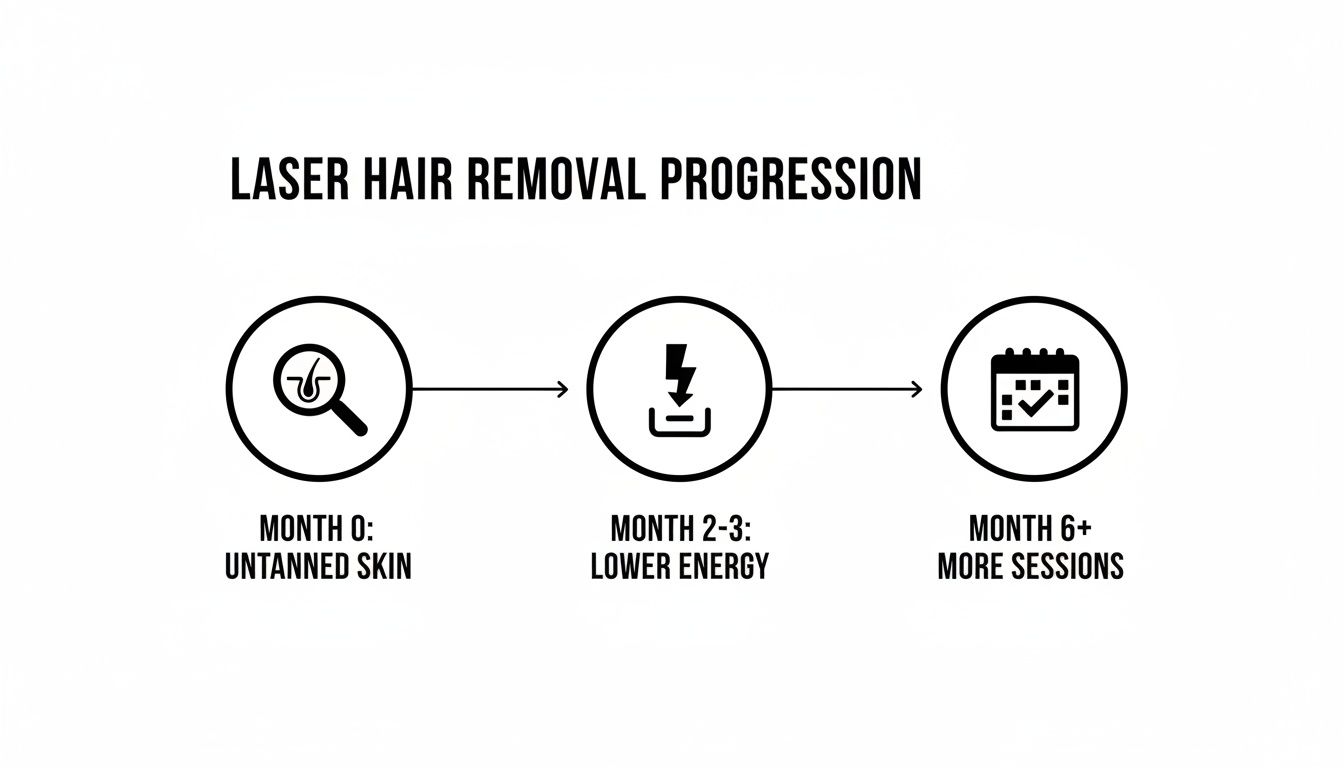
As you can see, staying out of the sun allows us to use optimal energy settings from the start, meaning fewer appointments are needed to reach your goal.
We almost always have to lower the energy for tanned clients, which can easily tack on extra sessions to your plan. While most people need about 2–6 sessions total, tanned skin might require an additional 1–3 visits. In practical terms, that could stretch a six-month treatment plan into an eight or nine-month one, adding to the overall cost and time commitment.
Starting your journey with your natural, untanned skin tone is non-negotiable for an efficient, safe, and successful outcome. You can find more essential tips in our complete guide on how to prepare for laser hair removal to make sure you get the best possible results from day one.
Your Safe Tanning Timeline After Laser Treatments
So, you’ve started your laser hair removal journey and you're loving the results, but summer is calling. The big question is: when can you safely get a tan? Getting the timing right is non-negotiable for protecting your skin and your investment.
After a laser session, your skin is extra sensitive and needs time to heal. Exposing it to UV rays or even self-tanning products too soon can cause serious problems. Think of it like a healing phase—you wouldn't put stress on an injury, and you shouldn’t rush your skin back into the sun.
Sunbathing and Tanning Beds
Let’s be direct: when it comes to the sun or a tanning bed, you need to be strict. You absolutely must wait a minimum of two weeks after your laser appointment before any direct UV exposure.
But if you want the best advice from seasoned pros? We strongly recommend waiting a full four weeks. This is especially true for sensitive spots like the Brazilian area, underarms, or full legs. That extra time allows your skin’s melanin levels to settle down, ensuring the laser targets the hair follicle—not your skin—at your next session.
The two-week rule is your absolute baseline for safety. Pushing it can lead to nasty burns, blisters, and hyperpigmentation that could set your treatment progress back by months. It's just not worth the risk.
Using Self-Tanners and Spray Tans
Sunless tanners are a much safer route, but they aren't an immediate green light. You still need to wait at least three to four days after your treatment before applying any self-tanner or getting a spray tan. This short break gives any initial redness and sensitivity a chance to completely disappear.
Here’s the critical part: while you can use them between sessions, your skin has to be 100% free of any tanner before your next appointment. That means you'll need to exfoliate thoroughly to remove every last trace. Any leftover color can attract the laser’s energy, which can cause irritation and make the treatment less effective. For a deeper dive, check out our critical rules for what to avoid after laser treatment.
To make it even clearer, we’ve put together a simple guide to help you plan your glow-ups around your laser sessions.
Safe Waiting Periods for Tanning After Laser Treatment
This table breaks down exactly how long you should wait before using different tanning methods after your laser hair removal session at NYC Laser.
Tanning Method | Minimum Recommended Wait Time | Best Practice Guideline | Key Considerations |
|---|---|---|---|
Sunbathing/Tanning Bed | 2 Weeks | 4 Weeks | This is essential for preventing burns, hyperpigmentation, and other skin damage. |
Self-Tanner/Spray Tan | 3-4 Days | 1 Week | The product must be completely exfoliated off your skin before your next laser session. |
Sticking to these timelines ensures your skin stays healthy, your results stay on track, and you can achieve that smooth, hair-free look you’re aiming for without any setbacks.
Smart Alternatives for a Sun-Kissed Glow
So, you love having a tan but you're committed to your laser hair removal results. I get it completely. The good news is you don’t have to pick one over the other. You just have to be smart about how you get that glow. It's all about swapping UV rays for safer, sunless options that won't mess with your skin or your treatment plan.
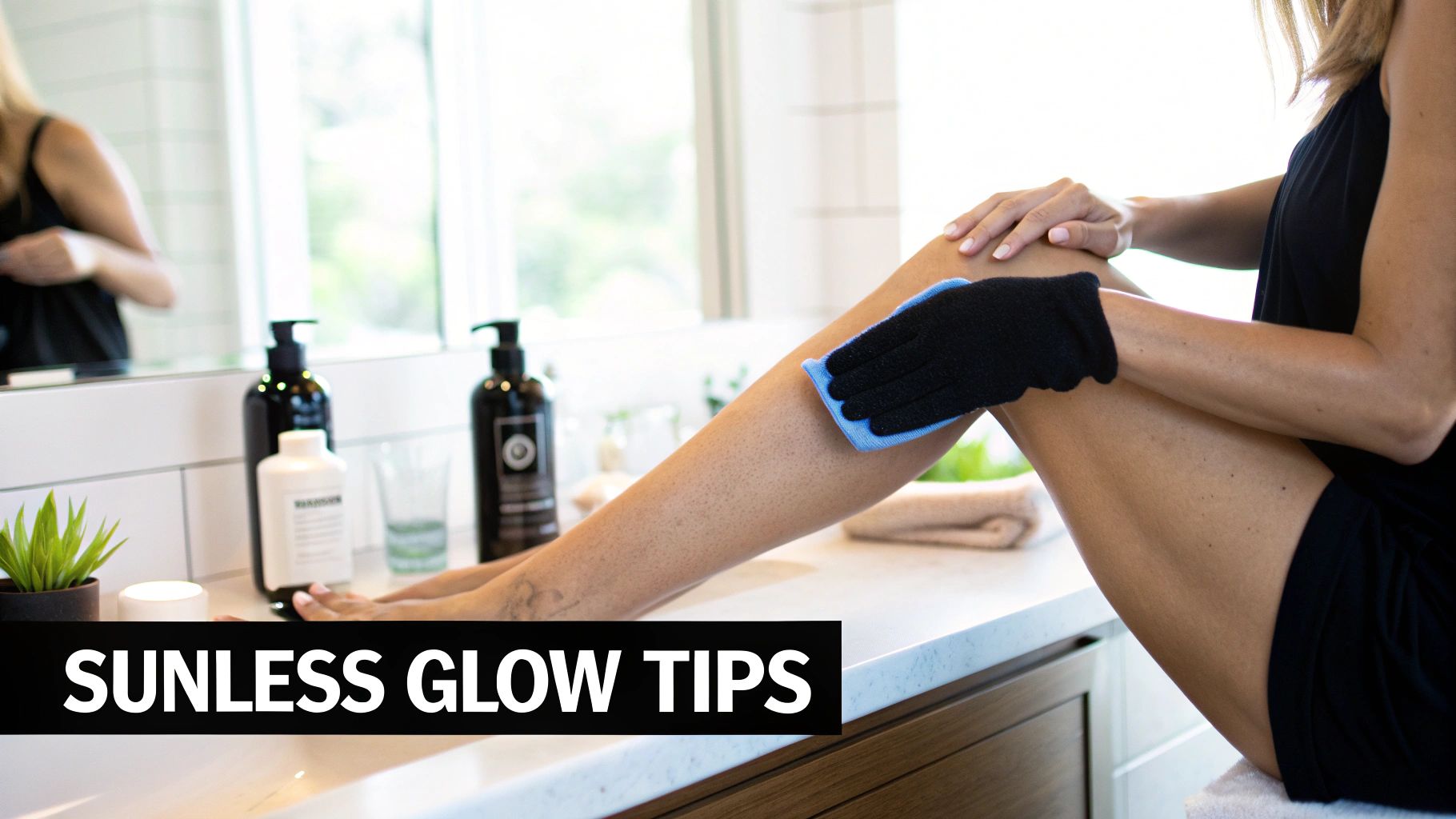
Sunless tanners are your absolute best friends during a laser series. Think mousses, lotions, and professional spray tans—they deliver a gorgeous, even color without any of the risks that come with sunbathing or tanning beds. Since they work by reacting with the very top layer of your skin, they don't interfere with the laser's ability to find and target the hair follicle. The only catch? Timing is everything.
Perfecting Your Sunless Tan Application
To get that flawless, natural-looking bronze, a little prep and planning go a long way. Following these steps ensures your skin looks incredible without getting in the way of your next laser session.
Wait After Your Session: Give your skin at least three to four days to completely calm down after a laser treatment before you even think about applying self-tanner.
Exfoliate First: Before you apply any product, gently exfoliate your skin. This sloughs off any dead cells and creates a perfectly smooth canvas for a streak-free tan.
Remove It Completely: This is the most critical step. You absolutely must exfoliate away all traces of the sunless tanner a few days before your next laser appointment.
The golden rule here is simple: it’s totally fine to use sunless tanner between sessions, but your skin needs to be 100% clean and clear of any product when you walk in for your next treatment.
Your Most Important Aftercare Tool
Beyond a temporary glow, your daily routine needs one non-negotiable hero product: a broad-spectrum sunscreen with at least SPF 30. Seriously, think of it as the ultimate insurance policy for your laser hair removal investment.
Using sunscreen every single day does more than just stop you from getting a sunburn. It shields your skin from the sneaky, everyday UV damage that can cause hyperpigmentation and other issues, especially on treated skin. By making it a daily habit, you’re actively protecting your skin's health, keeping it the perfect canvas for effective treatments and beautiful, long-lasting results. It's the simplest and most powerful answer for anyone wondering if you can tan after laser hair removal—because prevention is always the best strategy.
Frequently Asked Questions
Even with the most careful planning, life happens. We get it. This section tackles the real-world questions our clients ask every day, giving you clear, practical answers so you can navigate your laser hair removal journey with total confidence.
What Happens If I Get an Accidental Sunburn?
First thing's first: if you accidentally get a sunburn on a treated area, call us immediately to postpone your next appointment. Sunburned skin is damaged and inflamed. Applying laser energy to it isn’t just a bad idea—it’s dangerous and can lead to severe blistering, pain, and even potential scarring.
Your priority is to soothe the burn with things like pure aloe vera and cool compresses. We absolutely have to wait until your skin is completely healed—meaning no redness, no peeling, and no lingering sensitivity—before we can safely get you back on the schedule.
Your safety is always our number one priority. Never, ever try to push through an appointment with sunburned skin. The risk of complications is just too high. Healing first is non-negotiable.
Can I Use Self-Tanner Between My Laser Sessions?
Yes, you can absolutely use a self-tanner, but the timing is everything. We recommend waiting at least three to four days after your laser session before applying any sunless tanner. This gives your skin plenty of time for any sensitivity to calm down.
Here’s the most important part: you must completely exfoliate the tanner off your skin before coming in for your next appointment. Any leftover color on the skin’s surface can attract the laser’s energy, which could lead to irritation and make the treatment less effective on the hair follicles themselves.
Does the Two-Week Wait Apply Even If I Tan Easily?
One hundred percent, yes. This rule isn’t just about avoiding a visible, painful burn; it's about preventing pigment changes that happen deep within your skin. Any kind of tan, no matter how light or "healthy" it looks, is your skin’s signal that it's producing more melanin.
This extra melanin makes it harder for the laser to tell the difference between the pigment in your skin and the pigment in your hair follicle. That confusion increases the risk of side effects like hyperpigmentation (dark spots). To keep your treatment both safe and effective, everyone needs to follow the two-week rule, regardless of skin type or how easily you tan.
Is It Smarter to Schedule My Laser Sessions in the Winter?
Honestly, for a lot of people, this is a brilliant strategy. Scheduling treatments for larger areas like the legs, back, or bikini line during the fall and winter months just makes life easier. It naturally keeps your sun exposure to a minimum, so you don't have to stress about missing out on summer plans.
This timing lets you complete the bulk of your sessions while you're more covered up, so your skin is perfectly smooth and ready to go by the time the warm weather rolls around.
Ready to start your journey to smoother, hair-free skin with technology you can trust? At NYC Laser Hair Removal, we use the advanced Splendor X system to deliver safe, effective results for all skin types. Book your consultation today and let us create a personalized plan that fits your lifestyle and goals.
Comments