
Can Pregnant Women Get Laser Hair Removal? A Quick Guide
- squidsquib
- Feb 1
- 12 min read
When you’re pregnant, you question everything—what you eat, what you drink, and even your skincare routine. So, it’s only natural to wonder if you can continue with treatments like laser hair removal.
The short answer from every reputable clinic and medical expert is a firm but caring no. It’s best to pause your laser hair removal sessions until after your baby arrives. This isn't just a suggestion; it's a universal safety-first approach. Let’s break down exactly why.
Why Pregnancy and Laser Treatments Do Not Mix

If you're asking, can pregnant women get laser hair removal, you’ve probably noticed some changes in your body hair. Surging hormones like estrogen and progesterone can suddenly make hair grow thicker, darker, or in places you've never seen it before. While it might feel like the perfect time to tackle it, the medical community is united on this one: it’s wise to wait.
The core reason is a complete lack of safety data. It’s simply not ethical to conduct clinical trials on pregnant women for a cosmetic procedure. Without any research to prove it's safe for a developing baby, no responsible provider will take that risk.
To give you a clearer picture, here’s a quick summary of the main concerns.
Laser Hair Removal and Pregnancy At A Glance
Concern | Medical Recommendation | Underlying Reason |
|---|---|---|
Fetal Safety | Postpone all sessions | There are no clinical studies to prove the treatment is safe for a developing baby. |
Skin Sensitivity | Wait until postpartum | Hormonal changes make skin more reactive, increasing the risk of pain, redness, and irritation. |
Hyperpigmentation | Pause treatment | Pregnancy increases the risk of melasma ("mask of pregnancy"), and laser can trigger or worsen dark spots. |
Treatment Effectiveness | Ineffective to treat now | Much of the new hair growth is temporary and sheds on its own a few months after delivery. |
This table lays out the professional consensus, but let's dive a little deeper into the specifics.
The Professional Consensus on Safety
This isn’t just being overly cautious; it's standard medical practice. A 2017 review in the Journal of Clinical and Aesthetic Dermatology highlighted that while lasers are sometimes used for medically necessary treatments during pregnancy, there is zero data for cosmetic procedures like hair removal.
This lack of information led 95% of surveyed dermatologists and ob-gyns to strongly recommend postponing any cosmetic laser treatments until after delivery. If you want to dig in further, you can read more about the medical perspective on hair removal during pregnancy for a deeper understanding.
The professional guidance is clear: When the safety of a cosmetic procedure for a fetus is unknown, the only responsible course of action is to wait.
Hormonal Changes and Treatment Effectiveness
Beyond the critical safety questions, pregnancy hormones throw a few other wrenches into the works that make laser hair removal a bad idea right now.
These hormonal shifts can:
Increase skin sensitivity: Your skin can become much more reactive during pregnancy. A treatment that felt like a tiny pinch before might now feel genuinely painful, increasing the risk of side effects like prolonged redness or irritation.
Heighten pigmentation risks: Pregnancy makes you more susceptible to melasma, often called the "mask of pregnancy." Since laser energy targets pigment, using it on skin that's already primed for hyperpigmentation is a recipe for unwanted dark spots.
Cause temporary hair growth: A lot of that new, surprising hair that pops up during pregnancy is temporary. It’s hormonally driven and often sheds on its own within a few months postpartum. Treating it now would be a waste of your time and money.
Understanding the Medical Reasons to Wait
When your doctor pumps the brakes on something during pregnancy, there’s usually a mountain of research behind their advice. But with laser hair removal, the conversation is different. The biggest reason to wait isn't about a known danger—it's about what we don't know. And that lack of certainty is precisely why we hit pause.
The number one reason medical professionals and top-tier clinics defer treatments is the complete absence of clinical studies on pregnant women. Ethically, you just can't conduct research that introduces even a tiny, theoretical risk to an unborn child. It’s the same standard applied to new medications or other cosmetic procedures; without solid safety data, the only responsible choice is to wait it out.
Think of it this way: you wouldn't be the first to drive over a brand-new bridge that engineers haven't fully tested, especially not with your baby on board. We take the same safety-first approach, prioritizing the well-being of both mom and baby above everything else.
Your Hormones Are Running the Show
Even if safety wasn't a concern, pregnancy creates a wild and unpredictable environment for laser hair removal. The surge in hormones—especially estrogen and progesterone—has a major impact on your hair growth cycles, making any treatment you receive far less effective.
Here’s what those hormonal shifts can do:
Wake Up Dormant Follicles: Pregnancy hormones can suddenly activate hair follicles that were previously inactive. This can lead to new, and often temporary, hair growth on the face, abdomen, and other unexpected places.
Throw Hair Cycles Off-Kilter: The laser zaps hair most effectively when it's in the active growth phase (known as anagen). Pregnancy hormones disrupt these cycles, meaning more of your hair is likely in a resting or shedding phase where the laser has zero effect.
You’d essentially be paying to treat hair that was probably going to disappear on its own a few months after you give birth. Waiting until your hormones settle down postpartum ensures you’re targeting the stubborn, persistent hair—not the temporary, hormone-driven fluff. This makes your investment much smarter and your results far more predictable. If you're curious about other factors that can influence your sessions, you can learn more about potential laser hair removal side effects and how to minimize risk in our guide.
Treating hair during pregnancy is like trying to landscape in the middle of a hurricane. It’s smarter to wait for calm, stable conditions to get the best, most lasting results.
This hormonal chaos is a key reason why, even if safety were guaranteed, laser hair removal during pregnancy would likely lead to disappointing and inefficient outcomes. Waiting allows your body to return to its normal baseline, setting the stage for a truly successful series of treatments.
How Pregnancy Increases Your Skin's Sensitivity
Pregnancy doesn't just change your body—it sends your skin into a completely new, highly reactive state. A surge of hormones puts your skin on high alert, making it far more sensitive and unpredictable than you’re used to.
This heightened sensitivity is a huge factor when considering laser hair removal, turning a typically straightforward procedure into a potential minefield of side effects.
Think of your skin as a calm pond. Before pregnancy, a laser treatment is like tossing in a small pebble—it creates tiny, manageable ripples. During pregnancy, that same pond is already stirred up by hormones. The "pebble" of a laser can now create unpredictable waves of irritation, redness, and lasting discomfort.
The Risk of Hyperpigmentation and Melasma
One of the biggest changes is how your skin handles pigment. Pregnancy hormones can kickstart melasma, a condition that causes patchy brown or gray-brown spots, often called the "mask of pregnancy."
Since laser hair removal works by targeting the melanin (pigment) in hair follicles, using it on hormonally sensitized skin is a major gamble. The laser’s energy can easily be misinterpreted by your overactive pigment cells, leading to new or worsened hyperpigmentation.
Instead of getting smooth, hair-free skin, you could be left with lasting discoloration. We're not just being overly cautious here; studies show that pregnancy hormones cause melasma in 45-70% of women. This spike in melanin production significantly heightens the risk of laser-induced pigmentation issues.
During pregnancy, your skin is primed for pigment production. Applying a heat-based laser can inadvertently trigger the very cells you want to keep calm, potentially causing or worsening melasma.
Increased Pain and Physical Discomfort
It's not just about pigmentation. Your skin’s general sensitivity is dialed way up. A procedure that felt like a quick snap before might now feel surprisingly painful. Your body is working overtime to grow a new life, and this can lower your pain threshold.
This increased sensitivity means you're more likely to experience:
Prolonged redness and swelling after a session.
A higher risk of burns or blisters, even at standard laser settings.
General discomfort during the treatment that simply wasn't there before.
Putting treatments on hold isn't just about protecting the baby; it's about protecting your own skin's health and ensuring your comfort. Once you're postpartum and your hormones have settled, you can explore our guide to laser hair removal for sensitive skin to plan your return.
Exploring Safe Hair Removal Alternatives
Just because professional laser hair removal is on pause doesn't mean you have to give up on smooth skin. While your body is undergoing incredible changes, you still deserve to feel comfortable and confident in your own skin. Thankfully, several safe and effective hair removal methods are perfectly fine to use throughout your pregnancy.
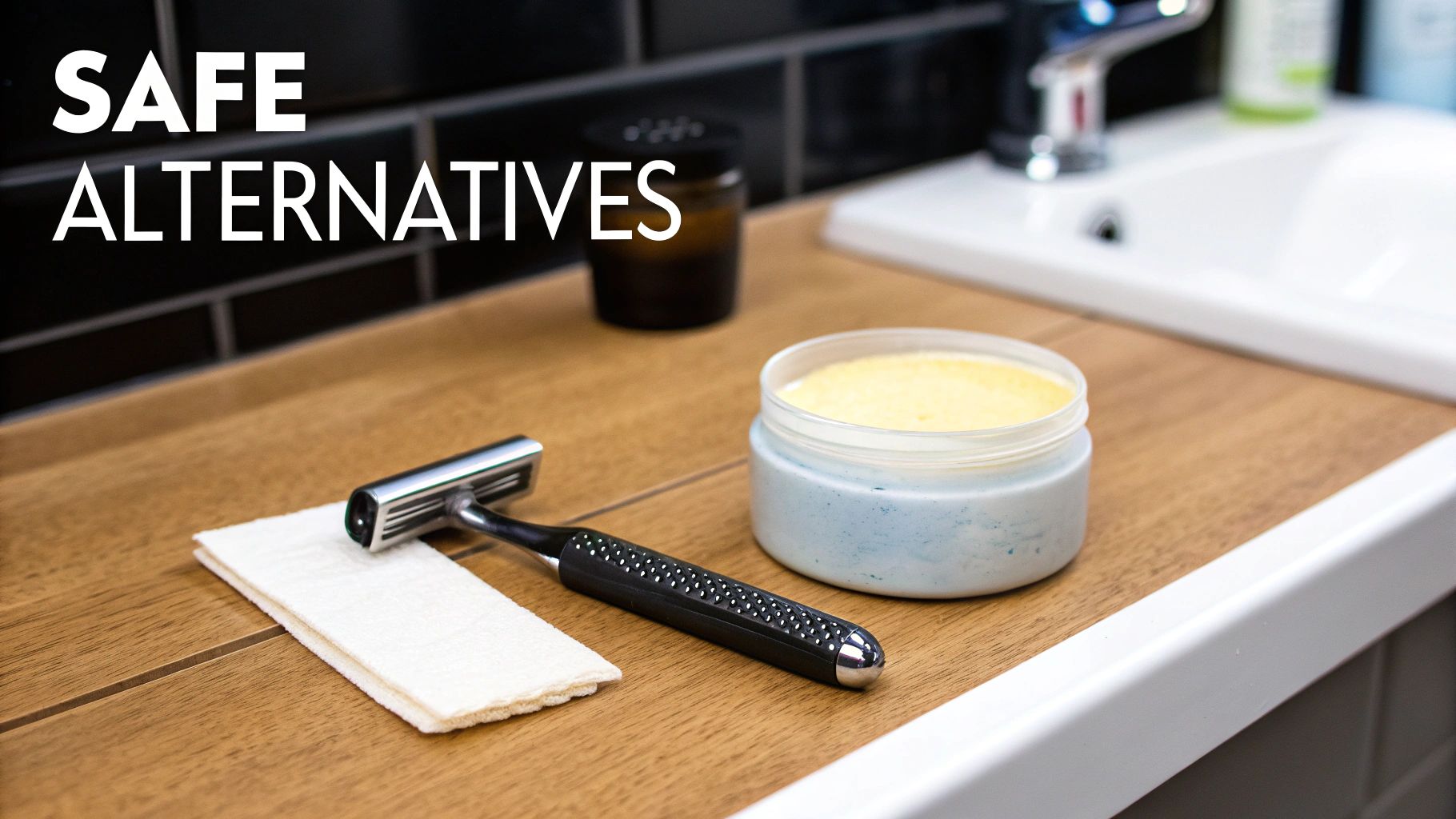
The key is simply to choose methods that don't involve harsh chemicals or intense procedures that could irritate your newly sensitive skin.
Top Pregnancy-Safe Methods
Shaving is universally recognized as the safest and most straightforward choice during pregnancy. It’s completely non-invasive, painless (as long as you’re careful!), and inexpensive. Just be mindful that a growing baby bump can make reaching certain areas a bit tricky—take your time and always use a fresh, sharp razor to avoid nicks.
Waxing and sugaring are also generally considered safe options, giving you longer-lasting results than shaving by pulling hair from the root. But be prepared for a different experience than you might be used to.
Due to increased blood flow and heightened skin sensitivity, waxing or sugaring during pregnancy can be significantly more painful. Always perform a patch test first and visit a reputable, hygienic salon you trust.
Each method comes with its own set of trade-offs, especially when you're expecting.
Comparing Safe Hair Removal Options During Pregnancy
To help you decide what's best for you right now, we've put together a quick comparison of the most common pregnancy-safe hair removal methods. Consider your pain tolerance, schedule, and how sensitive your skin has become lately.
Method | Safety Level | Pros | Cons |
|---|---|---|---|
Shaving | Highest | Completely safe, painless, can be done at home, and is very affordable. | Results are short-lived, requires frequent maintenance, and risk of minor cuts. |
Waxing/Sugaring | Generally Safe | Results last for several weeks, leaving skin smooth. | Can be much more painful during pregnancy; risk of irritation and ingrown hairs. |
Tweezing | Highest | Excellent for precision work on small areas like eyebrows or stray chin hairs. | Time-consuming and not practical for larger body areas like legs or arms. |
Ultimately, the best choice is the one that makes you feel most comfortable and secure. Many clients stick with shaving for its simplicity and safety, while others continue with waxing from a trusted technician.
What to Avoid While Pregnant
One method to absolutely steer clear of is depilatory creams. These products use strong chemicals like barium sulfide and thioglycolic acid to dissolve hair at the skin's surface.
While the risk of significant chemical absorption through the skin is low, most medical experts recommend avoiding them altogether during pregnancy. It's simply not worth taking even a small, potential risk. When in doubt, always err on the side of caution.
Planning Your Postpartum Laser Hair Removal
Once your new baby arrives, your world shifts to recovery, bonding, and a whole new routine. But when you start feeling ready to reclaim a little time for yourself, resuming laser hair removal is a fantastic way to do just that. A little planning goes a long way in making sure you can restart your journey safely and get the smooth skin you've been looking forward to.
Patience is everything here. Your body has just done something incredible, and it needs time to find its new normal. The main reason we press pause is due to hormonal fluctuations, which have a direct line to your hair growth cycles and how sensitive your skin is.
Finding the Right Time to Resume
Most experts and clinics recommend waiting at least three to six months after giving birth before you hop back into laser hair removal. This waiting period is crucial because it gives your hormone levels, especially estrogen and progesterone, a chance to settle back to their pre-pregnancy baseline.
So, why is this so important? A lot of the extra hair growth you might have noticed during pregnancy is temporary and will naturally shed in the months after delivery. Waiting ensures we aren’t treating hair that was going to fall out on its own, which makes your sessions far more effective and a better investment in the long run.
If you’re breastfeeding, the standard recommendation is to wait until you've finished. While there's no evidence suggesting the laser impacts breast milk, your hormones are still in flux throughout lactation. This can affect how your skin reacts to the treatment and make the results less predictable.
Your body's hormonal state is the foundation for successful treatment. Waiting until you've finished breastfeeding and your menstrual cycle has regulated is the best way to guarantee your skin is stable and ready for optimal, lasting results.
Your Post-Baby Solution at NYCLASER
Once you get the all-clear from your doctor and feel ready to go, NYCLASER is here to help you pick up right where you left off. We get the unique needs of postpartum skin and use advanced technology to make sure your experience is both comfortable and highly effective.
At our Westbury clinic, we use the Splendor X laser system, which is an excellent choice for new mothers. Its features are specifically designed to maximize comfort and deliver fantastic results, even on skin that might still be readjusting.
Here’s why the Splendor X is great for postpartum clients:
Blended Wavelengths: It cleverly combines two powerful laser wavelengths (Alexandrite and Nd:YAG), allowing us to safely and effectively treat a huge range of skin tones and hair types.
Dual Cooling System: This is a game-changer for comfort. The system continuously cools the surface of your skin during treatment, which makes the whole process feel much more pleasant—a huge bonus when your skin sensitivity might still be a bit heightened.
Speed and Efficiency: The laser has a large, square spot size that covers more area, faster. This means your appointments are quick, making them much easier to fit into a busy new parent’s schedule.
Partnering with NYCLASER means you're choosing a team that understands your post-baby journey. We’re ready to help you achieve your goals safely, effectively, and on your timeline.
What to Expect at Your NYCLASER Consultation

So you've navigated pregnancy and are officially ready to restart your journey toward smooth skin. The very first step is a complimentary consultation at our Westbury clinic, and we make sure it's a comfortable, no-pressure experience. This initial meeting is all about you—your goals, your questions, and making sure you have every piece of information you need.
Our expert technicians will start with a thorough skin and hair analysis. This part is especially important postpartum because it lets us see if your skin has gone through any changes. We’ll chat about your medical history, listen to what you want to achieve, and walk you through the entire process from start to finish.
Your Personalized Treatment Plan
Using that assessment, we’ll map out a treatment plan designed just for you. We’ll recommend the right number of sessions and explain how our Splendor X technology delivers safe, powerful results for your specific skin and hair type. You’ll leave with a clear breakdown of the treatment schedule and pricing.
Your safety and education are our foundation. We ensure every client leaves their consultation feeling confident, informed, and excited about their decision, with no obligation to book.
Ready to take the next step toward carefree, smooth skin? Booking your free consultation couldn't be easier.
Book Online: You can schedule your appointment right now through our online booking system.
Call Us: Prefer to chat? Give our friendly team a call at (516) 216-4336.
Visit Us: We are conveniently located at 355 Post Avenue, Suite 101, Westbury, NY 11590, serving clients from Jericho and across Nassau County.
For a sneak peek of what your first session will actually feel like, check out our guide on what to expect from laser hair removal for beginners. We can’t wait to partner with you on your post-baby journey.
Your Top Questions, Answered
Pregnancy brings a healthy dose of caution to any beauty routine, and that's a good thing. To help you feel completely confident in your decisions, we've put together straightforward answers to the most common questions we hear about laser hair removal, pregnancy, and postpartum care.
What If I Had a Laser Session Before I Knew I Was Pregnant?
First, take a deep breath. This happens all the time, and there’s no need to panic. If you had a treatment before you saw that positive test, rest assured there have been zero reported cases of harm to either mom or baby.
The laser’s energy is incredibly focused, targeting only the hair follicle a few millimeters under your skin. It simply doesn't travel deep enough to reach or have any effect on your uterus. While we pause all ongoing treatments for expecting mothers, that one early session isn’t considered a risk by doctors.
The next step is simple: let your technician and your doctor know, and we'll happily freeze your package. You can pick right back up after you've delivered and gotten the all-clear.
Is Laser Hair Removal Safe While I'm Breastfeeding?
Just like with pregnancy, there’s no research that gives a definitive "yes" on the safety of laser hair removal while breastfeeding. Because of that, any reputable clinic will advise you to wait it out.
The main issue is that your hormones are still on a rollercoaster during lactation. This hormonal flux can make your skin extra sensitive, mess with your hair growth cycles, and make the treatment's outcome unpredictable. You could end up with more irritation and less-than-stellar results.
Most experts agree: it's best to wait until you've finished breastfeeding and your regular menstrual cycle has returned. That’s the clearest signal your hormones have found their new normal, which makes for a much safer, more effective treatment.
The Bottom Line: Waiting until you’re no longer breastfeeding ensures your hormones are stable. This is crucial for both the safety of the procedure and the quality of your results.
Will Pregnancy Reverse My Laser Hair Removal Progress?
Absolutely not. Pregnancy won't "ruin" the investment you've made in your smooth skin. Any hair follicle that was successfully destroyed by the laser is gone for good—it can't magically regrow hair.
What you might see is new hair growth. The surge of pregnancy hormones can wake up dormant hair follicles that were previously inactive. Think of them as snoozing follicles that suddenly got a hormonal wake-up call. This is a temporary, normal response, not a sign that your past treatments failed.
The great news? Most of this new, hormone-fueled hair will naturally shed within three to six months after you give birth. Once your body has rebalanced, a few simple touch-up sessions are all you'll need to zap any new active follicles and get back to that beautifully smooth skin you love.
Ready to plan your postpartum return to smooth? The experts at NYCLASER are here to build a personalized plan that works for you. Book your free consultation today!
Comments