
Can I Tan Before Laser Hair Removal? a Clear Answer
A real tan adds pigment to the skin and raises the risk of burns or reduced efficacy, so most clinics ask you to wait roughly 2 to 8 weeks after sun or tanning-bed exposure and at least 2 weeks after a self-tanner before treating. If you've just returned from a beach vacation or booked a spray tan before your appointment, rescheduling may be the safest choice.
Laser hair removal works by directing heat toward pigment in the hair follicle. When the surrounding skin also contains extra pigment, the device has a harder job separating the follicle from the surface of the skin. That can increase the risk of burns, blistering, or unwanted pigmentation changes, while reducing the energy that reaches the follicle.
The right waiting period depends on what caused the color, how dark the area became, whether the skin is irritated, and how your provider evaluates it in person. A cosmetic self-tan follows a different timeline from a UV tan, and newer dual-wavelength systems such as Splendor X may give providers more flexibility, but technology doesn't make recent tanning risk-free.
The Short Answer on Tanning Before Treatment
Your legs are darker after a sunny vacation, or you have booked a spray tan before an event. Then you notice your laser hair removal appointment is next week. The practical answer is clear: do not assume the session can proceed just because your skin feels normal. Tell the clinic about the color change before you arrive.
A recent UV tan increases melanin in the skin. That extra pigment can compete with the hair follicle for the laser's energy, so more heat may collect in the epidermis, the outer skin layer. The result can be a higher risk of burns or pigment changes, with less energy reaching the follicle. Mayo Clinic explains that skin color changes are a known side effect and that risk rises with sun exposure before or after treatment.
Use these ranges as a starting point, not as permission to book without disclosing the tan:
Recent tanning situation | Practical starting point |
|---|---|
Self-tanner, spray tan, or bronzing product | Wait at least 2 weeks after the last application |
Light natural sun exposure | Often around 2 to 4 weeks |
Deep tan or tanning-bed exposure | Often closer to 6 to 8 weeks |
The timeline depends on how the color developed, how dark the area became, whether the skin is irritated, and how your provider assesses it. A self-tan changes the skin's surface color differently from UV exposure, so follow the clinic's instructions rather than treating both situations as identical. Cleveland Clinic advises avoiding sun exposure before laser hair removal and delaying treatment until the tan has faded.
Practical rule: If the treatment area is visibly darker than its usual shade, disclose the tan before attending. Your provider may postpone treatment, lower the energy, select another wavelength, or perform a patch test.
Dual-wavelength systems such as Splendor X may give a trained provider more settings to consider for darker or recently changed skin, but the technology does not make fresh tanning risk-free. A sun-tanned client may need to wait, while a self-tanned client may need to remove the product and meet a separate waiting period.
Why a Tan Changes How the Laser Works
Laser hair removal is selective. The device sends light into the skin, and the intended target is pigment in the hair and follicle. The heat damages the follicle while limiting unnecessary heating of the surrounding skin.
Think of the laser as a courier delivering a package to one address. The hair follicle is the correct address, but the skin's melanin creates a crowd of look-alikes wearing similar jackets. When the skin is untanned, the contrast between the hair and the surrounding skin is usually easier for the device to use. When a tan adds more melanin near the surface, the courier has more competing destinations.
The issue isn't only that the skin looks darker. A UV tan increases epidermal melanin, which competes with the pigment target in the follicle for the laser's energy. The skin may absorb more heat before the energy reaches the intended follicle. Medical guidance from the American Society for Dermatologic Surgery describes how tanning can interfere with laser absorption and contribute to unusual lightening, burns, or bumps.
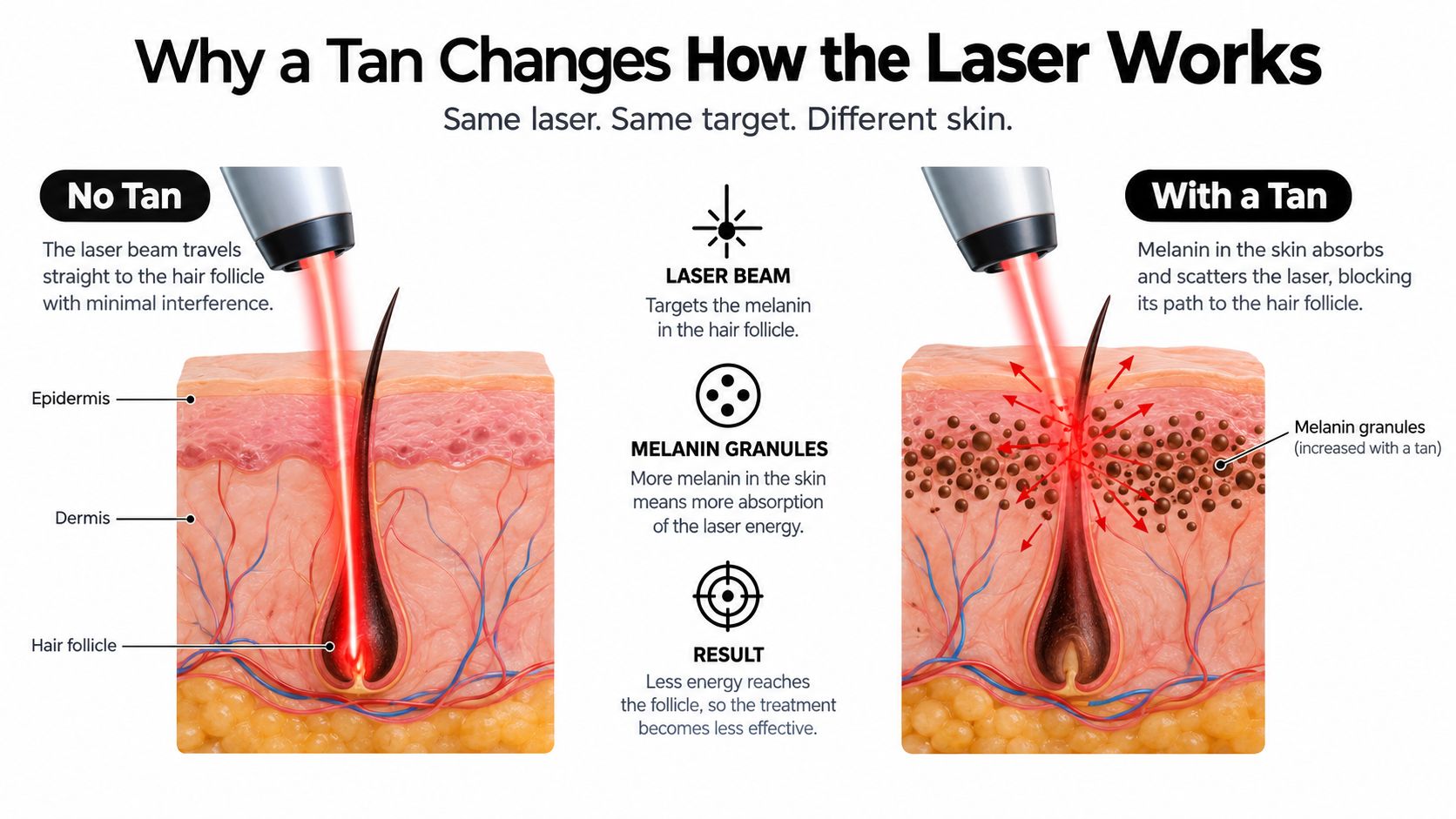
What the laser may do differently
A provider has to balance two competing goals:
Protect the epidermis: Extra surface pigment can absorb more energy, which may raise the chance of excessive heat, redness, blistering, or later pigmentation changes.
Reach the follicle: If the provider reduces the energy to protect tanned skin, the follicle may receive less heat, which can weaken the treatment or make results less even.
Assess the skin accurately: A recent tan can make the skin look different from its baseline, so the provider may need to reassess the treatment area rather than rely on previous settings.
That is why a tan can affect both safety and effectiveness. It isn't merely a cosmetic concern, and sunscreen applied after tanning doesn't instantly return the skin to its original condition.
The safest approach is to wait until the added color has faded and the skin is calm. A dual-wavelength device can help a trained provider select a more suitable approach, but it still has to work within the limits created by the skin's current pigment.
How Long to Wait After Sun or a Tanning Bed
You return from a beach holiday with darker skin, or notice a fresh tan after several tanning-bed sessions. The correct waiting period depends on how much the skin changed and whether it remains calm, rather than on the calendar alone.
Common guidance falls around 2 weeks, 4 weeks, or 6 to 8 weeks. A brief amount of incidental sun is different from a deep tan caused by repeated outdoor exposure or a tanning-bed session. Your provider will assess the treatment area's current shade, your usual skin tone, and any peeling, warmth, tenderness, or irritation.
Tan level | Typical skin response | Suggested wait before treatment |
|---|---|---|
Light or barely visible natural color | Skin may look slightly darker but remains calm and intact | Often around 2 weeks, subject to provider approval |
Noticeable natural tan | The treatment area is visibly different from its baseline shade | Often around 4 weeks |
Deep tan or tanning-bed exposure | Stronger color, possible sensitivity, peeling, or uneven fading | Often 6 to 8 weeks |
These are general medical guidance ranges, not guarantees. A darker surface can resemble the pigment inside the hair, making it harder for the laser to distinguish its target. In simple terms, the laser is trying to heat a small, dark follicle while passing safely through the surrounding skin. A recent tan reduces that visual and thermal contrast, so the provider may need to delay treatment, adjust the plan, or perform a patch test.
The shade of the skin matters more than a fixed countdown. If the tan is fading unevenly, one part of the area may respond differently from another. A dual-wavelength device may give a trained provider more options, but it does not remove the need to assess current pigmentation.
Tanning beds warrant particular caution because they deliberately expose the skin to concentrated ultraviolet light. Wait if the area is still darker than usual, warm, tender, peeling, or blotchy. Sunscreen can help prevent further exposure, but it does not immediately restore the skin's baseline tone.
For practical guidance on judging timing after exposure, review this guide to laser hair removal and sun exposure. When the tan has faded to your baseline shade and the skin is healthy, scheduling becomes more reasonable, although your clinic may still recommend a consultation or patch test before treatment.
Self-Tanners, Spray Tans, and Bronzing Lotions
A self-tanner creates a different kind of color from sunlight. Products such as gradual tanning lotions, mousse, bronzing lotions, and spray tans generally color the outermost layer of the skin rather than stimulating the same deeper melanin response produced by UV exposure.
That distinction changes the risk, but it doesn't make an immediate laser appointment sensible. A visible cosmetic pigment layer can still affect how light and heat behave at the skin's surface. If the product has faded unevenly, the laser may heat some areas differently from others, potentially increasing irritation or making the treatment less predictable.
A separate clock for cosmetic color
After your last self-tanner or spray-tan application, plan to wait at least 2 weeks before laser hair removal. The product should be fully gone, not merely lighter in a few places. Residual streaks around the ankles, knees, bikini line, or elbows can matter because uneven color creates uneven conditions across the treatment area.
Don't treat a self-tan as sun protection. Cosmetic color doesn't shield the skin from UV exposure, so continue using sunscreen and avoid adding another tanning layer while you wait.
A simple decision path looks like this:
Stop applying the product. Don't refresh a gradual tan, add bronzer, or attend another spray-tan appointment before the laser session.
Tell the clinic what you used. Mention whether it was a lotion, mousse, booth spray, or airbrush tan, and give the date of the last application.
Wait for complete fading. If streaks or darker patches remain after the usual window, the provider may ask you to wait longer.
Follow the clinic's removal instructions. Gentle cleansing may help, but aggressive scrubbing can irritate the skin and create a separate reason to postpone.
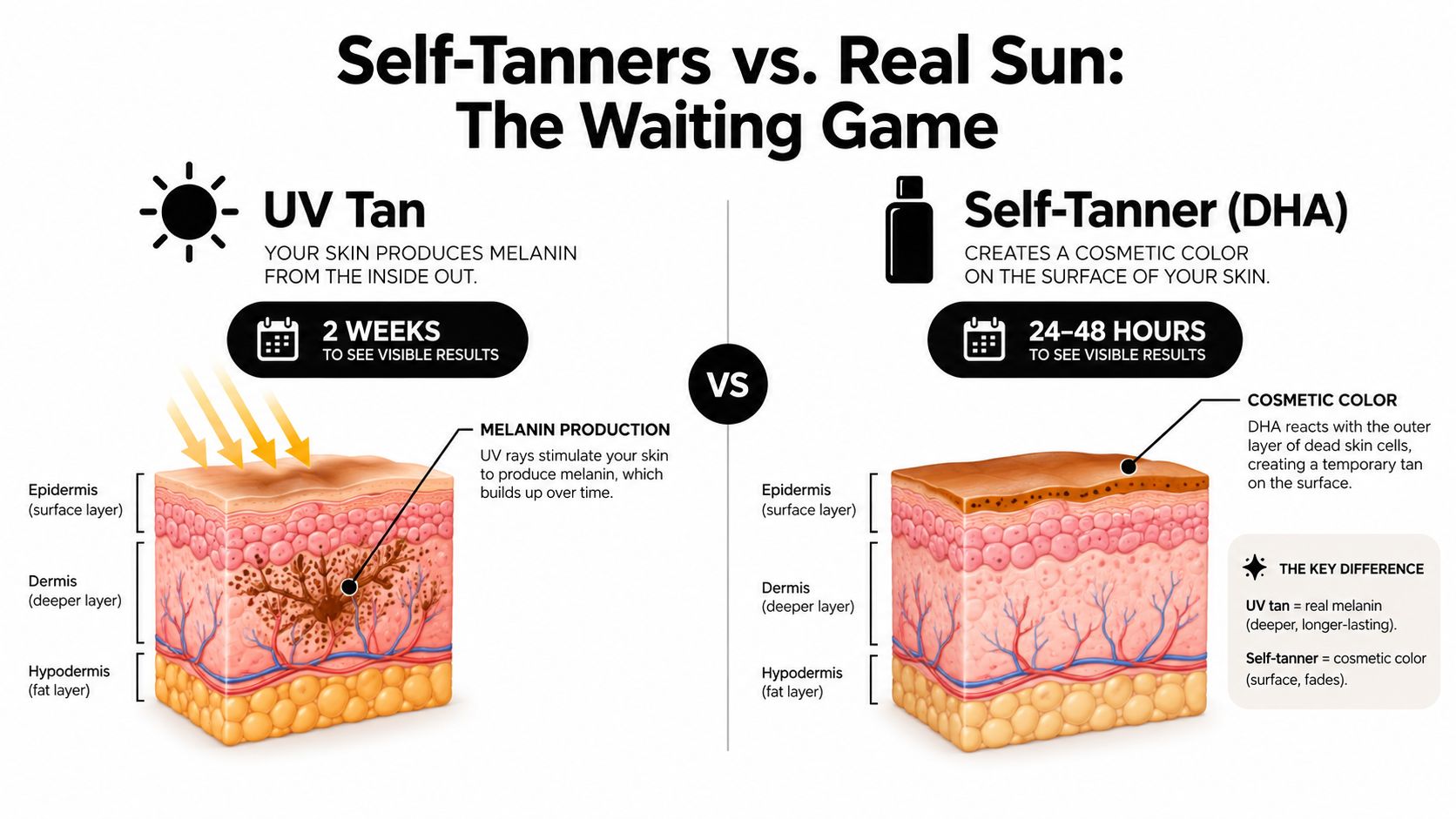
A provider may also distinguish between a completely faded product and skin that still looks darker because of recent sun exposure underneath it. Removing the cosmetic layer doesn't reverse a UV tan. If both occurred, the longer and safer UV-based timeline usually controls.
How Splendor X Handles Tanned and Darker Skin
Splendor X uses a dual-wavelength approach, combining two types of laser light so a trained provider can choose a strategy based on the client's skin tone, hair characteristics, and current pigment. That flexibility matters because no single setting suits every treatment area or every client.
One wavelength is generally more strongly absorbed by melanin and can be useful when the hair and surrounding skin offer enough contrast. The other penetrates further and is less readily absorbed by epidermal melanin, which can make it a more suitable option for deeper skin tones or situations where surface pigment requires extra caution. The provider, not the device alone, decides which approach is appropriate.
Splendor X also includes features intended to support controlled treatment, including skin-type calibration, a square spot size, and integrated cooling. These features can help the clinician cover the area consistently and protect the surface while directing energy toward the follicle. They don't erase the optical problem created by a recent tan.
Dual-wavelength technology can improve the provider's options. It can't turn freshly tanned skin into untanned skin.
A real tan may still lead the clinician to lower the energy, select a different wavelength, delay treatment, or perform a patch test. Lowering energy may protect the epidermis, but it can also mean the follicle receives less heat than it would under ideal conditions. That trade-off is why postponement may produce a more useful treatment than forcing an appointment too soon.
Skin type or tan status | Preferred approach | Typical setting adjustment |
|---|---|---|
Untanned skin with suitable hair-to-skin contrast | Provider selects the wavelength that best matches the assessment | Use calibrated settings appropriate to the area |
Deeper natural skin tone | Provider may favor the wavelength that is less readily absorbed by epidermal melanin | Use conservative, individualized energy and cooling |
Recently tanned skin | Treatment may be delayed or assessed with a patch test | Reduce energy or change wavelength only if the provider considers treatment safe |
Uneven self-tan or residual bronzer | Remove the cosmetic color and reassess | Avoid treating over visibly uneven pigment |
For a broader explanation of how advanced systems can be designed to different treatment needs, learn about advanced laser technology. The important distinction is that technology expands the clinical options, while waiting protects the starting conditions.
Clients with darker skin tones may also need careful monitoring for post-inflammatory hyperpigmentation, a darkening that can follow irritation or inflammation. A patch test and a candid discussion about previous reactions are sensible safeguards, especially when the skin has recently changed color.
Prep Steps If You Have a Recent Tan
If your appointment is close and you have been in the sun, used a tanning bed, or applied a self-tanner, tell the clinic plainly. The provider needs the full exposure history to decide whether the skin is ready or whether the visit should be moved.
Start with the source of color. Sun exposure, a tanning bed, a spray tan, a gradual lotion, or a mix of these can all change how the skin looks to the laser. Write down the last exposure date and the last day you used any cosmetic tanning product, because those details help the provider judge whether the pigment is still active or just sitting on the surface.
Keep the treatment area unchanged while you wait for guidance. Do not add more self-tanner, bronzer, or tinted body lotion to that skin. If color is still visible, the clinic may ask you to remove it gently, but harsh scrubbing can leave the area irritated and make the appointment less predictable. Use this pre-treatment guide on what not to do before laser hair removal as a checklist when you talk through the visit.
The skin itself matters as much as the color. Redness, tenderness, peeling, blistering, or a recent sunburn usually means the area is not ready for a routine session. Retinoids, acids, and other irritating products may also need to be paused if the provider tells you to. Do not wax or pluck, since the follicle must stay in place for the laser to target it. Shaving is different, because it trims hair above the skin while leaving the follicle available, so follow the clinic's timing instructions if shaving is part of your prep.
Sun protection still matters while you are waiting. Use broad-spectrum sunscreen with SPF 30 or higher on exposed skin and cover up with clothing or shade when you can. The Skin Cancer Foundation also advises protecting skin from additional UV exposure while you are recovering from recent sun exposure. Keep the area calm before the appointment, stay hydrated, and avoid showing up with skin that is hot or flushed from a shower, sauna, or hard workout. Ask the clinic how long those activities should be avoided on both sides of the session.
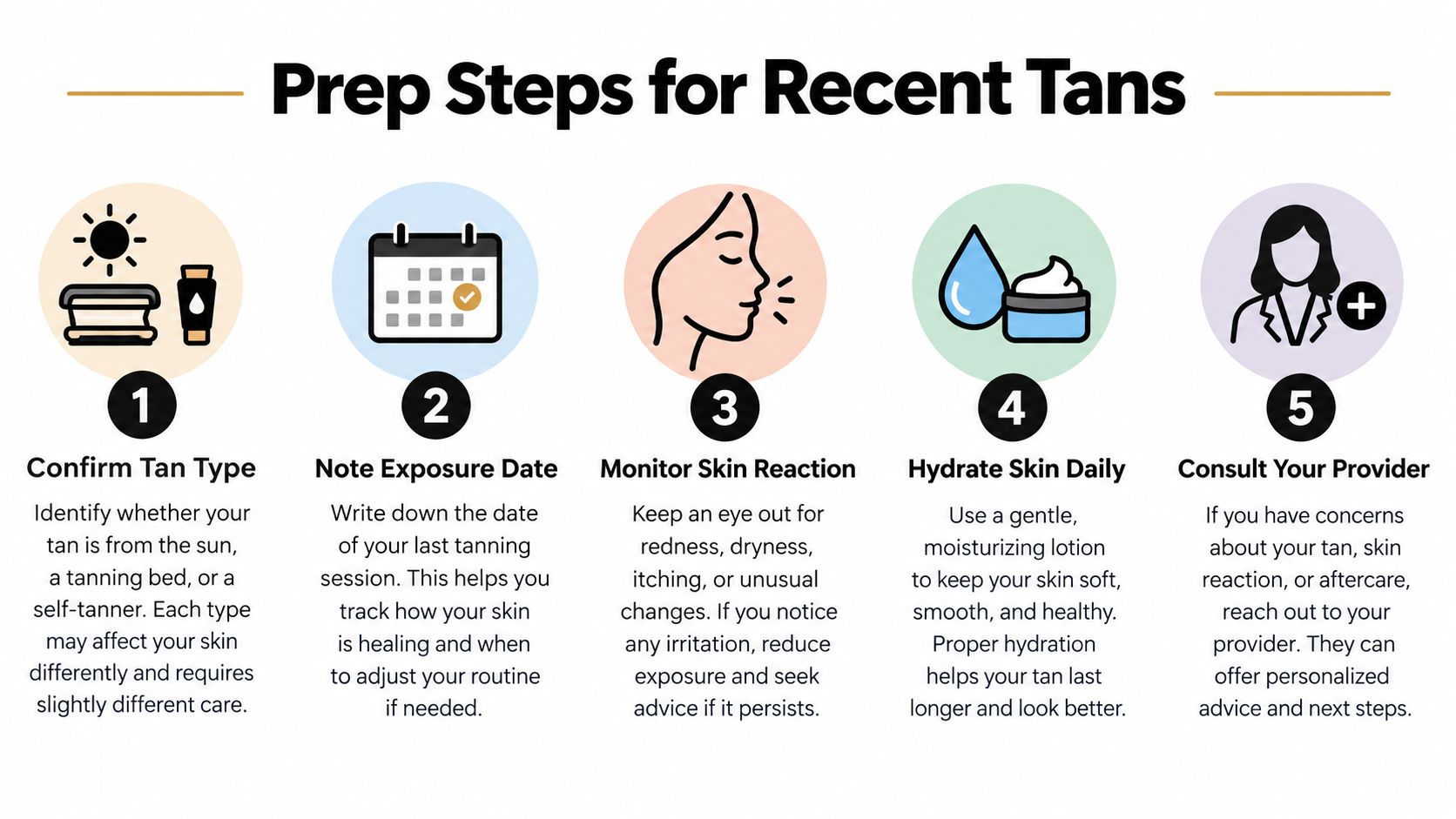
A provider may still change the plan after seeing the skin in person. That is not a rejection of treatment, it is a safety check based on how much pigment is present and how the skin is reacting. If the area has recently changed color, a patch test and a direct conversation about prior reactions can help decide whether to proceed now or wait until the skin has settled.
Scheduling Tips and Booking the Right Consultation
The easiest way to avoid a last-minute cancellation is to schedule around your tan-free periods, not just around open appointment slots. If you have a beach vacation, outdoor event, or regular tanning routine planned, tell the clinic before the first session so the provider can discuss a realistic treatment calendar.
A consultation at least 2 weeks before planned sun exposure gives you time to ask about protection and timing. If you want treatment before a beach trip, plan further ahead, often 6 to 8 weeks, because a deeper tan may require the longer waiting range after you return. Those windows are practical planning guides, not a promise that a session will be cleared on a particular date.
Bring four details to the consultation:
Exposure history: State whether the color came from the sun, a tanning bed, or a self-tanner.
Exact dates: Share when the exposure or last application occurred.
Skin response: Mention redness, peeling, sensitivity, blistering, or previous pigment changes.
Technology questions: Ask how the provider will choose between the Splendor X wavelengths, whether a patch test is appropriate, and what would cause the appointment to move.
A patch test can help the provider assess how your skin responds before treating a larger area, particularly when your tone has recently changed. It can also reduce the chance of discovering at the appointment that the treatment must be delayed.
For salon owners and clinics building client communication around appointment timing, find referral program tips for your salon can provide ideas for encouraging clients to share accurate treatment information and return for planned care. For clients, the main booking principle is simpler: tell the clinic about every recent tanning source before you arrive.
NYC Laser Hair Removal offers personalized laser hair reduction with Splendor X technology, including consultation-based planning for clients whose skin tone has changed after sun exposure or self-tanning. Visit NYC Laser Hair Removal to discuss your treatment area, recent tan, and the safest timing for your next session.
Comments