
Brazilian Laser Hair Removal Aftercare: A 2026 Guide
You just left the appointment, and the skin down there feels warm, tender, and a little too aware of itself. That is the moment when people start wondering about the awkward stuff, whether they can work out, have sex, shower, or whether the shedding means the treatment worked at all.
The first day is usually simple if you keep the area cool, dry, and low-friction. High-end devices like Splendor X can make treatment comfortable, but aftercare still matters because the Brazilian area is warm, covered, and easy to irritate with sweat, tight clothes, or overcleaning. If you want a broader skin-care reference for the hours after treatment, this post-laser skin care guide is useful, and the same basic logic applies here.
I tell patients to be direct with themselves about trade-offs. If the skin feels hot, skip the workout. If you are tempted to test it with sex or a spin class, wait. If you notice patchy shedding later in the week, that is usually part of the process, not a reason to panic. For a related recovery timeline, the 72-hour microneedling aftercare approach also reflects the same principle, keep the skin calm while it settles.
Your First 24 Hours After Brazilian Laser
You're leaving the appointment with skin that may feel hot, tender, and a little like a mild sunburn for the rest of the day and into the next morning, which is a normal response after treatment, according to StatPearls summary. In the Brazilian area, the main job is to lower heat, reduce rubbing, and avoid anything that makes the skin work harder than it needs to right now. The less you interfere, the better this first night tends to go.
The practical first-night checklist
Start with cooling if the area feels warm. A cool compress or an ice pack wrapped in cloth can calm heat and discomfort without adding friction, and that is usually the cleanest first response after a Brazilian treatment, as noted in StatPearls summary. Keep it light and brief. The goal is relief, not over-chilling the skin.
Practical rule: if your underwear rubs, it is too tight for tonight.
Wear loose cotton underwear or breathable clothing. Tight leggings, shapewear, and synthetic fabrics trap heat and create friction, which is exactly what the bikini area does not want while it is settling. If you have a choice between looking polished and keeping the skin calm, choose calm.
For showering, keep it lukewarm and short. Gentle cleansing with a mild, fragrance-free cleanser is the safer path here, and you should avoid scrubbing, strong acids, or any product that stings on contact. Hot showers, steam, and hard exfoliation can add irritation to skin that already feels sensitive, which is why the same basic recovery logic shows up in post laser skin care guidance.
If you want a broader recovery comparison, the 72-hour microneedling aftercare guide follows the same practical principle, keep the skin quiet while it settles. For Brazilian aftercare, that means no picking, no testing the area, and no rushing into products or activities that increase heat, moisture, or friction.
Navigating Your First Week Post-Treatment
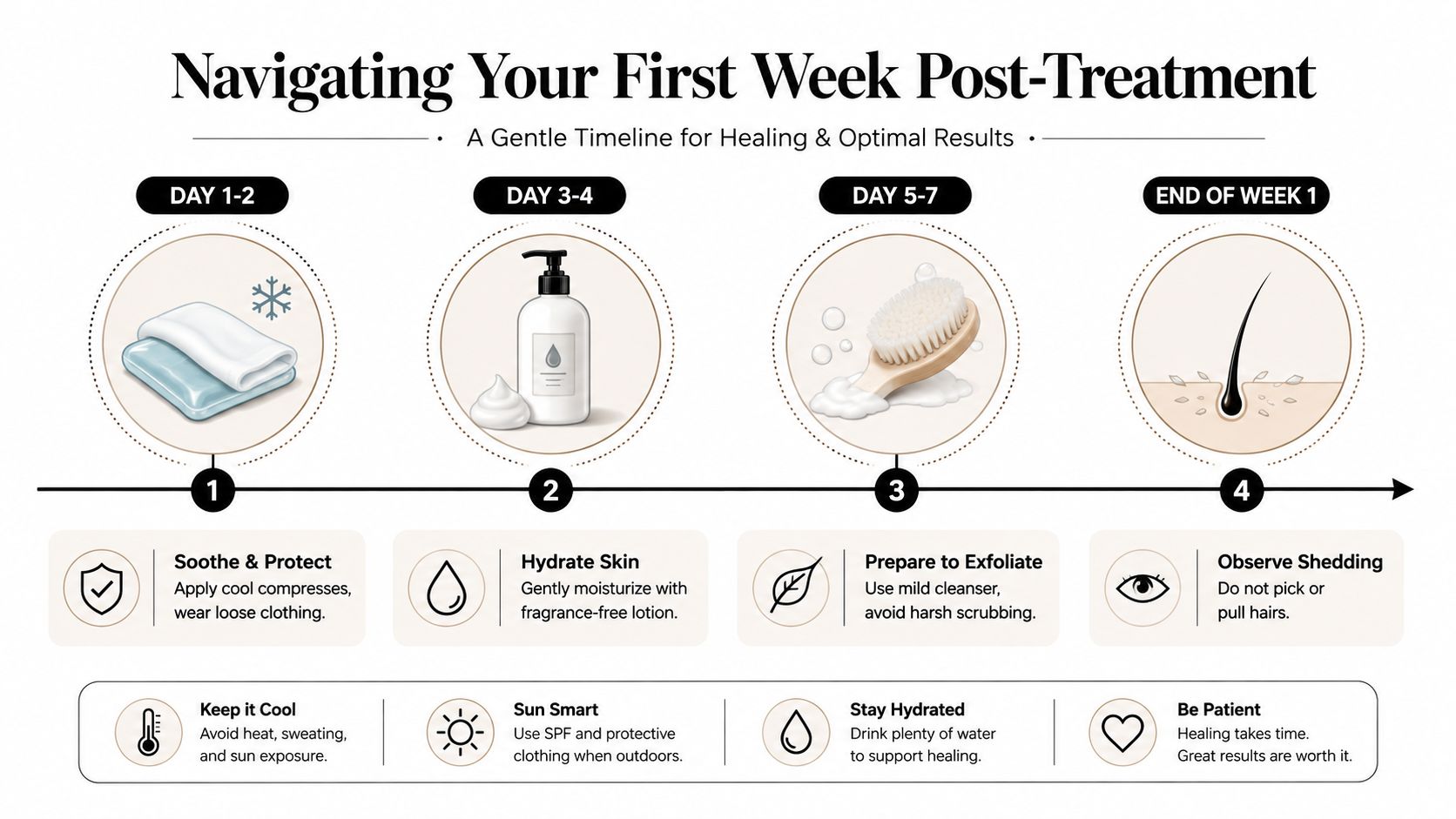
The first week can feel oddly uncertain. The skin usually settles before the treated hairs start releasing, so the area may look less dramatic than it feels. That can worry people who expected immediate emptiness, but it is a normal part of the process. The job this week is simple, leave the area alone while it calms down.
Day 1 to Day 2
Keep the routine bare-bones. If the skin feels warm, a cool compress is reasonable, and loose clothing helps reduce the rubbing and heat buildup that tend to bother the bikini area after treatment. Skip tight leggings, synthetic fabrics, pools, hot tubs, steam rooms, and anything else that keeps the area damp or overheated.
A lot of clients ask whether they can “check” the skin by touching or rubbing it. Leave it alone. That extra handling does more harm than the mild redness commonly observed at this stage.
Day 3 to Day 4
By now, a simple cleanse-and-moisturize routine is usually enough. Use lukewarm water and a mild, fragrance-free cleanser, then pat the area dry instead of rubbing it. If the skin feels dry or tight, a plain, fragrance-free moisturizer is appropriate.
If your skin is still sensitive, keep products boring. This is not the time for acids, strong actives, fragranced body washes, or any formula that tingles on contact. The Brazilian area reacts faster than other parts of the body because there is more friction, more moisture, and less room for error.
Day 5 to Day 7
By the end of the week, people often start asking why the area still looks like it has hair. That is usually shedding, not a bad treatment. Treated hairs can look stubborn before they release, and the process can be patchy enough to look confusing in the mirror. A useful breakdown of that shedding pattern is covered in laser hair removal shedding signs and timing.
Gentle exfoliation is usually introduced only once the skin feels settled. The goal is to help loose hairs release on their own, not to scrub the area raw or chase hair that is still anchored. If your exfoliation method would sting on a paper cut, it is too aggressive for the Brazilian area.
Keep the pressure light. If you feel tempted to scrub harder, stop there.
UV exposure deserves attention if the treated skin might be seen outdoors. SPF 30+ daily and reapplication for incidental exposure is a common recommendation because sun can worsen pigment changes while the skin is healing. For intimate areas that stay covered, the practical risk is lower, but beach days, pool days, and cutout swimwear still call for caution.
What Normal Hair Shedding Looks and Feels Like
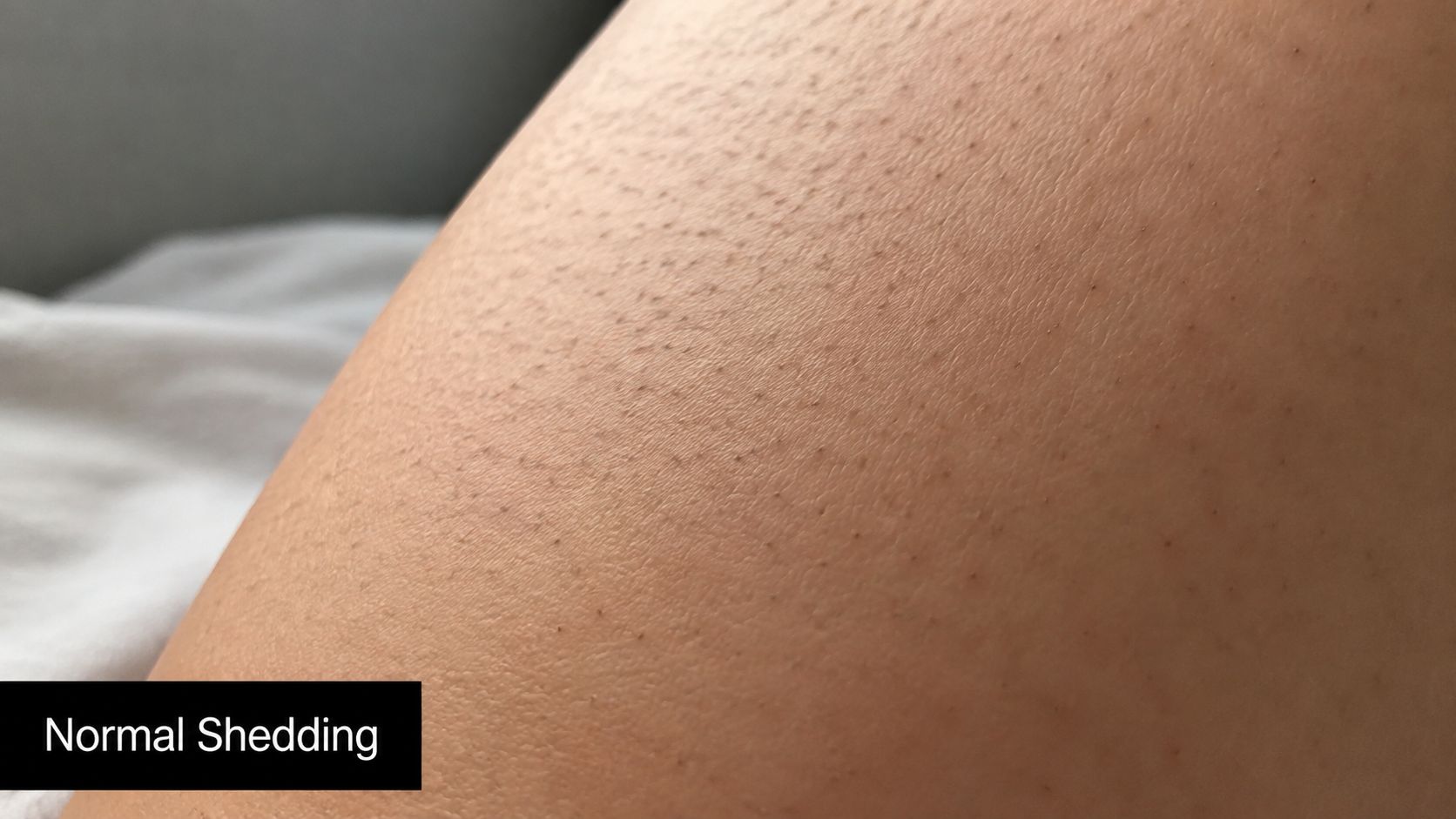
The panic usually starts in the mirror. You expect smooth skin, then you see stubble, dark dots, or little coarse ends and think the treatment missed. Most of the time, it hasn't. It's the follicles pushing out treated hairs on their own schedule.
Why the hair still looks present
Treated hairs often appear as stubble for 7 to 30 days after treatment, and that's frequently the follicles expelling the dead hairs, not new growth (Philadelphia Gyn). Other clinical instructions describe dead hairs shedding anywhere from 5 to 30 days, which is why the normal range feels annoyingly broad. That range is real, and it's one of the biggest reasons first-time clients worry too early.
The texture can be odd. You may notice rough little ends, tiny dark points, or hairs that seem to “grow” and then fall out when you wipe after showering. That isn't a failed session. It's the treatment doing its work underneath the surface.
Here's the useful mental model: laser weakens the follicle, the treated shaft stays in place for a bit, then the body releases it. The hair may look stubborn before it lets go.
What not to do during shedding
Don't tweeze, wax, or pick at the area. That can irritate the skin and interfere with the normal release of treated hairs. Gentle cleansing is fine, and gentle exfoliation can help later, but aggressive scrubbing isn't productive.
If you want a deeper clinic-style explanation of why this looks so strange, the laser hair removal shedding guide is the right companion read because it explains the difference between expected shedding and actual regrowth. That difference matters. Regrowth happens from surviving follicles later in the cycle, while shedding is the visible aftermath of the current session.
If the skin is calm but the hair is still there in week one, that's usually a sign to wait, not a sign to worry.
Your Brazilian Aftercare Skincare Routine
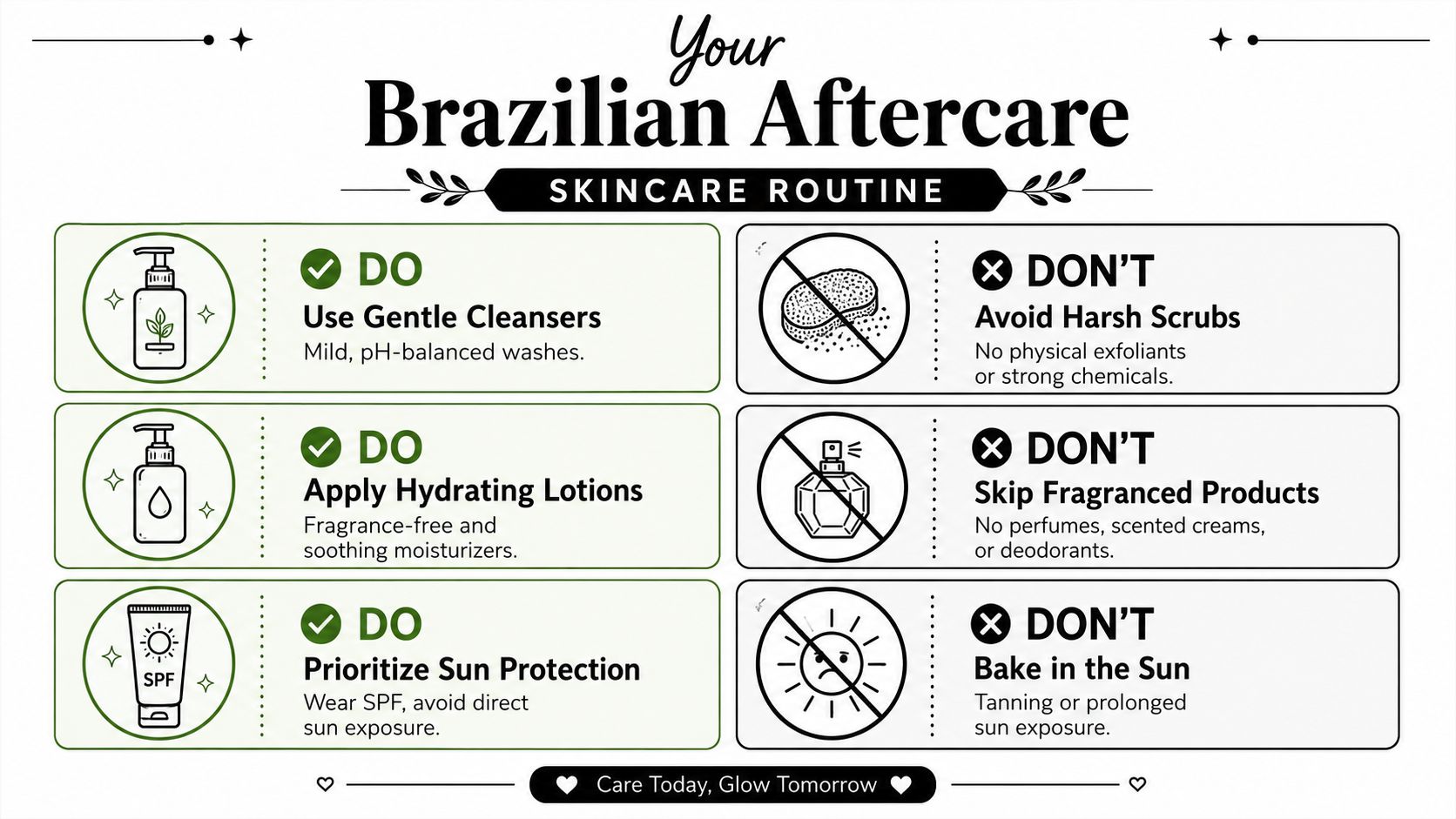
The safest post-laser skincare is boring, and that is a compliment. The treated skin wants gentle cleansing, fragrance-free hydration, and no nonsense. Anything scented, abrasive, or acidic is more likely to make the skin reactive than improve how it looks or feels.
What to use
Use a mild, fragrance-free cleanser with lukewarm water, then pat the area dry. That keeps the routine simple and lowers the chance of provoking the skin while it is still settling after treatment. If the skin feels dry, choose a plain moisturizer without perfume, dyes, or extra active ingredients.
Aloe is often tolerated well when the skin feels warm or mildly irritated. If itching shows up, some clinics will mention a short-term soothing option such as a thin layer of hydrocortisone, but that is a judgment call, not a daily habit. Keep the product list short enough that you can tell quickly whether something helps or starts to sting.
What to skip
Skip fragranced creams, body mists, harsh scrubs, retinoids, and strong acids on the treated area. The bikini region is already sensitive, and layering active ingredients on top of laser irritation is a good way to turn a normal recovery into an overcomplicated one.
That also applies to anything marketed to “tighten,” “brighten,” or “refresh” the groin area. Those labels sound appealing. Fresh laser skin usually wants less, not more.
If you want an adjacent educational resource on intimate-area care, the guide to natural vulvovaginal wellness reinforces the same principle. Support the area without loading it with extra products. For Brazilian laser hair removal aftercare, that mindset protects comfort and reduces the chance of unnecessary irritation.
Simple products beat clever products here. The skin does not need a routine, it needs a pause.
When to Resume Workouts Sex and Daily Activities
This is the part people lower their voice for, then call it “general recovery.” The honest answer is that the Brazilian area does not care about motivation, it reacts to friction, heat, and sweat. That is why return-to-activity advice can vary, but the logic stays the same.
Workouts
Many clinics tell patients to hold off on strenuous exercise for at least a day, and some recommend a longer pause before hard training, as noted in Luxe Laser Skin Clinic's laser hair removal aftercare guidance. The safest baseline is to avoid vigorous workouts during the first 24 to 48 hours, especially anything that compresses the groin, traps sweat, or creates repeated rubbing.
That means no spin class, no long run, no hot yoga, and no gym session that leaves the area soaked. Light walking is usually the better call because it keeps circulation moving without pounding freshly treated skin.
Sex and intimacy
Be careful here. Sex creates heat and friction, and those are the exact conditions that can turn calm recovery into a stinging one. If the area still feels warm, tender, or irritated by underwear, it is too soon.
The practical rule is simple. Wait until the skin feels settled and no longer reactive to basic movement. For many people, that overlaps with the same 24 to 48 hour window used for avoiding heat and exercise, but sensitivity varies. If you are already wondering whether it will hurt, that is your cue to wait.
Daily life details people forget
Shapewear can irritate treated skin just as much as a workout if it presses on the groin. Long car rides in tight clothes, cycling, and anything that keeps pressure on the area can do the same. Choose airflow over compression for a couple of days.
If you are not sure whether an activity counts as too much, use the sweat and rub test. If it makes the area damp, warm, or rubbed raw, hold off. For a broader comparison on what swelling can look like after treatment, this overview of swelling after laser treatment can help you tell ordinary post-treatment puffiness from something that deserves attention.
If redness becomes more than mild, or if symptoms start to look unusual rather than just sensitive, BacteriaFAQ's advice on infection symptoms is a useful reference point, but your laser clinic should always be the first place you call if the skin looks wrong after treatment.
Signs of Complications and Scheduling Your Next Session
A little redness is expected. Mild swelling around follicles can happen too, and that's usually part of the normal response rather than a problem. The line between normal healing and a complication is mostly about persistence, intensity, and skin surface changes.
If the area becomes painful, not just warm or tender, or if redness hangs on beyond the usual recovery window, call the clinic. Blistering is not normal. Persistent pain is not normal. Those are the moments to stop guessing and get a clinician to look at the skin.
If you want a quick reference for how infection symptoms can present more broadly, BacteriaFAQ's advice on infection symptoms is a useful comparison point, but your own laser clinic should always be your first contact if the skin looks wrong after treatment. For swelling that feels more dramatic than expected, the clinic's swelling after laser treatment overview can also help you distinguish common post-procedure puffiness from something that needs attention.
Scheduling matters just as much as aftercare. Laser only damages follicles when they're in the active growth phase, which is why session spacing isn't arbitrary. If you drift too far from the treatment plan, you miss the cycle you were trying to catch.
The best results come from a steady series, not from over-treating one session and hoping for the best.
Book the next appointment when your provider recommends it, and keep the timing consistent. That's how Brazilian laser hair removal stays efficient, predictable, and worth the investment.
If you want help with Brazilian laser hair removal aftercare or you're ready to start a treatment plan with modern Splendor X technology, schedule a visit with NYC Laser Hair Removal. Their team can walk you through recovery, provide straightforward answers to your awkward questions, and make sure your next session is timed for the best possible result.
Comments