
Hyperpigmentation From Laser Hair Removal Explained
While hyperpigmentation from laser hair removal is a potential side effect, it’s also highly preventable and almost never permanent. The official term for it is Post-Inflammatory Hyperpigmentation (PIH), which is just a clinical way of saying your skin produced extra pigment in response to the laser's energy, leaving behind temporary dark spots.
With today's advanced technology and a solid pre- and post-care routine, the risk is incredibly low.
What Causes Dark Spots After Laser Hair Removal?
Think of the laser as a highly focused beam of light programmed to seek out and heat the dark pigment (melanin) inside your hair follicles. Its one job is to target the hair, leaving the surrounding skin untouched. However, sometimes the skin can get a little irritated or inflamed from the heat.
When that happens, the skin’s natural defense system can kick into high gear. It signals specialized cells called melanocytes to produce extra melanin to protect the skin from what it thinks is an injury. This overproduction is what leads to those flat, discolored patches that are darker than your natural skin tone.
In simple terms, hyperpigmentation is your skin’s overprotective response to the inflammation caused by the laser’s heat. It's not a burn, but rather a temporary spike in pigment production right in the treated area.
This reaction is more common for certain people, and knowing your specific risk factors is the best first step toward preventing it altogether.
Identifying Your Skin Type and Risk
Not all skin reacts to laser treatments the same way. We use the Fitzpatrick scale, a dermatological classification system, to predict how different skin types will likely respond to laser energy. It categorizes skin into six types, from very fair (Type I) to very dark (Type VI).
Fitzpatrick Types I-III: Lighter skin tones have less melanin, creating a strong contrast between the skin and the dark hair follicle. This makes it easier for the laser to find its target, so the risk of hyperpigmentation is naturally lower.
Fitzpatrick Types IV-VI: Melanin-rich skin tones are more susceptible to hyperpigmentation from laser hair removal. The laser can sometimes have a harder time telling the difference between the melanin in the hair and the melanin in the skin, which raises the chances of irritating the surrounding tissue.
A quick look at the factors that can dial up your risk for dark spots will help you understand why your pre- and post-care routine is so important.
Risk Factor | Why It Increases Risk | How to Mitigate It |
|---|---|---|
Melanin-Rich Skin (Fitzpatrick IV-VI) | The laser can have trouble distinguishing between pigment in the skin and pigment in the hair, leading to skin inflammation. | Choose a clinic with advanced lasers (like Nd:YAG) specifically designed for darker skin tones. |
Recent Sun Exposure or Tanning | Tanned skin has more active melanin, which can absorb laser energy intended for the hair follicle, increasing the risk of irritation and PIH. | Avoid sun exposure and tanning beds for at least two weeks before and after your session. |
Aggressive Laser Settings | Settings that are too high for your skin type can cause excessive heat, leading to inflammation and a pigment response. | Work with an experienced, certified technician who performs a thorough skin analysis and patch test. |
Picking or Scratching After Treatment | Irritating the treated area can trigger a secondary inflammatory response, prompting your skin to produce more melanin as it heals. | Keep your hands off! Apply soothing, clinic-approved gels and avoid harsh scrubs for several days post-treatment. |
Ultimately, knowing your skin type is crucial. It’s what allows a skilled technician to choose the right laser technology and calibrate the settings to treat you safely and effectively. For instance, advanced lasers with longer wavelengths are designed to bypass the pigment in your skin's surface, making them a much safer choice for darker skin tones.
Your preparation and aftercare also play a massive role in ensuring a smooth, even-toned outcome. By understanding these fundamentals, you can confidently take the right steps to achieve the beautiful results you want—without any unwanted side effects.
The Science Behind Laser-Induced Dark Spots
To get why a treatment meant to remove hair can sometimes leave dark spots, we have to look at how laser hair removal works at its core. The entire process relies on a principle called selective photothermolysis. That’s just a scientific way of saying the laser’s light is specifically absorbed by dark pigment (melanin), which turns it into heat to knock out the hair follicle.
Think of it this way: the laser is a heat-seeking missile programmed to find dark targets. In a perfect world, the laser’s energy zips right through lighter skin, finds the dark, melanin-rich hair follicle, and zaps it without bothering anything else. This high contrast between light skin and dark hair creates an easy, ideal target.
But the process gets a little more complicated when there’s more melanin in the skin itself.
When The Laser Gets Confused
For people with naturally darker skin tones (typically Fitzpatrick types IV-VI), there isn't as much contrast between the pigment in the skin and the pigment in the hair. The laser, still looking for its dark target, can sometimes struggle to tell the two apart.
If the laser’s settings aren’t perfectly dialed in for a specific skin tone—maybe the energy is a touch too high or the pulse is too short—the surrounding skin can end up absorbing some of that excess thermal energy. This accidental heating basically sounds an alarm.
The skin interprets this excess heat as an injury or inflammation. In response, it kicks its natural defense system into gear, sending melanin-producing cells called melanocytes into overdrive to shield the area. This is exactly what causes post-inflammatory hyperpigmentation (PIH).
This is where all the factors—the laser, your skin's melanin, and your specific skin type—come together to determine the risk of developing dark spots.
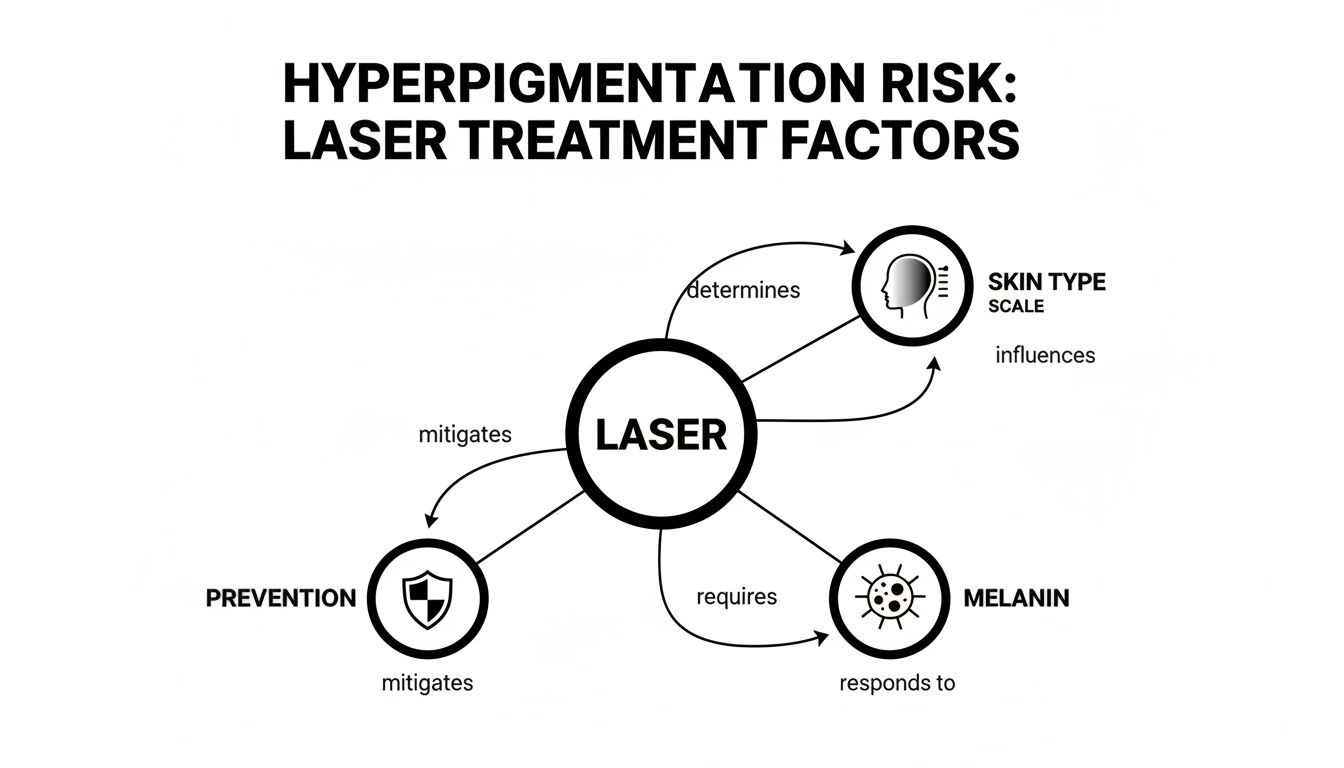
The image above shows that while the laser is the trigger, it’s the dance between the technology and your unique skin that dictates the final outcome. This is why a personalized approach isn't just a luxury—it's a necessity.
The Role Of Technology And Technique
The risk of hyperpigmentation from laser hair removal isn't just about your skin type; the technology being used plays a huge role. Older laser systems often didn’t have the finesse to safely treat dark hair on melanin-rich skin. They used wavelengths that were too easily absorbed by the melanin in the top layer of skin, raising the chances of collateral heat damage.
This is precisely why modern, advanced lasers are a non-negotiable part of the safety equation. At NYCLASER, we use the Splendor X, which features a 1064nm Nd:YAG laser. This longer wavelength is brilliant because it bypasses the surface melanin and dives deeper to target the hair follicle directly, dramatically lowering the risk of triggering that inflammatory response.
Of course, even the best machine is only as good as the person operating it. A skilled technician’s expertise is paramount. They must be able to accurately assess your skin, perform a patch test, and fine-tune the settings to deliver energy effectively without overheating your skin. The wrong setting can cause problems, no matter how advanced the laser is.
Data shows this is a real concern, especially for certain skin types. Post-inflammatory hyperpigmentation is most common in Fitzpatrick skin types V and VI. In these beautiful darker brown to very dark skin tones, the melanocytes are simply more reactive to heat. Studies have shown PIH rates as high as 24.1% in some diode laser trials, affecting 53% of participants in some way when treating sensitive areas. You can read more about these findings on sevlaser.com.
Ultimately, the science is clear: preventing these dark spots comes down to a partnership between smart, adaptable technology and meticulous, expert application. Choosing a clinic that invests heavily in both is your best defense against unwanted side effects.
How To Prepare Your Skin To Prevent Dark Spots
Your best defense against hyperpigmentation from laser hair removal starts long before you ever step into our treatment room. Think of your skin like a canvas—the cleaner and calmer it is, the more predictable and beautiful the final result will be. Proper preparation isn't just a friendly suggestion; it’s the single most important factor in ensuring your treatment is safe, successful, and free of complications.
The entire process hinges on managing your skin's melanin levels. Since the laser is designed to seek out pigment, any extra melanin from a recent tan can confuse it, raising the odds that the surrounding skin absorbs too much energy. This is why getting ahead of the game with proactive care is so critical.
The Four-Week Sun Moratorium
This is the golden rule: you must avoid all forms of sun exposure and tanning for at least four weeks before your appointment. We're not just talking about preventing a sunburn. This rule applies to tanning beds, self-tanning lotions, and even that "incidental" tan you get from walking around the city.
When your skin is tanned, it's in a reactive state with heightened melanin production. Hitting it with a laser at this point is like asking the machine to navigate a minefield, making it much harder to tell the difference between the pigment in your hair and the pigment in your skin. Sticking to this timeline allows your skin to return to its natural, baseline tone, creating the clearest possible target for the laser.
A non-negotiable part of safe laser treatment is presenting your skin in its most natural state. Tanned skin is reactive skin, and avoiding UV exposure is the simplest and most effective way to prevent complications like hyperpigmentation.
Adjusting Your Skincare Routine
What you put on your skin is just as important as keeping it out of the sun. Certain active ingredients can make your skin much more sensitive to light and heat, which dramatically increases the risk of an inflammatory reaction after your treatment.
About one week before your laser session, you’ll need to press pause on any products known for causing photosensitivity or exfoliation. This includes:
Retinoids: Products like tretinoin, retinol, and adapalene speed up cell turnover, leaving your skin more delicate.
Exfoliating Acids: This means stopping all alpha-hydroxy acids (AHAs) like glycolic acid and beta-hydroxy acids (BHAs) like salicylic acid.
Harsh Scrubs: Steer clear of any physical exfoliants that could create micro-tears or irritate the skin.
It's also crucial to tell your technician about any medications you're taking. Some antibiotics, for example, are known to increase photosensitivity. A transparent conversation ensures we can adjust your treatment plan for maximum safety. To get fully prepped, check out our in-depth guide to preparing for laser hair removal.
The Importance Of A Consultation And Patch Test
Finally, never, ever skip the initial consultation and patch test. This step is your ultimate safety net. During the consultation, one of our trained technicians will analyze your skin and hair type to determine the perfect laser settings just for you.
The patch test is where theory becomes reality. By treating a small, discreet area, the technician can see exactly how your unique skin chemistry reacts to the laser's energy. Back in 2016, laser hair removal was the third most popular non-surgical aesthetic procedure in the U.S., which just goes to show why standardized safety protocols like test spots are so essential. These tests are key to minimizing PIH risk by making sure the settings are perfectly matched to your skin—especially since we know longer wavelengths like the Nd:YAG are proven safer for darker skin tones.
This simple test takes all the guesswork out of the equation, allowing for precise calibration that maximizes results while keeping your skin protected. It provides total peace of mind, confirming you're ready for a full, successful treatment.
Fading Post-Laser Dark Spots At Home
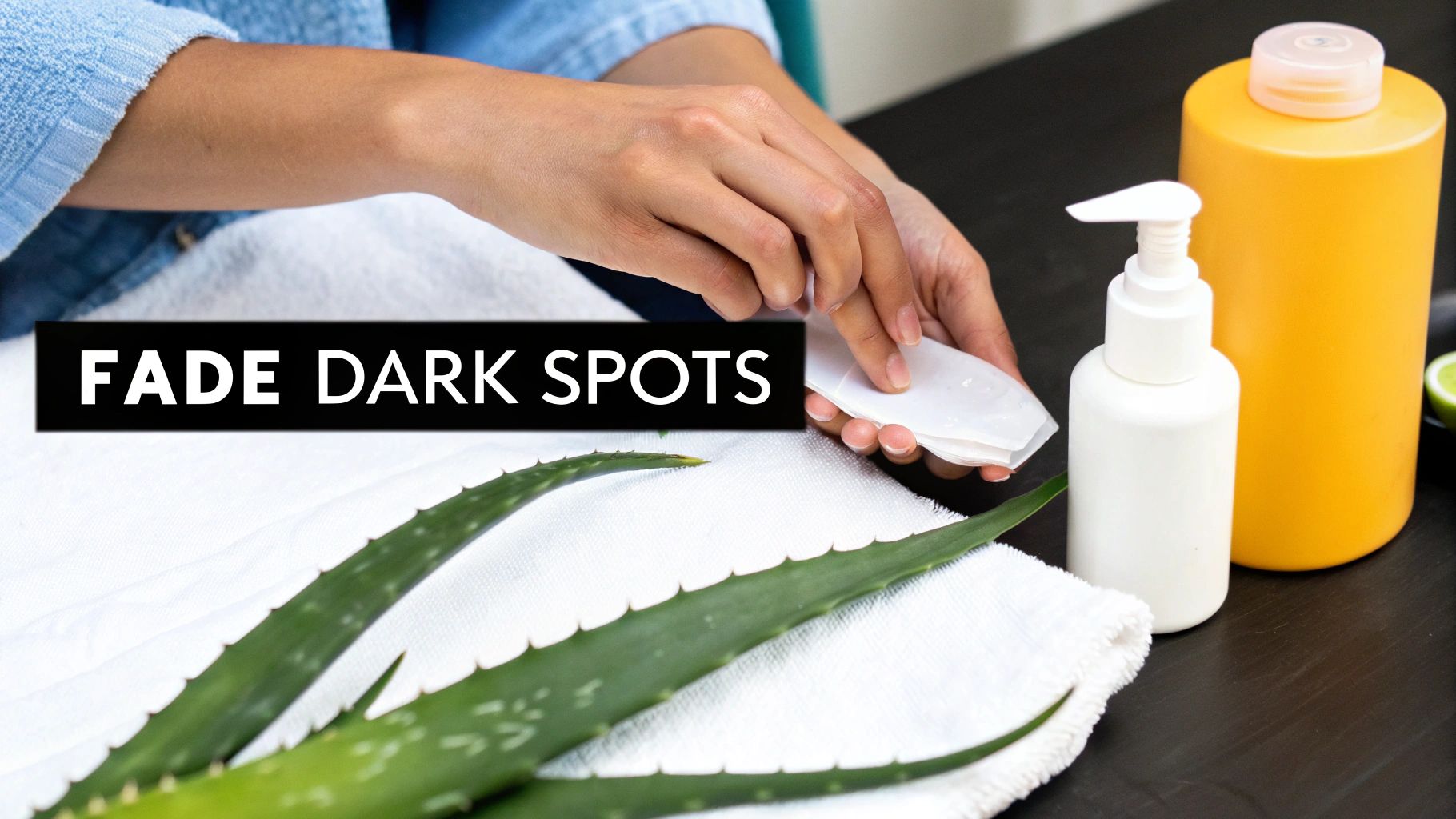
If you start seeing dark spots pop up after a laser session, the first rule is simple: don’t panic. This is almost always a temporary reaction called post-inflammatory hyperpigmentation (PIH), and with the right care, your skin can bounce back beautifully. Your immediate focus should be on calming things down with a gentle, soothing home routine.
Trying to fix it with harsh, aggressive products is the fastest way to make it worse. Think of it like treating a sunburn—the goal is to reduce heat and irritation. Cool compresses and products with soothing aloe vera can provide instant relief, helping to dial down the inflammatory response that tells your skin to produce extra pigment in the first place.
While your skin is in this delicate healing phase, it’s critical to avoid anything that could irritate it further. That means putting a full stop to all exfoliation, both physical scrubs and chemical acids. Even rubbing too hard with a towel can disrupt the healing process and worsen the hyperpigmentation from laser hair removal.
Your Most Powerful Defense Against Darkening
Soothing ingredients are your first line of defense, but sunscreen is your non-negotiable hero. Exposing inflamed, healing skin to the sun is a surefire way to make those dark spots deeper, darker, and much harder to get rid of. UV rays trigger your pigment-producing cells (melanocytes) to go into overdrive, undoing all your hard work.
The rule is simple and absolute: apply a broad-spectrum sunscreen with an SPF of 30 or higher to the treated area every single day, rain or shine. This protective shield is what stops the spots from getting darker and gives your skin the space it needs to heal.
Introducing Gentle Brightening Agents
Once the initial sensitivity has calmed down—usually in about a week or two—you can start to bring in some gentle, over-the-counter brightening ingredients. The key is to choose products that work by calming inflammation and gently blocking the enzyme that creates excess pigment, not by aggressively stripping the skin.
Topical Ingredients to Fade Hyperpigmentation
This table breaks down some of the most effective and gentle ingredients you can find in over-the-counter serums and creams. They are your allies in safely and gradually restoring your skin's even tone.
Ingredient | How It Works | Best For | Important Notes |
|---|---|---|---|
Niacinamide (Vitamin B3) | Reduces inflammation and blocks the transfer of pigment from melanocytes to your skin cells. | Calming redness and preventing new spots. Ideal for sensitive or acne-prone skin. | Very well-tolerated. Can be layered with most other ingredients. |
Vitamin C | A powerful antioxidant that brightens existing spots and protects skin from UV and environmental damage. | Fading stubborn spots and providing overall skin radiance. | Look for stable forms like L-Ascorbic Acid. Best used in the morning under sunscreen. |
Azelaic Acid | An anti-inflammatory that gently inhibits the tyrosinase enzyme responsible for melanin production. | Sensitive skin types looking to reduce both pigmentation and redness. | Can be found in 10% OTC formulas. Prescription strength is also available. |
Kojic Acid | Derived from mushrooms, it directly interferes with the tyrosinase enzyme to slow down pigment production. | Targeting specific, well-defined dark spots. | Can sometimes be slightly irritating. Start slowly and patch-test first. |
When you start using these, remember that patience and consistency are everything. Introduce one new product at a time, applying it just a few times a week to see how your skin reacts before you build up to daily use. By combining a soothing initial routine, diligent sun protection, and a gradual introduction to these gentle brighteners, you can take control of your skin’s recovery and help it return to its clear, even-toned state.
Advanced Treatments For Stubborn Hyperpigmentation
So, you’ve been diligent with your at-home care, but some dark spots just won’t budge. When gentle topicals aren’t enough to fade that stubborn hyperpigmentation from laser hair removal, it’s time to call in the professionals. A dermatologist or a highly skilled esthetician can offer more powerful treatments designed to break up excess pigment and kickstart skin renewal. These advanced options work on a deeper level than over-the-counter products, delivering much more noticeable results.
But first, a crucial note: your skin must be completely healed from the initial laser hair removal sessions before you start any new, intensive therapy. Jumping in too soon can backfire, causing more irritation and making the discoloration worse. Patience is key.
Prescription-Grade Topical Treatments
The first step up in professional care is often a prescription-strength topical. These aren’t your average drugstore finds—they contain much higher concentrations of active ingredients and require a doctor's supervision to be used safely and effectively.
Two of the heavy hitters you’ll likely discuss are:
Hydroquinone: This is often called the gold standard for a reason. Hydroquinone works by hitting the brakes on tyrosinase, the enzyme your body uses to produce melanin. It essentially tells your pigment-producing cells to calm down.
Tretinoin (Retin-A): A powerhouse retinoid, tretinoin dramatically speeds up how quickly your skin cells turn over. As fresh, new cells come to the surface, the older, pigmented cells are shed, revealing clearer, more even skin underneath.
A dermatologist will prescribe the right strength for your skin and coach you on how to use these potent ingredients without causing the irritation that can happen if they aren't managed correctly.
It's important to remember that the risk of post-inflammatory hyperpigmentation isn't the same for everyone. Research consistently shows that darker Fitzpatrick skin types (IV-VI) are at the highest danger. Some studies have noted that the wrong laser settings can cause significant issues—for example, one diode laser study found a 24.1% hyperpigmentation rate across various ethnicities. This is exactly why prevention with the right laser is so important, though treatments like 4% hydroquinone are proven to be effective for resolving it when it does occur. You can discover more insights about these clinical findings on pmc.ncbi.nlm.nih.gov.
In-Office Procedures For Deeper Correction
For hyperpigmentation that’s really dug its heels in, in-office procedures offer a more direct intervention. These treatments work by either physically removing the pigmented layers of skin or stimulating a deeper level of repair from within.
Chemical PeelsChemical peels use acids like glycolic, salicylic, or lactic acid to dissolve the "glue" that holds dead, discolored skin cells together. This controlled exfoliation makes the outer layer of skin peel away, revealing the fresher, more evenly toned skin hiding beneath. Peels come in different strengths, and a professional will choose the right one for your skin tone and the severity of the spotting. Of course, understanding the best laser hair removal for dark skin can help you avoid needing this step in the first place.
MicroneedlingSometimes called collagen induction therapy, microneedling uses a device with ultra-fine needles to create tiny, controlled micro-injuries in the skin. This process triggers your body’s natural healing cascade, ramping up collagen and elastin production. As your skin repairs itself, it helps break apart pigment clusters and improves overall texture and tone, making it a fantastic option for stubborn spots.
Pigment-Correcting LasersIt might sound a little ironic, but yes—a different kind of laser can be used to fix hyperpigmentation. Specialized devices, like Q-switched or fractional lasers, are designed to specifically target and shatter excess melanin particles without harming the surrounding skin. These treatments are incredibly effective but absolutely require an expert practitioner to ensure they are performed safely, especially on skin that has already been treated with laser hair removal.
How Advanced Lasers Like Splendor X Minimize Risk
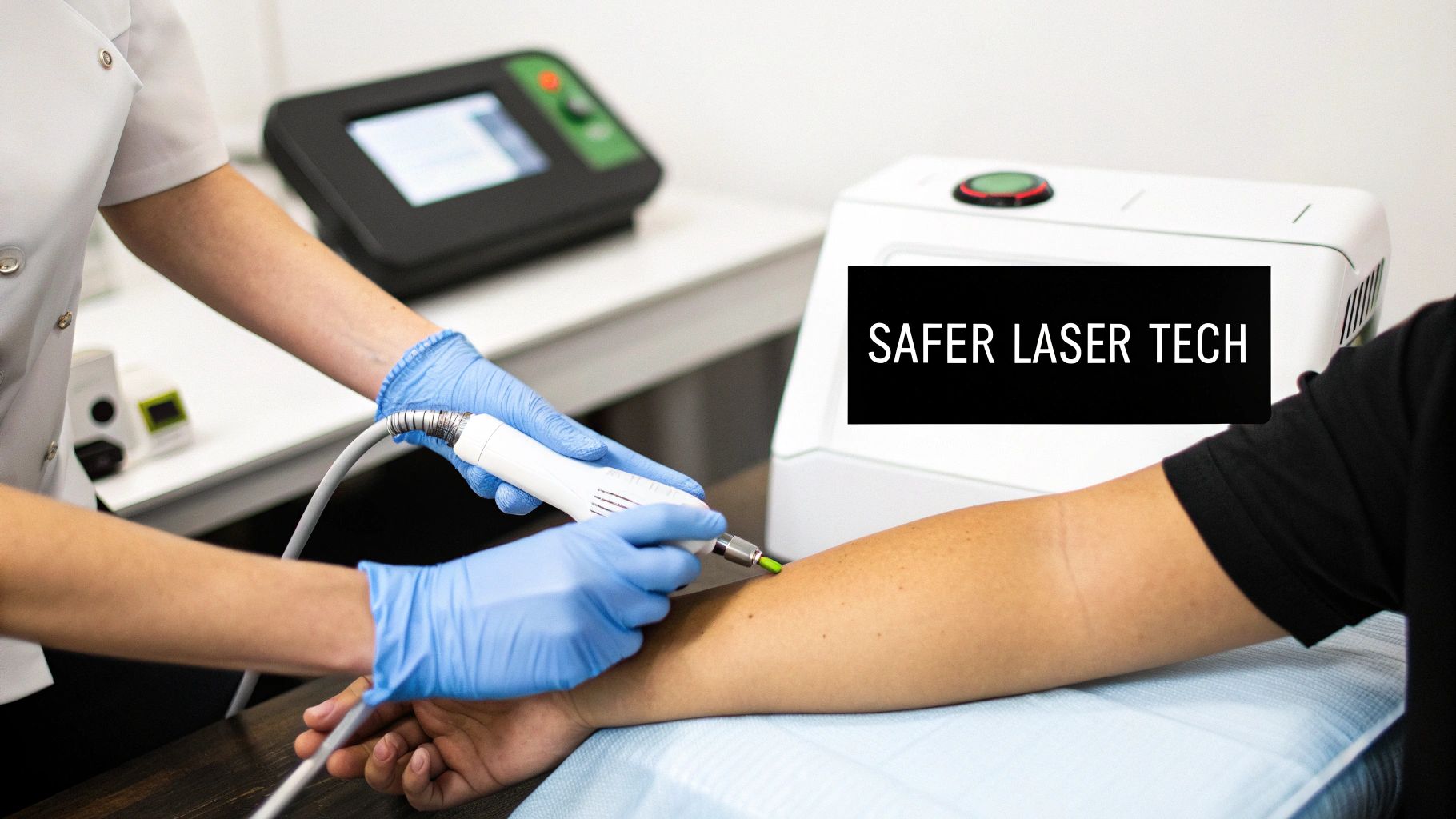
Technology is hands-down the biggest factor in preventing hyperpigmentation from laser hair removal. Older systems just weren't built to safely handle the full spectrum of skin tones, which is why we invested in the Splendor X at NYCLASER. It was engineered from the ground up for superior safety and effectiveness across the entire Fitzpatrick scale.
Its secret weapon? Innovative blended wavelength technology. Think of it like a smart device that uses two highly specialized tools at once, working in perfect sync. The Splendor X delivers both Alexandrite (755nm) and Nd:YAG (1064nm) laser energy in a single, synchronized pulse.
This dual-action approach gives our technicians the precision to customize the energy blend to your exact skin and hair type, taking the guesswork out of the equation.
Targeting The Follicle, Not The Skin
For melanin-rich skin, the Nd:YAG (1064nm) wavelength is the hero. Its longer wavelength is absorbed far less by the melanin in your epidermis (the top layer of skin). Instead of getting caught at the surface, it travels deeper to target the melanin packed inside the hair follicle itself.
This is a critical difference. By delivering heat directly to the root of the hair without overheating the surrounding skin, the risk of triggering inflammation—and the hyperpigmentation that follows—is dramatically reduced. It's a much smarter, more targeted way to get the job done right. If you have a darker complexion, you can learn more about how Splendor X is a guide for all skin tones on our blog.
The core principle of safe laser hair removal is to heat the hair follicle, not the skin. The Splendor X’s blended Nd:YAG wavelength ensures energy is delivered precisely where it needs to go, minimizing collateral heat and protecting the skin’s surface from irritation.
The Power Of Advanced Cooling
Beyond its brilliant wavelength tech, the Splendor X also has a powerful integrated cooling system. This isn't just a quick puff of cold air. It's a continuous contact cooling mechanism that actively chills your skin's surface right before, during, and after each laser pulse.
This constant cooling delivers two huge benefits:
It keeps the epidermis at a safe, comfortable temperature, adding another layer of protection against thermal damage and inflammation.
It makes the whole experience so much more comfortable.
This one-two punch of smart technology and protective features adds up to a safer, more reliable, and incredibly effective treatment for everyone. Choosing a clinic that invests in this level of advanced equipment gives you peace of mind that your skin is in the best hands, minimizing risks and maximizing those beautiful, smooth results.
Laser Hair Removal & Hyperpigmentation: Your Questions Answered
Even when you know the science, it's normal to have a few more specific questions pop up. Here are some straightforward answers to the most common concerns we hear about skin discoloration and laser hair removal.
How Long Does Hyperpigmentation Take To Fade?
The timeline for fading hyperpigmentation from laser hair removal really depends on how deep the discoloration is and your unique skin tone.
For mild spots, you might see them fade on their own within 3 to 6 months. But for more significant PIH, especially on melanin-rich skin, it can easily take 6 to 12 months—or even longer—without a little help from targeted treatments.
The single biggest factor in speeding this up? Sunscreen. Daily, relentless use of a broad-spectrum SPF 30+ is non-negotiable. UV exposure is like fuel for PIH, making it darker and helping it stick around much longer than you'd like.
Can I Get Laser Hair Removal With Existing Dark Spots?
It depends on what kind of spots we're talking about. If you have active post-inflammatory hyperpigmentation from a recent breakout or scrape, it's smart to wait until your skin has fully healed. Treating already inflamed skin can make the situation worse.
However, if you have older, stable marks like sunspots or freckles, treatment is usually not a problem. This is where advanced technology makes a huge difference. A system like the Splendor X can be precisely calibrated to work safely around them. Your mandatory consultation and patch test will tell us exactly how your skin will react.
While existing dark spots require careful consideration, they are not always a barrier to treatment. A patch test is the definitive way to confirm how your skin will respond, ensuring a safe and predictable outcome.
Is Hyperpigmentation More Likely On Certain Body Parts?
Yes, absolutely. Some areas are just more sensitive. The thin, delicate skin on the bikini line, underarms, and face is naturally more prone to an inflammatory response.
These spots also tend to deal with more friction from clothing, which can irritate the skin after a session and contribute to PIH. That's why gentle aftercare is crucial for these delicate zones. Follow your post-treatment instructions to the letter and stick to loose, breathable clothing for a day or two to let your skin heal in peace.
Does Splendor X Guarantee Zero Hyperpigmentation?
No cosmetic procedure is ever 100% risk-free, and any clinic promising that isn't being transparent. But the Splendor X technology was specifically engineered to dramatically lower the risk of hyperpigmentation compared to older lasers.
Here's what gives it a major safety advantage:
Blended Wavelengths: It smartly combines Alexandrite and Nd:YAG energy, allowing us to customize the treatment for literally every skin tone. The Nd:YAG wavelength is the gold standard for darker skin because it bypasses the melanin at the surface and goes straight for the hair follicle.
Integrated Cooling: A powerful cooling system blasts the skin's surface with cold air, protecting it from excess heat and significantly cutting down the chances of inflammation.
When you pair this superior technology with an experienced technician and a client who follows their aftercare, you get one of the safest and most effective laser hair removal experiences out there.
Ready to start your journey to smooth, clear skin with technology designed for your safety? At NYCLASER, we use the advanced Splendor X system to deliver exceptional results for every skin tone on Long Island. Book your consultation today and experience the difference.
Comments