
How to Treat Post Inflammatory Hyperpigmentation for Clear Skin
Before you can treat those stubborn dark spots, you have to know exactly what you’re up against. The first step is confirming you’re dealing with post-inflammatory hyperpigmentation (PIH), not another type of discoloration.
Think of PIH as your skin’s memory. After an injury like a pimple, a scratch, or even a bug bite, your pigment-producing cells (melanocytes) get a little overzealous. They flood the area with melanin as part of the healing response, leaving behind a flat brown, black, or purplish footprint long after the original issue is gone.
It's a straightforward biological process: inflammation sends a signal that kicks melanin production into high gear. If that extra pigment sits in the top layer of your skin (the epidermis), the spots look tan or brown. But if it drops deeper into the dermis, the spots can take on a frustrating blue-gray hue and become much tougher to fade.
Identifying PIH Versus Other Discoloration
Knowing the difference between PIH and other common pigment issues like sun spots or melasma is absolutely crucial. Why? Because the treatment plan for each is completely different.
Sun Spots (Lentigines): These are a direct result of UV exposure over the years. You'll typically find them as distinct, freckle-like spots on sun-drenched areas like your face, hands, and chest.
Melasma: Often triggered by hormones (think pregnancy or birth control) plus sun exposure, melasma shows up as larger, symmetrical patches. It has a classic pattern, usually appearing on the cheeks, forehead, and upper lip.
PIH is unique because it always follows a specific inflammatory event. If you can trace that dark mark back to a specific breakout or rash you had a few weeks ago, you can be almost certain it's PIH.
Why Skin Tone Matters
Your skin’s natural characteristics play a huge role here. While PIH is one of the most common dermatological complaints I see, it doesn’t affect everyone the same way. The condition is far more prevalent in individuals with darker skin tones simply because their melanocytes are naturally more reactive and primed to produce pigment.
In fact, research shows that a staggering 89% of PIH cases were triggered by inflammatory issues like acne or eczema, with 83% of those cases appearing on the face. You can dive deeper into the dermatological findings here to understand the implications for different skin types.
Key Takeaway: PIH is a memory of past inflammation. It's not a scar—scars change your skin's texture. This is just a footprint of pigment left behind. Getting this distinction right is the foundation for choosing the right tools to finally fade it.
This quick guide should help you decode what you’re seeing in the mirror, so you can move from feeling frustrated to creating a focused, effective action plan.
PIH At-a-Glance: Your Quick Identification Guide
Use this table as a quick reference to confidently identify what you're seeing on your skin.
Characteristic | Post-Inflammatory Hyperpigmentation (PIH) | Melasma | Sun Spots (Lentigines) |
|---|---|---|---|
Primary Cause | Inflammation (acne, eczema, injury) | Hormonal shifts + UV exposure | Chronic sun exposure |
Appearance | Flat, localized spots; tan, brown, black, or purplish-gray | Symmetrical, blotchy patches; "mask-like" pattern | Small, distinct, well-defined spots; like large freckles |
Common Location | Site of a previous injury (e.g., where a pimple was) | Forehead, cheeks, upper lip, chin | Face, hands, shoulders, chest—areas with high sun exposure |
Key Differentiator | Can be traced back to a specific inflammatory event | Symmetrical and often linked to hormonal triggers | Directly correlates with cumulative sun damage |
Once you've pinpointed the type of discoloration you're dealing with, you're ready to build a targeted routine that actually works. You're no longer just throwing random products at the problem; you're addressing the specific biological process that created the spots in the first place.
Building Your At-Home PIH Fading Routine
The most effective strategy for tackling post-inflammatory hyperpigmentation starts right in your own bathroom. A smart, consistent skincare routine is your first line of defense, working around the clock to break down existing dark spots and stop new ones from ever forming. The goal isn’t to use the harshest products, but the right ones.
This diagram breaks down how PIH actually happens—from that first trigger to the stubborn spot you see in the mirror.
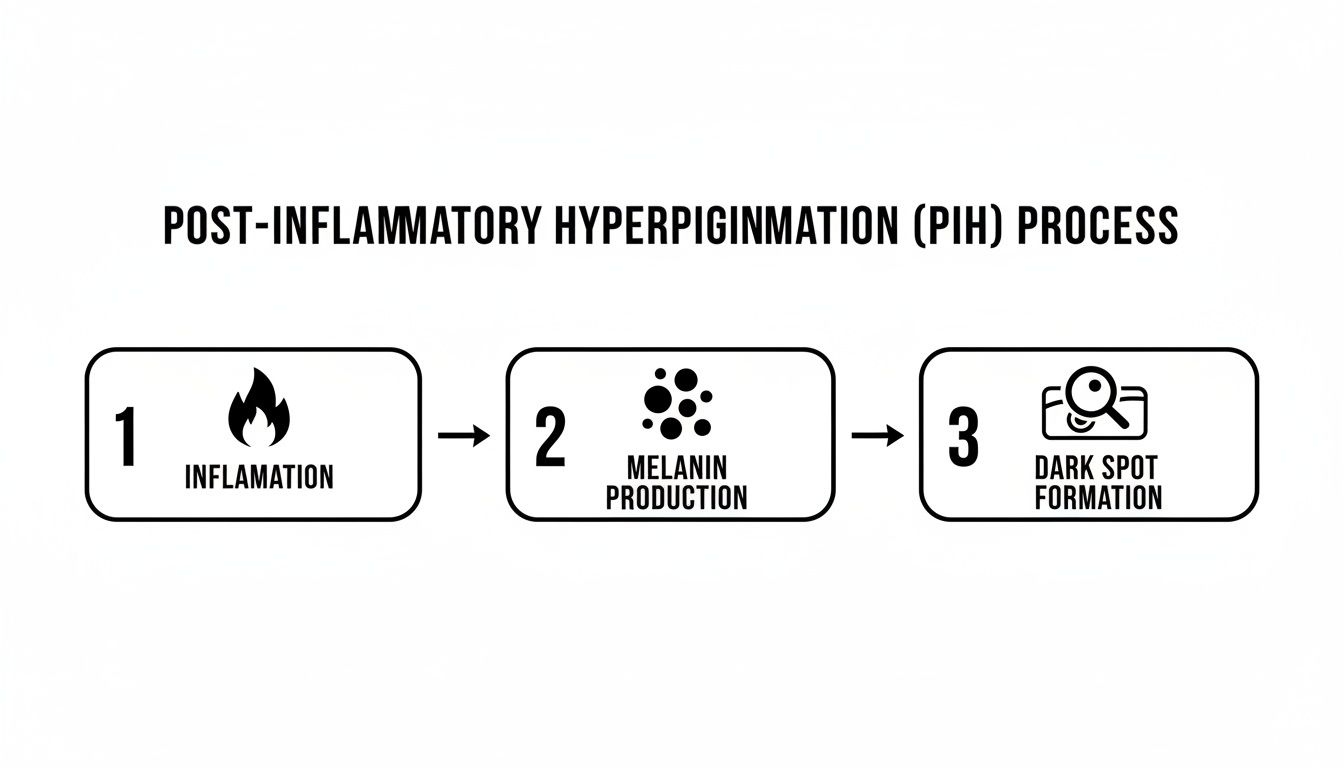
As you can see, inflammation is the direct culprit that tells your skin to go into melanin overdrive, creating those dark patches. This is a critical point: calming your skin is just as important as fading the pigment.
The Powerhouse Ingredients for Fading Dark Spots
To build a routine that actually gets results, you need to know your active ingredients. Each one works on hyperpigmentation from a slightly different angle, and combining them thoughtfully can create a seriously powerful effect.
Choosing the right active ingredient is the cornerstone of any successful PIH-fading routine. The table below breaks down the top-tier options, explaining how they work and who they're best for. This will help you select the perfect hero product for your skin's unique needs.
Comparing Top At-Home PIH Treatments
Ingredient | How It Works | Best For | Things to Note |
|---|---|---|---|
Retinoids | Speeds up skin cell turnover, pushing pigmented cells to the surface so they can shed more quickly. | Most skin types, especially for stubborn PIH and anti-aging benefits. | Can be irritating. Start with a low strength 2-3 times a week. Tretinoin is prescription-only. |
Azelaic Acid | Inhibits tyrosinase, the enzyme that produces melanin. It's also anti-inflammatory and antibacterial. | Sensitive, acne-prone, and rosacea-prone skin. A great option for darker skin tones. | Generally well-tolerated, but higher concentrations (15-20%) are often prescription. |
Vitamin C | A powerful antioxidant that blocks pigment production and protects skin from UV damage that darkens spots. | All skin types, especially for brightening and prevention. Works best in the morning. | Look for L-Ascorbic Acid formulations. It can be unstable, so store it in a cool, dark place. |
Niacinamide | Blocks the transfer of pigment from melanin-producing cells to your surface skin cells. Also strengthens the skin barrier. | Almost everyone. It's gentle, versatile, and pairs well with other active ingredients. | Rarely causes irritation, but some people experience flushing with initial use. |
Ultimately, the best ingredient is the one you'll use consistently. Whether you go for a powerhouse retinoid or a gentle niacinamide, sticking to your routine is what will deliver those clear, even-toned results.
Structuring Your Morning and Evening Routines
How you layer these ingredients is just as critical as which ones you choose. A well-designed routine maximizes the good stuff while minimizing irritation—which, ironically, can cause more hyperpigmentation.
Your A.M. Routine: Focus on Protection
Gentle Cleanser: Start with a clean slate without stripping your skin's natural moisture.
Vitamin C Serum: Apply to dry skin. This gives you antioxidant protection against pollution and UV rays all day.
Moisturizer: Keep your skin barrier happy and hydrated.
Broad-Spectrum Sunscreen (SPF 30+): This is absolutely non-negotiable. Without it, you’re undoing all your hard work.
Your P.M. Routine: Focus on Treatment
Gentle Cleanser: Wash away makeup, sunscreen, and the day's grime.
Treatment Serum: This is where your heavy lifter comes in. You might use a retinoid one night and an azelaic acid serum the next to avoid overwhelming your skin.
Moisturizer: Lock in hydration and create a buffer against any potential dryness from your active ingredient.
These aren't just suggestions; clinical evidence backs them up. Topical retinoids were the most common treatment in PIH studies, making up 22% of all interventions, and a whopping 85% of people saw at least partial improvement. Smart combinations, like 4% hydroquinone with 0.15% retinol and daily sunscreen, have also been proven both safe and effective. You can dive deeper into the clinical approaches to hyperpigmentation treatment to see the data for yourself.
Real-World Tip: If you're new to retinoids, try the "sandwich method." Apply a thin layer of moisturizer, let it sink in, apply your retinoid, wait a few minutes, then top it with another layer of moisturizer. This simple trick can make a huge difference in reducing irritation.
Start Low and Go Slow to Avoid Irritation
The biggest mistake I see people make when treating PIH at home is going too hard, too fast. Bombarding your skin with a bunch of powerful actives will only backfire, causing the exact redness and inflammation you need to avoid.
Introduce one new active at a time. Give your skin at least two weeks to get used to it before you even think about adding something else.
Always patch test first. Before slathering a new product on your face, test it on a small spot—like behind your ear or on your inner arm—for a few days to see how your skin reacts.
Start with a low frequency. Use your new active just 2-3 times a week to begin. As your skin builds tolerance, you can slowly work your way up to every other night, and maybe even nightly if your skin is happy.
This patient, methodical approach is the true secret to getting clear, even-toned skin without wrecking your skin barrier. Remember, it's a marathon, not a sprint.
Sunscreen Is Your Most Powerful PIH Treatment
Think of all the serums, acids, and treatments you’re using to fade those stubborn dark spots. Now, imagine undoing all that hard work with just a few minutes of unprotected sun. It's a frustrating reality, but without diligent, daily sun protection, every other step in your routine is fighting a losing battle.
Sunscreen isn't just a preventative measure; it's an active part of your PIH treatment.
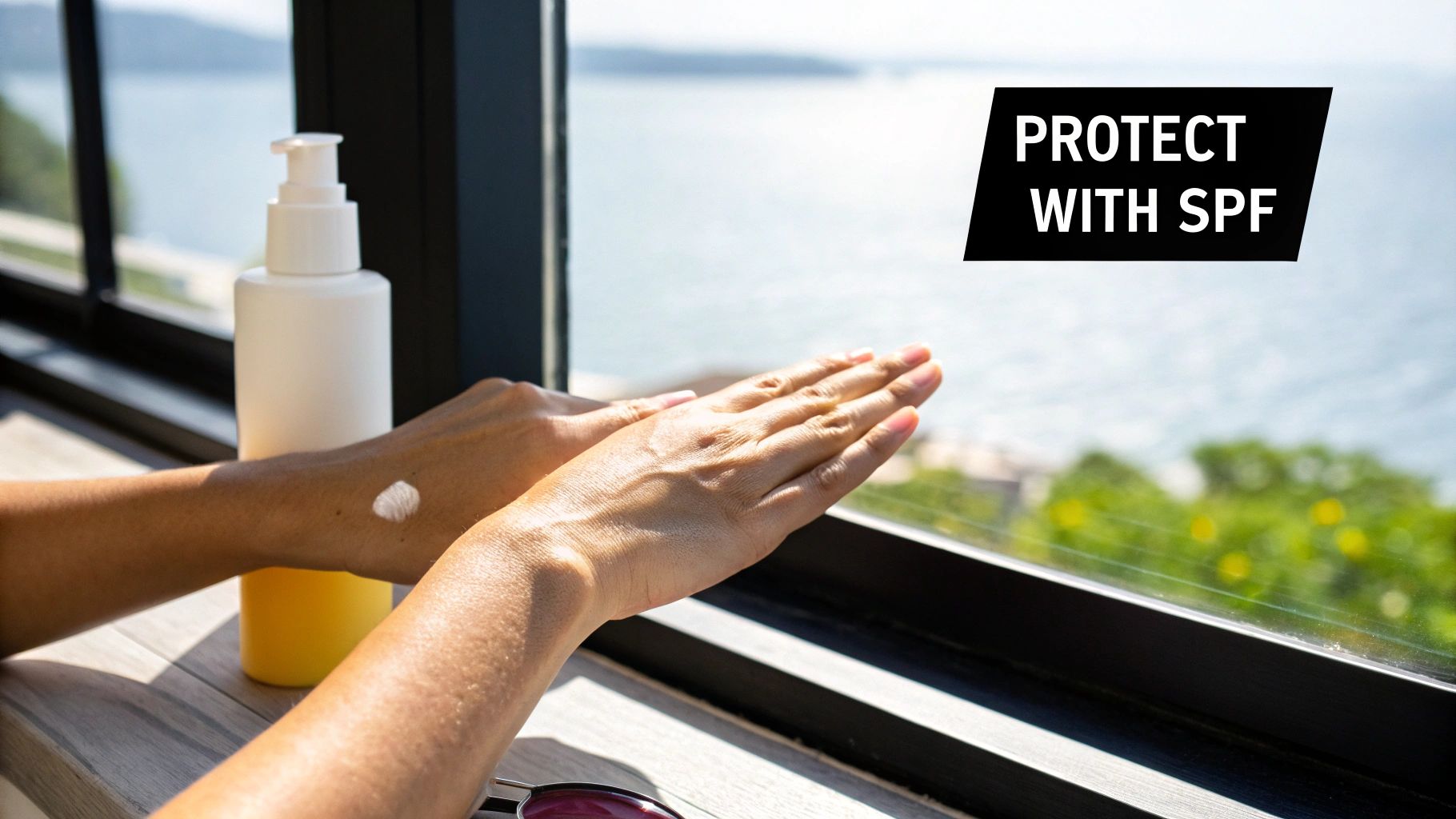
Even incidental sun—the light hitting your skin while you drive, sit near a window, or walk to the subway—is enough to wake up your melanocytes. These pigment-producing cells go into overdrive with UV exposure, cranking out more melanin that darkens existing spots and triggers new ones. It’s that classic one-step-forward, two-steps-back feeling that can make PIH so hard to manage.
Choosing the Right Sunscreen Formula
Not all sunscreens are created equal when you're tackling PIH. While the best sunscreen is always the one you'll actually wear every day, certain formulas have a distinct advantage for hyperpigmentation-prone skin.
Mineral-based (or physical) sunscreens are what I almost always recommend. These formulas use zinc oxide and titanium dioxide to create a physical shield on the skin's surface, reflecting and scattering UV rays before they can do any damage.
Why Mineral Sunscreens Excel for PIH: Many chemical sunscreens work by absorbing UV rays and converting them into heat. For some people, especially those with sensitive or reactive skin, this heat can be a low-level trigger for inflammation—potentially worsening the very condition you're trying to fix.
When you're shopping, look for these non-negotiables:
Broad-Spectrum Protection: This is critical. It ensures you're shielded from both UVA (aging) and UVB (burning) rays.
SPF 30 or Higher: For daily, incidental exposure, SPF 30 is the bare minimum. If you'll be outdoors for any real length of time, you need to bump that up to SPF 50+.
Tinted Formulas: This is a huge bonus. Many mineral sunscreens contain iron oxides, which give them a tint. Not only does this cancel out the dreaded white cast, but it also provides proven protection against visible light—another known PIH trigger, especially in deeper skin tones.
Making Sunscreen a Daily Habit
Knowing you need sunscreen is one thing; applying it correctly and consistently is what turns it into your most reliable PIH-fading tool.
First, you need to use enough product. A light skim isn't going to cut it. The rule of thumb for your face is about two fingers' worth—squeeze a line of sunscreen down your index and middle fingers. This ensures you're actually getting the level of protection advertised on the bottle.
Next up is reapplication, which is where most people fall short. Sunscreen isn't a one-and-done deal; it breaks down with sun exposure and sweat. You should reapply at least every two hours when you're outdoors, and immediately after swimming or sweating heavily.
For office days, a powder or spray SPF can make reapplying over makeup much more realistic. This diligence is especially vital if you're undergoing professional treatments. If you want to understand just how seriously we take sun avoidance around procedures, learning about tanning safety after laser hair removal offers some great perspective. It’s this level of consistency that truly protects your investment in clear, even-toned skin.
When to Consider Professional PIH Treatments
While a solid at-home routine is your first line of defense against post-inflammatory hyperpigmentation, sometimes you hit a wall. If your dark spots are just plain stubborn or seem to be set deep in the skin, it might be time to call in the professionals. The same goes if you simply want to speed up your results.
In-office treatments are a serious step up. They use powerful formulas and advanced tech that go way beyond what you can safely use at home.
It's completely normal to seek professional help after months of using topicals with only so-so results. Deeper pigment, especially the kind that has a blue-gray tint, often sits in the dermal layer. Surface-level products just can't reach that far. A skilled dermatologist or licensed esthetician can accurately gauge the depth of your PIH and recommend a procedure that actually targets the pigment at its source.
Chemical Peels for Resurfacing Skin
One of the most trusted and effective routes is the chemical peel. Don't let the name scare you. Modern peels are sophisticated formulas designed to get specific results with total control. They use acids—like glycolic, salicylic, or mandelic acid—at much higher concentrations than you'd find over the counter.
This concentration jump allows the peel to dissolve the "glue" holding dead, pigmented skin cells to the surface. It forces a rapid exfoliation, lifting away those discolored layers to reveal fresher, more even-toned skin underneath. Keep in mind, a series of peels is almost always needed to see a major difference.
Superficial Peels: These use milder acids like lactic or a low-strength glycolic acid. You’ll have minimal downtime (maybe some light flaking) and they’re great for maintenance or milder cases of PIH.
Medium-Depth Peels: Often using trichloroacetic acid (TCA), these penetrate deeper to tackle stubborn spots. The trade-off is more downtime, including redness and noticeable peeling for about a week.
For PIH, especially in melanin-rich skin, pros often lean on acids like mandelic acid. It has a larger molecule, so it penetrates the skin more slowly. This reduces the risk of irritation and, importantly, further inflammation.
Microneedling to Break Up Pigment
Microneedling, sometimes called collagen induction therapy, comes at the problem from a totally different angle. The procedure uses a device with ultra-fine, sterile needles to create thousands of tiny micro-injuries in the skin. This controlled trauma kicks your body’s natural healing response into high gear, which helps PIH in two ways.
First, it helps physically break up the dense clusters of melanin that make up a dark spot. Second, it ramps up the production of new collagen and elastin, which improves your skin's overall health and texture. This whole regeneration process helps push out old, pigmented cells and replace them with fresh, clear ones.
Many practitioners will also apply a pigment-inhibiting serum during the treatment. The micro-channels created by the needles allow the product to penetrate far deeper than it ever could on its own.
A Note on Downtime: After a microneedling session, expect your skin to look and feel like you have a mild sunburn for about 24-48 hours. To really tackle hyperpigmentation, most people need a series of 3-6 treatments, spaced about four to six weeks apart.
The Role of Laser Treatments
Lasers are the heavy hitters. They offer a highly targeted way to shatter excess pigment. They work by sending out a single wavelength of light that is specifically absorbed by melanin. When the pigment in the dark spot absorbs this energy, it heats up and breaks into tiny particles that your body's immune system then clears away.
Choosing the right laser is absolutely critical, especially for skin of color. The wrong device or an inexperienced technician can easily generate too much heat. This can cause burns or, ironically, make the hyperpigmentation even worse.
Pico Lasers (e.g., PicoSure, PicoWay): This newer generation of lasers delivers energy in incredibly short picosecond pulses. This creates a photo-acoustic effect that shatters pigment without generating as much heat, making them a much safer option for a wider range of skin tones.
Q-Switched Nd:YAG Lasers: These have long been a go-to for treating pigment in deeper skin tones. The 1064 nm wavelength is brilliant because it bypasses the top layer of skin, targeting deeper pigment with a much lower risk of surface damage.
If you’re thinking about lasers, a thorough consultation is non-negotiable. Our guide to laser hair removal and hyperpigmentation offers some great insights into why choosing the right tech for your skin is so important. A good provider will always prioritize safety, starting with conservative settings and performing a test spot to see how your skin reacts.
Treating PIH on Melanin-Rich Skin
When it comes to treating post-inflammatory hyperpigmentation, a one-size-fits-all approach is a recipe for disaster. For melanin-rich skin—often categorized as Fitzpatrick skin types IV through VI—the game plan requires more finesse, patience, and a genuine understanding of how this skin works.
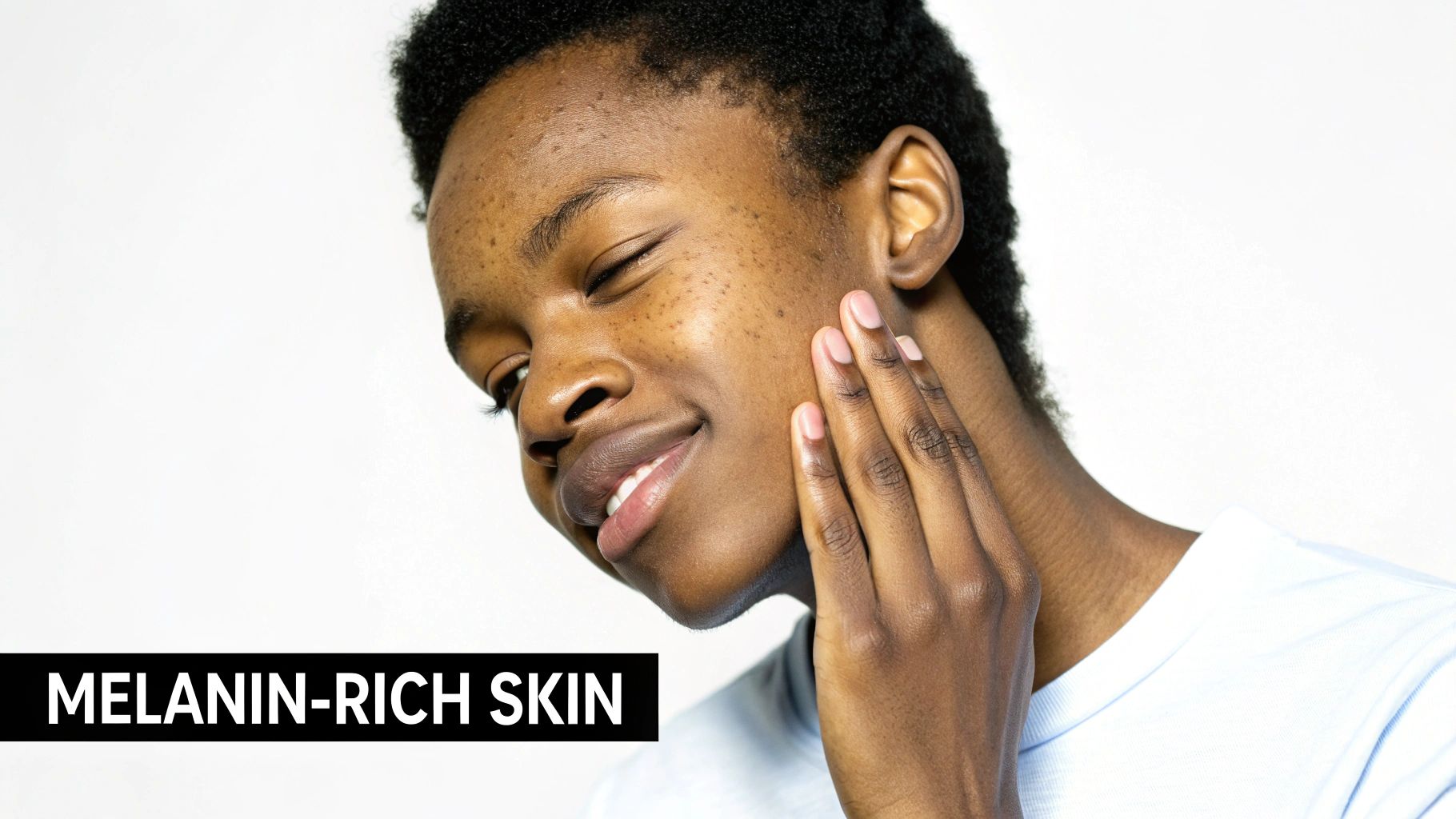
The very cells that give deeper skin its beautiful color, the melanocytes, are also more reactive. Think of them as being on high alert. This means any inflammation—whether from acne, a simple scratch, or an overly aggressive treatment—can send these cells into overdrive, producing excess pigment more readily and intensely than in lighter skin tones.
This heightened reactivity is exactly why a "low and slow" philosophy isn't just a suggestion; it's the golden rule. The main goal here is to fade existing spots without creating new inflammation, which would only kick off the PIH cycle all over again.
Gentle Yet Effective Topical Ingredients
While you definitely need powerful ingredients to see results, how you use them on darker skin tones is what truly matters. We need to focus on actives known not just for their efficacy, but for their gentler nature to avoid triggering a new inflammatory response.
Here are some of the safest and most effective options I recommend:
Azelaic Acid: This is a true hero for melanin-rich skin. It has the unique ability to specifically target overactive melanocytes while leaving normally pigmented skin alone. Plus, it has fantastic anti-inflammatory properties.
Mandelic Acid: As an alpha-hydroxy acid (AHA), mandelic acid has a larger molecular structure than its more famous cousin, glycolic acid. This means it penetrates the skin more slowly and evenly, giving you effective exfoliation with a much lower risk of irritation. It's a game-changer.
Retinoids: These are still a gold standard for cell turnover, but the key is starting with a very low concentration (like 0.25% retinol) and using it just a few nights a week. I always suggest the "sandwich method"—moisturizer, retinoid, then more moisturizer—as a great way to buffer potential irritation as your skin adapts.
Crucial Takeaway: Aggressive physical scrubs and harsh exfoliants are the enemies of melanin-rich skin. They can create micro-tears and inflammation, which is a direct flight to more dark spots. Always, always opt for gentle chemical exfoliation instead.
Safer Professional Treatment Options
When you’re ready to step up to in-office procedures, the stakes get even higher. The wrong treatment can cause irreversible damage or make the hyperpigmentation significantly worse. This is where choosing an experienced provider who understands the nuances of treating skin of color is absolutely non-negotiable.
Safe, effective professional treatments are all about minimizing heat and inflammation.
Superficial Chemical Peels: Instead of deep, aggressive peels that can shock the system, a series of superficial peels using mandelic or lactic acid is a much safer bet. These gently lift pigment from the surface over time without causing trauma.
Microneedling: This procedure is generally very safe for all skin tones because it's a mechanical process that doesn't rely on heat. It helps break up pigment and encourages cellular turnover without specifically targeting melanin, which is exactly what we want.
Specific Laser Wavelengths: This is the most critical area for caution. Lasers that generate too much heat can be disastrous for darker skin. The gold standard here is the 1064 nm Nd:YAG laser. Its longer wavelength allows it to bypass the melanin in the upper layers of the skin and target deeper pigment with a significantly lower risk of causing burns or more PIH.
Before committing to any procedure, especially laser, a thorough consultation is essential. For more context on why the right technology is so vital, our guide on the best laser hair removal for dark skin offers valuable insights into these safe practices. And never skip the patch test—seeing how a small, discreet area of your skin responds is the only way to proceed with confidence.
The PIH Healing Journey: Patience, Progress, and Realistic Timelines
Successfully treating post-inflammatory hyperpigmentation is a game of consistency, not intensity. I can't stress this enough. Understanding the timeline and learning how to actually see your progress are crucial for staying motivated when the results feel slow. It’s a marathon, not a sprint, but with the right expectations, you’ll get to the finish line.
When you're relying solely on at-home topicals, the path is a slow burn. You might start noticing some subtle, encouraging changes around the 3-month mark, but getting that significant fading you’re hoping for often takes 6 to 12 months—sometimes even longer. This is because these products work with your skin's natural rhythm, gradually increasing cell turnover and telling your pigment cells to calm down.
Setting Realistic Timelines
Of course, professional in-office procedures can definitely speed things up. A series of chemical peels or microneedling sessions can deliver more noticeable improvements within a few months, as they work more aggressively to resurface the skin and break up pigment.
Here’s a realistic breakdown:
Topical Treatments: Expect minor improvements in 3-6 months and more significant fading in 6-12+ months.
Professional Procedures: A series of treatments can show meaningful results in 3-5 months, depending on the specific treatment plan.
The most important thing to remember is that there is no overnight fix for PIH. True progress is measured in months, not days or weeks. Sticking to your consistent, gentle routine is far more effective than trying to rush the process with harsh products, which can easily backfire and cause even more inflammation.
How to Actually Track Your Progress
Staring at your skin in the mirror every single day is the fastest way to get discouraged. Your eyes will adjust to the slow, subtle changes, tricking you into thinking nothing is happening at all. You need a more objective way to keep track.
The best method, hands down, is taking monthly progress photos. Find a spot in your home with good, consistent natural light. Use the same camera angle, hold your phone the same way, and snap a picture on the same day each month. When you compare those photos side-by-side after three or four months, the improvements will be so much more obvious. I promise.
Building a long-term maintenance routine is the final piece of the puzzle. Once your skin has cleared, you don't just stop. Continuing with a gentle retinoid, a tyrosinase inhibitor like azelaic acid, and—most importantly—daily sunscreen will help prevent new spots from crashing the party. Celebrate the small victories, trust the process, and you will see lasting results.
Answering Your Top PIH Questions
When you're dealing with post-inflammatory hyperpigmentation, questions are bound to come up. Getting straight answers helps you set realistic expectations and, most importantly, stick with a routine that actually works.
How Long Does PIH Really Take to Fade?
This is the big one, and the honest answer is: it depends. The timeline varies wildly based on how deep the pigment is, your natural skin tone, and how consistent you are with treatment.
With a solid at-home routine—we're talking diligent use of topicals and daily sunscreen—you can expect to see real improvement in 3-6 months.
But for those deeper, more stubborn marks? They can easily hang around for a year or even longer if you're only using at-home care. This is where professional treatments like chemical peels or lasers can be a game-changer, often speeding things up and showing results within just a few sessions. Patience is key here.
Can I Use Multiple Active Ingredients at the Same Time?
Yes, but you have to be smart about it. Throwing too many potent ingredients at your skin at once is a fast track to irritation, which will only make your PIH worse.
A much safer—and more effective—strategy is to layer ingredients thoughtfully. For example, use an antioxidant like Vitamin C in the morning to protect your skin, and then a cell-turnover booster like a retinoid at night to repair it.
A Pro Tip We Swear By: Never, ever introduce multiple new active products at once. Add one new ingredient into your routine and give it a solid two to three weeks before you even think about adding another. This gives you time to see how your skin reacts and prevents you from wrecking your skin barrier.
What's the Difference Between PIH and Acne Scars?
This is a critical distinction because you treat them completely differently. Getting this right is the first step to seeing results.
PIH is all about pigment. It's a flat spot of discoloration left on the skin's surface after inflammation has calmed down. It doesn't change the actual texture of your skin.
Acne scars are a texture problem. They happen when tissue is either lost, creating a dip or pit (atrophic scar), or when too much tissue grows, creating a raised bump (hypertrophic scar).
While some treatments like microneedling can pull double duty and help with both, true textural scars almost always need more intensive in-office procedures—think fractional laser resurfacing—to see a significant change.
At NYC Laser Hair Removal, we're passionate about helping our clients achieve healthy, even-toned skin. While our specialty is advanced laser hair removal, our commitment to overall skin health means we're here to help you navigate all your concerns with expert care. Learn more about how we can help you at https://www.nyclaser.com.
Comments