
How to Prevent Razor Bumps for Flawlessly Smooth Skin
The best way to prevent razor bumps is to stop the hair from growing back into the skin in the first place. This means rethinking your whole approach with a smart combination of skin prep, the right shaving technique, and consistent after-care to keep everything calm and clear.
The Real Reason You Get Razor Bumps
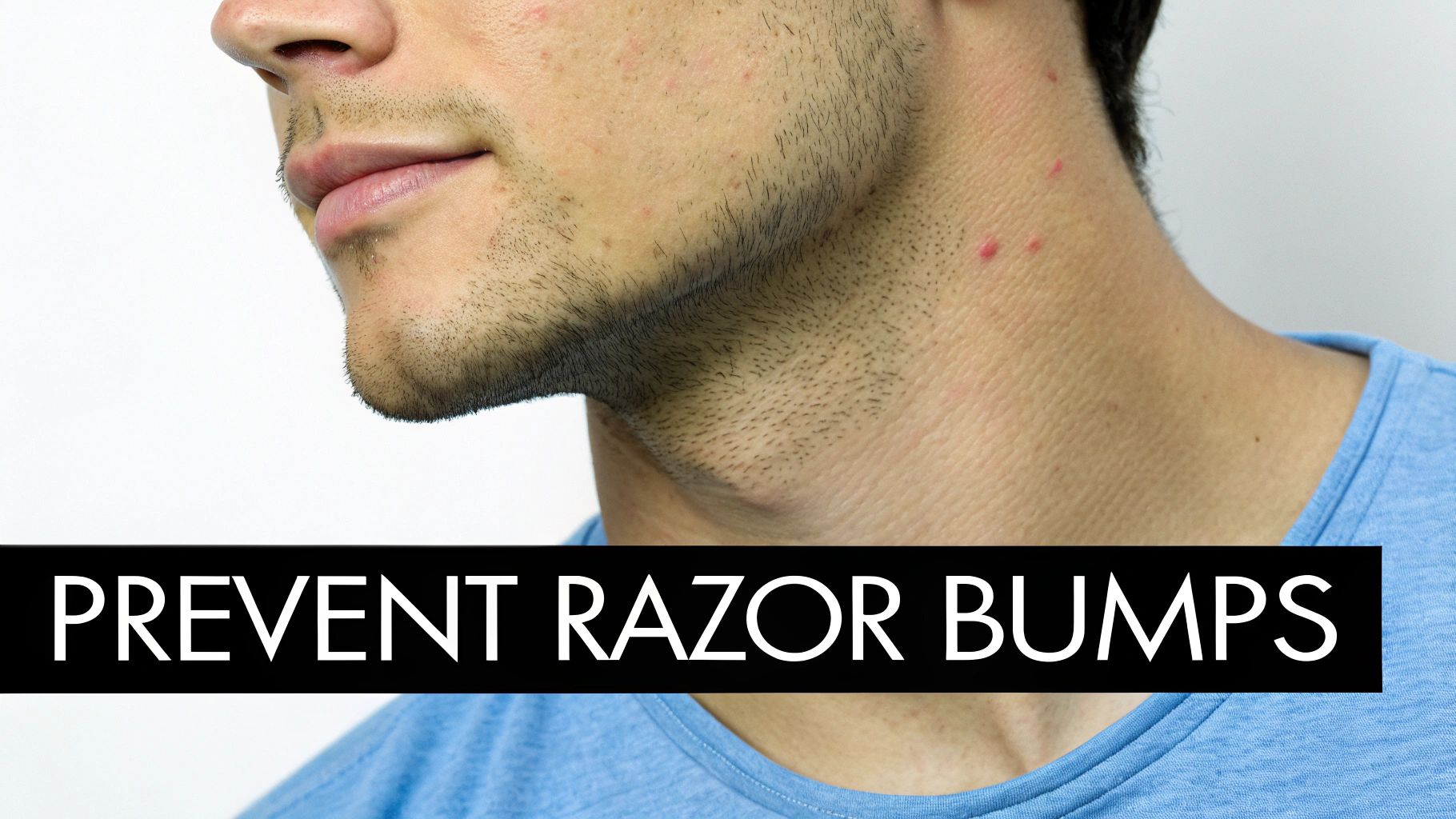
Let's get one thing straight: those frustrating red bumps aren’t just random irritation. They're a specific medical condition known as pseudofolliculitis barbae (PFB). It happens when a hair, cut sharply by a razor, curls back on itself and grows directly into your skin.
Your body then treats this ingrown hair like a tiny splinter, launching an immune response. The result? Inflammation, redness, and those painful, pimple-like bumps we all hate. While anyone can get them, the issue is especially common for people with naturally curly or coiled hair, since the hair’s structure makes it much more likely to curve back into the skin.
Understanding the Ingrown Hair Cycle
Ever had this happen? You want a super clean shave for a big event in Nassau County, but by the next day, your neck is a mess of sore, red bumps. That’s not just bad luck—it’s a predictable cycle.
Here's how it usually plays out:
The Cut: A razor blade slices the hair shaft, creating a sharp, spear-like tip.
The Regrowth: As the hair grows out, its natural curl directs this sharp tip right back toward the skin.
The Puncture: The hair pierces the skin's surface, becoming trapped or "ingrown."
The Reaction: Your immune system goes on the defense, causing inflammation, redness, and a painful bump.
This cycle is incredibly common. In fact, research shows that PFB affects between 45% and 95% of African American men at some point, which really highlights the role hair texture plays. This is why a solid prevention plan is so critical for the diverse communities across Long Island and beyond.
The single most important goal in preventing razor bumps is to stop the hair from re-entering the skin. Every step in a proper shaving routine should be focused on achieving this outcome.
Why Your Hair Type Matters
The shape of your hair follicle dictates how your hair grows. Straight hair tends to grow directly out from the skin. Curly hair, on the other hand, exits the skin at an angle and coils as it grows. That natural curl is the main reason some of us are just more prone to PFB.
Even your shaving technique can make it worse. Pulling the skin taut to get a closer shave might feel effective, but it can cause the freshly cut hair to retract below the skin's surface. As it starts to grow back, it gets trapped before it even has a chance to break through, creating an ingrown hair from underneath.
Getting a handle on these details is the first step toward building a routine that actually works with your skin, not against it. If you're curious about related issues, our guide on the causes and treatments for uneven hair growth is a great resource.
Your Essential Pre-Shave Preparation
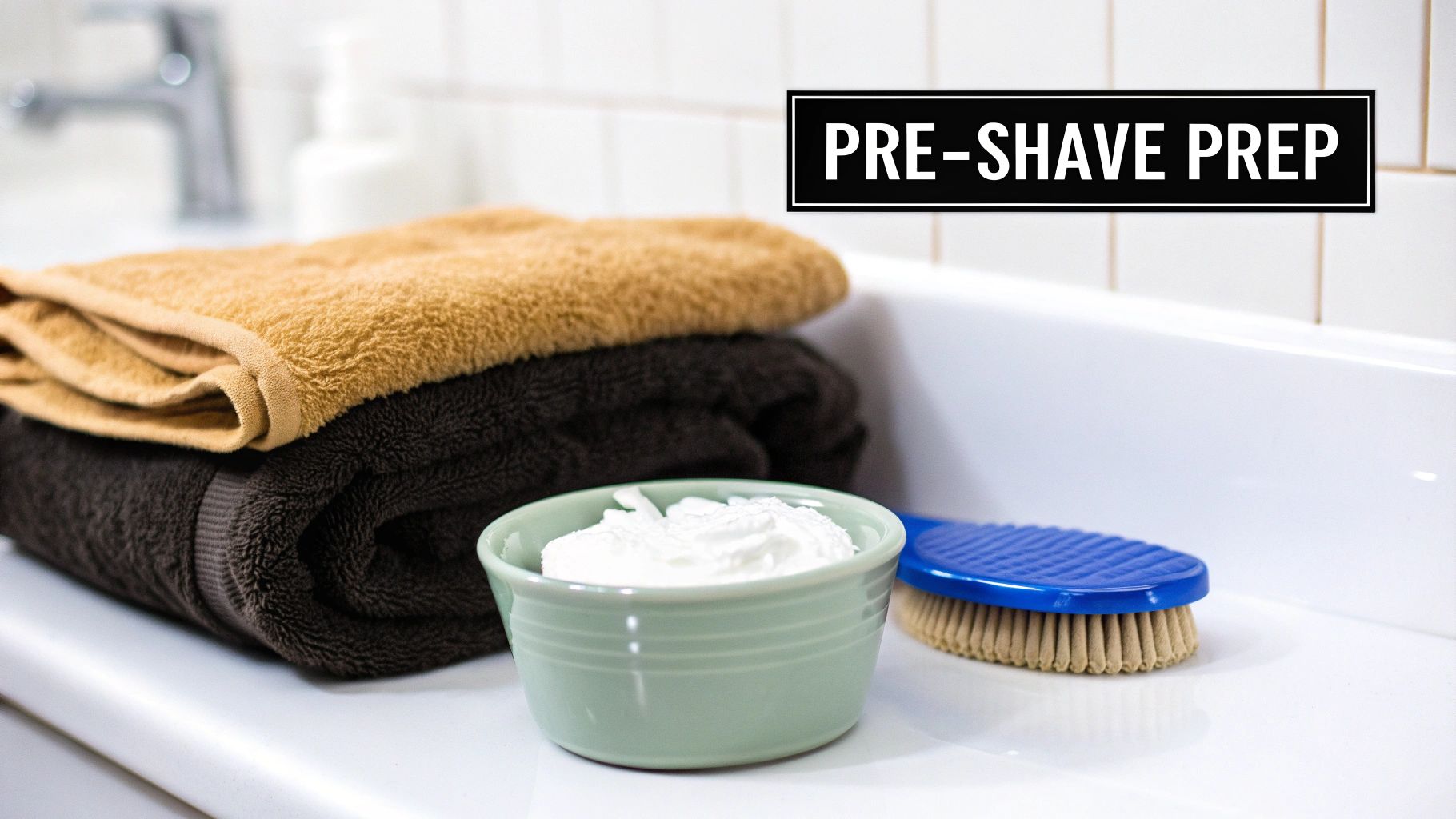
Think of your pre-shave routine as setting the stage for a smooth, irritation-free result. Honestly, skipping these few minutes is the fastest way to wind up with the exact redness and bumps you’re trying to prevent. A great shave has less to do with the razor itself and more to do with getting your skin and hair ready before the blade ever shows up.
It all starts with warmth and moisture. The goal here is simple: soften the hair so it's easier to cut cleanly. The absolute best time to shave is right after a warm shower—the steam has already done half the work for you.
No time for a full shower? No problem. Just soak a towel in warm water, wring it out, and press it against your skin for two to three minutes. This one move can soften hair by a whopping 30-40%, which dramatically reduces the tugging and pulling that irritates skin. For more on this, check out these dermatological tips on the AAD's website.
Gentle Exfoliation to Free Trapped Hairs
With your skin warm and damp, the next move is a quick, gentle exfoliation. And I do mean gentle. This isn’t about using a harsh scrub; you just want to lift any hairs that might be hiding right under the skin's surface. Going too aggressive will just cause more problems.
For most people, a soft washcloth and some slow, circular motions are all it takes. This little bit of friction is enough to clear away the dead skin cells that clog pores and trap hairs—a classic recipe for ingrowns.
The point of pre-shave exfoliation isn't to scrub your skin raw. It's to gently clear a path for the razor. A light touch is all you need to lift those hairs and stop them from turning inward.
By getting that microscopic debris out of the way, you’re creating a smooth runway for your razor to glide over, instead of it getting snagged or cutting hair below the skin line.
Choosing the Right Cleansers and Creams
This is where a lot of people go wrong. The products you use right before you shave are your skin's first line of defense against a sharp blade. It’s crucial to pick formulas that protect, not provoke.
First up, a gentle, non-comedogenic cleanser. That’s just a fancy way of saying it won’t clog your pores—a must-have for preventing those pimple-like bumps.
Next, your shaving cream or gel needs to be incredibly slick. Look for products loaded with moisturizing ingredients like glycerin, shea butter, or aloe vera. A thick, cushiony lather allows the razor to glide effortlessly, minimizing friction and the risk of nicks and irritation.
To make it easy, here's a quick reference guide for your pre-shave routine. Sticking to this checklist will make a huge difference in keeping your skin calm and clear.
Pre-Shave Prep Checklist
Action | Why It Works | Pro Tip |
|---|---|---|
Warm the Skin | Softens hair follicles, making them easier to cut without tugging. | Shave immediately after a warm shower or apply a warm, damp towel for 2-3 minutes. |
Gently Exfoliate | Lifts trapped hairs and removes dead skin cells that can clog the razor. | Use a soft washcloth in a circular motion. Avoid harsh, gritty scrubs. |
Use a Gentle Cleanser | Removes dirt and oil without stripping the skin's protective barrier. | Look for non-comedogenic and soap-free formulas to prevent clogged pores. |
Apply a Quality Shave Cream | Creates a protective, lubricating layer between the blade and your skin. | Choose creams rich in glycerin or shea butter. Let it sit for a minute to fully soften hair. |
Following these steps consistently will help you build a routine that actively prevents razor bumps before they even have a chance to form.
One final word of warning: steer clear of any products with a lot of alcohol. While that "clean" tingle might feel refreshing, alcohol strips your skin of its natural oils, leaving it dry, tight, and vulnerable. Check the ingredient list for "denatured alcohol" or "isopropyl alcohol"—if you see it near the top, find another option. Careful prep is your best defense.
How to Master Your Shaving Technique
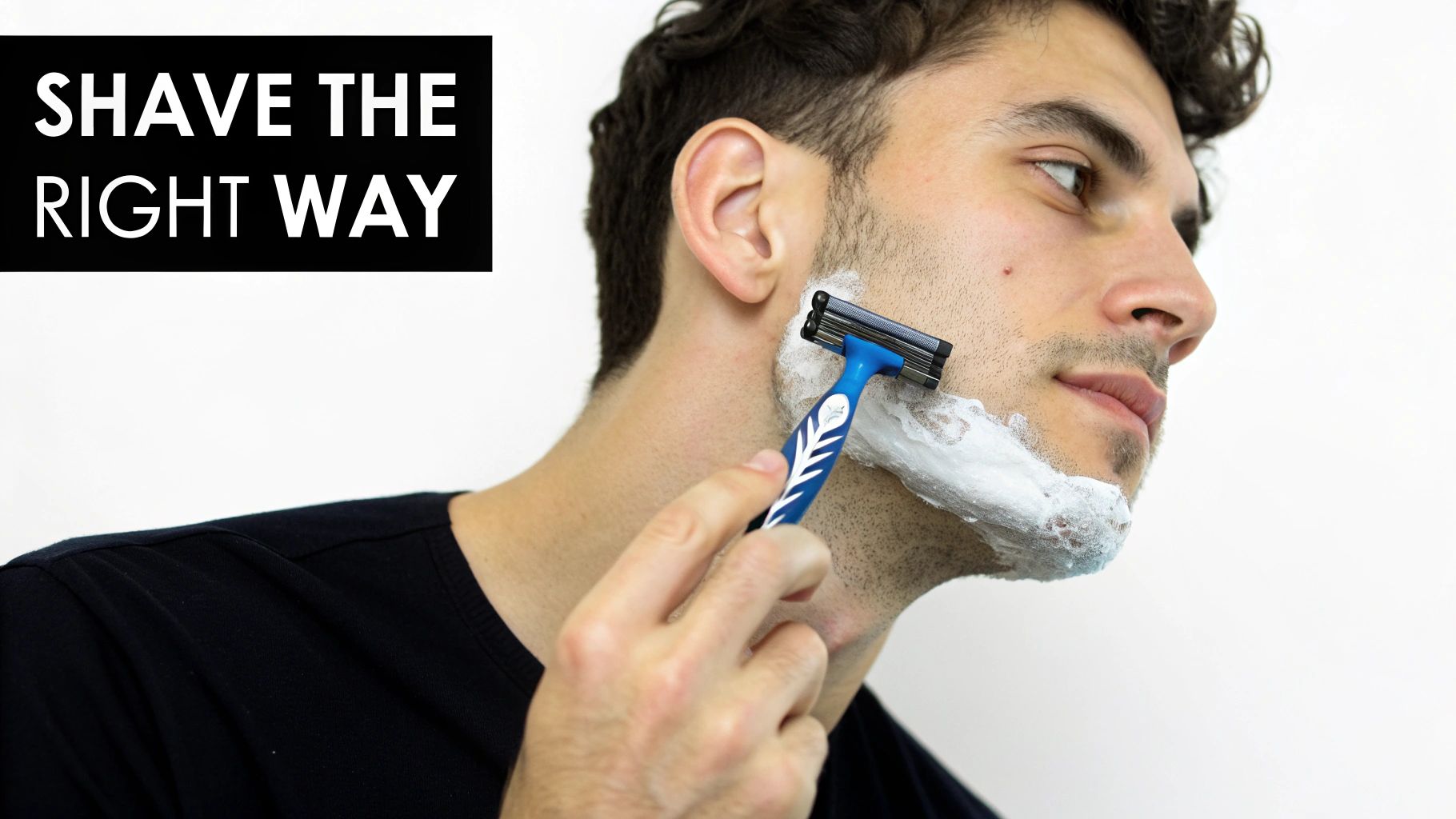
After you’ve prepped your skin, the way you actually handle the razor makes all the difference. This is where many well-intentioned routines fall apart. We’ve been conditioned to believe that a super-close, baby-smooth shave is the ultimate goal, but that mindset is often the direct cause of the irritation and bumps you're trying to prevent.
When you shave too aggressively, you cut the hair below the skin's surface. As that hair starts to grow back, it’s already trapped, making it incredibly easy for it to curl inward and become an ingrown hair. That's why your technique isn't just a suggestion—it's the heart of the entire process.
Embrace Lighter Strokes and Go with the Grain
The single most important rule is to always shave in the direction your hair grows. This is what’s known as shaving "with the grain." When you go against the grain, you pull the hair up before cutting it, which leads to that overly close shave that invites ingrowns. It also creates a ton of unnecessary friction and irritation.
Apply just enough pressure to let the blade do its job. Think of it as gliding the razor over your skin, not scraping it. Light, gentle strokes are much kinder to your skin and are essential for preventing razor bumps. Be sure to rinse your blade under hot water after every single pass to keep it clean and prevent it from dragging.
Your goal is not to eliminate every trace of hair in one aggressive pass. It's to reduce the hair's length comfortably. A consistently smooth result comes from a gentle, smart technique, not brute force.
By focusing on a light touch and the right direction, you leave the hair cut cleanly right at the skin's surface. This small change makes a huge difference, allowing the hair to grow straight out of the follicle instead of getting trapped underneath.
Map Your Hair Growth for Precision Shaving
Hair doesn't always grow in one neat, uniform direction, especially around the neck and jawline. For many people, the hair on the neck grows upwards or sideways, turning "shaving with the grain" into a confusing guessing game. It’s no surprise this is a major trouble spot for razor bumps.
To figure out your own growth pattern, let your stubble grow for a day or two. Gently run your fingers over your face and neck. The direction that feels smoothest is with the grain; the direction that feels rough and prickly is against it. Once you know your patterns, you can create a mental "map" to follow every time you shave.
The Great Razor Debate: Single Blade vs. Multi-Blade
It’s easy to get drawn in by the marketing for razors with five or even six blades. But when it comes to preventing razor bumps, more isn't always better. A multi-blade razor is designed to use the first blade to lift the hair up while the subsequent blades cut it. This "lift-and-cut" action is exactly what can lead to hair being cut too short—below the skin line.
For this reason, many people find that a simple single-blade or double-blade razor provides an excellent shave with far less irritation. No matter how many blades you use, the most important factors are always:
Sharpness: A dull blade is your enemy. It tugs at hair and scrapes the skin instead of cutting cleanly. Replace your blade or cartridge regularly—a good rule of thumb is after every 5 to 7 shaves.
Cleanliness: Always rinse your razor thoroughly after you’re done and store it in a dry place. A damp razor is a breeding ground for bacteria.
Ultimately, the best razor is the one that works for your skin and hair. If you consistently get bumps with a multi-blade cartridge, experimenting with a simpler razor could be a game-changer. Just remember: a sharp, clean blade and proper technique are far more critical than how many blades are stacked together.
Post-Shave Rituals for Calm Skin
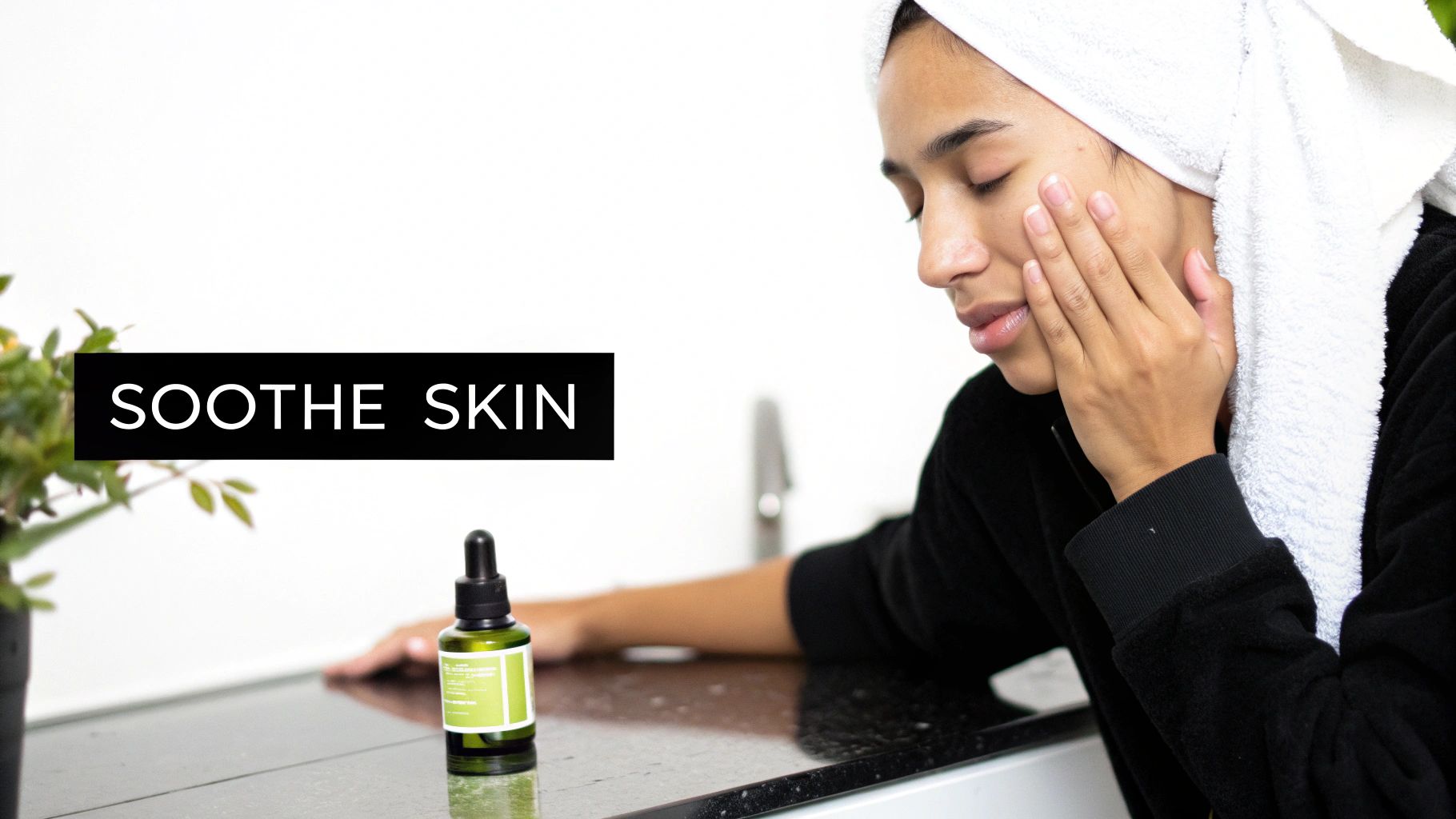
The moment you put your razor down isn’t the end of your routine. It’s a critical window of opportunity. What you do in the minutes right after shaving can either soothe your skin or set the stage for the red bumps you’re trying to avoid.
Think of post-shave care as the essential cooldown after a workout. It helps your skin recover, stay calm, and lock in that smooth finish.
First things first: a cool water rinse. While warm water was your best friend during prep, cool water helps to calm the skin and tighten pores. This simple action can reduce immediate redness and make your skin feel instantly refreshed.
Next, resist the urge to scrub your skin dry. That friction is a major source of irritation on freshly shaved, sensitive skin. Instead, gently pat your skin dry with a clean, soft towel. This small habit change makes a huge difference.
The Power of Soothing Aftercare Products
With your skin clean and gently dried, it’s time for a high-quality aftercare product. This is where you actively work to prevent razor bumps by calming inflammation and keeping pores clear.
The number one rule? Choose an alcohol-free formula. Products loaded with alcohol will sting, dry out your skin, and trigger the exact irritation you’re fighting.
Look for balms, lotions, or serums designed to be soothing and hydrating. A good aftercare product acts as a protective barrier, locking in moisture and delivering key ingredients to help your skin heal. It’s a non-negotiable step.
Key Ingredients to Look For
Navigating skincare labels can feel overwhelming, but a few key players stand out for post-shave care. Keep an eye out for these.
Salicylic Acid: A beta-hydroxy acid (BHA) that works wonders by gently exfoliating inside the pore. It helps dissolve the dead skin and oil that can trap hairs, making it a powerhouse for preventing ingrowns.
Witch Hazel: A natural astringent with potent anti-inflammatory properties. It helps reduce redness and soothe irritation without the harshness of alcohol.
Aloe Vera: Famous for its immediate cooling and soothing effects, aloe is perfect for relieving that initial post-shave sting. It’s incredibly hydrating and helps skin heal faster.
Chamomile: Just like the tea, chamomile has a calming effect on the skin. Its anti-inflammatory properties help reduce redness and discomfort, making it ideal for sensitive areas.
Your post-shave product isn't just a moisturizer. It's an active treatment. Choosing a formula with ingredients like salicylic acid or witch hazel is a proactive strategy to keep your skin clear and calm.
If you find yourself with persistent irritation, you might also be interested in our guide on how to reduce razor burn for smoother skin, which shares some overlapping tips for aftercare.
Simple Home Remedies for Quick Relief
You don’t always need a specialized product to calm your skin down. Sometimes, the most effective solutions are the simplest ones you can find at home. These can be lifesavers if you’re out of your go-to balm or just need immediate relief.
One of the best and easiest options is a cold compress. Just soak a clean washcloth in cold water, wring it out, and press it gently against the shaved area for a few minutes.
This quickly reduces inflammation and constricts blood vessels, which minimizes redness and provides instant comfort. You can repeat this as needed if the irritation persists. It’s one of the most effective ways to stop razor bumps in their tracks.
A Lasting Solution to End Razor Bumps
It’s incredibly frustrating when you’ve done everything right—the prep, the technique, the aftercare—and still end up with stubborn razor bumps. That daily cycle of prevention and treatment can feel like a battle you’re always losing. If you’ve reached the point where temporary fixes just aren’t cutting it anymore, it’s time to look for a way out of the cycle for good.
The most effective strategy is to stop the problem at its source: the hair follicle itself. This is where professional laser hair removal comes in as a truly lasting solution.
How Laser Hair Removal Stops Bumps for Good
Shaving just lops off hair at the skin’s surface, leaving the follicle intact and ready to cause trouble again. Laser hair removal is different. It sends a concentrated beam of light directly into the hair follicle, where the pigment absorbs it. This light converts to heat, which damages the follicle and dramatically slows its ability to regrow hair.
It's simple: no hair means nothing can curl back and grow into the skin. No ingrown hairs, no inflammation, and no more razor bumps. It's a direct fix that stops the problem before it can even start.
Dermatologists agree that laser hair removal can reduce razor bumps by 70-90% over the long term, making it the closest thing to a permanent cure for pseudofolliculitis barbae (PFB). For a deeper dive, check out this guide on the causes and treatments for razor bumps from Pine Belt Dermatology.
Advanced Technology for Every Skin Tone
It used to be that laser hair removal only worked well for people with light skin and dark hair. Thankfully, technology has come a long way, and today’s treatments are safe and effective for nearly everyone.
Here at NYCLASER in Westbury, we use the Splendor X system. It’s a game-changer because it combines two powerful lasers into one. This dual-wavelength approach lets our technicians precisely target hair follicles on all the diverse skin tones and hair types found across Long Island—from the fairest complexions to the darkest—without harming the surrounding skin.
Investing in laser hair removal is an investment in your skin's health. It offers a permanent path to the smooth, clear, and confident skin you've been fighting for, freeing you from the daily hassle of shaving.
What to Expect from Your Treatment
The Splendor X technology isn’t just effective; it’s designed for comfort. It has a built-in cooling system that protects your skin during treatment, which makes sessions quick and far more comfortable than older laser systems.
A full treatment plan usually involves a series of sessions to make sure we target hair in every growth cycle. Here’s a quick overview of what to expect:
Targeted Areas: The technology is precise enough for small zones like the bikini line and powerful enough for large areas like the back or chest.
Session Bundles: Our Westbury clinic offers packages of 3 or 6 sessions, giving you a clear, structured plan for achieving lasting smoothness.
Quick and Convenient: Appointments are fast, and there’s usually no downtime, so you can easily fit them into your busy schedule.
If you've been weighing your options, our detailed guide on laser hair removal vs. waxing offers more insight into the long-term benefits. Choosing laser is more than a cosmetic decision; it's a commitment to permanently smooth, irritation-free skin.
Your Razor Bump Questions Answered
Even with the perfect shaving routine, you're bound to run into questions. Getting consistently smooth skin often means troubleshooting a few specific issues along the way. Here are the most common questions we get, with practical answers to help you stay bump-free.
How Often Should I Shave to Avoid Bumps?
This might sound counterintuitive, but for a lot of people, the answer is to shave more often. Sticking to a consistent schedule—shaving every one to three days—can make a huge difference.
Why? It keeps your hair short. When hair never gets long enough to curl back and dig into your skin, you effectively stop the ingrown process before it even starts. You're disrupting the cycle.
The big exception here is if your skin is already angry, red, and covered in bumps. If that's the case, you need to hit pause. Stop shaving the area for at least a few days, maybe even a week or two, to let your skin fully heal. Trying to shave over irritated skin will only make things worse.
Are Hair Removal Creams or Waxing Better Than Shaving?
They can be, but neither is a perfect solution. Each has its own pros and cons.
Chemical Depilatories (Hair Removal Creams): These creams dissolve hair right at the surface of your skin. This is great because it avoids creating the sharp, pointy tip that a razor leaves, which is often the culprit behind ingrowns. The trade-off is that the chemicals can be harsh. If you have sensitive skin, you might end up with irritation or an allergic reaction. Always do a patch test on a small, hidden area first.
Waxing: Waxing pulls the entire hair out from the root, which means you get longer-lasting smoothness. While you won't get razor bumps, you can still get ingrown hairs as they grow back. Sometimes they get trapped just under the surface of the skin.
While these are decent alternatives, if you're looking for a real, long-term fix that gets to the source of the problem—the hair follicle itself—laser hair removal is the most effective option out there.
What Is the Best Way to Treat Existing Razor Bumps?
When you’re already dealing with bumps, the game plan shifts from prevention to gentle treatment. The absolute first thing to do is stop shaving the area. Let it breathe and give it a chance to heal without more irritation.
Next, grab a warm compress and apply it to the bumps for 10-15 minutes a few times a day. The warmth helps soothe the inflammation and can coax the trapped hair to the surface.
A gentle chemical exfoliant is your best friend here. Look for products with salicylic acid or glycolic acid. These ingredients help dissolve the dead skin cells that are clogging the follicle and keeping the hair trapped.
See the little loop of an ingrown hair? If you can clearly see the tip, you can use a pair of sterile tweezers to gently lift it out. Just lift the tip, don't pluck the whole hair. Plucking it can damage the follicle and just cause another ingrown to form.
If the bumps are really painful, just won't go away, or look infected (like you see pus), it’s time to call a dermatologist.
Is Laser Hair Removal Safe for All Skin Tones?
Yes, absolutely—as long as the clinic is using the right technology. Years ago, this was a legitimate concern, as older lasers really only worked safely on people with fair skin and dark hair.
Thankfully, modern systems have completely changed the game. Advanced lasers, like the Splendor X technology we use right here at our Westbury clinic, are built with dual-wavelength technology. This lets us precisely calibrate the laser to target the melanin in the hair follicle while leaving the pigment in your skin alone.
This makes it a safe and incredibly effective treatment for the full spectrum of skin tones, from the very lightest to the very darkest. It’s a reliable choice for the diverse communities across Long Island and Nassau County, ensuring everyone has an option for clear, smooth skin without risking burns or hyperpigmentation.
Ready to end the cycle of shaving and irritation for good? At NYC Laser Hair Removal, we use advanced technology to deliver lasting smoothness. Book your appointment online today and discover a permanent solution to razor bumps.
Comments