
Dark Bikini Area Laser Treatment: A Safe Guide
You angle the mirror, guide a razor across the bikini line, and hope this time the skin will look even. Two days later, an ingrown hair appears, the area feels irritated, and the same shadowed tone returns. If shaving, waxing, or plucking has become a repeating routine, the darkness may reflect repeated inflammation rather than your natural skin tone.
Dark bikini area laser treatment can help by reducing the hair that triggers frequent removal and follicle irritation. It doesn't work as a bleaching treatment, and darker intimate skin needs more careful wavelength selection, cooling, patch testing, and aftercare than a casual beauty-treatment approach. The safest plan treats the bikini area as its own environment, with friction, moisture, hormones, and pigment all influencing the response.
Why the Bikini Area Stays Dark After Years of Shaving
Consider someone who shaves every few days. The razor removes hair, but it also repeatedly scrapes the outer skin and passes over follicles that may already be swollen or curved. Waxing creates a different kind of trauma by pulling hair from the follicle, while depilatory products can irritate sensitive skin. When the same area is injured before it has fully settled, pigment-producing cells can remain active.
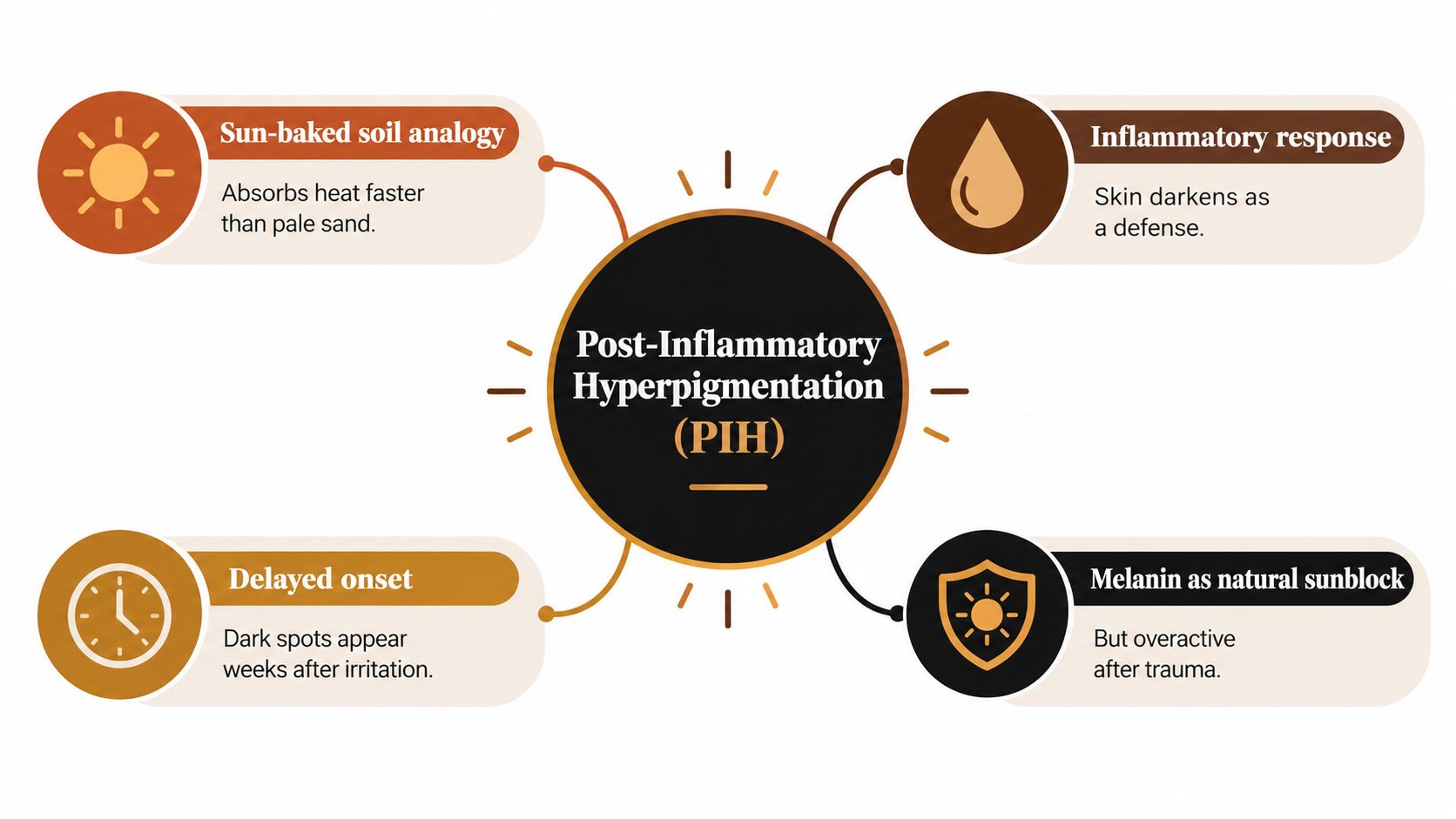
That process is called post-inflammatory hyperpigmentation, or PIH. The darkening often appears after razor burn, ingrown hairs, small cuts, or friction. It isn't a sign that the skin is dirty, poorly cared for, or unhealthy. It can be the visible record of ordinary repair happening over and over.
Practical rule: If the trigger continues, a cream may have little opportunity to work.
The bikini zone receives more mechanical stress than many people realize. Underwear seams rub against the inguinal crease, tight clothing traps heat, and sweat can increase friction. The labial folds and surrounding skin also respond to hormonal changes, which can make pigmentation more persistent or uneven. A dark border along the bikini line may therefore have several overlapping causes rather than one isolated problem.
Why topical lightening alone often disappoints
A topical product may address pigment near the surface, but it doesn't stop a new shaving nick or an inflamed follicle from sending another inflammatory signal. Strong acids, retinoids, or bleaching ingredients can also irritate intimate skin when used without professional guidance, potentially creating more inflammation.
Laser hair removal changes the pattern. It targets pigment in the hair and follicle, reducing regrowth so shaving becomes less necessary. The laser doesn't promise to erase your natural skin tone, but reducing repeated follicular trauma may give existing discoloration a chance to soften gradually. Guidance on the relationship between ingrown hairs, irritation, and the bikini area is also available in this overview of bikini-area bumps.
The important distinction is simple: laser primarily reduces hair. Any improvement in darkness is usually indirect and depends on whether shaving, waxing, and ingrown-hair inflammation were contributing to the appearance.
How Pigmentation Behaves in Melanin-Rich Intimate Skin
Melanin-rich skin can be compared to sun-baked soil. It absorbs and holds heat differently from pale sand, so the same source of energy may produce a stronger response at the surface. This doesn't mean darker skin can't be treated. It means the clinician must control where the energy is absorbed.
Melanocytes are the cells that produce melanin. After inflammation, they can behave like overheated circuits that keep sending signals after the original spark has disappeared. A small ingrown hair may heal quickly, yet leave a brown or gray mark that remains visible much longer.
The intimate area adds extra variables
Fitzpatrick skin types IV to VI contain more epidermal melanin, and the bikini area has additional sources of irritation. The inguinal crease, labial folds, and perianal region can experience warmth, moisture, and skin-on-skin contact. Underwear seams, exercise, cycling, and tight garments may keep producing low-level friction even after a shaving episode has healed.
Hormonal changes can also affect hair growth and skin behavior. Estrogen and androgen fluctuations may change the density or timing of regrowth, while conditions associated with hormonal hair growth can make results less predictable. A clinician should ask about those patterns rather than treating every bikini area as biologically identical.
Pigment may sit close to the surface and deeper within the skin. That helps explain why surface-only approaches often provide limited or temporary change. A useful plan has two parts:
Reduce the source of inflammation, especially repeated shaving and ingrown hairs.
Avoid adding new inflammation, through appropriate laser settings and gentle aftercare.
People with darker skin should receive an individualized assessment rather than a generic setting copied from a lighter treatment area. This guide to laser hair removal for African American skin provides further context on why skin type and device selection matter.
Choosing the Right Laser Wavelength for Darker Bikini Skin
Wavelength jargon becomes easier when you focus on one question: Where does the device place most of its heat? The target is the hair follicle, but the skin above it also contains melanin. In Fitzpatrick IV to VI skin, excessive epidermal absorption can increase the risk of burns and pigment changes.
The long-pulsed 1064 nm Nd:YAG wavelength is generally the preferred technical choice for darker bikini skin. It penetrates more and has lower absorption by epidermal melanin than shorter wavelengths. That gives the clinician a better safety margin when the goal is follicular heating without excessive surface heating. A review of cosmetic procedures in dark-skinned patients reported hyperpigmentation in 9.9% of ruby-laser treatments compared with 2.1% of Nd:YAG treatments, and blistering in 14.9% versus 5%, respectively, in the cited group of patients with Fitzpatrick types IV to VI (NIH-hosted review).
Device/Wavelength | Melanin Absorption | Safety for Fitzpatrick IV-VI | Bikini Suitability |
|---|---|---|---|
Alexandrite, 755 nm | Higher epidermal melanin absorption | More caution required | May be appropriate selectively, but not the default choice for darker skin |
Diode, around 800 to 810 nm | Intermediate absorption | Can work with conservative settings and cooling | Possible in selected cases |
IPL, broadband light | Broad and less specific energy distribution | Less predictable in melanin-rich skin | Generally not preferred for types V to VI |
Nd:YAG, 1064 nm | Lower epidermal melanin absorption and deeper penetration | Preferred technical option | Strong safety foundation for darker bikini skin |
Splendor X blend, 755 nm and 1064 nm | Adjustable combination of shorter and longer wavelengths | Depends on the blend and settings | Allows clinician-guided titration for individual skin and hair characteristics |
A device that combines wavelengths doesn't automatically make every setting safe. The treatment plan matters more than the brand name. Splendor X combines 755 nm Alexandrite and 1064 nm Nd:YAG delivery in a square spot, allowing a clinician to use the deeper-penetrating component more heavily when treating darker skin while retaining flexibility when the hair and skin contrast permit it. The dual-wavelength laser explanation offers additional device-specific context.
Longer pulse durations, effective cooling, and even beam coverage can reduce unnecessary hot spots. Clinical data on long-pulsed 1064 nm Nd:YAG in darkly pigmented patients reported 70% to 90% hair reduction at 12 months, with adverse effects limited to mild-to-moderate pain and rare vesiculation or transient pigment change without fibrosis or scarring (published clinical study). Ask the provider which wavelength dominates your settings, how cooling is used, and what response they want to see during the patch test.
What a Splendor X Treatment Actually Looks Like at the Clinic
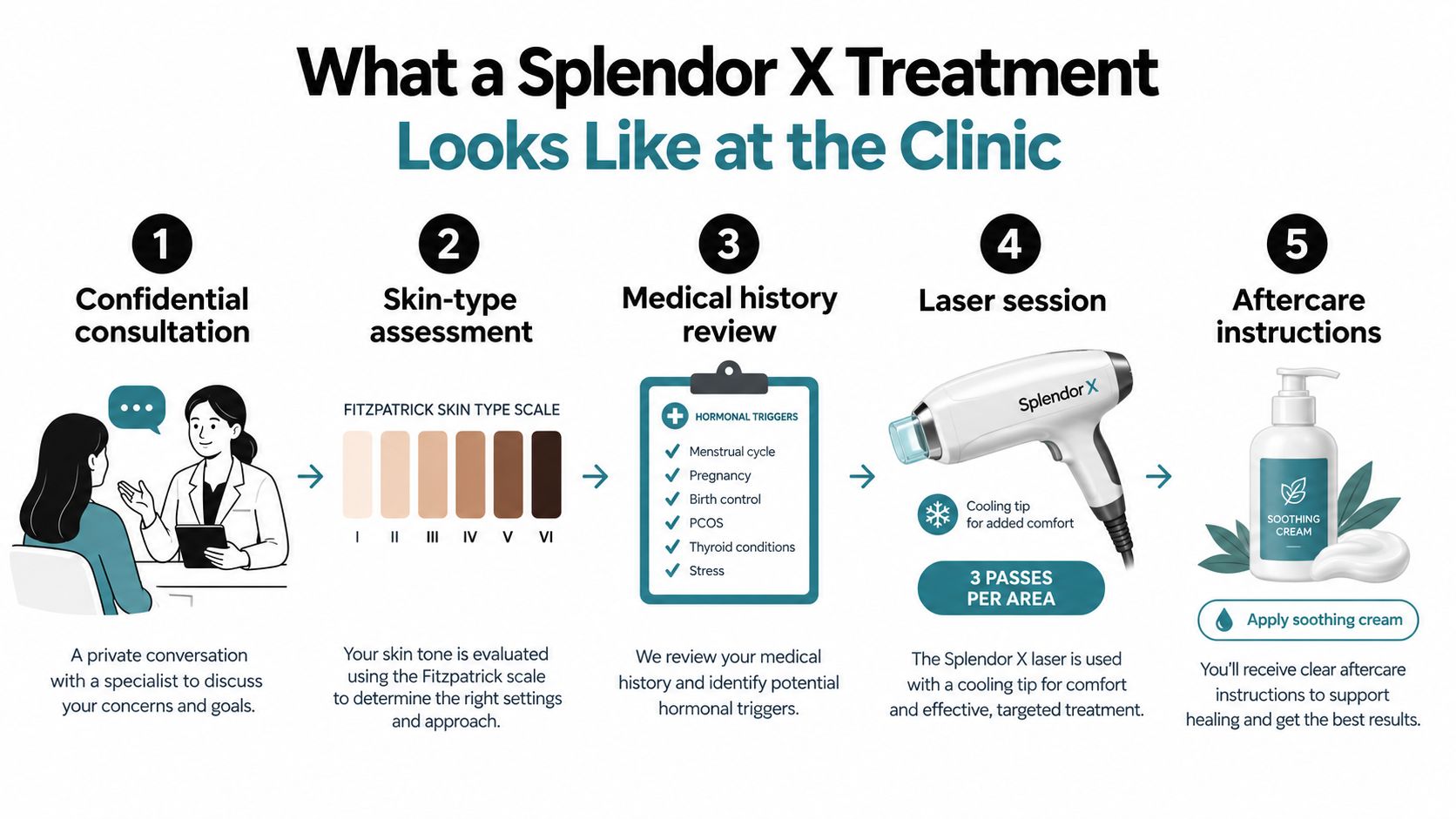
A professional appointment should begin before the handpiece touches your skin. The clinician reviews your hair-removal history, tanning or sun exposure, current products, prior reactions, medical conditions, and any hormonal pattern that may influence regrowth. They also assess your Fitzpatrick skin type, although that scale is only one part of the decision.
A patch test on a discreet area, such as the upper thigh, helps the provider judge whether the selected wavelength and parameters are appropriate. Darker skin can experience delayed pigment changes, so the immediate feeling during treatment isn't the only response that matters. A responsible clinic documents the test response and carries that information into the full treatment plan.
Inside the treatment room
You'll receive appropriate eye protection. The clinician may divide the bikini region into smaller anatomical sections, such as the outer bikini line and more central areas, to keep coverage consistent and prevent unnecessary overlap. The Splendor X handpiece can deliver blended Alexandrite and Nd:YAG energy, with the balance selected according to skin tone, hair thickness, and the response seen during testing.
Most patients describe a brief snapping warmth or pinprick sensation. Cooling air or an integrated cooling system can make each pulse more tolerable and helps protect the surface skin. The exact intensity should be adjusted to produce a controlled follicular response, not excessive pain, blistering, or a gray-white change in the skin.
The clinic records the wavelength balance, pulse duration, fluence, spot size, cooling approach, and skin response. That record matters because the next appointment shouldn't begin from guesswork. If the skin remains calm and the hair response supports it, the clinician may gradually adjust the parameters across later visits rather than starting aggressively.
A bikini appointment is usually brief, but the exact duration depends on the selected area and whether you're treating a bikini line or a more extensive Brazilian region. The goal is a repeatable protocol that protects the skin while addressing the follicles.
Pre-Treatment and Post-Treatment Care That Protects Your Results
Care begins before treatment. The bikini area is more likely to become irritated when products, heat, friction, and hair removal methods overlap, so a simple calendar helps reduce avoidable problems.
Before the appointment
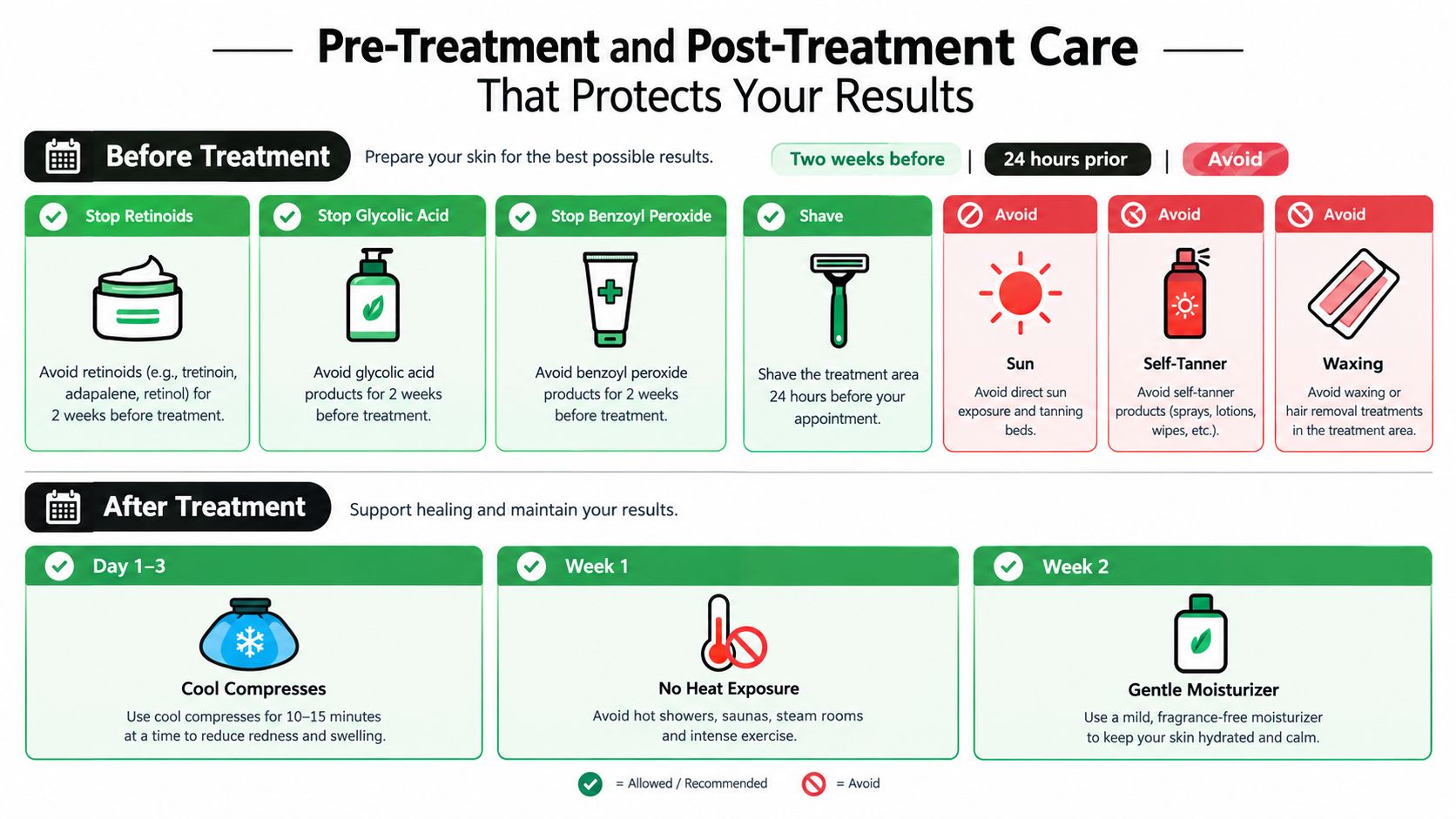
During the two weeks before treatment, ask the clinic which products should be paused. Common irritants in the treatment zone include retinoids, glycolic acid, and benzoyl peroxide. Avoid waxing, plucking, self-tanner, and unnecessary sun exposure, because the clinician needs to treat your actual skin response rather than recently altered or irritated skin.
Shave rather than wax or pluck, and follow the clinic's timing instructions. Arrive with clean skin free from oils, fragrance, deodorant, or other products. A light meal can make the appointment more comfortable, and you may be asked to avoid caffeine or other stimulants if they increase your sensitivity.
After the session
Mild redness, warmth, and small areas of perifollicular swelling can occur. Cool compresses and a fragrance-free barrier cream may soothe the area, but don't apply strong active ingredients unless your provider specifically approves them.
For the first 48 hours, avoid hot baths, saunas, hot yoga, intense exercise, and tight clothing that rubs the treated skin. Choose breathable underwear and keep washing gentle. Between appointments, don't wax or pluck because the follicle needs to remain available for laser targeting. Shaving is usually the less irritating option.
If the treated area is exposed, use a broad-spectrum mineral sunscreen with SPF 30 or higher, and reapply as directed. The Mayo Clinic notes that treated skin can darken or lighten and that pigment changes are more likely in people with black or brown skin, particularly without sun precautions (Mayo Clinic laser hair removal guidance).
Call the clinic if you develop blistering, crusting, severe pain, spreading swelling, or unusual darkening or lightening. Don't attempt to correct a new pigment change with aggressive exfoliation. More irritation can make the problem harder to settle.
Realistic Results, Timelines, and How Many Sessions to Expect
Laser hair removal follows the hair-growth cycle, not a one-visit schedule. At any appointment, some follicles may be responsive while others are resting. Hair thickness, color, hormonal influences, skin response, and consistency with appointments all affect the visible timeline.
The most reliable clinical data for this area comes from a 2023 PubMed-indexed study of laser hair removal across skin types. At three months, the bikini line showed mean hair reduction of 48.1 ± 20.9%, compared with 41.5 ± 19.4% in the axilla. The study also found similar efficacy between lighter and darker groups, with 45.5 ± 16.9% reduction in skin types I to IV and 40.3 ± 17.2% in types V to VI (PubMed study on laser hair removal across skin types).
Those figures describe average hair reduction in a study, not a promise about pigment lightening or an individual result. A person may notice slower regrowth, fewer shaving bumps, and a softer shadow before the skin tone itself appears more even.
What a sensible progress arc looks like
During the early part of a course, treated hairs may shed while untreated or resting follicles continue to grow. The bikini line can look patchy during this period, especially if the patient compares it with a uniformly shaved area.
Later sessions often reveal a clearer pattern. Hair may become less dense or finer, and fewer ingrown hairs may appear. If friction and shaving were contributing to PIH, the reduction in irritation can gradually improve the appearance of dark marks, but pigment often clears more slowly than hair.
A plateau doesn't necessarily mean the treatment has failed. Hormonal changes, irregular appointment timing, fine residual hair, or follicles entering a different growth phase can all affect the result. A provider should reassess the skin, hair, wavelength balance, and treatment objective instead of increasing intensity or promising that more sessions will solve every concern.
If the main goal is skin lightening, discuss that separately. Laser hair removal may remove a repeated trigger, but it isn't a guaranteed treatment for every cause of bikini-area discoloration.
Common Myths About Laser on Dark Bikini Skin
Myth one, laser always lightens dark skin
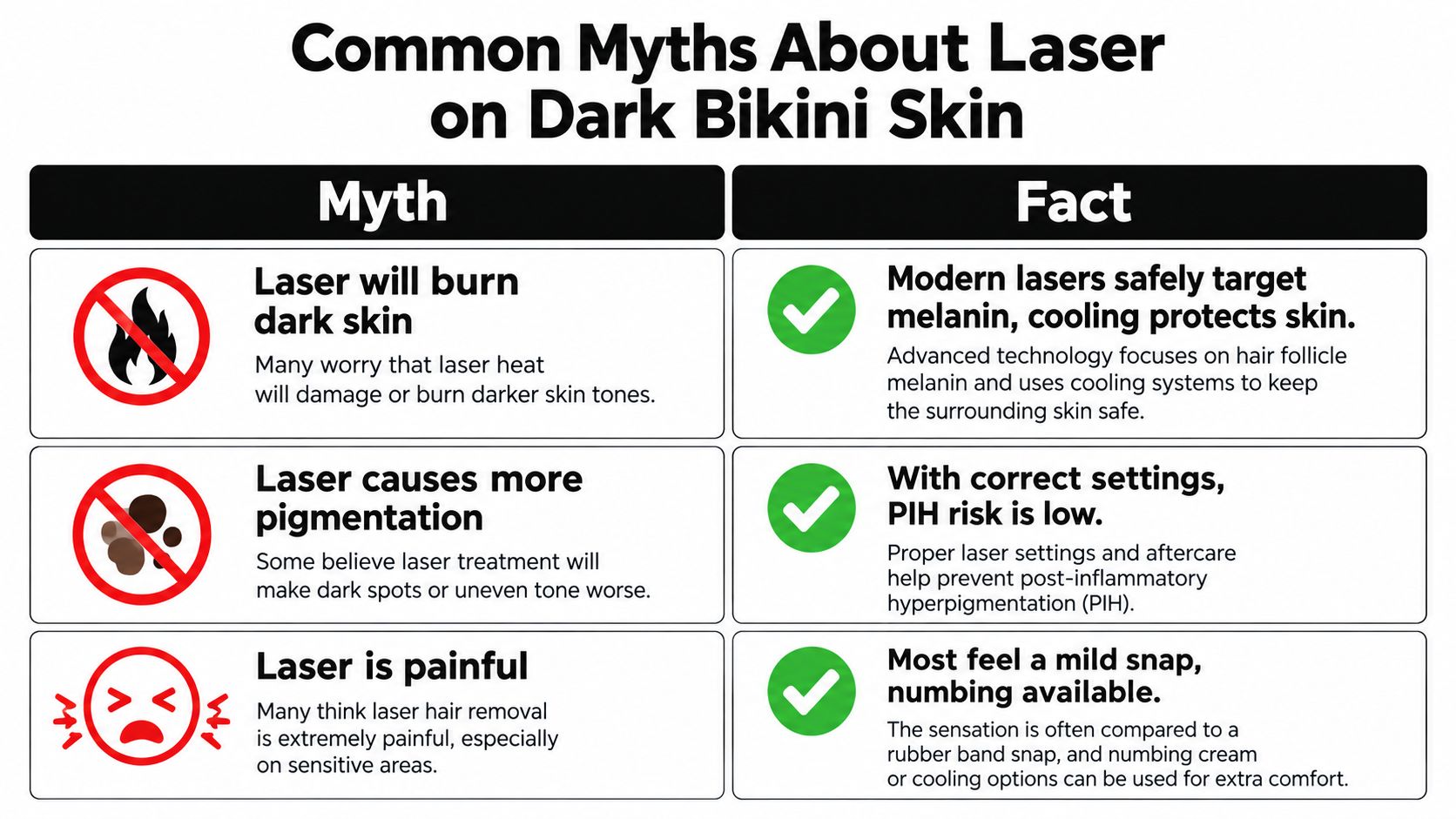
Laser hair removal doesn't selectively bleach the bikini area. Its primary target is the hair follicle. When the treatment reduces shaving, waxing, and ingrown-hair inflammation, the skin may look more even over time, but the result is indirect and varies by cause.
A darker natural tone, hormone-related pigmentation, frictional discoloration, and PIH aren't interchangeable. A clinician should first determine whether the concern is pigment left by irritation or normal variation in skin tone.
Myth two, IPL is the same as laser
IPL uses broadband light rather than one focused laser wavelength. That broader energy distribution can be less predictable in melanin-rich intimate skin. Guidance for darker skin identifies IPL as unsuitable for hair removal in Fitzpatrick types V to VI because of hyperpigmentation risk (clinical guidance on laser for darker skin).
That doesn't mean every shorter-wavelength device is automatically unsafe or every Nd:YAG treatment is automatically safe. Settings, cooling, patch testing, operator training, and the condition of the skin all matter. The wavelength is the starting point for safety reasoning, not a substitute for clinical judgment.
Myth three, more sessions always mean better results
More appointments aren't automatically better. Once the remaining hair is fine, sparse, or hormonally driven, repeatedly treating without reassessing may offer diminishing returns and add unnecessary inflammation. A provider should explain whether the next session is addressing active coarse hair, maintenance, or a different concern entirely.
Myth four, a stronger setting proves the treatment is working
A painful session or dramatic heat sensation isn't a reliable measure of follicular success. In darker skin, excessive heat can damage the epidermis and contribute to pigment changes. The published Nd:YAG data described earlier supports a risk-benefit approach, where meaningful hair reduction can occur without scarring when parameters are selected carefully.
The useful question isn't “How strong is the machine?” Ask which wavelength is being used, why it suits your skin, how cooling is applied, and what response the clinician considers safe.
Your Questions Answered and How to Book in Long Island
Does bikini laser hair removal hurt?You may feel brief snapping warmth or pinpricks. The bikini area can be more sensitive than the legs, but cooling and careful parameter selection can improve comfort. Tell the clinician if the sensation feels excessive rather than trying to endure it.
What should I do about active ingrown hairs?Don't pick, squeeze, wax, or aggressively exfoliate an active bump before treatment. Let the provider inspect it. They may adjust the treatment area or recommend that the inflammation settle first.
Can hormones affect candidacy or results?Hormonal factors don't automatically rule out treatment, but they can influence regrowth and the pace of improvement. Mention PCOS, pregnancy or postpartum changes, hormonal medication, or a sudden change in hair growth during the consultation.
Can I come during my period?Ask the clinic about its policy and choose what feels comfortable. A tampon or menstrual cup may be practical for some patients, while others prefer to reschedule because the area feels more sensitive during that time.
When will I see results?You may notice shedding or slower regrowth before you see a major change in density. Pigment linked to shaving and ingrown hairs can take longer to improve because laser removes the trigger rather than instantly removing established pigment.
What happens at a first appointment?Expect a private consultation, skin and hair assessment, medical-history review, discussion of current products, and a patch-test conversation. Bring a list or photographs of topical products, especially retinoids, acids, acne treatments, and pigment products, so the clinician can tell you what to pause.
NYCLASER offers bikini line and Brazilian treatment using the Splendor X platform, which combines 755 nm Alexandrite and 1064 nm Nd:YAG wavelengths. The Westbury clinic at 355 Post Avenue, Suite 101, Westbury, NY 11590, provides online booking, single sessions, and multi-session package options. Confirm current consultation fees, package details, and patch-test requirements directly with the clinic before booking.
Dark bikini skin is treatable, but safe treatment depends on a provider who plans around melanin, friction, delayed pigment response, and the anatomy of the area. A careful assessment is more valuable than a blanket promise about lightening or permanent removal.
If shaving bumps, ingrown hairs, and persistent bikini-line darkness are shaping your routine, visit NYC Laser Hair Removal to discuss a Splendor X plan for your skin and hair characteristics. Ask specifically about the 1064 nm Nd:YAG component, patch testing, cooling, and how the clinic will protect darker intimate skin throughout treatment.
Comments