
Laser Hair Removal for Women: A Practical 2026 Guide
You're rushing through a shave before the LIRR, covering razor burn before school drop-off, or avoiding a swimsuit because your bikini line is already irritated. After enough weekly shaving, monthly waxing, and recurring ingrown hairs, laser hair removal starts to look less like a luxury and more like a practical way to reclaim time and comfort.
For women on Long Island, the right decision depends on more than a promotional package. Skin tone, hair color, treatment area, hormonal patterns, appointment spacing, device selection, and provider technique all affect the experience. This guide breaks down what laser hair removal for women can realistically do, where it has limitations, and how to plan a series that fits a busy Nassau County schedule.
Why More Long Island Women Are Choosing Laser
A typical patient doesn't arrive because she's never tried hair removal. She arrives after years of trying everything else. She has shaved her underarms before work, waxed before beach weekends, bought products for ingrown hairs, and adjusted clothing around stubble or irritation. The frustration isn't one bad shaving day. It's the repetition.
Laser offers a different arrangement. Instead of managing visible hair every few days, a patient commits to a planned series, usually with sessions spaced according to the treatment area and hair-growth cycle. The payoff is gradual reduction, not an instant promise of perfectly bare skin. She may still shave during the early part of the series, but the regrowth commonly becomes less dense and easier to manage as treatments continue.
Long Island routines make that change especially appealing. Humid summers, frequent trips to beaches and pools, gym schedules, weddings, vacations, and exposed legs or underarms create a steady demand for predictable grooming. A morning saved before a commute or a last-minute invitation can matter more than the cosmetic label attached to the treatment.
Practical rule: Choose laser because you want less recurring maintenance, not because a clinic promises that every follicle will disappear forever.
The category has moved well beyond an early-adopter service. A 2025 peer-reviewed study reported that 311 of 335 participants with previous laser hair removal experience were women, or 92.8% of that sample, while 33.4% of all survey participants had previously undergone treatment. The same source cites an industry estimate placing the global market at USD 1.02 billion in 2023, with a projection of USD 7.67 billion by 2035. These figures indicate broad adoption and strong female demand, but they don't replace an individualized consultation. (peer-reviewed study and market data)
A clinic also has to communicate clearly online and locally. For practices evaluating how educational content and local visibility support patient decisions, this guide by Silver Spoon Agency offers useful context. For a patient, the practical test is simpler: can the clinic explain its technology, screening process, scheduling logic, pricing structure, and expected maintenance without hiding the trade-offs?
How Laser Hair Removal Actually Works
If your Long Island schedule leaves little room for shaving before work, workouts, or weekends away, understanding the treatment helps you plan it realistically. Laser hair removal targets the follicle beneath the skin, where repeated grooming methods do not reach.
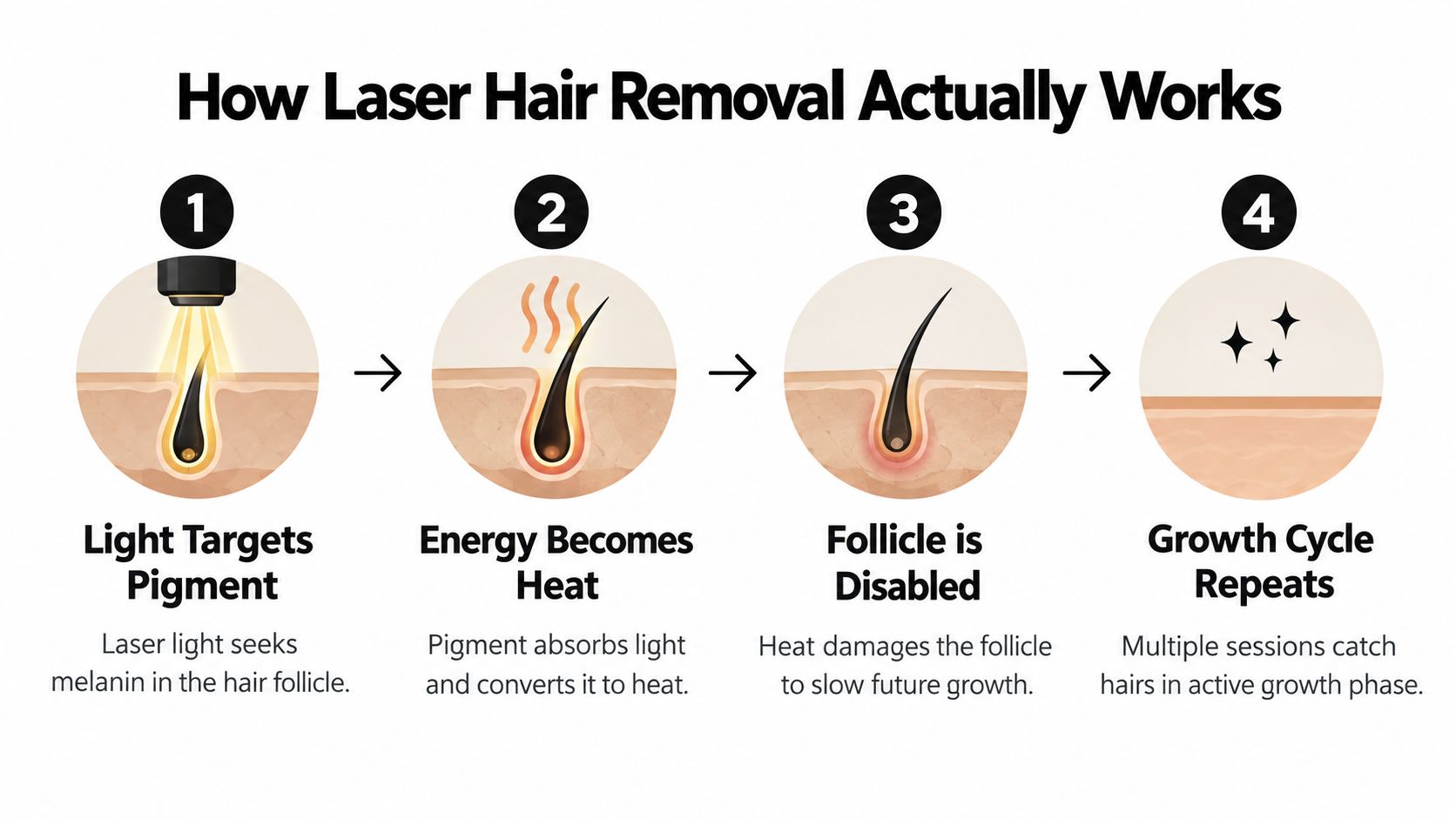
Shaving cuts hair at the surface, while waxing removes the visible hair from the root. Laser treatment directs concentrated light toward pigment in the hair and converts that light into heat. The heat weakens the follicle's ability to produce strong future growth. Wavelength choice, pulse settings, cooling, and technique help protect the surrounding skin. Clinicians call this targeted process selective photothermolysis. Its development includes the introduction of selective photothermolysis in 1983 and practical long-pulse ruby laser hair-removal systems demonstrated in the 1990s. (clinical review)
Why one session can't treat every follicle
Hair grows in cycles. A follicle responds best when its hair is in the active growth phase, called anagen. At one appointment, some hairs are active while others are resting or transitioning, so one session cannot affect every follicle at its most responsive stage.
That pattern makes a series necessary. Spacing also needs to match the treatment area and regrowth, rather than fit an arbitrary calendar. A comparison of intervals found six-week sessions produced about 81% average hair reduction at one year, compared with 57% for two-week intervals. Guideline-style reviews commonly recommend approximately four to eight weeks between sessions, depending on the body area and device. (treatment-interval study)
Modern systems may use diode technology or multiple wavelengths. The clinician should match energy delivery to your skin tone, hair characteristics, and hormonal growth pattern, not choose the strongest setting. This explanation of laser hair removal technology provides a deeper technical overview.
A session commonly feels like quick warmth or small snaps. Underarms and bikini areas often feel more noticeable than larger areas, although cooling and individualized settings can make treatment easier to tolerate. The right device and spacing can turn hair removal into a lower-maintenance routine that fits real schedules.
Benefits Beyond Smooth Skin
The biggest practical gain is fewer grooming decisions during a busy week. A woman who shaves her underarms before a workout, waxes before a Long Island beach trip, and treats bikini-line irritation afterward may care more about reliable preparation than a short-lived feeling of smoothness.
Laser can also interrupt the cycle behind many ingrown hairs. With fewer coarse hairs pushing through recently shaved skin, patients may see less friction, redness, and bump formation. Hormonal growth can still produce new hairs, so improvement varies, especially around the bikini line, underarms, and other areas affected by changing hormone patterns.
Everyday changes patients notice
Less emergency shaving: Dark stubble is less likely to appear unexpectedly before a beach day, appointment, or event.
Fewer razor-related reactions: Shaving less often gives dry, itchy, or inflamed skin more time to recover.
More consistent texture: Legs may feel smoother between appointments as regrowth becomes finer or sparser.
Simpler gym routines: You can spend less time arranging shaving around classes, showers, and clothing changes.
Less bathroom clutter: Razors, replacement blades, wax appointments, exfoliants, and ingrown-hair products may take up less space and attention.
Clinical research supports the possibility of substantial underarm reduction, including a diode-laser study in female participants that found marked decreases in hair counts after treatment. A separate home-use study also reported meaningful underarm reduction. These findings help explain why patients continue treatment, but they do not predict the result for every woman or every body area. (clinical laser hair-reduction evidence)
The day-to-day benefit depends on more than the device. Hair thickness and pigment, skin tone, hormonal activity, treatment settings, and appointment consistency all affect the outcome. A clinician may adjust the plan when regrowth changes, rather than forcing every appointment into the same schedule.
For many Long Island women, the useful endpoint is long-term reduction and easier maintenance. That can mean fewer rushed shaving sessions before work, travel, workouts, or weekends, while still allowing for occasional maintenance when hormones stimulate new growth. Laser is a lifestyle upgrade when the plan fits your skin, hair pattern, and actual calendar.
Most Popular Treatment Areas for Women
Women commonly begin with areas that create the most daily inconvenience. Underarms are compact and quick to treat. Bikini and Brazilian zones are popular because shaving and waxing can produce friction, bumps, and ingrown hairs. Legs cover more surface area, but they offer a visible payoff when a patient wants less last-minute preparation for dresses, shorts, or beachwear.
Facial areas need more careful discussion. The upper lip, chin, and jawline are small zones, yet they can be sensitive and may respond differently when hair growth has a hormonal component. Women with PCOS or another hormonal imbalance may need ongoing maintenance and medical evaluation rather than viewing facial treatment as a one-time fix. Medical literature also describes paradoxical hypertrichosis in about 0.6% to 10% of laser hair-reduction patients, occurring more often on the head and neck, particularly the chin and mandibular areas, and in patients with darker skin or hormonal imbalance. (review of complications in skin of color)
Area | Avg. Sessions | Sensitivity | Pricing Tier |
|---|---|---|---|
Underarms | 6 to 8 | Moderate | Small |
Bikini or Brazilian | 6 to 8 | Moderate to high | Small to medium |
Half or full legs | 6 to 10 | Low to moderate | Large to extra large |
Arms | 6 to 10 | Low to moderate | Medium to large |
Upper lip or chin | 6 to 8 | Moderate to high | Small |
Chest or abdomen | 6 to 10 | Variable | Medium to large |
The session ranges above reflect common planning categories, not a guarantee. Smaller zones usually cost less per visit, but hormonal facial hair may require touch-ups. Larger zones take longer and often reveal shedding gradually, with visible changes commonly becoming easier to assess after the early appointments.
Package selection should follow the area's behavior. A patient focused on underarms may prioritize a small-zone series, while someone preparing for summer may compare full-leg treatment with a bikini or underarm combination.
Matching Technology to Your Skin Tone
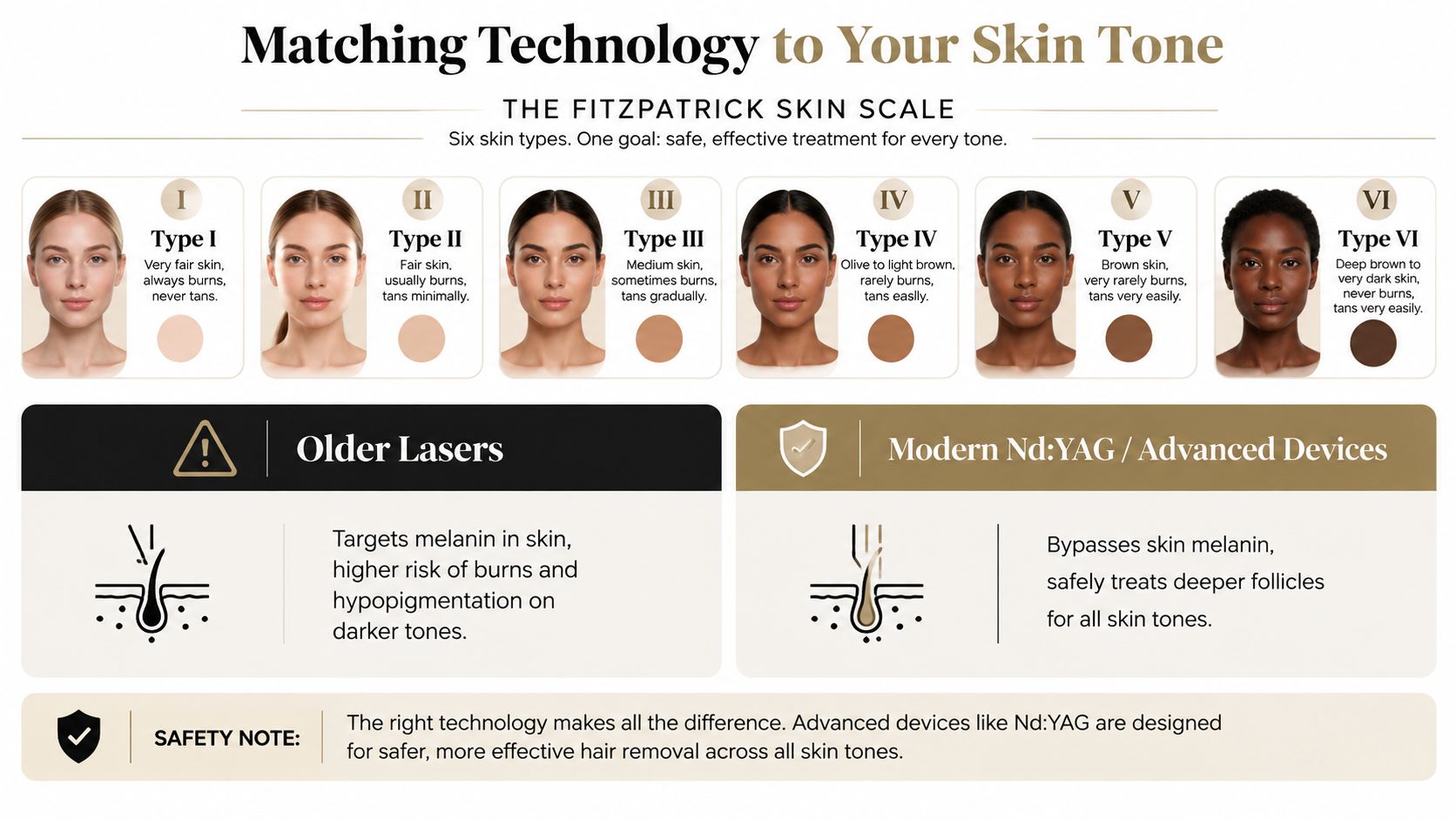
Laser settings aren't interchangeable across skin tones. The Fitzpatrick scale classifies skin from type I through type VI, and the amount of melanin in the epidermis affects how safely a wavelength can deliver energy to the follicle. If the device or settings are poorly matched, the laser may heat pigment in the skin instead of concentrating enough energy in the hair.
For women with Fitzpatrick types I through III, alexandrite at 755 nanometers and diode at 810 nanometers are generally preferred because melanin absorbs those wavelengths strongly. For types IV through VI, Nd:YAG at 1064 nanometers is generally safer because it penetrates deeper and is less absorbed by epidermal melanin, lowering the risk of burns and post-inflammatory hyperpigmentation. (clinical reference on laser selection by skin type)
Why dual-wavelength treatment matters
A dual-wavelength platform such as Splendor X combines Alexandrite 755 nm and Nd:YAG 1064 nm technology. That gives a trained practitioner more flexibility when treating fair, olive, tan, or deeper skin tones, provided the settings are selected carefully for the individual patient.
The consultation remains more important than the device name alone. The provider should review your current skin tone, hair thickness, recent sun exposure, tanning history, medications, and any previous reaction to light-based treatments. Patch testing or cautious test areas can help the clinician evaluate how your skin responds before treating a larger zone.
Square spot sizes and uniform energy delivery may help a practitioner cover an area systematically and reduce missed patches. They don't eliminate risk, and they don't make every patient identical. A useful technical overview of this approach is available in the dual-wavelength laser treatment guide.
Safety check: A provider who can't explain why a wavelength and setting suit your skin shouldn't be treating you.
Preparing for Sessions and Caring for Skin Afterward
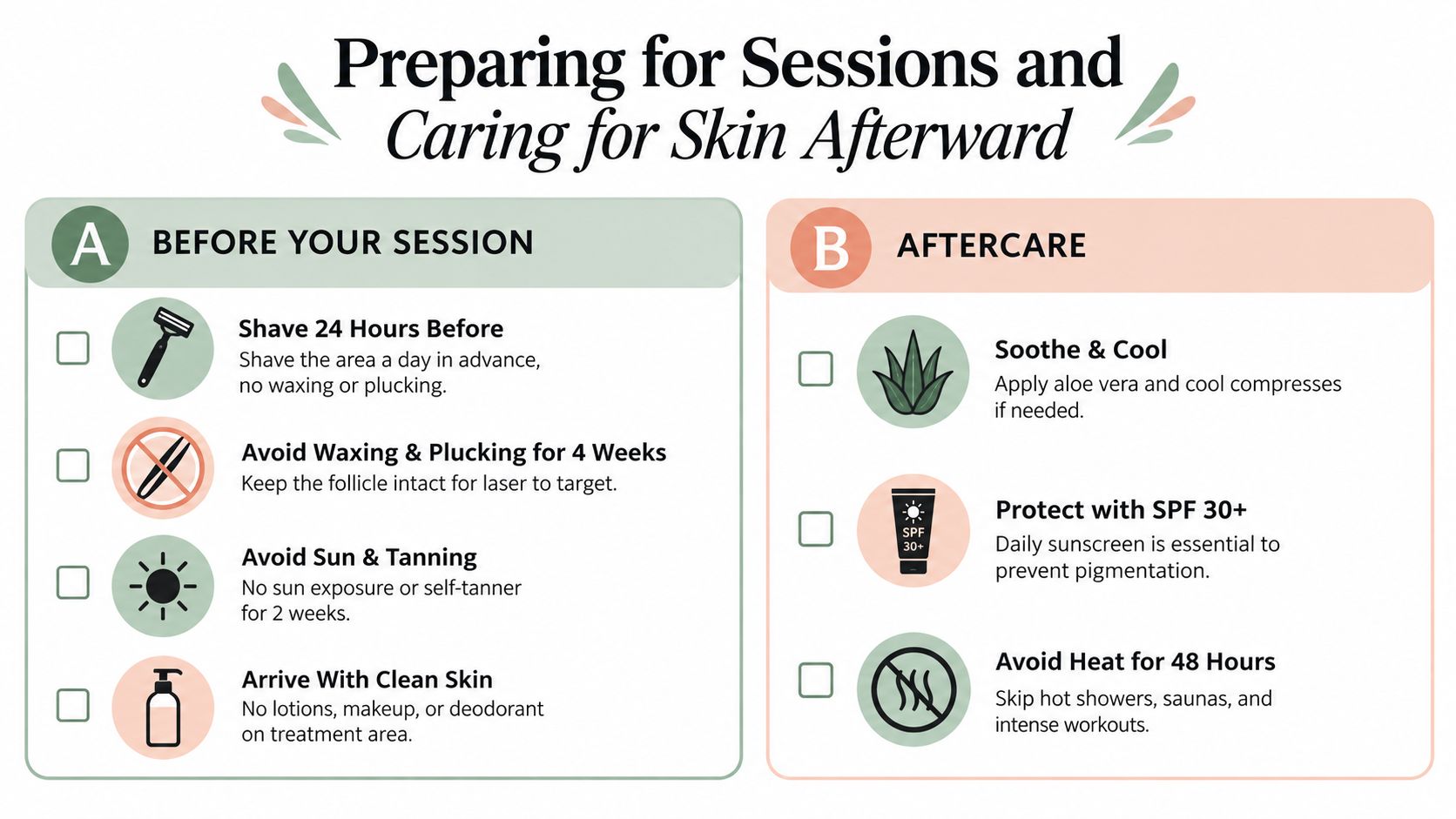
Preparation affects comfort, safety, and whether the laser can reach the follicle efficiently. The basic rule is to remove surface hair without removing the follicle underneath. Waxing, plucking, and threading take away the target the laser needs to heat.
Before your appointment
Shave the area: Shave about 24 hours before treatment so hair isn't long above the skin.
Protect the follicle: Avoid waxing, plucking, or threading for at least four weeks before the appointment.
Avoid added pigment: Skip self-tanner and reschedule after a fresh tan. Recent sun exposure can change how the skin absorbs laser energy.
Pause irritating products: Avoid active skincare acids and other products your clinician has told you to stop on the treatment area.
Arrive with clean skin: Leave lotions, makeup, deodorant, oils, and fragrance off the zone being treated.
On the day, the practitioner should confirm the area is clean and reassess the skin before starting. Smaller zones may take only a short appointment, while larger areas require more time. Cooling systems and, where appropriate, numbing options can make sensitive areas easier to tolerate.
Aftercare that fits real life
Cool compresses or aloe can calm temporary warmth. Avoid hot showers, saunas, intense workouts, and other heat-producing activities for 24 to 48 hours, then follow the clinic's specific instructions. Wait several days before exfoliating, and use mineral SPF 30 or higher on treated skin that will be exposed to sunlight.
Mild redness or warmth can occur, but severe pain, blistering, unusual swelling, or a reaction that concerns you should be reported promptly. Don't restart waxing or plucking between sessions, and don't move appointments closer together because some regrowth appears. The clinician's spacing plan is designed around follicle growth, not impatience.
Packages, Pricing, and Realistic Timelines
Budgeting becomes clearer when you separate the first treatment series from later maintenance. For many Long Island women, an initial course involves six to eight sessions, with appointments often four to eight weeks apart. The right interval depends on the treatment area, hair-growth cycle, skin response, and how easily appointments fit around work, commuting, family schedules, and other commitments. Booking too close together can create extra inconvenience before enough new growth is ready to respond.
Smaller areas such as underarms and bikini zones often feel efficient because appointments cover less skin and the hair is frequently coarser and more pigmented. Legs and arms involve greater surface area, so the planned series may be followed by occasional touch-ups. Facial hair influenced by hormonal patterns can respond less predictably. A responsible quote should explain that maintenance may be part of the plan rather than promise a fixed endpoint.
Area Grouping | Sessions in Series | Spacing Between Sessions | Best For |
|---|---|---|---|
Small zones, such as lip or underarms | 6 to 8 | 4 to 8 weeks | Lower-maintenance daily grooming |
Bikini combinations | 6 to 8 | 4 to 8 weeks | Fewer ingrown hairs and easier swimwear preparation |
Legs or full arms | 6 to 10 | 4 to 8 weeks | Broad reduction across visible areas |
Multi-area packages | Based on each area | Area-specific | Coordinating several priorities |
Maintenance visits | Individual plan | Set after the initial series | Addressing later regrowth |
A package often costs less per area than booking isolated appointments, but the headline price is only part of the decision. Combination bundles may suit patients treating several zones, while memberships can work better for ongoing maintenance. Ask whether the package expires, whether touch-ups are included, what happens after a missed appointment, and whether the quoted price covers the exact zone you want.
A practical package should match your treatment plan, not push you into unused sessions. This laser hair removal package guide explains common package structures and planning questions. NYC Laser Hair Removal should still provide a personalized estimate based on your skin tone, hair pattern, selected areas, expected spacing, and likely maintenance needs.
Planning Your First Series at NYCLASER
A sensible first appointment starts before the laser handpiece touches your skin. At a complimentary consultation, the practitioner should review your medical history, inspect skin and hair characteristics, discuss recent sun exposure, and identify whether hormonal factors may affect facial or body-hair growth. Bring a list of medications, details about previous waxing or laser treatments, and photographs of any past reactions if you have them.
At NYCLASER, small zones such as the upper lip may take around 10 minutes, while full legs may take up to 60 minutes, according to the clinic's stated service information. That range makes treatment easier to schedule around lunch breaks, errands, school pickups, and evening plans. The clinic operates in Westbury and offers online booking, with business hours listed as Monday through Saturday from 10 a.m. to 6 p.m.
Splendor X technology gives the practice access to Alexandrite and Nd:YAG wavelengths, which can be relevant for women with fair, olive, tan, or deeper skin tones. The technology still needs experienced assessment and conservative judgment. A consultation should address hair color, because laser relies on pigment in the hair, and should distinguish ordinary regrowth from patterns that may need medical evaluation.
Ask before booking: Which wavelength will you use for my skin tone, how will you handle recent sun exposure, what spacing do you recommend for each area, and how will hormonal hair growth change maintenance?
Once an initial series is complete, maintenance may become occasional rather than routine, with some patients planning one or two visits per year based on regrowth. That schedule isn't universal, especially for hormonally driven facial hair, but it illustrates the lifestyle shift many patients want. You're replacing constant shaving or waxing decisions with periodic appointments and a simpler daily routine.
Clinics also need practical communication that answers patient questions before the consultation. Providers reviewing social posts for medical spas may find useful ideas for explaining preparation, technology, and expectations in a clear, patient-friendly way. For the patient, the standard is straightforward: the clinic should make the process understandable, provide realistic expectations, and fit appointments into the life you already have.
NYC Laser Hair Removal offers personalized laser hair reduction with Splendor X technology for areas including underarms, bikini, facial zones, arms, and legs, with consultation-based treatment planning and flexible booking. Visit NYC Laser Hair Removal to review available treatment areas, arrange a consultation, and choose a series that fits your skin, goals, and Long Island schedule.
Comments