
Before and after facial laser hair removal: A Visual Guide
If you're tired of the daily battle with unwanted facial hair, you're not alone. The constant cycle of shaving, waxing, and plucking is frustrating and often leaves skin irritated. But what does the journey from that constant maintenance to smooth, clear skin really look like? The reality of before and after facial laser hair removal is a progressive shift—one that trades razor burn and stubble for long-lasting confidence.
The Journey To Smooth Skin Explained
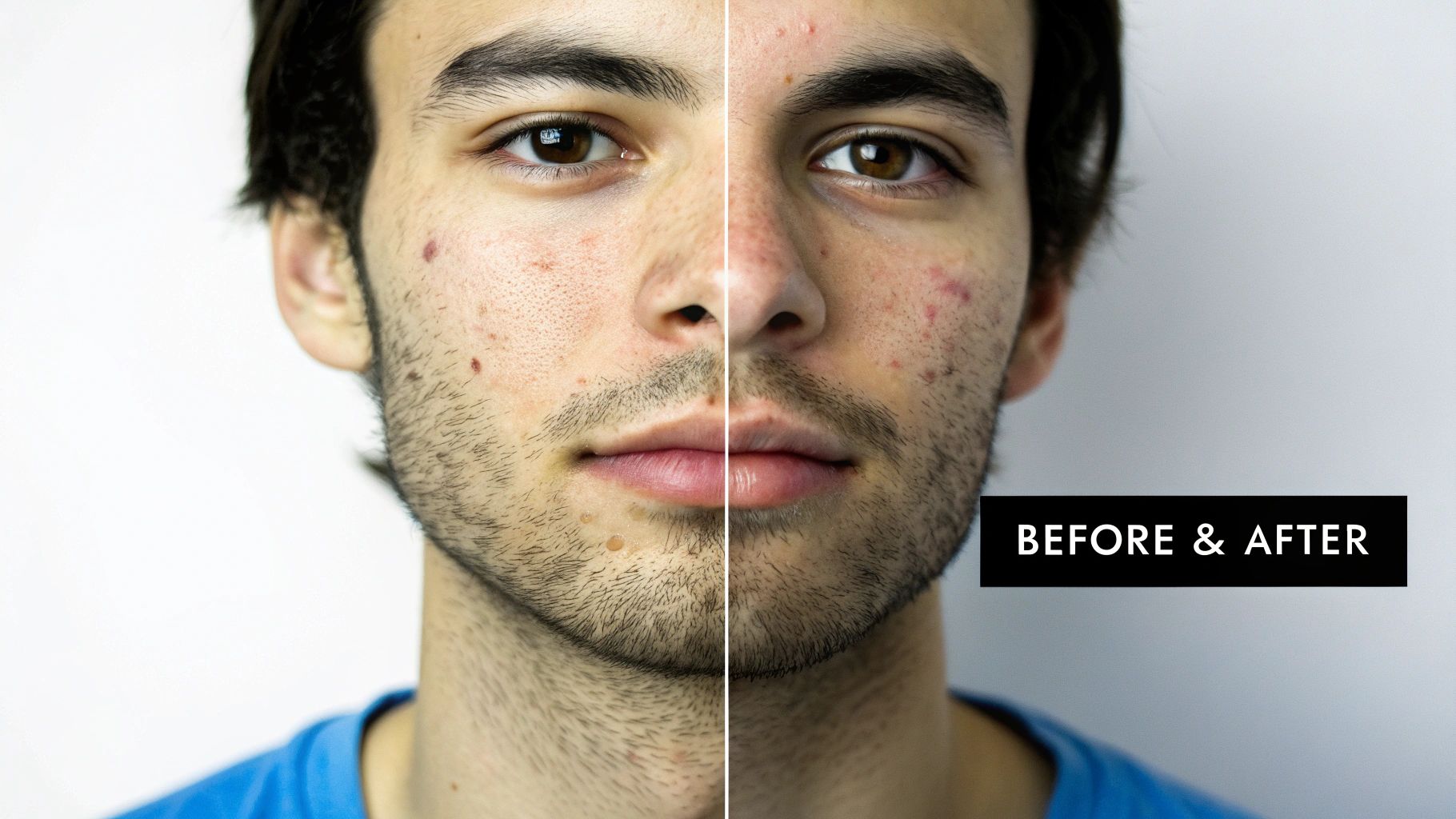
For most people, the "before" picture is a story of struggle. It's the time spent shaving every morning, the sharp sting of waxing, and the tedious task of plucking stray hairs. These methods do more than just remove hair; they often bring a whole host of skin problems with them.
We see it all the time: persistent razor bumps, painful ingrown hairs, and dark spots (hyperpigmentation) are incredibly common. This is especially true for women dealing with hormonal hair growth, a condition called hirsutism that affects up to 10% of women. The constant irritation can be a major source of self-consciousness.
From Daily Frustration To Lasting Confidence
The "after" is where the real change happens. Imagine waking up and not even thinking about a razor or needing to cover up redness. After a full series of facial laser hair removal treatments, the skin isn't just hair-free—it's healthier. With the constant inflammation gone, skin tone evens out and the texture becomes noticeably smoother.
This freedom doesn't happen in a single visit. It's built progressively over several sessions. Each treatment zaps hair follicles while they're in their active growth phase, which gradually makes the hair grow back thinner and lighter until it's barely there.
The goal is permanent hair reduction. We typically see a 70-90% decrease in hair. Any hair that does eventually grow back is usually so fine and light that you hardly notice it.
Setting Realistic Expectations For Your Transformation
Understanding the process is the key to loving your results. That stunning "after" photo doesn't happen overnight; it’s the result of a carefully planned series of treatments. At our Westbury, NY, clinic, we use the Splendor X system because its advanced technology works beautifully on a wide range of skin tones and hair types, making this transformation possible for more people than ever.
To put it in perspective, clinical studies show just how dramatic the change can be. One study found that after a complete treatment cycle, hair thickness dropped from a coarse 250µm to a super-fine 40µm. That’s a huge difference you can both see and feel.
This whole journey from a daily battle to lasting smoothness is a strategic process. We have to target the hair at exactly the right time in its growth cycle to get those incredible results. If you're curious about the science behind it, check out our guide: What Is the Hair Growth Cycle and How It Affects Your Laser Treatment. Following the recommended schedule ensures we treat every follicle effectively, leading you to the clear, confident skin you're looking for.
How Laser Technology Creates Smooth Skin
To understand the amazing before and after facial laser hair removal results you see, you have to get a little geeky about the science behind that flash of light. It's actually a pretty elegant process. Think of the laser as a smart, heat-seeking device with one simple mission: find and neutralize the source of unwanted hair.
That "device" is really just a highly concentrated beam of light. Its target is melanin, the pigment that gives your hair its color. When the laser pulses, that light energy zips down the hair shaft and instantly converts to heat as soon as it hits the melanin-rich follicle deep under your skin. This targeted heat is what disables the follicle's ability to grow new hair, all without harming the surrounding tissue.
The Power Of Dual Wavelengths
Older laser systems weren't always great at telling the difference between the pigment in your hair and the pigment in your skin. This made treating darker skin tones tricky and sometimes risky. Thankfully, modern technology like the Splendor X system has completely changed the game by using a dual-wavelength approach.
It combines two powerhouse lasers into one seamless treatment:
The Alexandrite laser (755nm): This wavelength is a master at targeting melanin, making it incredibly effective for lighter skin tones with dark hair.
The Nd:YAG laser (1064nm): This one penetrates deeper and is less absorbed by melanin in the skin, making it the gold standard for safely treating darker skin tones.
By blending these two wavelengths, a skilled technician can perfectly customize the treatment for your exact skin and hair type. This ensures you get the best possible results with the highest level of safety, opening the door for nearly everyone to get that smooth, hair-free skin they've been wanting.
Key Takeaway: The technology works by selectively targeting the pigment in the hair follicle. This precision is what allows it to destroy the hair root while leaving the surrounding skin untouched—it's why "after" photos show clear, healthy skin, free from the irritation that other hair removal methods leave behind.
Why Multiple Sessions Are Essential
So, if the laser is so good at what it does, why can't we zap everything in one go? It all comes down to the hair's natural growth cycle. Every single hair on your face goes through three distinct phases, and the laser can only do its job effectively during one of them.
Here’s a quick breakdown of that cycle:
Anagen (The Growth Phase): This is the active stage when the hair is physically connected to its root (the papilla). For the laser's heat to successfully destroy the follicle, the hair must be in this phase.
Catagen (The Transition Phase): A short phase where the hair detaches from the papilla and stops growing.
Telogen (The Resting Phase): The hair is now fully detached and will eventually fall out, while the follicle chills out before starting a new growth phase.
At any given time, only about 20-30% of your facial hair is in that active anagen phase. Since the laser can only disable follicles that are actively growing, a single session can only treat that percentage of hair. For a deeper dive into this, you can learn more about the science and process of laser hair removal in our detailed guide.
This is exactly why your appointments are scheduled four to six weeks apart. We strategically time them to catch the next wave of hair as it enters the anagen phase. By completing the full series of treatments, we can make sure we target and treat virtually every follicle, leading to that smooth, flawless "after" that lasts.
Visualizing Your Treatment Timeline Session By Session
Getting that perfect "after" photo is a journey, not an overnight miracle. Those incredible before and after facial laser hair removal transformations you see online are the result of several sessions, each one building on the last. It helps to know what to expect at each stage so you can set realistic goals and actually enjoy the process.
Let's walk through the typical progression. Think of it as mapping out your path from dealing with unwanted facial hair to showing off clear, confident skin.
Before Your First Session
Your prep work is simple but absolutely essential for getting the best results. For a few weeks before your first appointment, you'll need to stop any hair removal that pulls the hair out from the root—that means no waxing, plucking, or threading. The laser needs that follicle intact to do its job.
The most important step? Shave the treatment area 24 hours before you come in. Shaving leaves the hair just below the skin's surface, creating a perfect pathway for the laser's energy to travel straight to the follicle. If the hair is too long, the laser just singes the surface hair and never reaches the root, which makes the treatment far less effective and can irritate your skin.
Immediately After Session 1
It's completely normal to see some mild redness and a little bit of swelling around the hair follicles right after your first treatment. Most people say it looks and feels like a minor sunburn, and it usually fades within a few hours to a day. This is actually a great sign—it means the follicles have responded to the laser.
Over the next one to three weeks, the "shedding" begins. The treated hairs will start to fall out on their own. At first, you might mistake it for new growth, but it's really just the disabled follicles pushing out the old hair. This is the first real proof that the treatment is working its magic.
This infographic breaks down why we need multiple sessions to get the job done. It all comes down to the hair growth cycle.
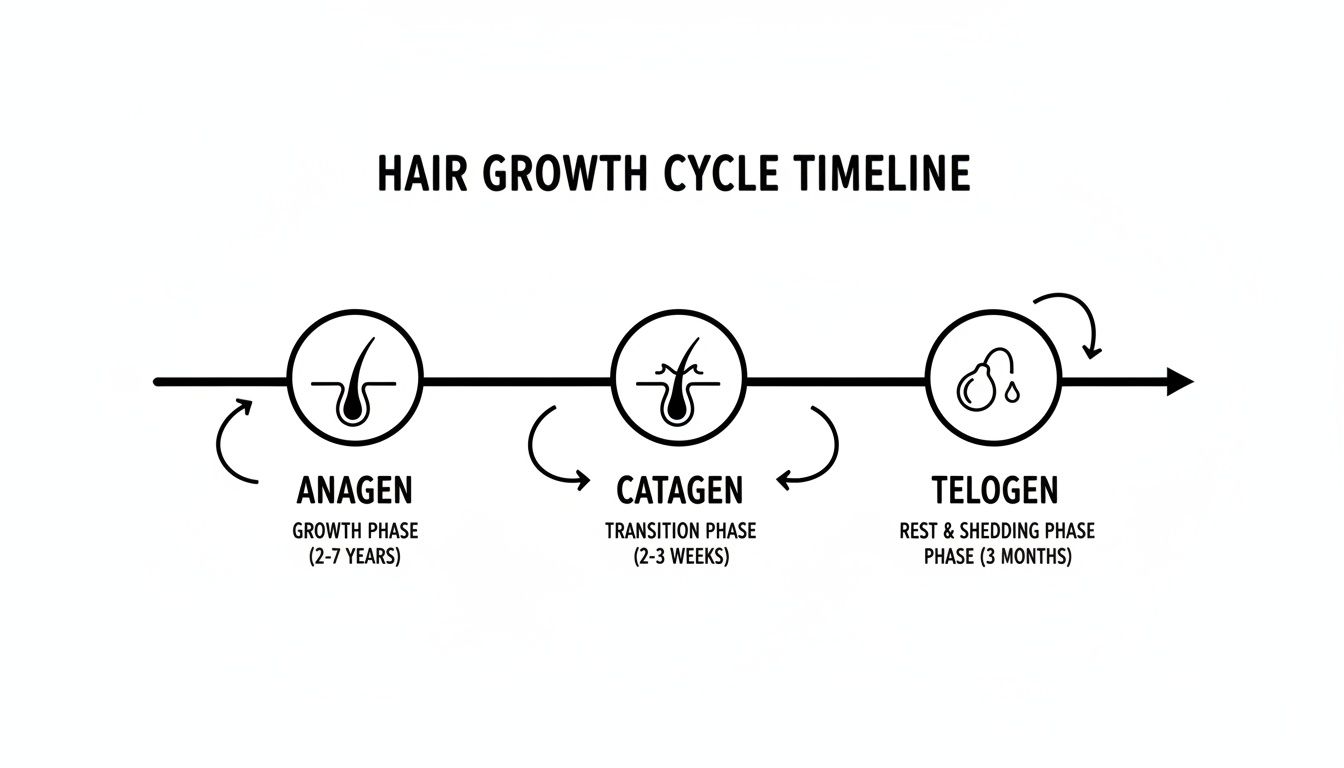
As you can see, the laser is only effective when the hair is in its active (Anagen) growth phase. We space out your appointments to catch new hairs as they enter this critical stage.
After 3 Sessions
Once you've hit your third session, you'll really start to see a major difference. Most of our clients report about 50% less hair at this point, which is a huge milestone.
The hair that does grow back will be noticeably finer, lighter, and way softer than before. It will also grow back much slower and in patches. That daily stubble you were used to fighting? It'll be a distant memory, and you'll find yourself reaching for the razor far less often. For a deeper dive, check out the full breakdown in our NYC laser hair removal timeline guide.
Mid-Treatment Milestone: This is where the "after" really starts coming into view. Your skin's texture improves without the constant irritation from shaving, and the daily chore of managing facial hair becomes a thing of the past.
After 6-8 Sessions
This is the finish line. After completing a full series of six to eight treatments, you can expect to see up to 90% permanent hair reduction. The area will be smooth, clear, and virtually hair-free.
Any hair that might remain is usually so fine and light that it’s practically invisible. The constant cycle of shaving, tweezing, and worrying is finally over. To keep things looking flawless, all you’ll likely need is a quick touch-up session once every year or two. This is the "after" you've been working toward: lasting smoothness and a whole new level of confidence.
Factors That Influence Your Final Results
Ever wonder why your friend's before and after facial laser hair removal journey looks a little different than someone else’s? The final result isn’t just about the laser itself. It’s a team effort between your unique biology and the technology we use. Knowing what shapes your outcome helps set clear expectations and ensures you get the best transformation possible.
Think of it like tuning a radio. To get a perfectly clear signal, you need just the right frequency. With laser hair removal, that "signal" is the contrast between your skin tone and hair color. It’s probably the single biggest factor in the whole process.
The Role of Skin Tone and Hair Color
The classic, textbook scenario for laser hair removal has always been high contrast: dark, coarse hair against fair skin. The laser’s energy is designed to seek out melanin (the pigment in your hair), and when there’s a big difference, it can easily "find" the dark follicle without getting confused by pigment in the surrounding skin.
This is why people with very light blonde, gray, or red hair sometimes don’t see the same results—those hairs just don't have enough melanin to absorb the laser's heat effectively. But technology has come a very long way.
The old rules don't really apply anymore. With advanced systems like the Splendor X, we can safely and effectively treat a much wider range of skin tones, including darker complexions that used to be turned away.
The Splendor X system is a game-changer because it uses dual-wavelength technology, blending two types of lasers (Alexandrite and Nd:YAG). This lets your technician create a custom-blended treatment perfectly tuned to your unique skin and hair color combo, delivering incredible results safely for everyone.
How Hair Thickness and Density Matter
The actual texture of your hair plays a huge part, too. As a general rule, thicker, coarser hair responds better and faster to laser treatments than fine, wispy hair.
Why? Coarse hair is packed with dense melanin, making it a bigger, more absorbent target for the laser’s energy. This allows the heat to travel straight down to the follicle's root and shut it down for good.
Coarse Hair (like on the chin or sideburns): This type often shows a dramatic reduction right from the first few treatments because it soaks up the laser energy so well.
Fine Hair (like 'peach fuzz' on the cheeks): This might require a few more sessions to get the same level of smoothness since the target is smaller and less pigmented.
The density of the hair in a specific spot also affects the process. An area with a lot of hair packed together might feel a bit warmer during treatment and requires a really meticulous approach to make sure every single follicle gets zapped over your full series of sessions.
Why The Treatment Area Is Important
Not all facial hair is the same. The specific area you’re treating can influence how many sessions you’ll need and how quickly you’ll see results. Hair on the upper lip, for example, is often finer and grows on a different cycle than the coarser, more stubborn hair that can pop up on the chin.
Areas that are more sensitive to hormones, like the chin and jawline, can sometimes be more persistent. Hormonal shifts can occasionally trigger new hair growth down the road, which is why some clients love coming in for a quick annual maintenance session to keep those spots perfectly smooth.
The Impact of Hormonal Conditions
Underlying hormonal conditions can definitely be a big piece of the puzzle. Conditions like Polycystic Ovary Syndrome (PCOS) can cause hirsutism, which is the growth of excess coarse hair on the face, chest, and back.
For anyone dealing with a hormonal imbalance, laser hair removal can be absolutely life-changing. It offers real relief from the daily frustration of tweezing, shaving, or waxing. It's important to know, however, that while the laser is fantastic at destroying existing hair follicles, it can't stop your body from creating new ones in the future.
Clients with these conditions often see amazing results, but they may need more sessions to start and more regular touch-ups to maintain that smooth, hair-free skin. For them, a truly personalized treatment plan isn't just a good idea—it's essential for a successful outcome that lasts.
Your Checklist For The Best Possible Outcome
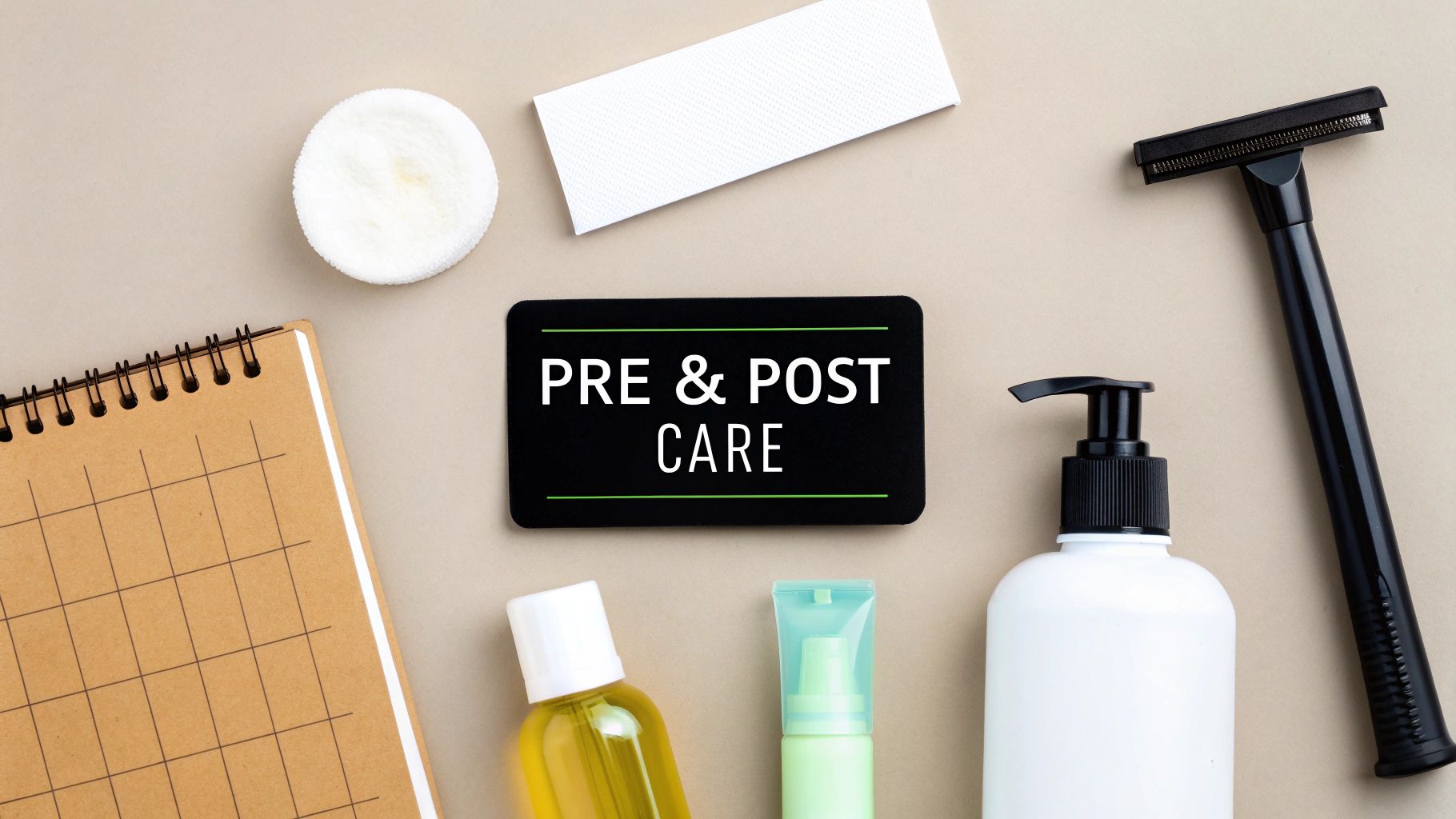
That flawless "after" photo in your before and after facial laser hair removal journey? It starts long before you even step into our Westbury clinic. Think of it as a partnership: we bring the advanced technology, and you bring the careful preparation.
Following a simple checklist ensures the laser can do its job effectively, all while keeping your skin safe and happy. It's the secret to getting incredible results.
Before Your Appointment
This is all about setting the stage for a perfect treatment. The laser needs a clear path to the dark pigment in the hair follicle, which means some grooming habits have to go on pause.
Pause Plucking and Waxing: For at least four weeks before your session, you have to stop waxing, plucking, or using an epilator. The laser needs the hair root to be present in the follicle to work, and these methods pull it right out. Shaving is the only green-lit option.
Shave 24 Hours Prior: The sweet spot for shaving is 24 hours before your appointment. This gives your skin barrier a chance to recover from any tiny nicks but leaves the hair short enough for the laser to zap the root beneath the skin with maximum efficiency.
Avoid Sun Exposure: We can't stress this enough. Tanned skin contains more active melanin, which can confuse the laser and increase the risk of side effects. For at least two weeks before your treatment, steer clear of direct sun and tanning beds on your face.
Arrive with Clean Skin: Come to your appointment with a completely clean face—no makeup, lotions, or even deodorants in nearby areas. We need a clear canvas to work on.
After Your Appointment
Once your session is over, the game plan shifts to protecting your newly sensitive skin. Good aftercare isn't just about healing; it actually speeds you toward that smooth, clear "after" look you're aiming for.
Your skin might feel like it has a mild sunburn, so gentle, soothing care is key.
Apply SPF Religiously: Your skin is going to be extra sensitive to UV rays. You'll need to apply a broad-spectrum sunscreen of SPF 30 or higher every single day, even when it's cloudy. This is non-negotiable for protecting the treated area.
Keep It Cool: For the first 24-48 hours, avoid anything that generates a lot of heat. That means no hot showers, saunas, steam rooms, or tough workouts.
Use Gentle Skincare: Stick to the basics with gentle, non-irritating cleansers and moisturizers. Hold off on using products with active ingredients like retinol, glycolic acid, or salicylic acid for about a week to prevent any irritation.
Don't Pick or Scratch: You'll start to notice some hairs shedding, which can sometimes look like tiny blackheads. Let them fall out on their own. Absolutely no picking, scrubbing, or exfoliating the area for at least one week.
Following these simple steps before and after each session is your best insurance for a safe, effective, and beautiful outcome. It's the small details that make the biggest difference in your transformation.
Your Facial Laser Hair Removal Questions Answered
Even after seeing incredible before-and-after photos, you probably still have a few questions. That’s completely normal. Choosing laser hair removal is a big decision, and feeling confident means having all the facts first. Let’s tackle the most common questions head-on.
Does Facial Laser Hair Removal Hurt?
This is easily the #1 question we get, and for good reason. Most people describe the sensation as a quick, tiny snap, like a rubber band on the skin. It’s over in an instant—lasting only as long as the laser pulse itself.
What really changes the game is the technology. We use the Splendor X, which has a built-in cooling system. This little feature is a hero, blasting a continuous stream of chilled air onto your skin right before, during, and after each pulse. It makes the entire experience much, much more comfortable.
Honestly, when you compare it to the drawn-out sting of waxing or the tedious plucking of individual hairs, the brief sensation from a laser session is a walk in the park. Plus, facial areas are treated in minutes, so it's over before you know it.
How Many Sessions Will I Need For My Face?
You'll definitely see less hair after your very first session, but getting those smooth, lasting results you're after typically takes a series of 6 to 8 treatments.
It's not that the laser isn't working—it's all about timing it with your hair's natural growth cycle. The laser is only effective when a hair is in its active growth phase (called the anagen stage). Since not all your hairs are in the same phase at the same time, we need multiple sessions.
We schedule your appointments 4-6 weeks apart. This strategy lets us systematically catch each new cycle of hair as it enters that active stage, which is the key to achieving a truly smooth final result.
Is Facial Laser Hair Removal Truly Permanent?
This is where the wording gets important. The FDA clears laser hair removal for "permanent hair reduction," which is a much more accurate description than "permanent removal." What does this actually mean for you? After you complete your full series of treatments, you can expect a 70-90% reduction in hair.
The results are incredibly long-lasting and, for most people, completely life-changing. If any hair does grow back, it's usually much finer, lighter, and way less noticeable. Think soft "peach fuzz," not coarse stubble.
To keep things perfectly smooth, some clients come in for a quick touch-up session once a year or so, especially if hormones shift later in life. It’s an easy way to zap any stray hairs that might pop up and maintain your results.
The proof is in the numbers. Before laser, 80% of people dealt with irritating bumps from shaving, and 70% endured painful monthly waxing rituals. Demand in the U.S. shot up by 25% between 2019 and 2023, with over 1.3 million procedures expected annually by 2025. Facial areas like the upper lip and chin make up 40% of all treatments, thanks to quick 15-30 minute appointments. For more info, check out these trends shaping laser hair removal treatments.
Key Insight: Think of it like weeding a garden. Your initial sessions are like clearing out all the existing weeds. An occasional touch-up is like pulling the one or two tiny new weeds that might pop up over time to keep the garden looking perfect.
What Are The Most Common Side Effects?
Your safety is our top priority. The good news is that the side effects from facial laser hair removal are almost always minor and temporary. Most commonly, you’ll see a bit of redness and maybe some slight swelling around the hair follicles, which looks like tiny raised bumps.
Clients usually say it feels like a very mild sunburn, and it typically disappears within a few hours to a day. This is actually a good sign—it shows the laser has effectively targeted the follicles.
Serious side effects like burns or pigment changes are extremely rare, especially when you're in the hands of a certified technician using top-of-the-line equipment. The best way to ensure a smooth recovery is to follow the aftercare rules, which are simple but crucial:
Stay out of the sun. Keep the treated area protected from direct sunlight.
Use SPF daily. A broad-spectrum SPF 30+ is non-negotiable.
Keep it cool. Avoid hot showers, saunas, and steam for the first 24-48 hours.
Sticking to these steps protects your investment and paves the way for the best possible outcome.
Ready to start your own transformation? At NYC Laser Hair Removal, our state-of-the-art Splendor X technology delivers safe, comfortable, and effective treatments for all skin types. Book your consultation at our Westbury, Long Island location today and get started on your journey to flawlessly smooth skin.
Comments