
Your Ultimate Guide to Remove Ingrown Hairs Safely
Let's be honest, everyone's dealt with an ingrown hair at some point. It’s one of those uniquely frustrating skin issues. To get rid of them for good, you need to understand what’s actually happening under your skin—it's more than just a surface-level problem. Think of it as a hair that took a wrong turn, growing back into the skin instead of up and out.
Our goal is to gently coax that trapped hair out without making things worse, meaning no infection and no scarring. It’s a delicate operation, but with the right technique, you can handle it. A successful approach really boils down to two things: smart treatment now and even smarter prevention for the future.
So, Why Do Ingrown Hairs Happen in the First Place?
An ingrown hair is basically your body’s response to a simple mechanical failure. When a hair can't break through the surface, it curls back on itself and re-enters the skin. This triggers a small, localized freak-out from your immune system.
That red, angry bump you see? That’s your body treating the hair like a tiny splinter. It sends in an inflammatory response to deal with the "invader," which is why the area gets swollen, tender, and sometimes even fills with pus, looking a lot like a pimple.
In some cases, this can become a chronic issue called pseudofolliculitis barbae—you probably know it as razor bumps. This is when you get clusters of these inflamed bumps in areas where you regularly remove hair.
The Real Culprits: Grooming Habits and Hair Type
More often than not, the root cause is our own grooming routine. Shaving, waxing, and plucking are the biggest offenders. When you shave too closely, you can cut the hair at a sharp angle, creating a pointy tip that’s perfect for piercing the follicle wall on its way back out. Waxing and tweezing can also damage the follicle, disrupting the hair's natural growth path.
Want to dive deeper? You can learn more about the underlying causes of ingrown hairs and see exactly how different removal methods set the stage for trouble.
Are You More Prone to Ingrowns?
While grooming habits are a huge factor, your natural biology also plays a starring role. Certain things can make you much more likely to develop these pesky bumps. Knowing your personal risk factors is the first step to building a prevention plan that actually works.
Here’s what puts you at a higher risk:
Hair Type: If you have coarse, curly hair, you're at the top of the list. The natural coil of the hair makes it incredibly easy for it to bend back and grow into the skin.
Skin Type: People with acne-prone skin often get a double whammy. When pores are already clogged with oil and dead skin cells, it’s much harder for a new hair to find its way out.
Friction from Clothing: Ever notice more bumps along your bikini line or inner thighs? Tight clothing is often the culprit. Constant rubbing irritates the follicles and can physically push growing hairs back down.
At the end of the day, an ingrown hair is just a hair that lost its way. By understanding what’s causing that misdirection—whether it’s the blade of your razor or the natural curl of your hair—you can finally start preventing them instead of just treating them. This is how you get on the path to permanently smooth, irritation-free skin.
Your Guide to Safe At-Home Ingrown Hair Removal
When you spot an ingrown hair, that little red bump can feel like a siren call to pick, poke, and squeeze. It’s a completely normal urge, but trust me, a forceful approach almost always backfires. You’re far more likely to end up with inflammation, a nasty infection, or even a permanent scar.
The key is to work with your skin, not against it. You want to create the perfect conditions for that trapped hair to find its way out safely and gently.
First, let's look at how we even get here. An ingrown hair is usually just a simple mechanical problem. After shaving or waxing, a tiny hair fragment gets trapped under the skin, curls back on itself, and starts growing inward.
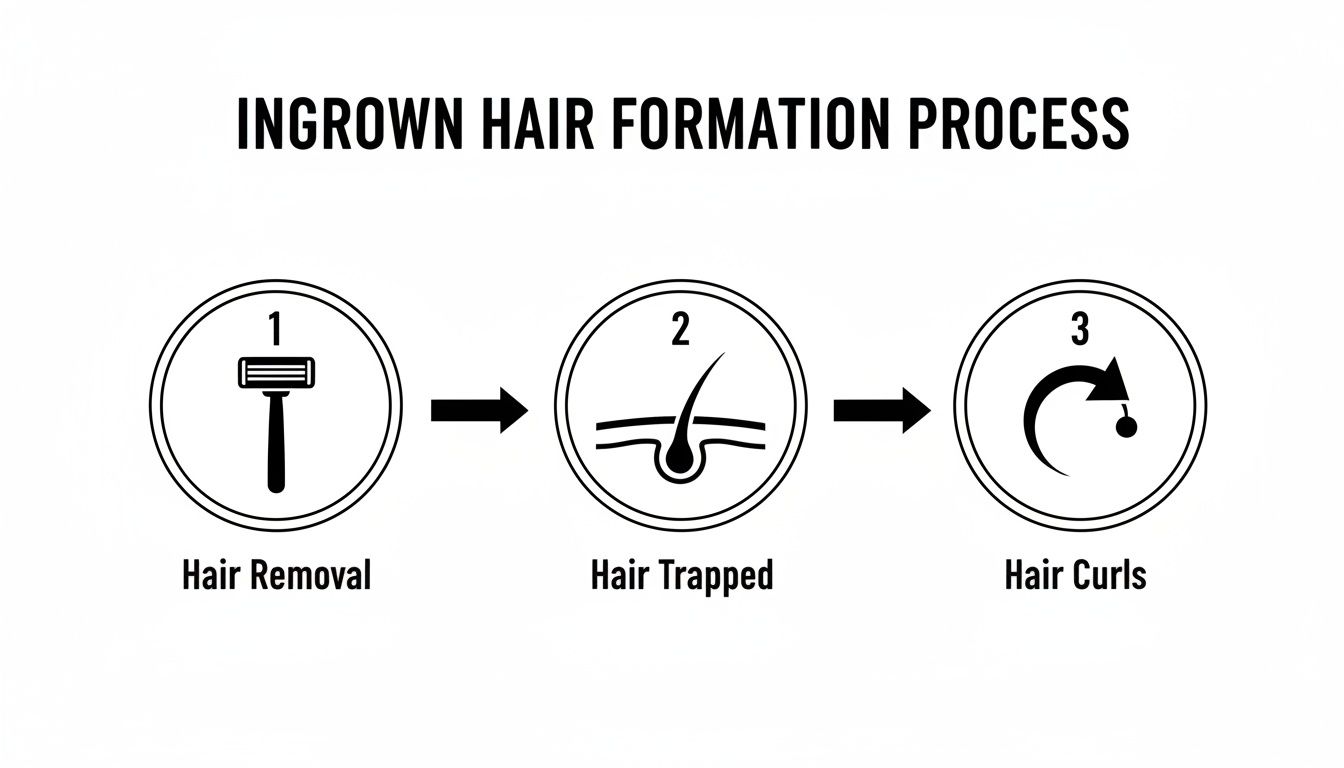
This diagram shows it perfectly. Our job is to gently reverse that process without causing collateral damage.
Prepping The Area For Extraction
Before you even think about touching the hair, your first job is preparation. Never, ever try to extract an ingrown hair from dry, tight skin. That’s a recipe for creating micro-tears and pushing bacteria deeper into the follicle.
Instead, start with a warm compress. Soak a clean washcloth in warm (not scalding) water and hold it firmly against the area for a good 10-15 minutes. This simple step is a game-changer. It softens the top layer of skin and actually encourages the trapped hair to move closer to the surface. It also helps calm down some of that initial inflammation, making everything less tender.
Next up is gentle exfoliation. After the compress, use a mild chemical exfoliant with salicylic acid or even just a soft-bristled brush and lightly scrub the area in a circular motion. The goal is to clear away any dead skin cells that might be blocking the hair’s escape route. Just be careful not to scrub too hard—that’ll only make the irritation worse.
Key Takeaway: Preparation isn't about forcing the hair out. It's about creating an environment where the hair can be released with minimal resistance and damage to your skin. A little patience here prevents a lot of problems later.
The Right Tools and Technique
Once the skin is prepped, it's time to assess. Is the hair actually ready for removal? If you can clearly see the hair loop or its tip just beneath the surface, you're good to go for an at-home treatment. If it's deep, red, angry, and painful with no visible hair, leave it alone. That’s a job for a professional.
For a visible hair, you'll need the right tools:
A sterile, fine-tipped pair of tweezers.
A sterile needle or lancet.
And yes, sterilization is non-negotiable. Wipe your tools down thoroughly with rubbing alcohol or boil them in water for a few minutes. This is the most critical step to prevent introducing bacteria into the open follicle and causing a painful infection.
With your sterile needle, gently pierce the very surface of the skin right over the hair loop. You’re just creating a tiny exit point. Then, use the tip of the needle or your tweezers to carefully guide the hair out from under the skin. Do not pluck the hair out completely! Plucking can damage the follicle and cause the next hair that grows in to become ingrown, too. Just free the trapped end and let it rest above the skin.
Safe At-Home Ingrown Hair Removal Do's and Don'ts
Knowing what not to do is just as important as knowing the right steps. So many common reactions to an ingrown hair can turn a minor issue into a major problem. If you're constantly battling irritation from shaving, you might also want to check out our complete guide on how to reduce razor burn for smoother, calmer skin.
For a quick reference, here’s a breakdown of the safe way versus the risky way to handle an ingrown hair at home.
Action | Do (The Safe Way) | Don't (The Risky Way) |
|---|---|---|
Extraction | Gently guide the visible hair loop out with a sterile needle or tweezers. | Dig into the skin with unsterilized tools or your fingernails. |
Pressure | Apply a warm compress to soften the skin and reduce inflammation. | Squeeze or try to "pop" the bump like a pimple. |
Exfoliation | Use a gentle chemical or physical exfoliant to clear away dead skin. | Scrub the area aggressively, causing more irritation. |
Timing | Wait until you can clearly see the hair trapped near the surface. | Attempt to extract a deep, painful, or cystic ingrown hair. |
Once you’ve successfully freed the hair, clean the area with soap and water or a mild antiseptic. Applying a little hydrocortisone cream can help calm any leftover redness. From there, just keep the area clean and try to avoid friction from tight clothing for a day or two while it heals.
Knowing When to Call a Professional
While most ingrown hairs are manageable with patience and the right at-home techniques, some situations demand a hands-off approach. It’s absolutely crucial to know the difference between a minor annoyance and a skin issue that’s escalating.
The urge to just fix it now is completely understandable. But trying to remove ingrown hairs that are deeply embedded or showing signs of infection can backfire, leading to painful abscesses, cellulitis (a bacterial skin infection), or even permanent scars. Sometimes, the smartest move is recognizing your limits and calling in an expert.
A dermatologist or licensed esthetician has the sterile tools, clinical knowledge, and steady hand to resolve complex cases safely. They can properly drain cysts, extract deeply trapped hairs, and prescribe medications to get severe inflammation or infection under control—preventing a small bump from becoming a big problem.
Clear Signs of Infection
An infected ingrown hair isn't just a red bump; it's your body's alarm system signaling a bacterial invasion. When you spot these signs, it's time to stop all at-home treatments and consult a professional.
Key warning signs include:
Significant Pus: A tiny whitehead is one thing. A large amount of yellow or green pus, on the other hand, points to a substantial infection that needs proper drainage and maybe even antibiotics.
Spreading Redness: If the redness around the bump is expanding, feels warm to the touch, or you see red streaks forming, the infection could be spreading into the surrounding skin. This needs immediate attention.
Intensifying Pain: A standard ingrown might feel tender, but if the pain is constant, throbbing, or getting noticeably worse over time, that’s a major red flag.
Fever or Swollen Lymph Nodes: These are systemic symptoms, meaning your whole body is fighting a more serious infection. You should seek medical attention right away.
When an Ingrown Hair Goes Deeper
Not all ingrown hairs are polite enough to stay near the surface. Some get trapped deep within the dermis, forming hard, painful nodules known as cysts. These are absolutely not candidates for a DIY extraction.
A cystic ingrown hair often feels like a firm, pea-sized lump under the skin and usually won't come to a head. Trying to squeeze or dig these out is not only incredibly painful but also practically guarantees scarring and a much higher risk of infection.
A dermatologist can treat these stubborn cysts with a quick corticosteroid injection to shrink the inflammation or perform a minor incision and drainage procedure in a sterile environment. This professional approach ensures the entire hair and any infected material are removed so the area can finally heal cleanly.
Addressing Chronic Issues and Discoloration
Sometimes, the issue isn't one dramatic ingrown hair but a relentless cycle of them. If you’re constantly battling bumps in the same area—think the neck, bikini line, or underarms—it’s probably time for a professional consultation.
This kind of chronic inflammation frequently leads to post-inflammatory hyperpigmentation (PIH). Those are the stubborn dark spots that stick around long after the bump itself has healed.
A professional can offer treatments that tackle both the ingrowns and the discoloration they leave behind. They might suggest prescription-strength retinoids, chemical peels, or other clinical treatments to fade dark spots and smooth out your skin texture. Most importantly, they can help you find a long-term solution, like laser hair removal, to break the cycle for good.
Building a Prevention-Focused Skincare Routine
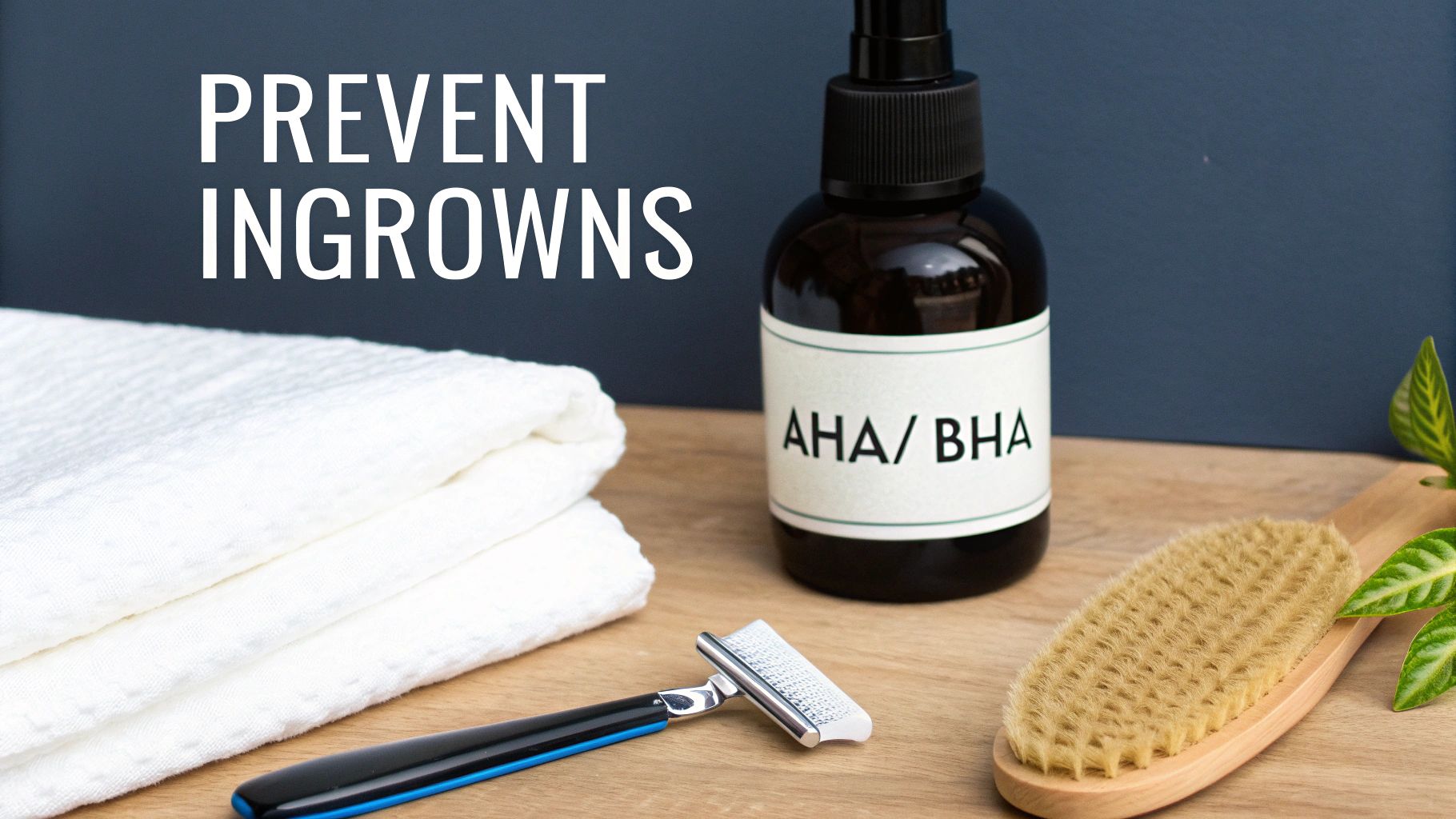
While knowing how to safely remove ingrown hairs is a crucial skill, the real win is creating a routine where you rarely have to. True skin freedom isn't about treatment—it's about prevention. A few smart adjustments to your grooming habits can dramatically reduce the chances of hairs getting trapped in the first place.
Think of it as setting your skin up for success. This proactive approach is all about creating an environment where hair can grow freely, keeping follicles clear of debris, and minimizing the irritation that causes them to get angry in the first place.
Master the Art of Exfoliation
If there's one non-negotiable step for preventing ingrowns, it's regular exfoliation. Dead skin cells are the number one culprit behind clogged follicles. They create a physical barrier that traps emerging hairs, forcing them to curl back down or grow sideways.
You have two great options, and many of our clients find success using a combination of both:
Physical Exfoliation: This means manually sloughing off dead skin. Tools like a dry brush, a gentle scrub, or an exfoliating mitt work wonders. Dry brushing before a shower is fantastic for large areas like the legs because it boosts circulation while whisking away flaky skin.
Chemical Exfoliation: This method uses skin-safe acids to dissolve the "glue" holding dead cells together. Look for products with salicylic acid (a BHA) or glycolic acid (an AHA). Salicylic acid is a powerhouse because it's oil-soluble, allowing it to get deep into the pore to clear out blockages.
The key is consistency, not aggression. Aim to exfoliate two to three times per week. Overdoing it with harsh scrubbing can create micro-tears and inflammation, which ironically makes your skin more prone to ingrown hairs.
Rethink Your Hair Removal Technique
How you remove hair is just as important as your skincare. A sloppy shaving or waxing technique is a direct ticket to the kind of skin trauma that leads to ingrowns.
Start by upgrading your razor. A dull, single-blade disposable is a recipe for disaster—it tugs at the hair and cuts it at a jagged angle. Instead, use a sharp, multi-blade razor and swap out the blade every 5-7 shaves. A fresh blade glides smoothly and cuts hair cleanly at the surface, which is exactly what you want.
Direction matters, too. While shaving against the grain delivers that ultra-smooth feeling, it also dramatically increases your risk of ingrowns. Always shave in the direction of hair growth. This simple switch leaves the hair tip less sharp and far less likely to pierce the skin as it regrows.
Lifestyle Choices for Smoother Skin
Believe it or not, what you do outside of the bathroom can have a huge impact on your skin.
One of the easiest changes is your clothing. Tight, synthetic fabrics are a nightmare for follicles, as they trap heat and moisture while creating constant friction. This is the perfect storm for irritation, especially right after hair removal. Whenever possible, opt for loose-fitting, breathable fabrics like cotton—particularly for underwear and workout clothes.
Proper hydration is another pillar of prevention. Dehydrated skin is less pliable, and the surface layer of dead cells builds up more quickly. Drinking plenty of water and using a good, non-comedogenic moisturizer keeps your skin soft and supple, making it much easier for new hairs to break through the surface without getting trapped. Our guide to preventing ingrown hairs after a Brazilian wax has more specific tips for this notoriously tricky area.
Ingrown hairs can affect anyone, but they aren't random. Men most often see them on the chin, cheeks, and neck, while for women, it's the legs, pubic area, and underarms. People with thick, coarse, or curly hair—including many African Americans and Latinos—have a much higher chance of developing them. The prevalence is highest between the ages of 15 and 35.
Considering Laser Hair Removal for a Permanent Solution
If you're tired of the endless cycle of shaving, waxing, treating bumps, and then starting all over again, it might be time for a more permanent fix. While prevention routines are great, they require constant upkeep. For anyone dealing with chronic, painful ingrown hairs, laser hair removal offers a way to break free from the cycle by getting straight to the source: the hair follicle itself.
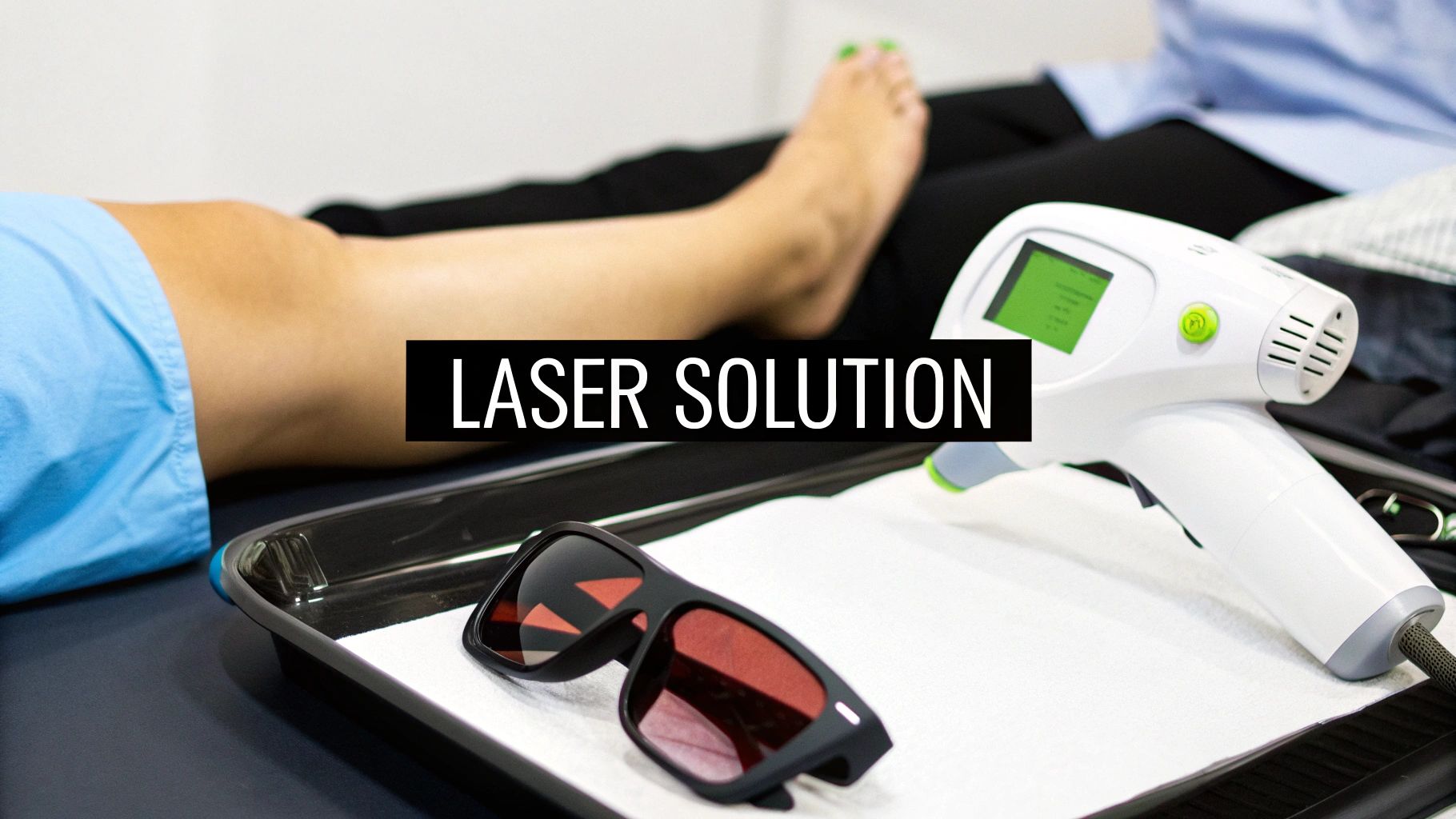
Unlike shaving or waxing that just cuts the hair at the surface, a laser sends a concentrated beam of light directly into the follicle. The pigment in your hair absorbs this light, which then converts to heat and damages the follicle, making it much harder for hair to grow back. No follicle, no hair—and no hair means zero chance of it becoming ingrown.
How Laser Treatments Eliminate Ingrown Hairs
The science behind it is pretty straightforward. By zapping the hair during its active growth phase, the laser disables the follicle’s ability to produce new hair. Since not all hairs are in the same growth phase at once, you'll need a series of treatments to catch each one at just the right time.
With every session, fewer and fewer hairs grow back. Any that do are usually finer, lighter, and weaker, so they're far less likely to get trapped under the skin. This systematic thinning of the hair is what makes laser treatment the gold standard for anyone who wants to permanently remove ingrown hairs and the irritation they cause.
By destroying the hair follicle, you're not just treating the symptom (the ingrown hair); you're eliminating the cause. It's the difference between constantly weeding a garden and removing the roots so the weeds can't grow back.
Modern Technology for Every Skin Tone
In the past, a common concern was that laser hair removal was only safe for people with light skin and dark hair. Luckily, the technology has come a long way. Modern systems, like the Splendor X we use at NYCLASER, are designed to work safely and effectively across a huge range of skin tones and hair types.
This kind of advanced technology blends different laser wavelengths, letting the device target the hair follicle with precision while leaving the surrounding skin untouched. This is a game-changer, especially for people with darker skin who are often more prone to ingrowns and hyperpigmentation. Now, they can safely get the lasting results they want.
The Journey to Smooth, Ingrown-Free Skin
It’s important to see laser hair removal as a process, not a one-and-done fix. You might even notice a few ingrown hairs crop up during the first few treatments. This is totally normal and usually happens for a couple of reasons:
Shaving Prep: You need to shave before each session, which can cause a little temporary irritation as your skin gets used to the new routine.
Hair Shedding: After a treatment, the damaged hairs are gradually pushed out of the follicle. Sometimes, one of these shedding hairs gets stuck on its way out.
But don't worry, this is just a temporary phase. As you continue your sessions, the number of active follicles will drop dramatically. By the end of your treatment plan, the problem of ingrown hairs will be pretty much a thing of the past. Most clients see a huge reduction after just a few sessions. If you're curious about the long-term effects, our detailed guide explores just how permanent the results of laser hair removal can be.
Ultimately, investing in laser hair removal is an investment in your long-term skin health and convenience. You're trading a reactive routine filled with creams and tweezers for a proactive solution that delivers smooth, clear skin all year round.
A Few Lingering Questions About Ingrown Hairs
Let's wrap up by tackling some of the most common questions we hear. Even with a solid game plan for dealing with ingrowns, a few uncertainties can pop up. This final section is all about giving you clear, straightforward answers so you can handle your skin with total confidence.
So, how long does an ingrown hair actually stick around? A minor, uncomplicated one will usually clear up on its own in a week or two, especially if you help it along with warm compresses and gentle exfoliation. But if it gets infected or turns into a deep, painful cyst, it can linger for a month or even longer. At that point, you'll probably need a professional to step in to avoid scarring.
Is It an Ingrown Hair or Just a Pimple?
It's incredibly easy to mistake an ingrown hair for a regular pimple. They both show up as angry red bumps, after all.
The real giveaway is usually right in the center. If you look closely at an ingrown hair, you can often spot a tiny dark dot or even a visible loop of hair trapped just under the skin's surface. A pimple, on the other hand, is just a clogged pore filled with oil and bacteria—no hair at its core. Ingrowns almost always appear in areas you shave, wax, or pluck, like the beard area, bikini line, or legs. Pimples can show up anywhere.
Key Insight: The easiest way to tell them apart is to look for the hair. If you can see the shadow or loop of a hair inside the bump, it’s an ingrown. If it’s just a whitehead or a red bump with no visible hair, it’s likely a pimple.
Do Those Popular Home Remedies Actually Work?
You've probably seen a dozen suggestions online, from dabbing on tea tree oil to making a paste out of crushed aspirin. Some of these DIY tricks have merit, but others are less effective—or can even make things worse.
Tea Tree Oil: This one's a solid choice. It has natural antibacterial and anti-inflammatory properties. A diluted drop can help calm redness and keep infection at bay, making it a safe bet for most people.
Aspirin Paste: The magic here is salicylic acid, a chemical exfoliant that’s great for skin. A paste can help reduce inflammation and exfoliate, but be warned: it can be pretty irritating, especially if your skin is sensitive.
Sugar Scrubs: A gentle sugar scrub can help physically exfoliate the dead skin trapping the hair. The key word here is gentle. Scrubbing too aggressively will just make the inflammation a whole lot angrier. Use a very light touch.
It's no surprise these questions come up so often—these pesky bumps are becoming more common. Research actually documented a significant 70% relative increase in reported ingrown hair cases between 1998 and 2015. This trend just underscores why finding effective ways to manage and prevent them is so important. If you want to dive into the data, you can explore the study's findings on skin condition trends.
How Does Laser Hair Removal Help With Ingrowns?
One of the biggest misconceptions is that laser hair removal only prevents future ingrown hairs. While that’s its main superpower, it absolutely helps with existing ones, too.
The heat from the laser actually helps reduce the inflammation around a current ingrown hair, calming it down. More importantly, after a session, the damaged follicle will naturally shed the trapped hair over the next few weeks. This often resolves the bump completely without any need for risky manual extraction. It’s this dual-action effect—treating the present and preventing the future—that makes it such a definitive solution for anyone who’s chronically battling them.
Ready to stop fighting the endless cycle of ingrown hairs for good? At NYC Laser Hair Removal, we use advanced Splendor X technology to provide a lasting solution for smooth, clear skin. Book your appointment online today and start your journey toward an irritation-free life.
Comments