
How to remove chest hair permanently: A Complete Guide to Lasting Smoothness
- squidsquib
- Dec 22, 2025
- 15 min read
If you're looking for a way to get rid of chest hair for good, let's get one thing straight right away: electrolysis is the only method the FDA has approved for true, permanent hair removal.
Laser hair removal, on the other hand, delivers incredible, long-term reduction. Understanding that key difference is the absolute first step toward getting the smooth chest you're after.
The Truth About Permanent Chest Hair Removal
The term "permanent hair removal" gets thrown around a lot, and frankly, it causes a ton of confusion. Before you invest your time and money, you need to know what each treatment actually delivers.
The endless cycle of shaving, waxing, or trimming is just a temporary fix. Shaving might last a day before stubble reappears. Waxing buys you a few weeks, but often at the cost of serious pain and ingrown hairs. These methods never get to the root of the problem—the hair follicle itself.
Professional treatments are totally different. They're designed to disable the follicle's ability to produce new hair, which is where the critical distinction between "reduction" and "removal" comes into play.
Permanent Reduction vs. Permanent Removal
When you start researching how to get rid of chest hair permanently, you’ll find two main technologies dominating the conversation: laser hair removal and electrolysis. Each has a very specific job to do.
Laser Hair Removal (Permanent Reduction): This is by far the most popular route. It uses concentrated light to zap the pigment in your hair follicles. The heat damages the follicle, making it incredibly difficult for it to regrow hair. After a full series of treatments, most guys see an 80-99% reduction in chest hair. It’s fantastic for clearing dense patches but might leave a few fine, light hairs behind.
Electrolysis (Permanent Removal): This is the gold standard for absolute permanence. An electrologist inserts a tiny probe into each individual hair follicle, delivering an electrical current that destroys the growth cells for good. Once a follicle is treated with electrolysis, it can never produce another hair. Period.
The best way to think about it is this: Laser is like a controlled burn to clear a forest, while electrolysis is like pulling the last few stubborn weeds by hand.
Most of our male clients get their ideal results by using laser first for the heavy lifting, then finishing with electrolysis to zap any lingering hairs for that perfectly smooth, flawless look. This two-step strategy is the most practical path to a chest you can be proud of, starting with realistic expectations and a solid plan.
Exploring Laser Hair Removal for Your Chest
When you're tired of the endless cycle of shaving and waxing, laser hair removal is usually the first stop for a long-term solution. While it's not technically permanent like electrolysis, the results are so dramatic and lasting that most of our clients consider it a life-changer. It's hands-down the most popular route to a smoother chest.
The science behind it is pretty straightforward. A specialized laser sends a concentrated beam of light directly into your hair. The pigment (melanin) in the hair shaft absorbs that light, which instantly converts to heat. This heat travels down to the follicle, damaging it enough to seriously slow down—or stop—its ability to grow new hair.
This is exactly why you need more than one session. Your hair grows in different cycles, and the laser is only truly effective when a hair is in its active growth stage, known as the anagen phase. At any given time, only about 20% of your chest hair is in this phase. That means we need a series of treatments, spaced 6 to 8 weeks apart, to make sure we catch every single follicle at the right moment.
How Advanced Lasers Get the Job Done
Modern laser technology has made the entire process safer, faster, and more effective than ever before. Here at NYC Laser Hair Removal, we use the Splendor X system, which is a game-changer because it combines two powerful laser wavelengths into one device.
This lets us customize every single treatment with incredible precision.
Alexandrite (755nm): This is the go-to for lighter skin tones (Fitzpatrick types I-III) with dark hair. It’s highly attracted to melanin, making it incredibly effective at zapping those follicles.
Nd:YAG (1064nm): For darker skin tones (Fitzpatrick types IV-VI), this is the gold standard. Its longer wavelength bypasses the pigment in the skin's surface and zeros in on the follicle itself, which drastically reduces any risk of discoloration.
Having both options means we can tailor the treatment perfectly to your skin and hair type, ensuring you get the best results safely.
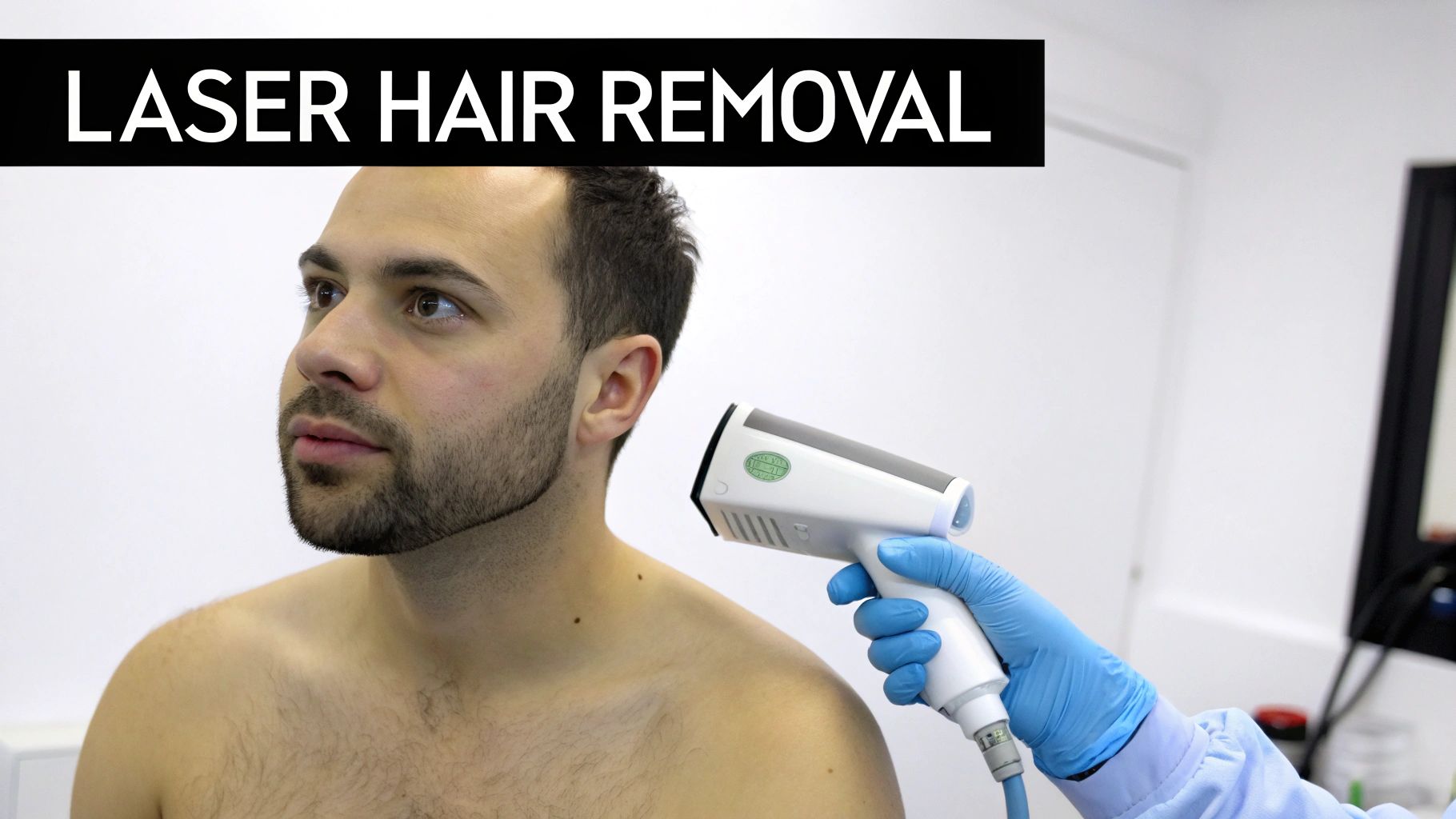
Clinics that invest in proven, high-quality technology are demonstrating a commitment to client safety and results. For a deeper dive into the science, check out our guide on how the laser hair removal process works.
Are You a Good Candidate for Chest Laser Hair Removal?
Traditionally, the perfect candidate was someone with light skin and dark, coarse hair. That high contrast made it super easy for the laser to find its target (the dark hair) without affecting the surrounding skin.
But things have changed. Thanks to advanced lasers like the Nd:YAG, the playing field has expanded significantly. While it's still true that lasers can't target hair without pigment—like white, gray, or very light blonde—most other skin and hair combinations are now fair game.
The demand for these treatments is soaring. The permanent hair removal service market was valued at USD 3.95 billion and is projected to hit USD 8.4 billion within the next decade. Clearly, people are seeing the value in these long-term solutions.
Your initial consultation is the most important step in the entire process. It's not just a sales pitch; it's a critical safety and strategy session where a skilled technician assesses your unique profile.
During this meeting, we'll evaluate your skin type, hair color, and density to map out a personalized treatment plan. This is your chance to get all your questions answered and make sure you feel totally comfortable with us and the technology we're using.
What to Ask During Your Consultation
Walking into your first consultation can feel a bit overwhelming, but coming prepared with a few key questions will empower you to make an informed decision. A reputable clinic will always welcome your curiosity.
Here are a few essentials to have on your list:
What kind of laser do you use? Is it the right choice for my skin tone and hair color?
Based on my chest hair, how many sessions do you think I'll realistically need?
What's the cost breakdown? Can you explain the difference between single sessions and package pricing?
Do you have before-and-after photos of clients with a similar profile to mine?
What kind of training and experience do your technicians have?
What are the must-know pre- and post-treatment care instructions?
Getting solid answers to these questions will give you the confidence you need to move forward and finally get that smooth, hair-free chest you've been wanting.
Understanding Electrolysis: The Gold Standard Solution
While laser hair removal is fantastic for long-term reduction, there's only one method the FDA recognizes for 100% permanent hair removal: electrolysis. This isn’t just another option; it’s the definitive final answer for anyone who wants specific hairs gone for good. If you're serious about getting rid of chest hair permanently, this is where the conversation ends.
Electrolysis works with incredible precision. A trained electrologist inserts an ultra-fine, sterile probe—often thinner than the hair itself—into the natural opening of a single hair follicle. A tiny pulse of electrical current is then delivered directly to the growth cells, destroying them on contact.
Once a follicle is properly treated this way, it can never grow another hair again. That’s a powerful guarantee, and it’s what makes electrolysis the ultimate solution for a truly flawless chest.
The Different Types of Electrolysis Explained
Not all electrolysis is created equal. Technicians use three primary methods, or "modalities," to destroy the hair follicle. A skilled professional will know exactly which one to choose for your specific hair type, skin, and the area being treated.
Galvanic: The original method. It creates a chemical reaction inside the follicle to destroy the growth cells. It's incredibly effective but takes a bit more time.
Thermolysis: This technique uses heat generated by a high-frequency current to essentially "cook" the hair-producing cells. It’s much faster than galvanic and works wonders on fine, straight hairs.
Blend: Just like it sounds, this method combines the chemical action of galvanic with the speed of thermolysis. It's a highly effective one-two punch that can take out even the most stubborn or distorted follicles.
Why Choose Electrolysis for Your Chest?
The single biggest advantage of electrolysis is its universal effectiveness. It doesn’t rely on pigment the way a laser does, which gives it a massive edge in certain situations.
Think of it this way: Laser hair removal is like a wide-angle lens, capturing a big scene all at once. Electrolysis is the macro lens, focusing on one perfect detail. Both are essential tools, but they serve different, specific purposes.
This precision is exactly why electrolysis shines where lasers sometimes can't. It’s the perfect tool for targeting specific types of hair that other methods simply can’t see.
Key Advantages of Electrolysis:
It Works on Any Hair Color: Because it destroys the follicle directly, electrolysis is just as effective on blonde, red, gray, or white hairs—all of which are invisible to lasers.
It’s Safe for All Skin Tones: The treatment targets the follicle, not the surrounding skin pigment, making it a safe and reliable option for every skin type without the risk of discoloration.
It Offers True Permanence: Each treated follicle is gone for good. No other method can match that level of finality.
The process is incredibly meticulous, making it ideal for targeting smaller areas or for finishing the job after a series of laser treatments. In fact, many of our clients at NYC Laser Hair Removal use laser to clear the dense areas of their chest first. Then, they switch to electrolysis to permanently eliminate the few stray, light-colored hairs that remain. This combined approach delivers the most efficient and complete result, giving you that perfectly smooth chest you've been aiming for.
Your Treatment Journey from First Call to Final Session
Knowing exactly what to expect is the best way to guarantee a smooth, successful experience. When you understand the full journey—from prep to aftercare—it removes any uncertainty and empowers you to get the absolute best results.
Think of this as your complete roadmap for getting that permanently smooth chest with professional treatments.
Setting the Stage: Pre-Treatment Preparation
Your results actually start long before you step into our clinic. Proper prep isn't just a suggestion; it’s a non-negotiable step that sets the foundation for a safe and effective treatment. The two most critical rules are simple: avoid the sun and leave the hair root alone.
Sun exposure is the biggest deal-breaker. Tanned skin has more melanin, which can confuse the laser and seriously increase the risk of burns or discoloration. You absolutely must avoid direct sun, tanning beds, and even self-tanners on your chest for at least four weeks before your appointment.
Just as important is what you don't do to your hair. You'll need to stop waxing, plucking, or using any depilatory creams for at least four to six weeks before your session. Why? Those methods rip the hair out from the follicle, and if there's no hair, there's nothing for the laser to target. Shaving is the only approved way to manage hair between your appointments.
Key Takeaway: Think of your hair follicle as an anchor for the laser's energy. If you pull it out with wax or tweezers, the laser has no pathway to destroy the growth cells. Shaving is perfect because it leaves the root right where we need it.
Inside the Treatment Room: What to Expect
On the day of your appointment, you’ll need to shave your chest completely. This ensures the laser's energy is focused deep inside the follicle, not wasted on scorching the hair sitting on the surface of your skin.
A typical chest session is surprisingly fast, often lasting only 15 to 20 minutes. Your technician will give you protective eyewear and apply a cooling gel to your skin. As the treatment starts, most guys describe the sensation as a quick snap, almost like a rubber band flicking against the skin. It’s over in a flash and very manageable.
Modern devices like the Splendor X have incredible built-in cooling systems that blast chilled air onto your skin's surface, making the whole process much more comfortable. Your technician will work methodically across your chest, making sure every inch is covered.
While laser is great for large areas, electrolysis is often the final step for perfectionists, targeting any lingering individual hairs. The diagram below shows just how precise it is.
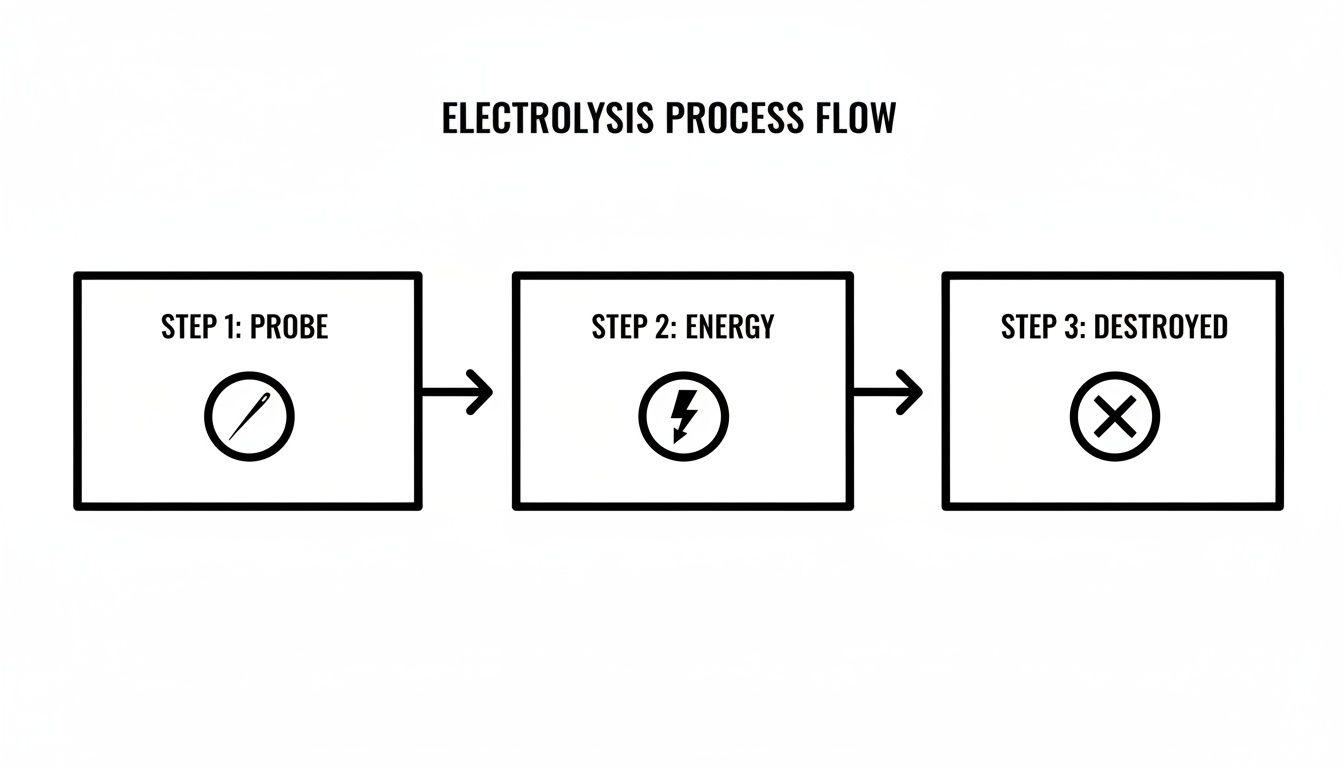
This process offers true permanence by destroying each follicle one by one—an amazing complement to laser for achieving that flawlessly smooth finish.
The demand for these treatments tells the whole story. The laser hair removal market was valued at USD 1.22 billion and is projected to hit USD 4.60 billion in the next eight years. That kind of growth only happens when something really works.
The Post-Care Playbook: Protecting Your Investment
What you do after your session is just as crucial as what you did before. Good aftercare minimizes any side effects, helps your skin heal quickly, and ultimately protects your investment by making the treatment as effective as possible.
Right after your session, it's totally normal to see some mild redness and swelling, kind of like a minor sunburn. This usually fades within a few hours.
Here’s your essential post-treatment checklist:
Soothe Your Skin: Apply aloe vera gel or a calming lotion to cool things down. Steer clear of any harsh products with alcohol or heavy fragrances for the first 24-48 hours.
Sunscreen is Mandatory: Your skin will be extra sensitive to UV rays. You have to apply a broad-spectrum sunscreen with at least SPF 30 to your chest every single day, even if it’s cloudy out.
Avoid Heat and Sweat: For the first 24 hours, skip the hot showers, saunas, steam rooms, and intense workouts. Sweat can irritate the treated follicles, so take a rest day.
Gentle Exfoliation (But Not Yet): About a week after your treatment, you can start to gently exfoliate your chest. This helps the shedding process along, where the treated hairs are pushed out of the follicles.
Over the next 1 to 3 weeks, you'll start to see the treated hairs shedding. That’s the best sign that the treatment worked! Sticking to your appointment schedule is the key to success, and you can get a better sense of the full timeline by reading our guide on how many laser sessions you'll actually need. Follow this roadmap, and you’ll be on your way to the permanently smooth chest you're looking for.
Navigating Costs and Choosing a Trusted Provider
Deciding to go for a permanently smoother chest is a real investment—not just in money, but in your daily comfort and confidence. Before you jump in, it's crucial to get a handle on the costs and, more importantly, find a provider who will deliver safe, effective results. While price is always a factor, it should never be the only one.
The cost for laser hair removal or electrolysis isn't a simple, one-size-fits-all number. It varies pretty widely based on a few key things. Think of it less like buying a product off the shelf and more like commissioning a custom service tailored to you.
Breaking Down the Price Tag
The final quote you'll get depends on a handful of predictable variables. Knowing what they are will help you make sense of different clinics' pricing and compare them apples-to-apples.
Treatment Area Size: A full chest is considered a large area, so the price will reflect that. If you decide to add on your abdomen or shoulders, that will be factored into the total.
Hair Density and Coarseness: Thicker, denser hair needs more energy to treat effectively and might require more sessions, which can bump up the cost.
Clinic Location: It's no surprise that a clinic in a prime NYC location has higher overhead than one in a smaller town, and that's reflected in the pricing.
Technology Used: Clinics that invest in top-tier, medical-grade lasers like the Splendor X may have a higher price point. What you're paying for is superior safety, comfort, and much better results.
A word of caution: Don't let a rock-bottom price be your main guide. An unusually cheap offer can be a red flag for outdated tech, inexperienced technicians, or a bait-and-switch where they try to upsell you later. Your safety and the quality of your results should always come first.
Per Session vs. Package Deals
Most reputable spots will offer you two ways to pay. A per-session rate gives you flexibility, letting you pay as you go. This can be a decent option if you're not sure how many treatments you'll ultimately need or if you're just coming in for a quick touch-up.
But the best value, almost without exception, comes from package deals. You're going to need a series of 6 to 10 sessions for the best possible chest hair reduction. Buying a package of six or more treatments upfront can unlock significant savings, often cutting the per-session cost by 15-25%. We dive deeper into the numbers in our guide on laser hair removal costs in NYC.
Finding a Clinic You Can Trust
This is the single most important decision you'll make. A great clinic puts your safety first, gives you honest expectations, and has the right tools and talent to get the job done correctly.
Use this checklist to vet any provider you're considering:
Check Their Tech: Ask them straight up what kind of laser they use. Is it a modern, FDA-cleared device that's right for your skin type? The Splendor X, for instance, is a fantastic option because its dual-wavelength technology can safely treat the widest range of skin tones.
Verify Technician Credentials: Your treatment should be done by a licensed and certified laser technician or electrologist who has plenty of experience. Don't feel weird asking about their training or how long they've been doing this.
Read Real Reviews: Look past the glowing testimonials on their website. Check Google, Yelp, and other third-party sites for unbiased feedback. You're looking for patterns in the comments—good or bad—about their professionalism, cleanliness, and, of course, their results.
Insist on a Consultation: A thorough, in-person consultation is non-negotiable. This is where a pro will actually look at your hair and skin, walk you through the process, answer all your questions, and perform a patch test to see how your skin reacts.
It's easy to see the appeal of at-home solutions when you're looking at the professional investment. The market for hair removal products is massive—valued at around USD 29.75 billion and still growing. But those temporary fixes just can't compete with the lasting power of professional treatments. As you can read in this market report from Mordor Intelligence, the demand is huge, but so is the gap in results. When you invest in a trusted provider, you're paying for a permanent solution, not just kicking the can down the road.
Your Top Questions, Answered
Deciding to go for a permanently smoother chest is a big step, and it's totally normal to have a few final questions floating around. Think of this as the last chat you'd have with a pro, clearing up any lingering doubts before you commit. We’ve pulled together the most common questions we get from guys every single day to give you the straight-up, expert answers you need.
How Much Does Laser Hair Removal Hurt on the Chest?
Let's be real: it's not a spa massage, but it's far from unbearable. Most clients say the laser feels like a quick rubber band snap against the skin. It’s a flash of heat that’s over in an instant.
Modern tech makes a huge difference here. Our Splendor X laser, for example, has a powerful, built-in cooling system that blasts chilled air on your skin during the treatment. This makes the whole process way more comfortable. While some spots like the sternum or around the nipples can be a bit more sensitive, the treatment itself is incredibly fast—we’re usually done in just 15-20 minutes.
The main takeaway? The feeling is temporary and totally manageable. Your technician is always in control and can adjust the settings to keep you comfortable.
How Many Laser Sessions Will I Actually Need for My Chest?
This is the big one because it ties directly to your time and budget. For the chest, most guys need somewhere between 6 to 10 sessions to get that 80-90% permanent hair reduction we aim for.
We schedule these appointments 6 to 8 weeks apart, and that timing is critical. It's not just a random number; it’s specifically designed to zap hairs when they’re in their active growth phase, known as the "anagen" stage. If you stick to the schedule, you’re hitting a new cycle of hair each time, which is the key to getting the best possible long-term results.
Can I Get This Done if I Have Dark Skin or a Tan?
Yes, you absolutely can—but only if the clinic has the right technology. Older lasers were a huge risk for darker skin tones because they couldn't easily tell the difference between the pigment in your skin and the pigment in the hair follicle. This could lead to burns or discoloration.
Thankfully, technology has caught up. Advanced lasers like the Nd:YAG (which is half of the dual-wavelength system in our Splendor X) are engineered specifically for darker complexions (Fitzpatrick types IV-VI) and even tanned skin. Its longer wavelength bypasses the melanin in your skin and goes straight for the hair root. The bottom line: make sure your clinic has modern, safe technology and technicians who know exactly how to treat your skin type.
What Happens to the Hair Between My Treatments?
This is where a lot of people get confused. The hair doesn't just disappear right after your session. Over the next 1 to 3 weeks, you’ll see the treated hairs start to shed. It might look like new growth, but it's actually your body pushing out the dead hairs.
You can—and should—shave during this time. In fact, we ask you to shave the day before your appointment. But what you can't do is pull the hair out from the root.
Don't Do This Between Sessions:
Waxing: Rips the hair out, root and all.
Plucking/Tweezing: Pulls the hair from the follicle.
Depilatory Creams: Can dissolve hair below the skin, removing the target.
Using any of these methods removes the very thing the laser needs to treat. If there's no hair in the follicle, your next session won't be effective, and you'll be compromising your final results.
Ready to stop wondering and start seeing real results? At NYC Laser Hair Removal, we use the most advanced tech to deliver safe, effective, and lasting smoothness. Book your free consultation with our experts today and let's build a personalized plan just for you.
Comments