
Understanding laser hair removal hurt: What to Expect and How to Ease Pain
Let’s get right to it: does laser hair removal hurt? While it isn’t completely sensation-free, the vast majority of people find it far more comfortable than they ever expected. The most common description is a quick, warm snap, like a tiny rubber band flicking against the skin. It’s over in an instant.
Think of it as a brief, zippy sensation—a small price to pay for ditching the razor for good.
Decoding the Sensation of Laser Hair Removal
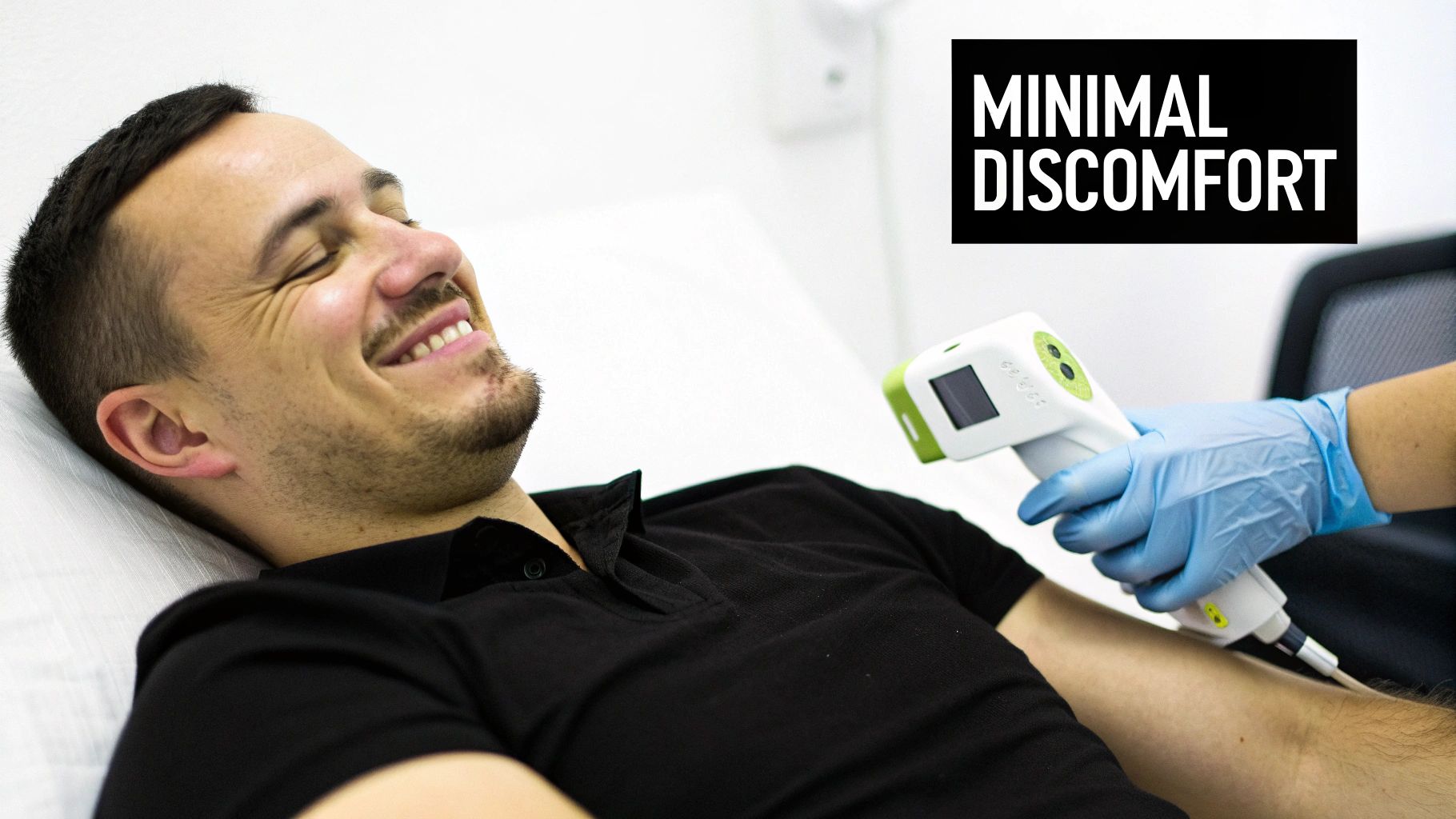
When people ask if laser hair removal hurts, they’re usually imagining something far more intense than the reality. Modern technology has made the process surprisingly manageable. The laser’s job is to send a concentrated pulse of light energy straight into the hair follicle, where the pigment absorbs it. That energy instantly converts to heat, which is what disables the follicle and stops it from growing new hair.
That little "snap" you feel? It’s just that energy exchange happening in a fraction of a second. It’s incredibly targeted, leaving the surrounding skin completely untouched.
A Quick Look at Laser Hair Removal Pain Levels
To give you a clearer idea of what most people feel, this table breaks down the typical sensations our clients report. It offers a straightforward overview of what you can likely expect during your session.
Pain Level | Common Sensation Description | Likelihood |
|---|---|---|
No Pain | A mild warmth on the skin, similar to a hot stone. | Less Common |
Mild Pain | The classic "rubber band snap"—a quick, zappy flick. | Very Common |
Moderate Pain | A sharper, more intense snap, like a rubber band on sensitive skin. | Common (in certain areas) |
Significant Pain | A deep, stinging sensation that lingers for a second. | Rare |
As you can see, the experience for most falls squarely into the mild and manageable category. The more intense feelings are usually limited to particularly sensitive areas and are over in a flash.
What the Data Says About Pain
You don't just have to take our word for it. Studies consistently back up what our clients tell us: the discomfort is minimal. According to procedural statistics, nearly 60% of patients reported either no pain at all (11%) or only mild pain (48%) during their treatments. You can learn more about these findings on SatoriLaser.com.
This data confirms that while you’ll feel something, it’s typically a minor sensation that most people tolerate extremely well.
The great news is that technology has made comfort a top priority. At NYC Laser, we use advanced systems like the Splendor X, which are engineered with powerful, built-in cooling features that work in tandem with the laser.
This integrated cooling is a total game-changer. It actively chills the surface of your skin an instant before the laser pulse, effectively neutralizing much of the heat. This makes the entire session feel significantly more comfortable from start to finish.
This kind of technology transforms what could be an intimidating process into a surprisingly straightforward one. It ensures the focus stays where it should be: on getting you fantastic, long-lasting results without any unnecessary discomfort. In short, the fear of pain is almost always worse than the actual experience.
What to Expect During Your Treatment Session
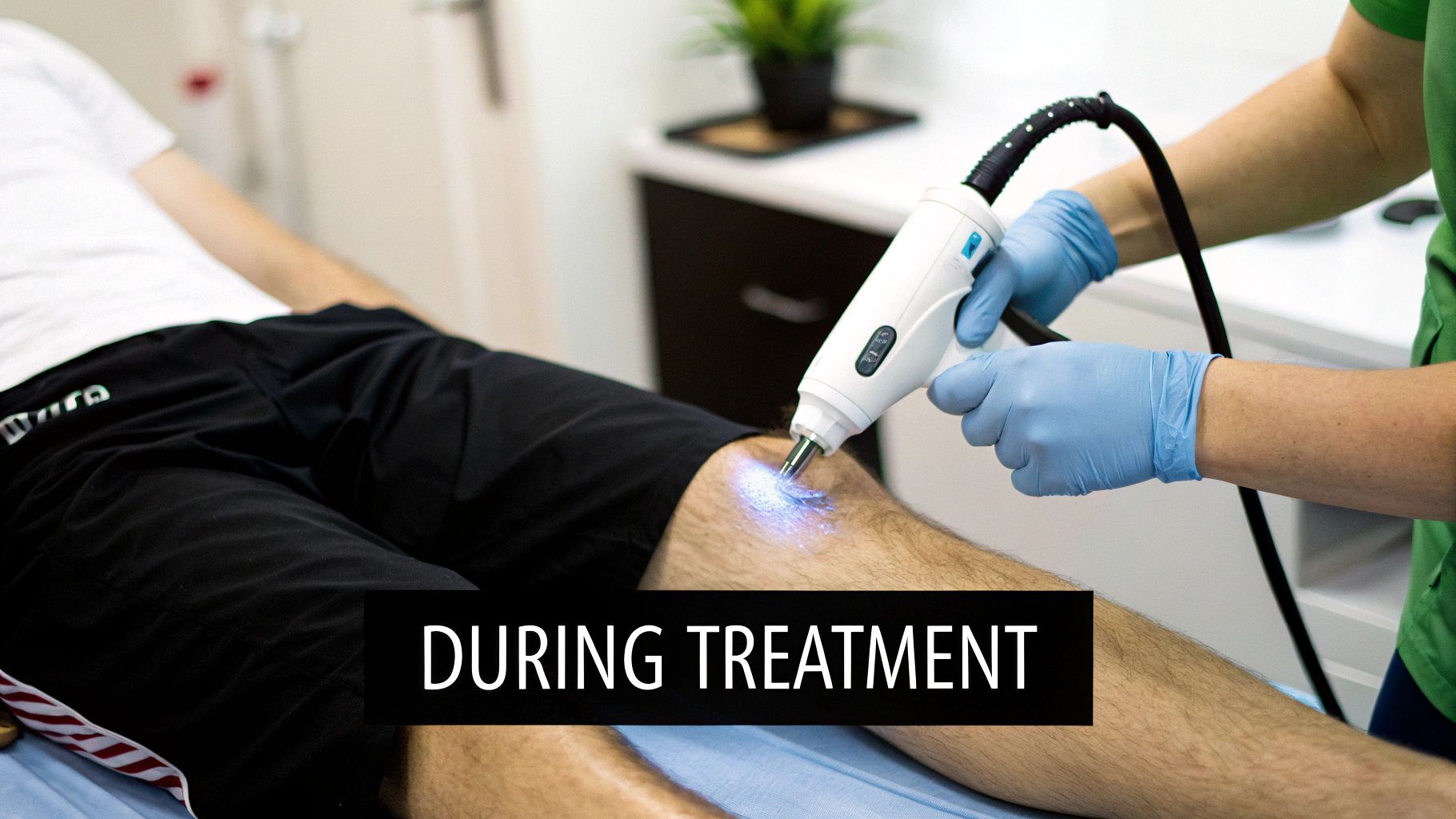
Walking into your first laser hair removal appointment can feel a little mysterious, especially if you're worried about what it's going to feel like. So, let’s pull back the curtain and walk through exactly what a session is like, step by step. Knowing the process helps demystify the whole experience and puts you in the driver's seat.
Your journey starts with some simple prep. Your technician will cleanse the treatment area, and sometimes they'll mark it out with a white pencil to make sure every inch is covered precisely. After that, they’ll apply a layer of cool, clear ultrasound gel to your skin. This isn't just for comfort—it helps the laser handpiece glide smoothly and gives your skin an extra layer of protection.
The Treatment Process Step-by-Step
Once you're prepped and have your protective eyewear on, the main event begins. Here’s a play-by-play of what happens next:
The Glide: The technician places the laser's handpiece against your skin and starts gliding it across the treatment area in a steady, methodical pattern. Thanks to the large spot size on modern devices, big areas like your legs can be covered surprisingly fast.
The Pulse: You’ll feel a series of quick, warm pulses as the laser does its thing. This is where that famous "rubber band snap" sensation comes in. It’s a fast, zappy feeling that’s over almost as soon as it happens.
The Cooling: This part is a game-changer for your comfort. Advanced systems have a cooling mechanism built right in, working at the exact same time as the laser. As the handpiece sends heat down to the follicle, it also blasts the surface of your skin with cold air, instantly neutralizing the warmth.
This simultaneous cooling is the secret sauce for a comfortable session. It works in real-time to cancel out the laser's heat, making sure the feeling stays a quick, manageable flick instead of a lingering sting.
Why Technology Makes All the Difference
Older laser technologies didn't have this integrated cooling, which is why they got a bad rap for being uncomfortable. Today, systems like the Splendor X are engineered with comfort as a top priority. You can learn more about how the Splendor X technology at NYCLASER is designed for a much more pleasant experience.
The session itself is often way shorter than people think. A small area like the underarms might take less than five minutes, while larger areas like the full legs can be done in about 20 to 30 minutes. The sensation is repetitive but not cumulative, meaning it doesn’t build up or get more intense as the session goes on. It's just a consistent, quick snapping feeling that stops the moment the technician lifts the handpiece away. By the time it’s over, most clients are genuinely surprised by how easy the whole thing was.
Why Your Laser Session Might Feel Different
The big question, "does laser hair removal hurt?" never has a simple yes or no answer. Everyone’s experience is unique because, just like our pain thresholds, several key factors can completely change how a treatment feels. It can even feel different from one part of your body to another.
Think of it like this: the laser is designed to find pigment. The more pigment it finds, the more energy gets absorbed, and the more sensation you’ll feel. This is exactly why your personal hair and skin traits are the biggest players in your comfort level.
Your Hair and Skin Type Matter Most
Your hair’s thickness and color are the most significant factors, hands down. Coarse, dark hair contains a ton of melanin (pigment), making it a perfect target for the laser. This means the follicle soaks up more energy, which is what creates that noticeable "snap" sensation during the treatment.
On the other hand, someone with finer, lighter hair will probably feel a much milder sensation because their follicles absorb far less energy. This is also why the feeling often gets more comfortable with each session—as the hair grows back thinner and sparser, there's simply less pigment for the laser to target.
It All Depends on the Treatment Area
Another huge factor is where on your body you're getting treated. Different areas have different skin thicknesses and nerve densities, which directly impacts how sensitive they are. You wouldn't expect a pinch on your calf to feel the same as one on your inner arm, and the same logic applies here.
Research confirms what we see every day: the intensity of laser hair removal changes a lot depending on the body area. Areas with thinner, more delicate skin—like the underarms and bikini line—are naturally more sensitive to the laser's pulse. In contrast, spots with thicker skin, like the legs or arms, usually feel much less intense. You can find more details about how skin thickness affects sensation in this Healthline article about laser hair removal pain.
Our specialists are experts at adjusting the settings for these more delicate zones to keep you comfortable. For more info on treating these spots, check out our guide to small area laser hair removal packages.
Key Takeaway: It's completely normal for your underarms or bikini area to feel more sensitive than your legs. This is an expected part of the process, and your technician is trained to manage it.
How Advanced Tech Adapts to You
This is where modern technology makes a world of difference. A system like the Splendor X isn't a blunt instrument; it’s designed to be precisely calibrated to your specific needs. It uses a dual-wavelength system, which lets the technician choose the perfect laser type for your unique combination of skin tone and hair color.
This level of customization is crucial for two reasons:
Safety: It ensures the laser energy is effectively absorbed by the hair follicle, not the surrounding skin.
Comfort: By tailoring the settings, the technician can deliver powerful results with the minimum sensation necessary.
This ability to adapt the treatment means that no matter your hair type or how sensitive the area is, your session can be optimized to be as comfortable and effective as possible.
How the Sensation Compares to Waxing
To get a real sense of whether laser hair removal hurts, it’s helpful to stack it up against something most people are familiar with: waxing. Ask anyone who's made the switch, and they'll almost always describe laser as a major upgrade in comfort. The two methods feel completely different because they work in completely different ways.
Waxing is a cycle of intense, repeated pain. Every time a strip is ripped off, dozens of hairs are torn out by the root, causing a sharp, stinging sensation that’s just as bad on your tenth appointment as it was on your first. You endure that immediate, jarring discomfort every few weeks, for life.
Laser hair removal, on the other hand, is more of a quick, zappy sensation. It's often described as a tiny rubber band snapping against your skin—a targeted flick that's over in a fraction of a second. That distinction is everything. It's a momentary feeling for a permanent result.
Short Term Sensation for Long Term Freedom
This is really the core trade-off. With waxing, you're signing up for a lifetime of painful appointments just to keep things smooth. With laser, the discomfort is not only brief, but it also gets easier with every single session. As the hair grows back finer and sparser, there's less pigment for the laser to target, making that "snap" feel much milder over time.
Think of it like this:
Waxing Pain: A consistent, high-impact pain that you have to endure forever to maintain your results.
Laser Sensation: A quick, manageable feeling that actually lessens over your treatment plan and eventually stops completely.
The core difference is the endgame. One method offers temporary smoothness at the cost of recurring pain, while the other offers a few moments of discomfort for a future free from hair removal altogether. It's an investment in lasting comfort.
This quick visual breaks down the main factors that influence what a laser session will feel like for you personally.
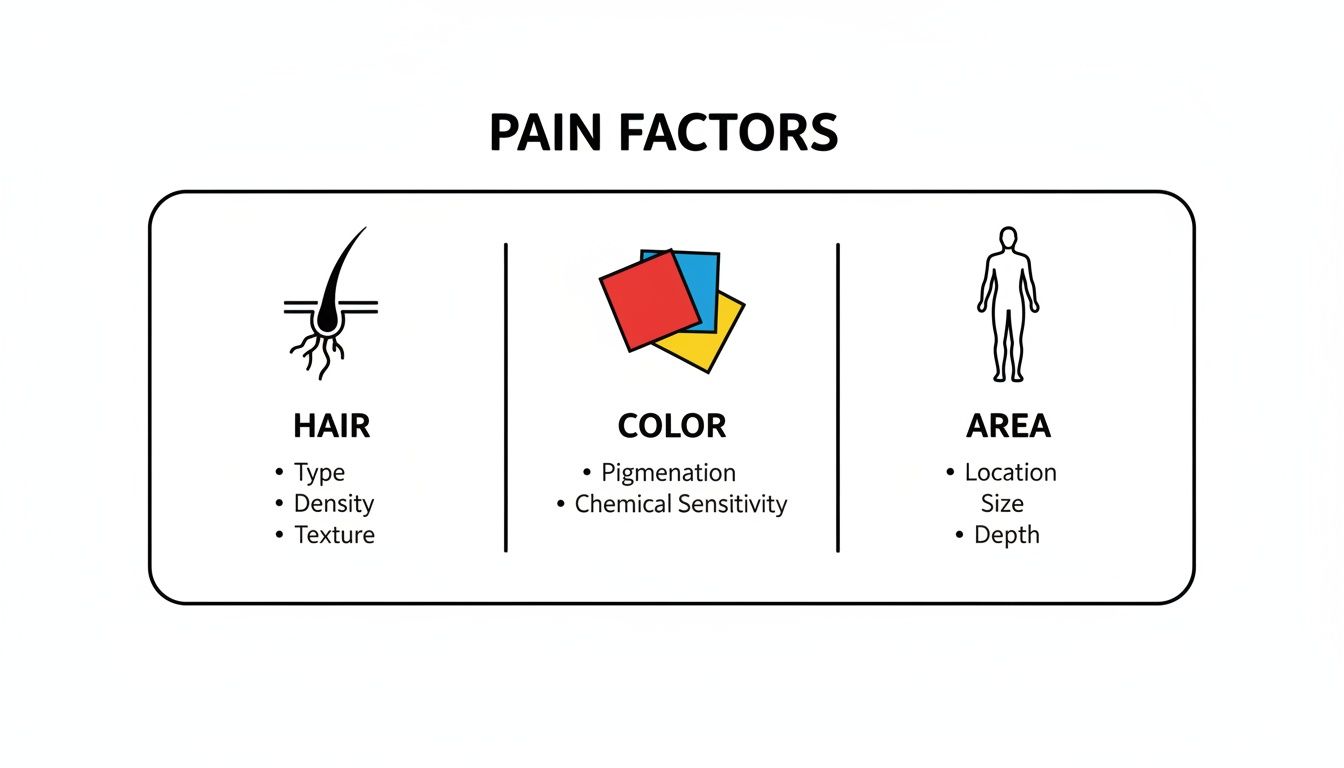
As you can see, the thickness of your hair, its color, and the specific body area you're treating all play a role in your experience.
A Smarter and More Comfortable Investment
When you weigh the fleeting sensation against the final outcome, laser hair removal is a much more appealing path. Those quick little zaps you feel during a handful of sessions are a tiny price to pay for years of smooth, hair-free skin—without the constant pain, cost, and hassle of waxing.
It reframes the question from "does laser hair removal hurt?" to "is a momentary sensation worth a permanent result?" For most people, the answer is a resounding yes.
Proven Ways to Make Your Session More Comfortable
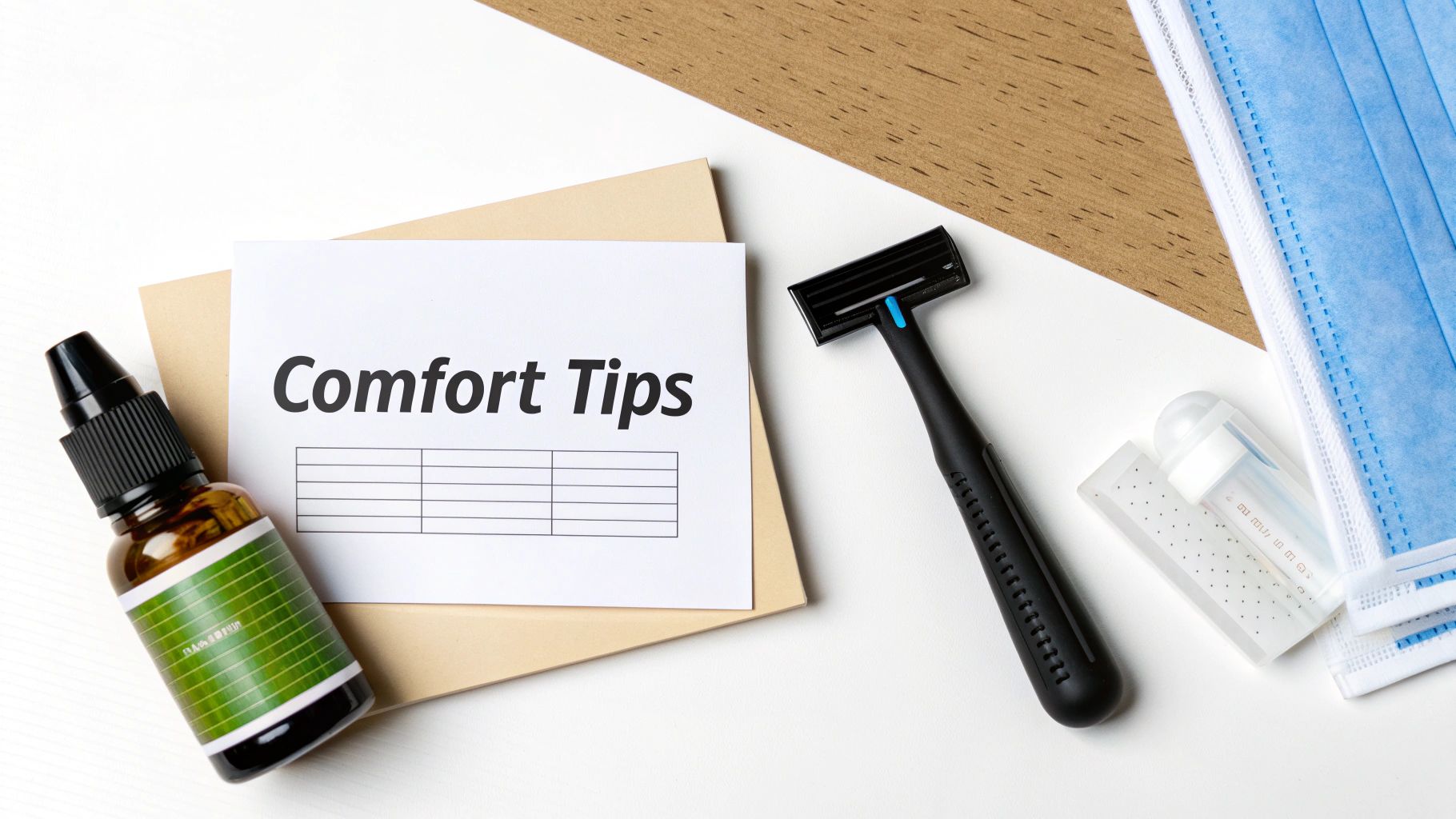
Sure, the first question everyone asks is "does laser hair removal hurt?" But the better question is, "how can I make it more comfortable?" The truth is, you have a surprising amount of control over how your session feels.
With just a few simple steps before and during your appointment, you can seriously minimize any sensation. Being proactive is the secret to a great experience, turning you into an active partner in your own comfort.
Before Your Appointment
Think of this as setting the stage for a smooth, easy session. Following these pre-treatment guidelines helps prevent extra skin sensitivity and makes sure the laser can do its job as efficiently as possible.
Shave the Right Way: Shave the treatment area 24 hours before you come in. If you shave too close to your appointment, your skin can be irritated. If you don't shave, the laser singes the surface hair instead of targeting the root, which is both ineffective and uncomfortable.
Avoid Sun Exposure: This is a big one. Stay out of the sun and away from tanning beds for at least two weeks before your session. Tanned or sunburned skin is way more sensitive and can react poorly to the laser, which means more discomfort and a higher risk of side effects.
Skip Certain Products: On the day of your appointment, don't apply any lotions, deodorants, or oils to the area we'll be treating. We need clean, clear skin so the laser can connect directly with the hair follicle without anything getting in the way.
During Your Session
Your comfort doesn't stop with prep. Once you're in the treatment room, communication and technology team up to keep you feeling good from start to finish.
The most important tool for a comfortable session is your own voice. If the sensation ever feels too intense, just tell your technician. We can immediately adjust the laser settings or turn up the cooling to make sure you stay relaxed.
Modern systems like the Splendor X were designed with comfort as a top priority. Its secret weapon is a powerful, built-in cooling mechanism that blasts a continuous stream of cold air right where the laser is working. This instantly counteracts the heat, making that snapping sensation much less noticeable.
Finally, aftercare is simple but crucial. We'll give you a soothing aloe vera gel to apply. For the next 24 hours, just avoid hot showers, saunas, and intense workouts to let any mild redness calm down. Following these steps helps your skin recover quickly, leaving you with nothing but smooth, comfortable results.
What to Expect After Your Treatment
Once the laser clicks off, your journey isn’t quite over—but the hard part is. What comes next is a simple, straightforward recovery phase with zero real downtime, so you can head right back to your day.
Immediately after your session, it's totally normal to see some mild redness and a little bit of swelling around the hair follicles. It might look and feel like a very mild sunburn. Don't panic—this is actually a great sign! It means the laser did its job and effectively zapped the follicles, and your skin is just having a normal reaction to the heat.
This temporary sensitivity usually disappears within a few hours. Clinical data backs this up, showing that side effects are almost always minimal and short-lived. In fact, studies show that temporary redness is the most common reaction, seen in about 14% of patients, with a mild burning feeling reported by only 5.7%. These effects consistently clear up within a few days, underscoring just how safe modern treatments are. You can dig into the clinical findings on laser hair removal safety yourself if you're curious.
Soothing Your Skin After Treatment
A little bit of aftercare goes a long way in making your recovery smooth, speedy, and comfortable. These simple steps will help calm your skin and lock in those amazing results.
Cool It Down: Applying a soothing aloe vera gel can feel incredible. It’s the perfect way to calm any lingering warmth or redness.
Avoid Heat: For the first 24 hours, it's best to skip hot showers, saunas, steam rooms, and sweaty workouts. Keeping the area cool helps prevent any extra irritation.
Stay Sun-Safe: Your skin will be extra sensitive to UV rays post-treatment. It's crucial to avoid direct sun exposure and apply a broad-spectrum SPF 30+ to the area for at least two weeks.
Important Takeaway: Think of the minimal, temporary side effects as a small price to pay for the huge long-term win of smooth, hair-free skin. Following these aftercare steps is the final piece of the puzzle, ensuring your experience is effective and comfortable from start to finish.
Common Questions About Laser Hair Removal Pain
Even after you understand the basics, a few questions about the actual feeling of laser hair removal tend to pop up. Let's tackle them head-on so you can walk into your first session feeling completely confident.
Does The Pain Get Better With Each Session?
Yes, it absolutely does. This is one of the best parts of the process.
The sensation you feel is the laser's energy targeting the dark pigment in your hair follicles. After each treatment, the hair that grows back is much finer and sparser, which means there's simply less pigment for the laser to zap in the next round. What might feel like a noticeable snap in your first session often becomes more of a gentle flick by your last.
Is Numbing Cream a Good Idea?
While it might seem like an easy fix, we generally steer clients away from over-the-counter numbing creams. These products can sometimes interfere with how effectively the laser works and, in some cases, can even cause unexpected skin reactions.
Modern lasers, especially advanced systems with built-in cooling technology, are designed to keep you comfortable without needing any topical anesthetics. The best way to manage the sensation is to keep an open line of communication with your technician—they can adjust settings in real-time.
Why Does It Hurt More in Certain Areas?
The difference in sensation across your body comes down to two simple factors: skin thickness and nerve density.
Areas with thinner skin and more nerve endings—like the bikini line or underarms—are naturally more sensitive. In contrast, places with thicker skin, like your legs or arms, usually feel much less intense. It's a completely normal part of the experience.
Have any other questions on your mind? You can find more answers on our detailed laser hair removal FAQ page.
Ready to experience the difference for yourself? At NYCLASER, our advanced technology and expert technicians ensure your journey to smooth skin is as comfortable as it is effective. Book your consultation today and take the first step toward lasting results.
Comments